TestedRoutes
GuidesDestinationsInspireAbout me

TestedRoutes Newsletter

Field-tested travel routes, in your inbox when they drop.

© 2026 TestedRoutes. All rights reserved.

ContactFAQLegalTermsPrivacyRefundsSecurityAffiliate disclosureSitemap

We independently review everything we recommend. When you buy through our links, we may earn a small commission at no extra cost to you. More on how this works.

ExploreGuidesDestinationsInspireAbout
Destinations›Togo

North & West Africa · The Gulf of Guinea

Togo

Is it worth stopping for, how long it actually needs, and what one day in Lomé buys – for the narrowest country on the Gulf of Guinea.

Paulius Pikelis

Tested by Paulius Pikelis · 140 countries

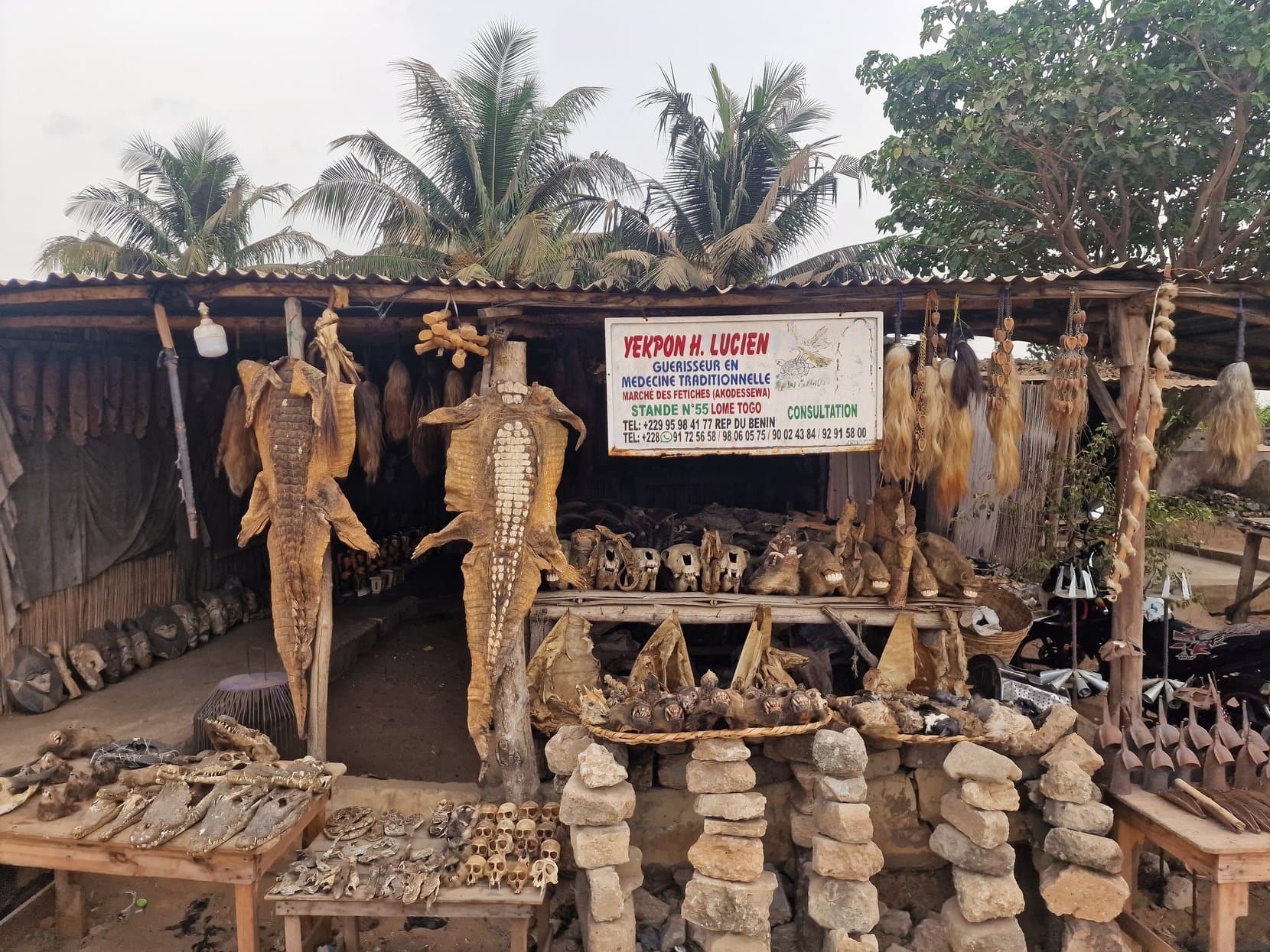
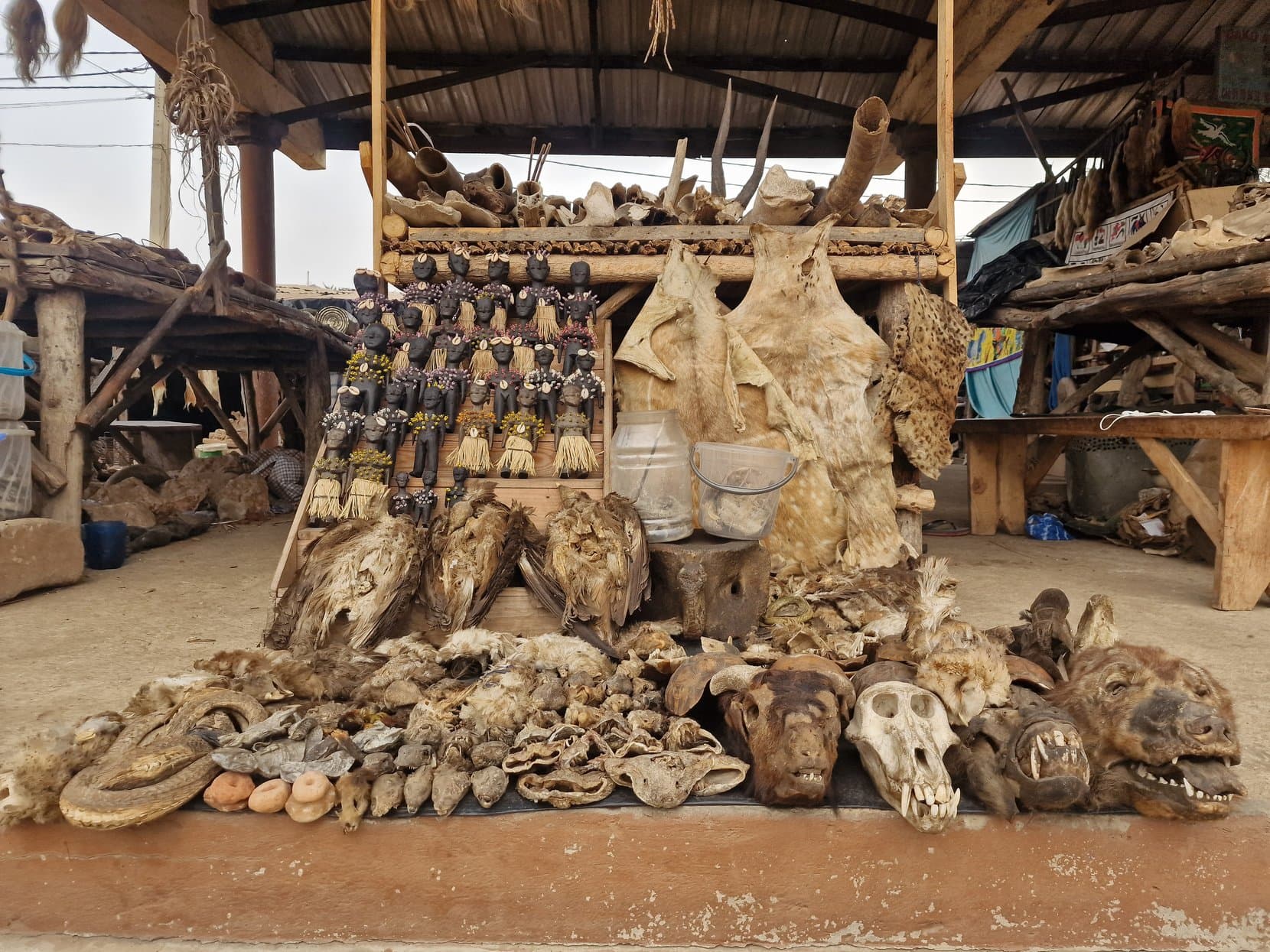
A table of dried animal skulls, skins and bones under a thatched roof at Akodessawa fetish market, Lomé, Togo

Is Togo worth it, and how long does it really need

Togo is a strip of a country: about a hundred kilometres of Atlantic coast at the bottom, six hundred kilometres of interior running north, and roughly 8.7 million people in it by the UN's count. Almost everyone who comes sees the bottom fifty kilometres of it, and the useful thing this page can tell you is that the bottom fifty kilometres is a day. Not a disappointing day – a good one. But a day.

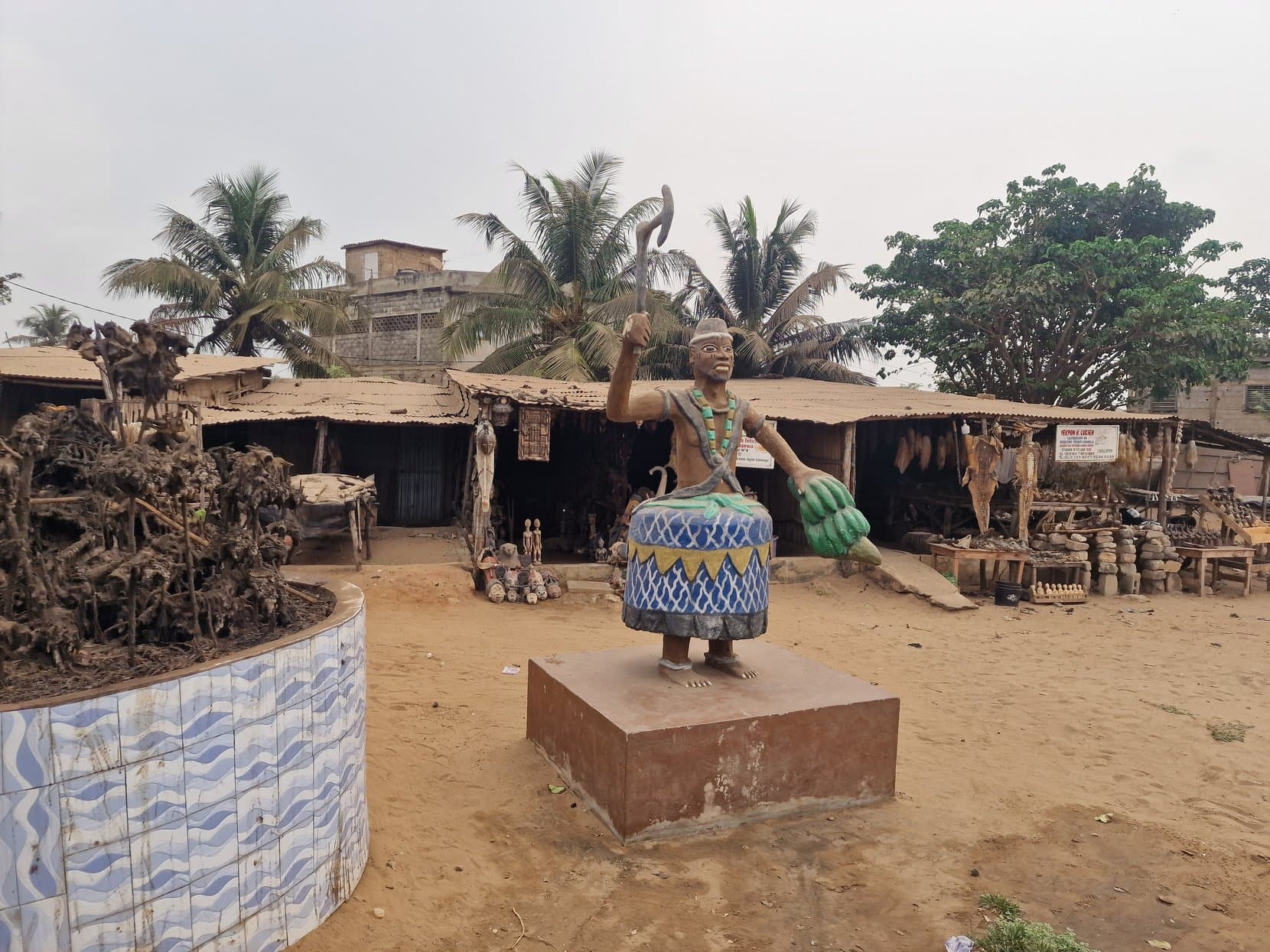
What that day holds is unusual for a capital this size. Lomé is low-rise, walkable and sits directly against the Ghanaian border, which gives it a permeable, in-between quality. It holds Akodessawa, widely billed as the largest fetish market in the world and emphatically a working one, where the people buying are locals rather than visitors. It holds the Palais de Lomé, the German governor's residence from 1905, shut for decades and reopened at the end of 2019 after a full restoration. And it moves, more or less entirely, on the back of motorbikes.

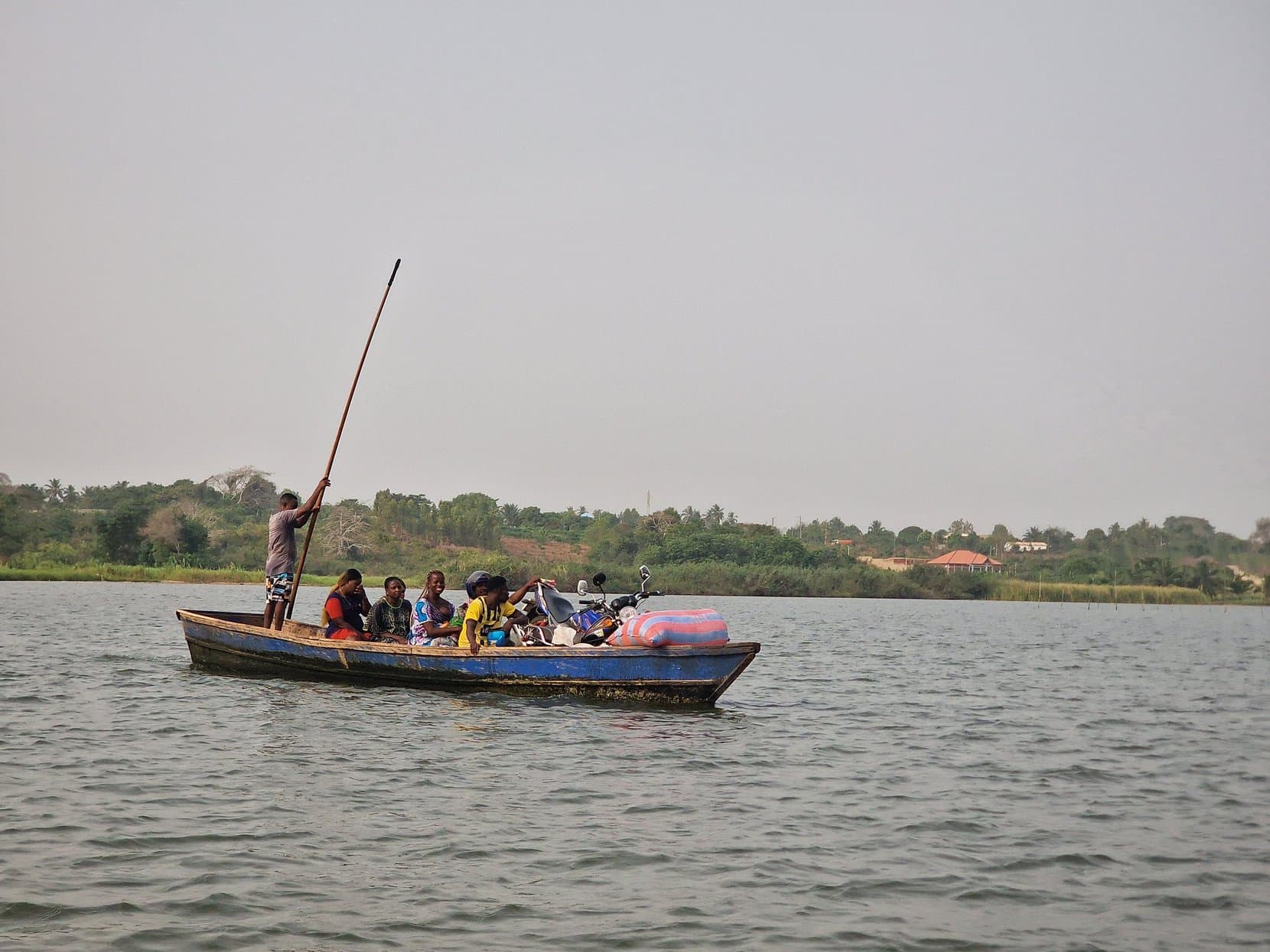
The best thing in the country is an hour east of all that, and it is a boat. Lake Togo is under two metres deep, so the craft that cross it have no engines – the captain stands in the stern and poles. There is no landing on the far side, so somebody carries you the last few metres onto the shore at Togoville, an old royal village with a Vodun tradition, a Catholic one, and a papal visit it has never got over. That crossing is the reason to give Togo two days rather than one.

What this page cannot tell you about is the north. We did not go – we came in after dark from Ghana, spent one full day in the south, and left at five the next morning for Benin. The famous thing in Togo, the fortified Batammariba compounds of Koutammakou that UNESCO lists, is up there, along with the hills at Kpalimé and the Fazao forest. That is a week, and it is somebody else's trip report.

When to go

The southern coast runs two rainy seasons and a dust season, and for a one- or two-day stop the practical question is simply whether the light is any good.

November to March

The dry season and the straightforward choice. Hot, bright, and everything within reach of the coast behaves. From December into February the harmattan blows dust down from the Sahara, which mutes the light and coats everything – it is the price of the most reliable window of the year.

April to mid-July

The main rains on the coast, and they are heavy. The country turns green, the hills inland come into their own, and unpaved roads become an open question. Lomé itself keeps working; the north is a different calculation.

August to September

A genuine drier gap on the coast in August before a shorter wet season returns in September and October. The quietest time to be here, and the greenest the south gets without being actually wet.

What I would pick

The first half of February, which is when we came, and I would not change it. The coast was hot and dry, the lake was flat enough to pole a boat across, and the haze had mostly gone. If you are pushing north to the hills or to Koutammakou, take the end of the rains in late October instead.

How long to stay

This is the whole reason the page exists, so it is worth being blunt: if Togo is a stop on the coastal circuit, it is one day, or two if you take the lake.

One day

The honest answer for most people, and the thing nobody will tell you. Lomé is a compact, walkable, low-rise capital and a single day covers the market, the restored palace on the seafront, the museums and enough of the city to know what it is. If Togo is a stop on a longer drive, this is what it needs.

Two days

A day for the capital and a day for Lake Togo, which is the better of the two. The lake is under two metres deep and the boats that cross it have no engines – the captain stands and poles. Togoville on the far shore is a small, strange, quiet place and it is the thing I would send anyone to Togo for.

A week or more

What the country would need to be a destination rather than a stop: the hills around Kpalimé, the Fazao forest, and the fortified Batammariba compounds of Koutammakou in the far north, which UNESCO lists and which is the one genuinely famous thing Togo has. We did not go north at all, so everything in this row is research rather than experience.

What we actually had

A day and a half – in after dark from Ghana, one full day for Lomé and Togoville, and out at five the next morning toward Benin. It was enough to see the south properly and it is why this page says a day rather than a week.

From the trip

The open yard of Akodessawa fetish market with a carved figure on a plinth, Lomé, Togo
A signed stall of dried animal parts under a thatched roof at Akodessawa fetish market, Lomé, Togo
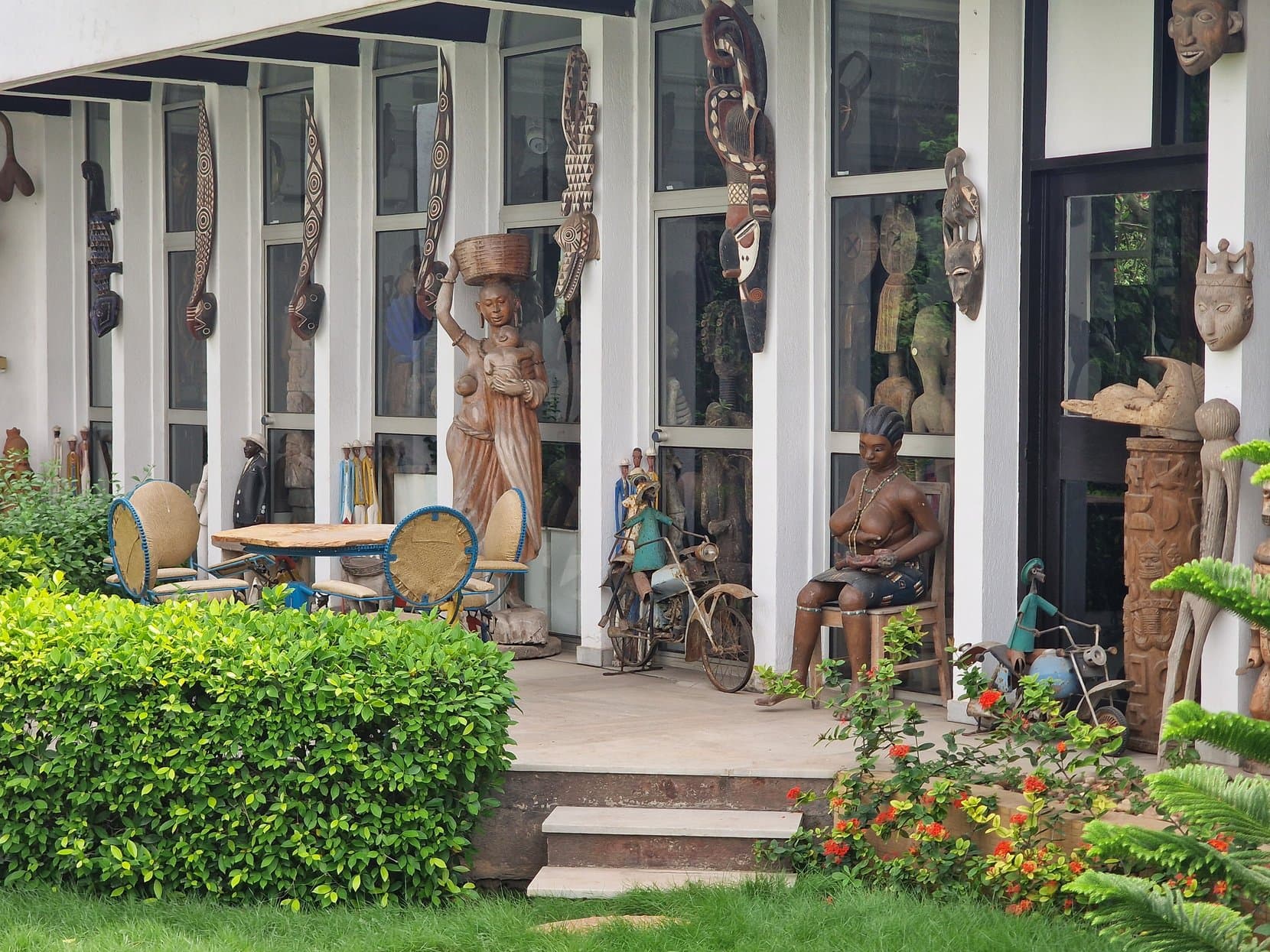
Tall carved wooden figures along the colonnade of a museum with people sitting beneath them, Lomé, Togo
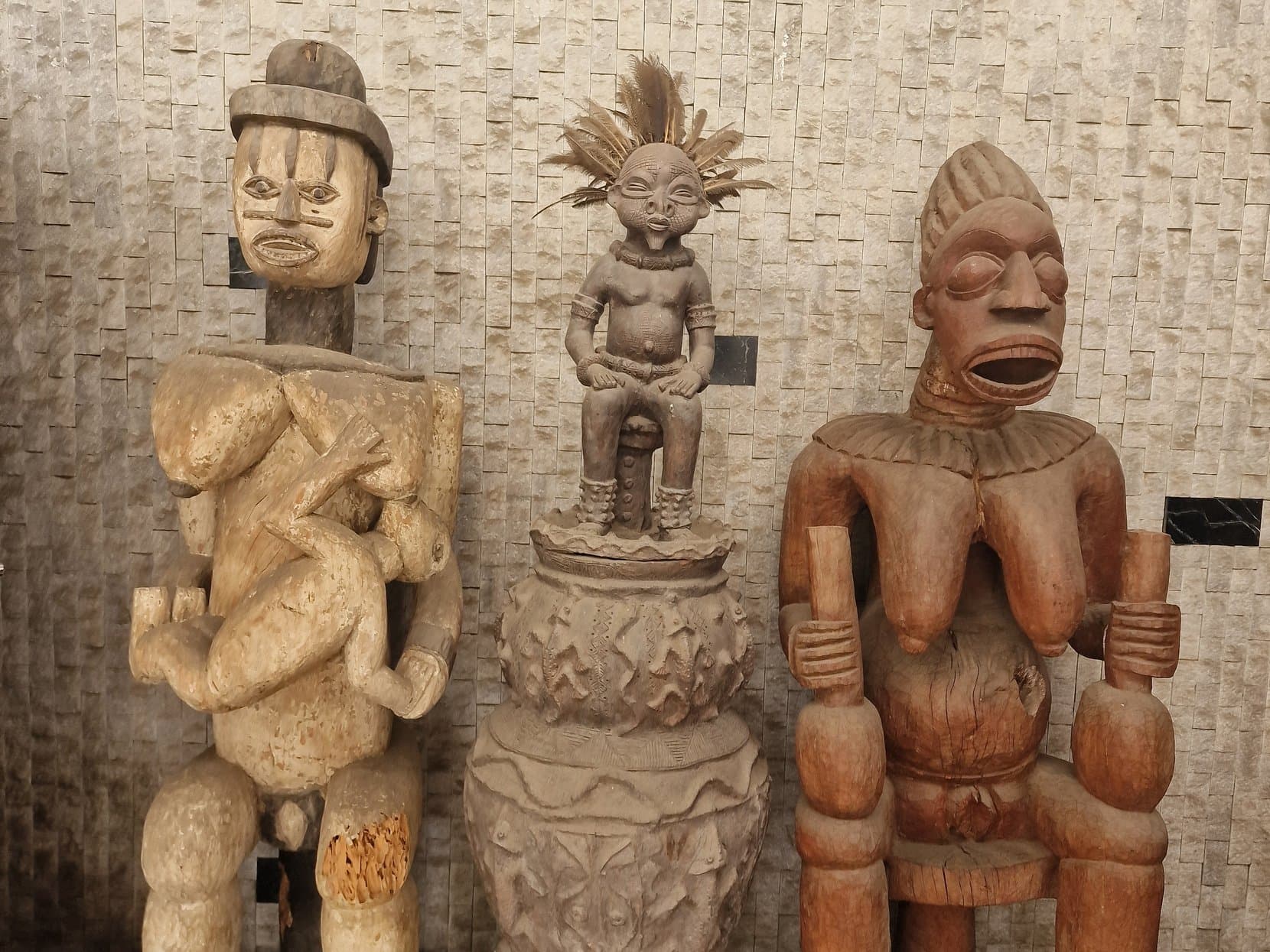
Three large carved wooden figures against a stone wall inside a museum, Lomé, Togo
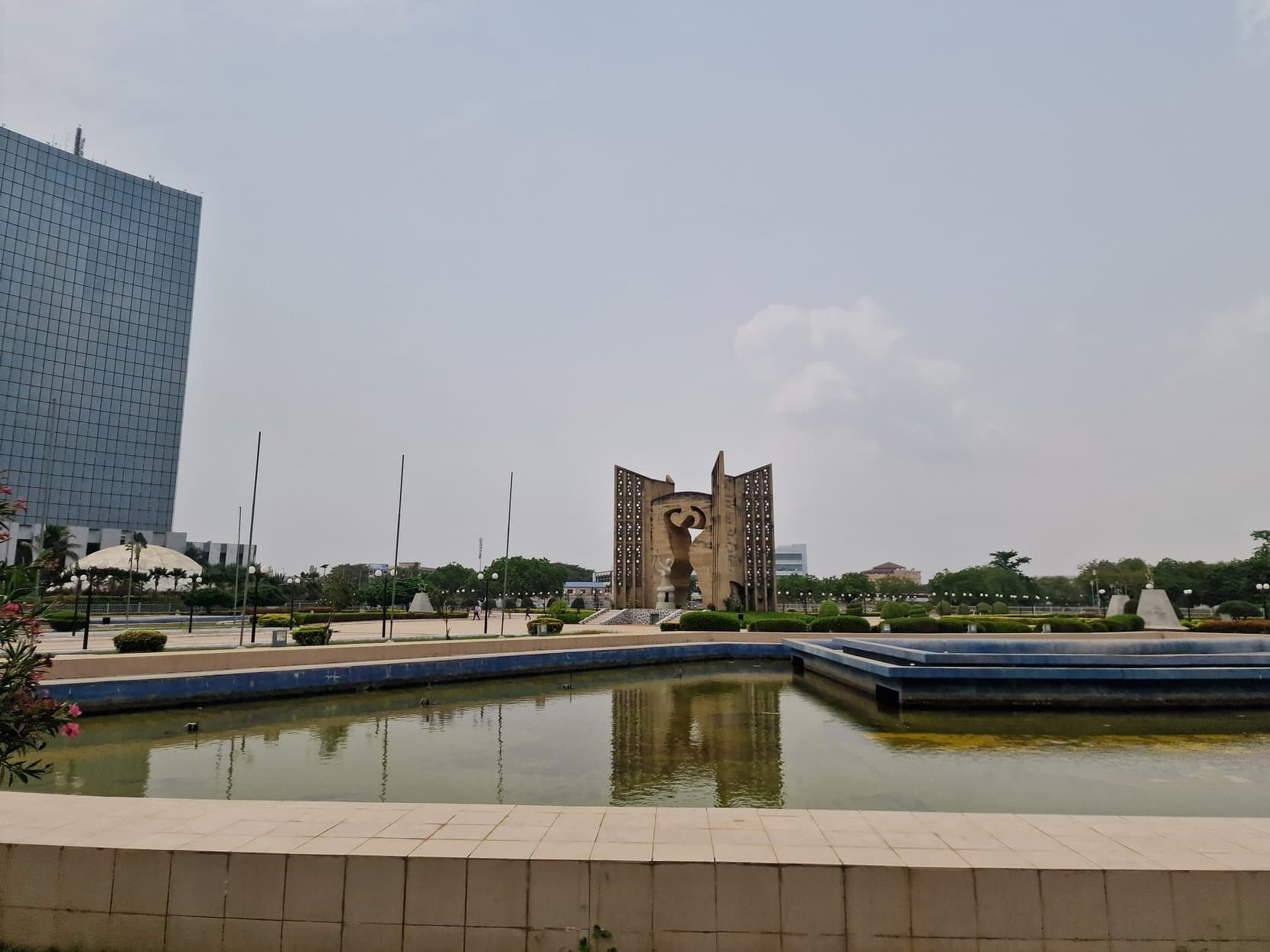
The Independence Monument and its reflecting pool with a tower behind, Lomé, Togo
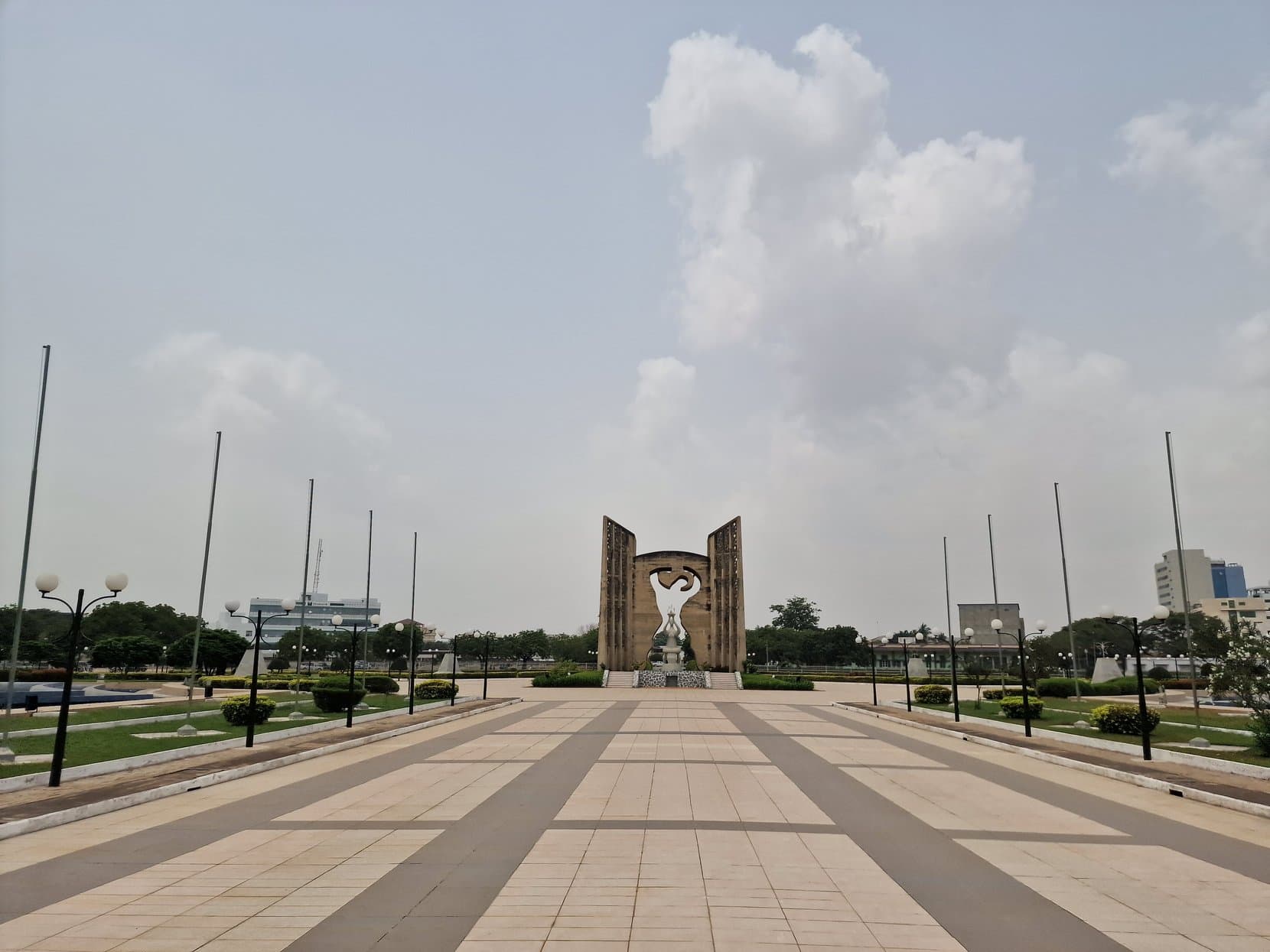
The wide empty paved plaza running toward the Independence Monument, Lomé, Togo
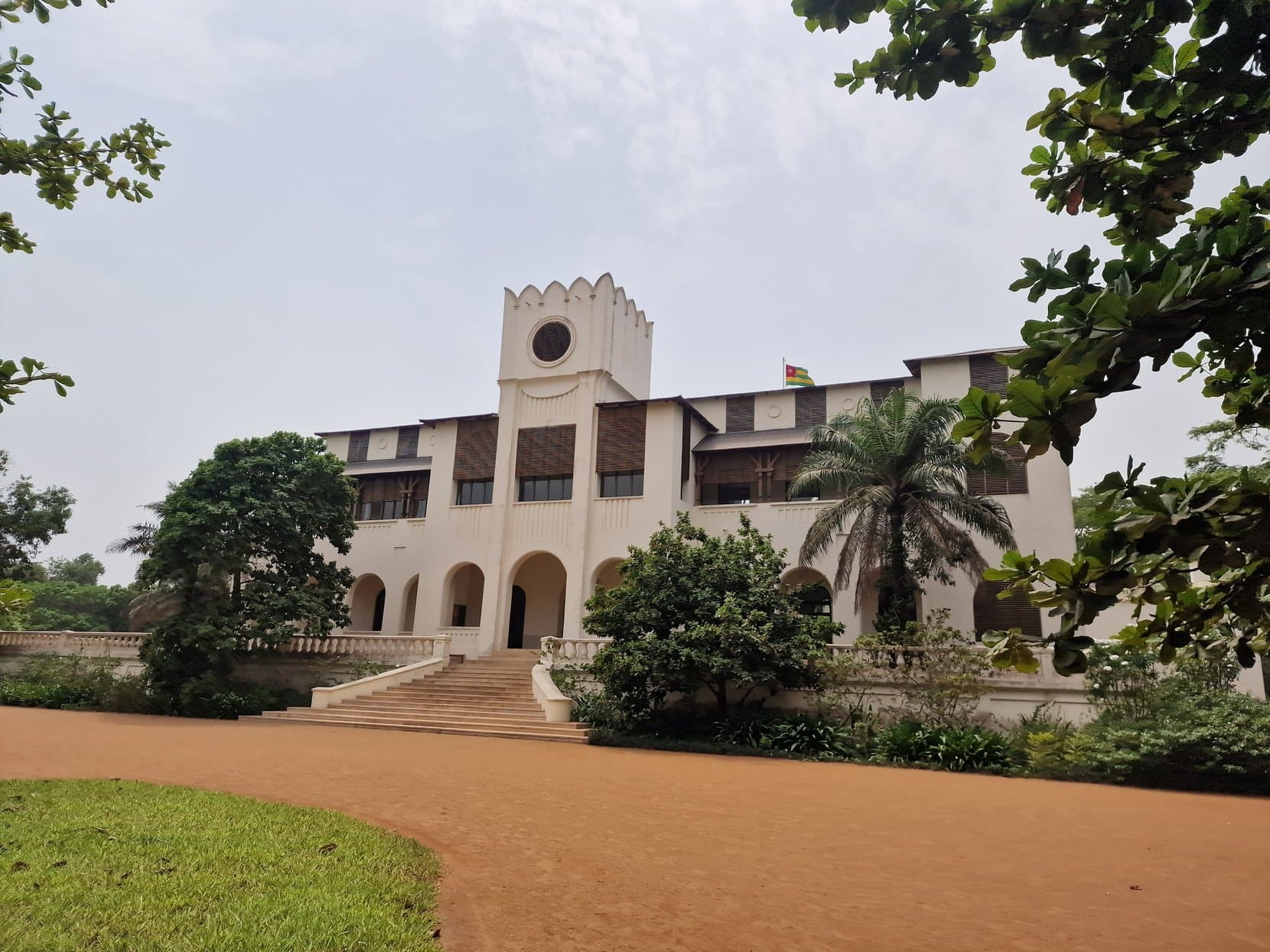
The white facade of the Palais de Lomé behind trees and a sandy drive, Togo
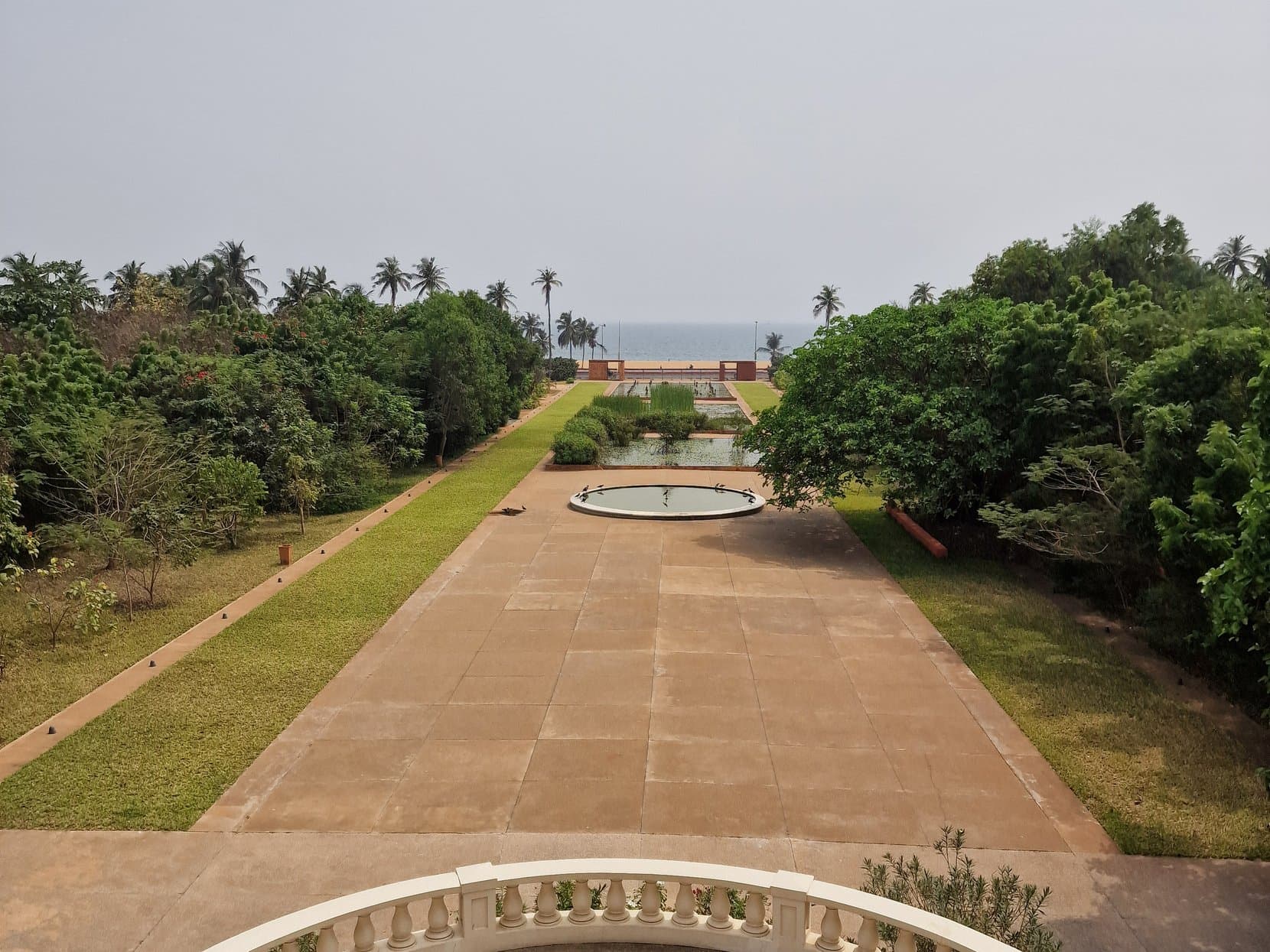
A long lawn and pool running from a balustrade toward the sea in the Palais de Lomé park, Togo
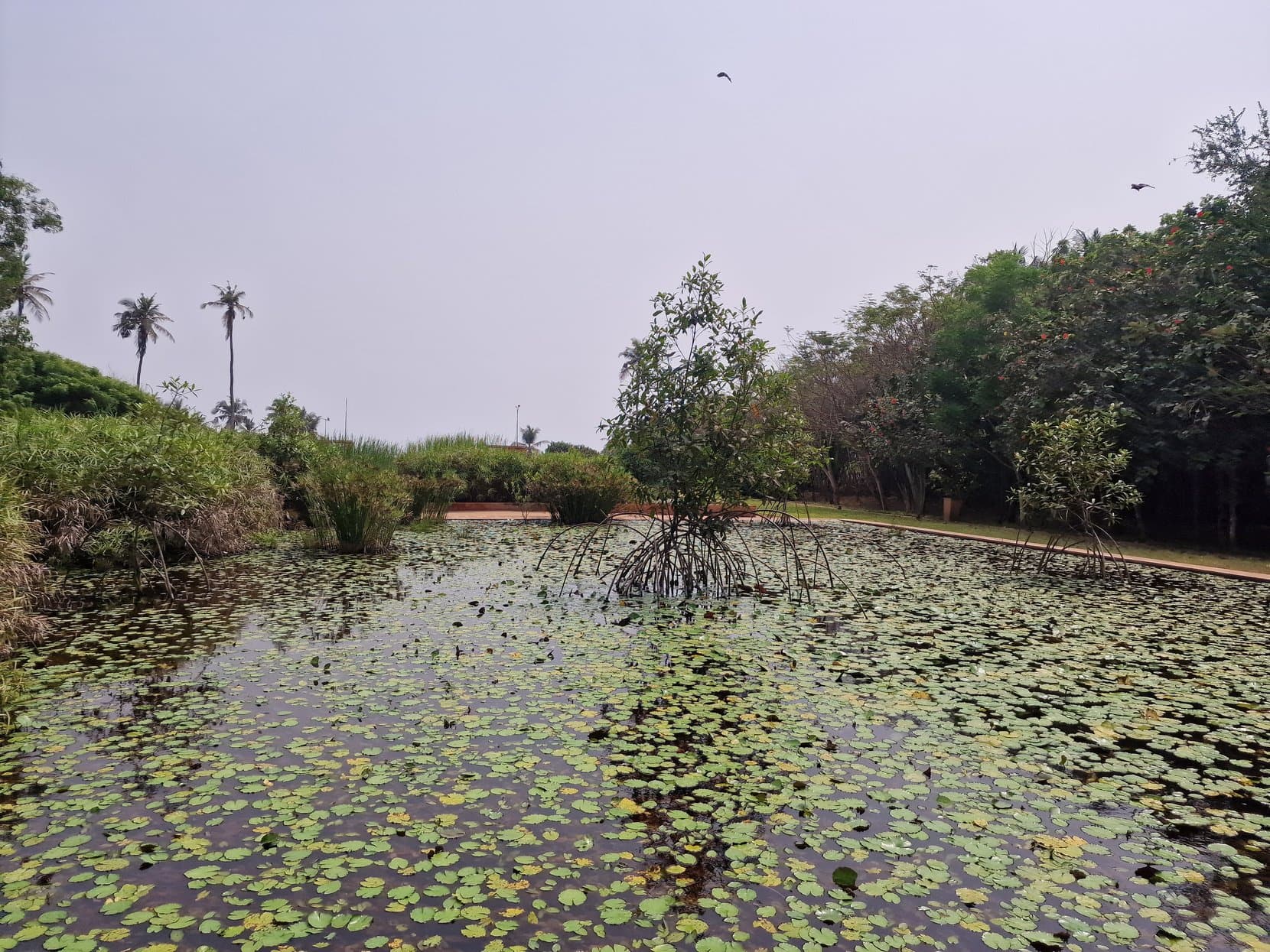
A pond covered in water lilies under trees, Lomé, Togo
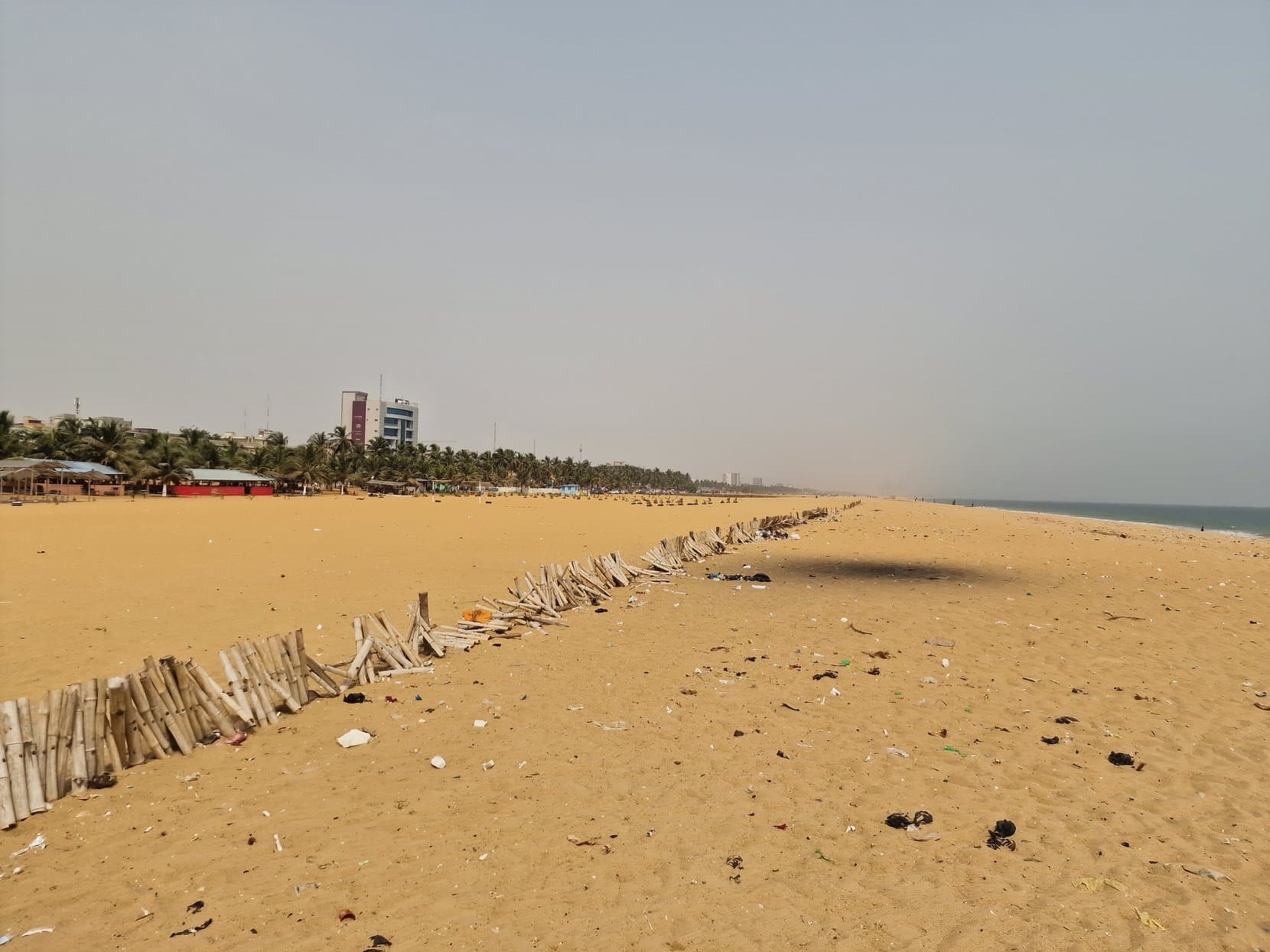
A long empty sandy beach with the city's towers at the far end, Lomé, Togo
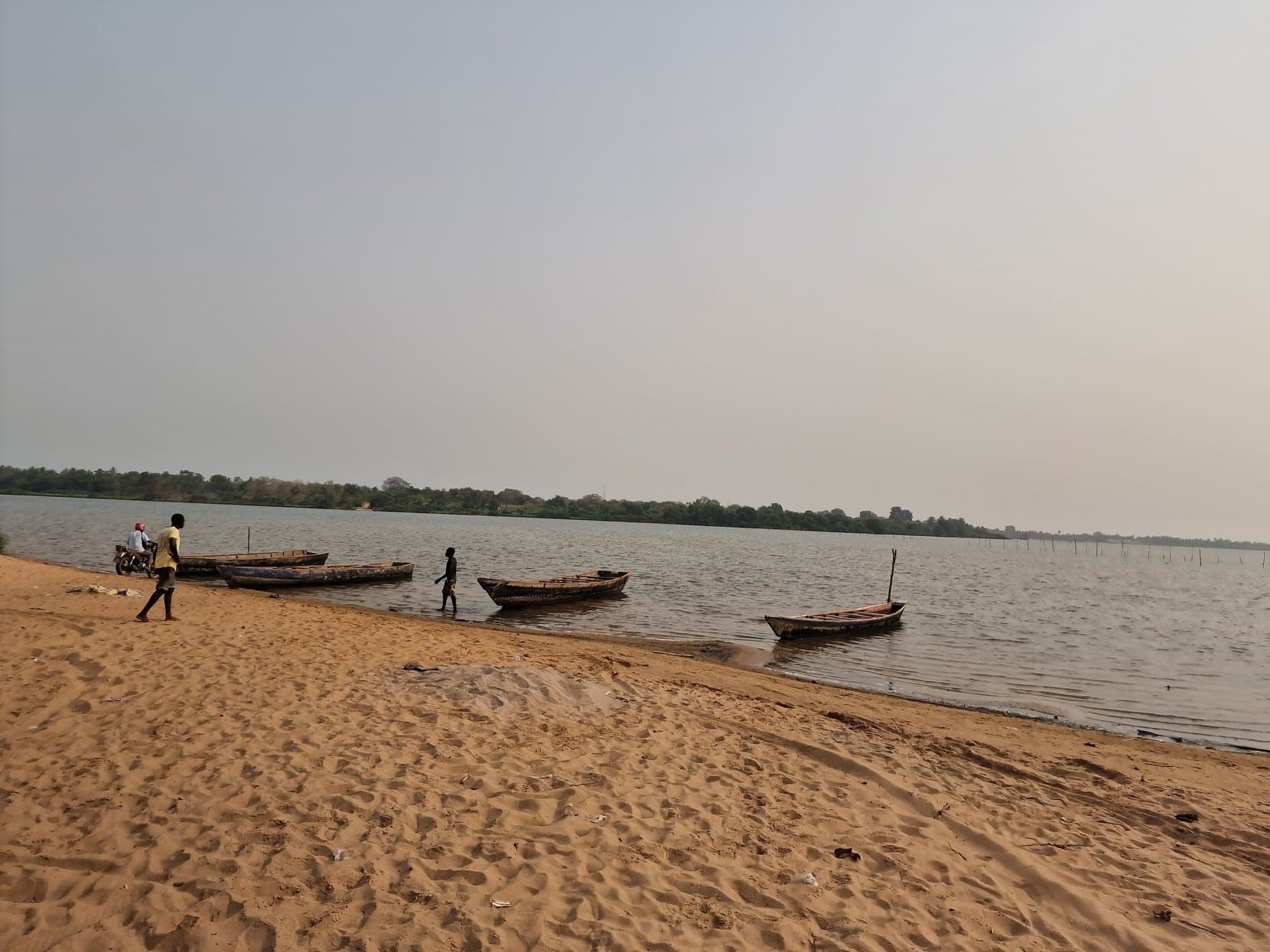
Wooden boats and a few figures on the sandy shore of Lake Togo in flat afternoon light
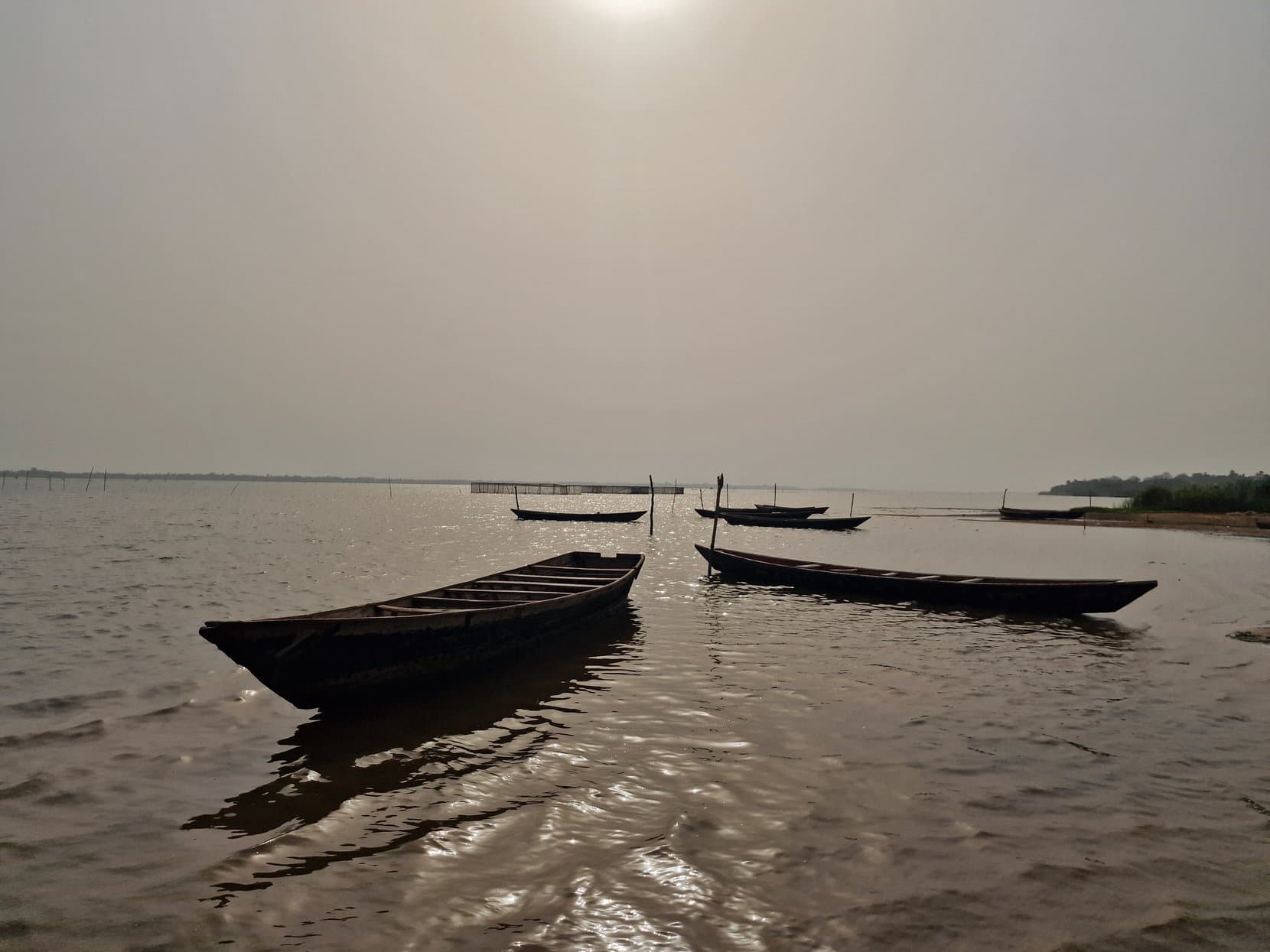
Dugout canoes drawn up in the shallows of Lake Togo at dusk, Togoville, Togo
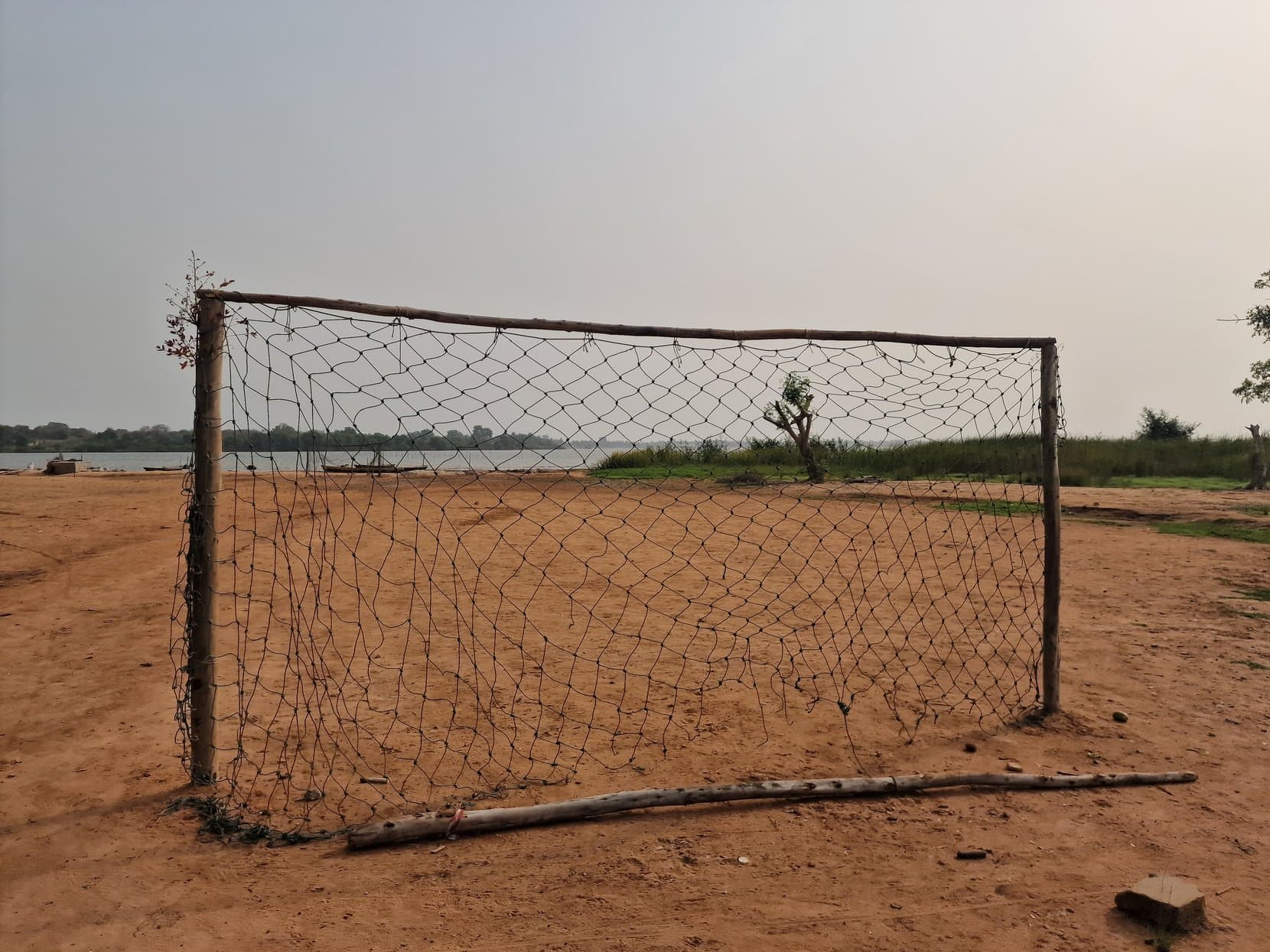
A football goal with a torn net on the sand beside Lake Togo, Togoville, Togo
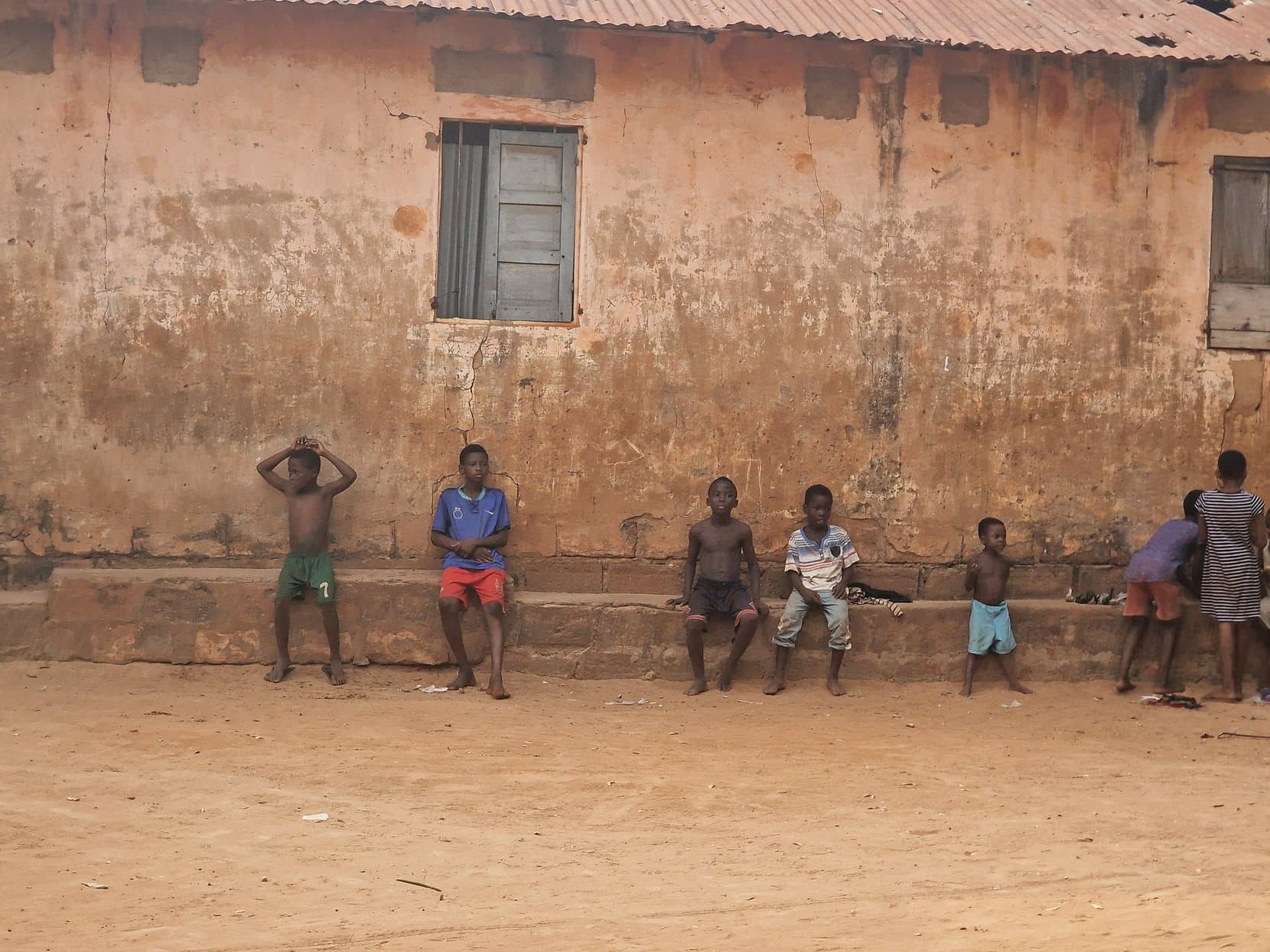
Children sitting along the base of an ochre wall in Togoville, Togo
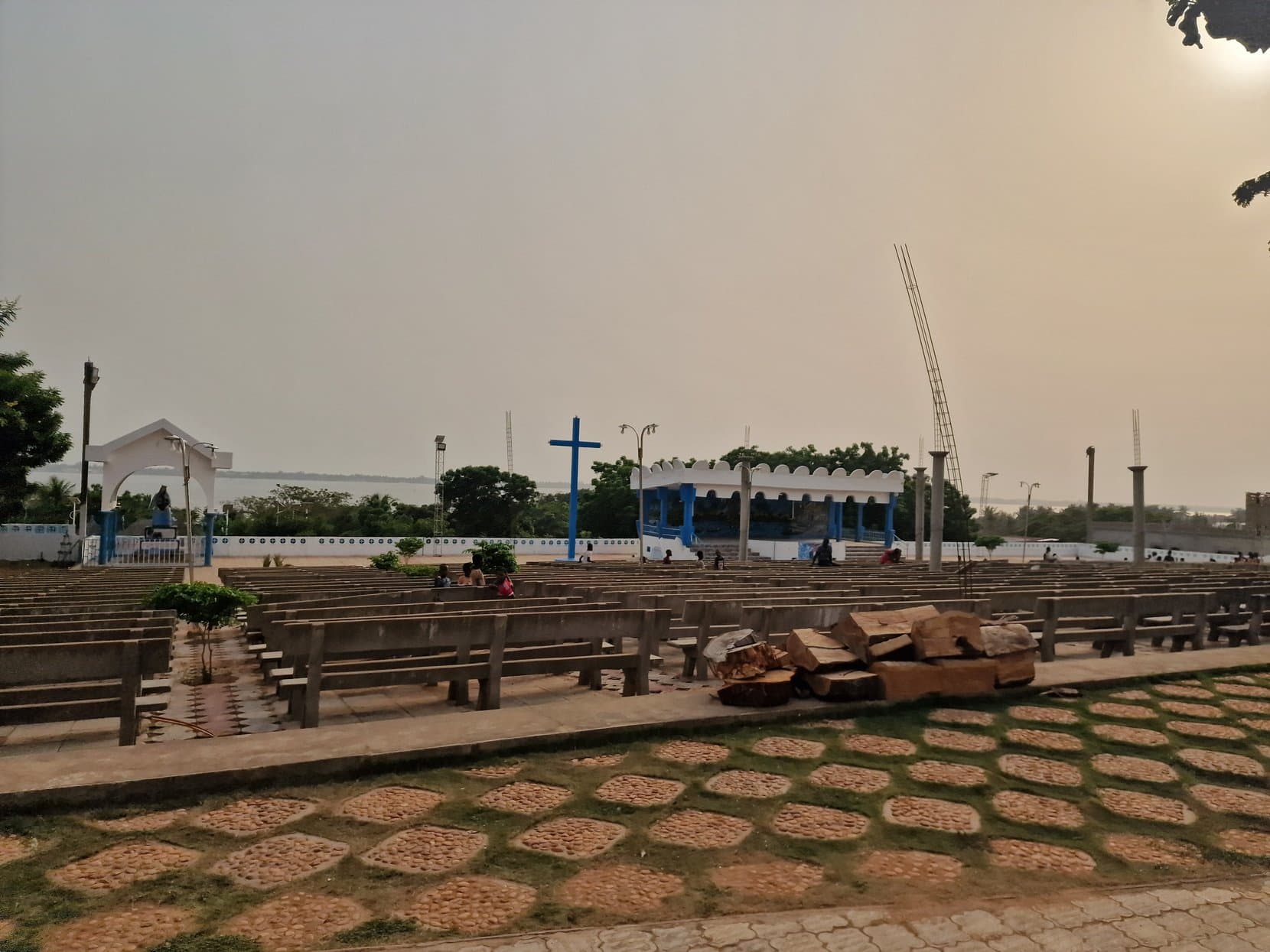
Rows of open-air benches facing a cross and a stage at the papal site, Togoville, Togo
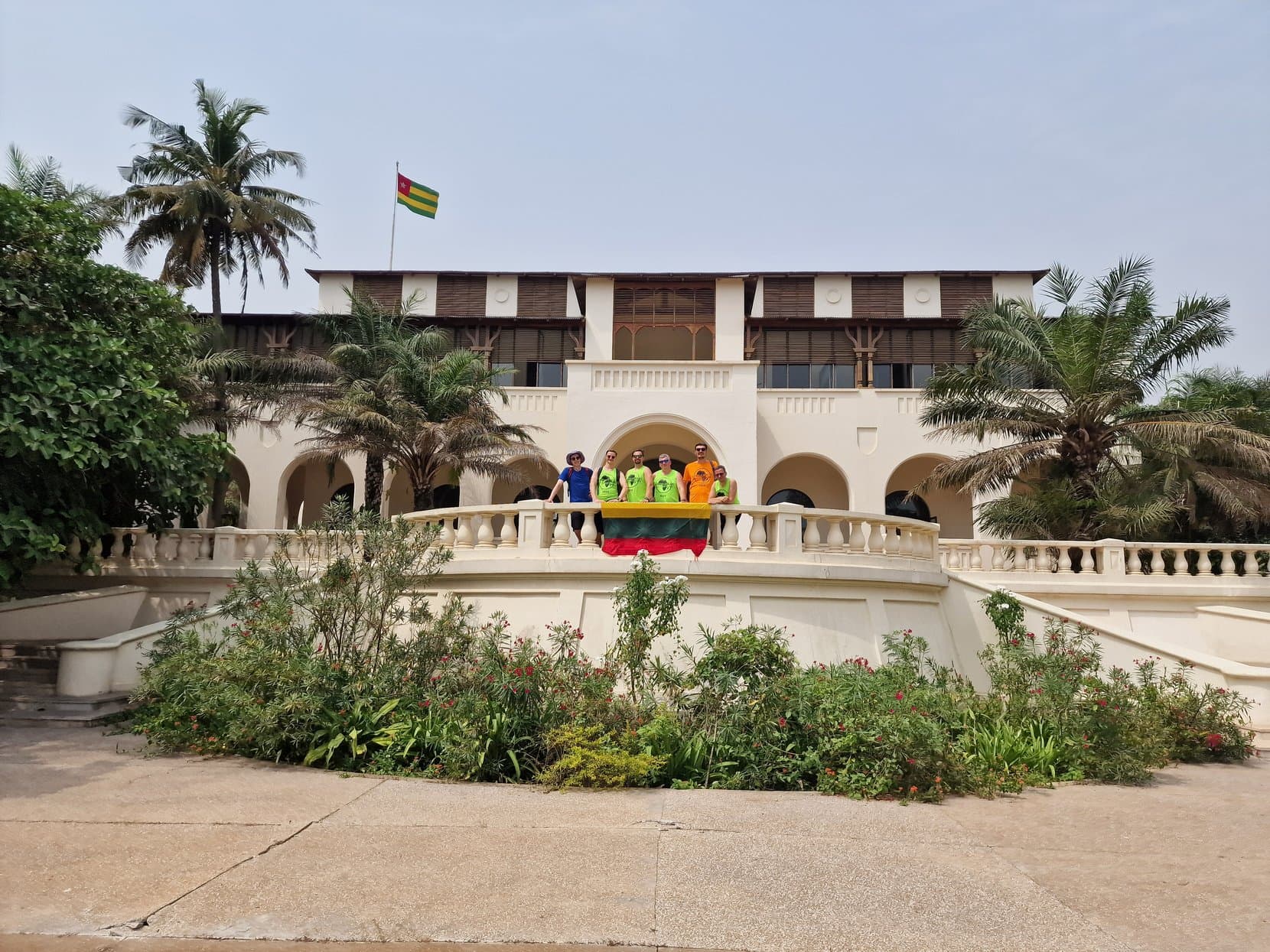
The rally crew on the balcony of the Palais de Lomé under a Togolese flag, Togo

Akodessawa's yard, with the carved figure on its plinth

The regions

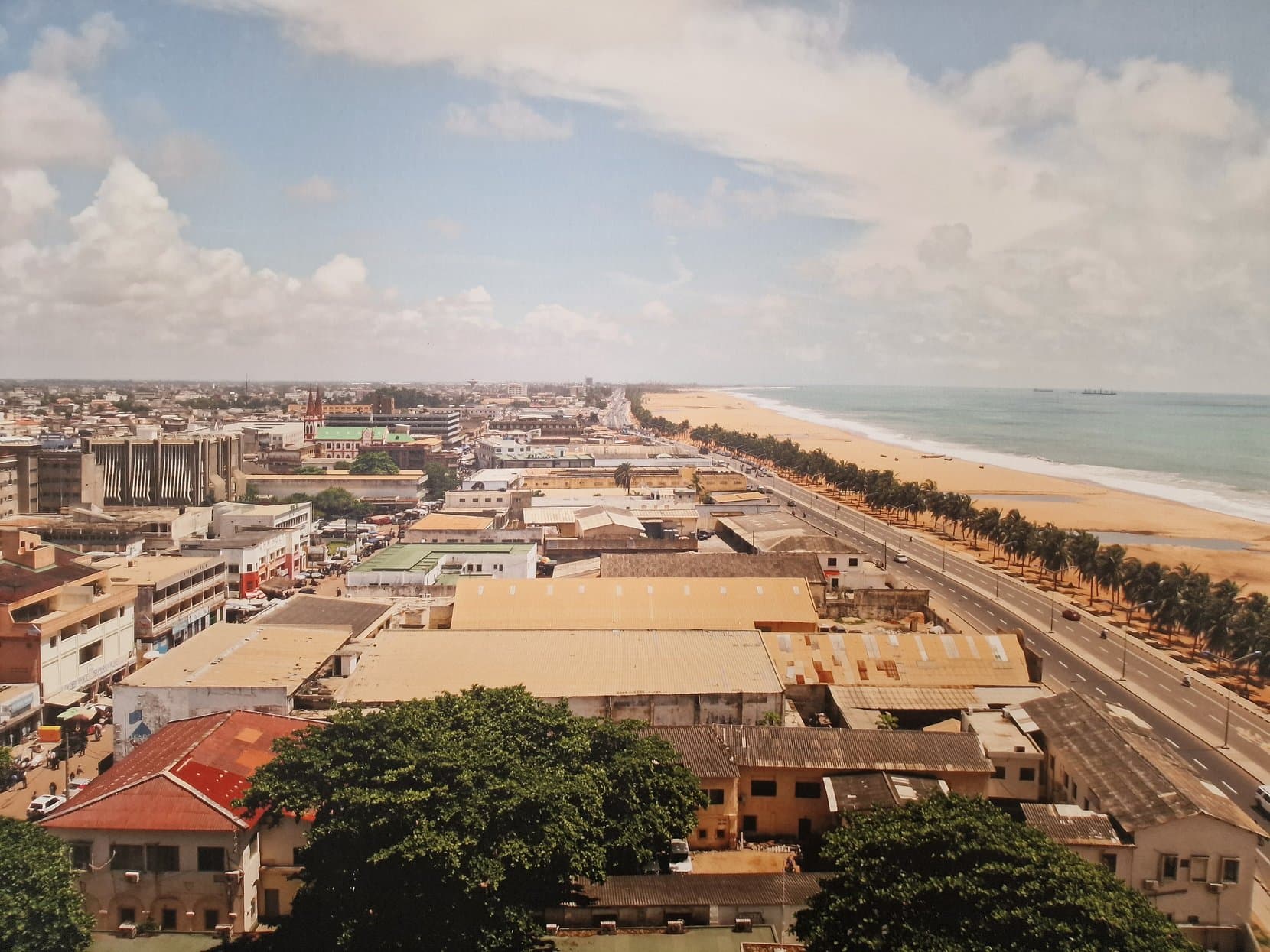
Lomé's low rooftops and the long beach beside the city, seen from above, Togo

Lomé and the coast

One of the few capitals in the world sitting directly on an international border – the Ghana frontier is at the western edge of the city – which gives Lomé an odd, permeable feel. It is low-rise, hot, and moves almost entirely on motorbikes. The standouts are the Palais de Lomé, built in 1905 as the German governor's residence and reopened at the end of 2019 after a long restoration as an exhibition space and park, and the Musée International d'Art d'Afrique du Golfe de Guinée. And then there is Akodessawa, billed as the largest fetish market in the world, which is not a museum and not a show.

A loaded wooden boat being poled across the shallow water of Lake Togo, Togo

Lake Togo and Togoville

An hour or so east of the capital, a shallow lagoon separates the coast road from the old royal village of Togoville. The lake is less than two metres deep, so the boats that cross it carry no engine at all: the captain stands in the stern and poles, and the crossing takes as long as it takes. The far shore has no jetty, so the last few metres are done on somebody's back. Togoville is where the German protectorate treaty was signed in the 1880s, and where Pope John Paul II came in 1985 – a visit the village will still tell you about.

There are only two cards here because there were only two regions in our trip. Togo's other half runs north from the coastal plain into hills and then savannah: Kpalimé and the waterfalls and coffee country around it, the Fazao-Malfakassa forest, and in the far northeast the fortified Batammariba compounds of Koutammakou, a UNESCO World Heritage site and the one thing in Togo that is internationally famous. We saw none of it, so it gets research rather than a card. Note as well that the far north, near the Burkina Faso border, is where the region's security problems actually reach – check the current advice before planning anything up there.

Getting there and around

Lomé's airport is a real regional hub – it is the home base of ASKY, which flies to a long list of West and Central African capitals – and from Europe the practical routes are Paris or Brussels direct, or a connection through another African hub. Most visitors need a visa; Togo offers an e-visa and also issues on arrival, including at land borders, and a yellow fever certificate is a genuine entry requirement.

Once you are here, the country is small enough that getting around is barely a question in the south. Lomé runs on motorbike taxis to an extent that is startling at first; shared taxis cover the coast road east and west, and the border with Ghana is at the edge of the city. A car with a driver for the day you go to the lake is the one arrangement worth making. Going north is a different proposition and needs its own planning.

French is the working language of everything official and is what you will need; Ewé and Kabiyé are the two main national languages. The currency is the West African CFA franc, pegged to the euro, and Togo is a cash country outside the better hotels.

What it costs

One number is worth publishing, because it is the part nobody can avoid: return flights from western Europe run about €650 booked ahead. That is what reaching Togo costs, not what the trip costs. On the ground this is one of the cheaper countries on the coast, and because almost nobody visits, there is very little tourist pricing to work around:

StyleWhat that looks like
LeanSmall local hotels in Lomé, shared taxis and motorbike taxis, eating at the roadside. Togo is cheap at this level and there is very little tourist mark-up to avoid
CoreA proper hotel on or near the Lomé seafront and a car with a driver for the day you go east to the lake. This is where most visitors land and it is not expensive
SplurgeA handful of international-standard hotels in the capital and a small number of beach places along the coast. The ceiling is low, and spending more here buys comfort rather than access

Because the trip is short, the flight dominates the budget to an unusual degree – which is the argument for arriving overland from Ghana or Benin rather than flying to Togo specifically. As a leg of a coastal circuit it costs almost nothing. As a standalone destination it is expensive per day, not because the country is, but because there are not many days in it.

Tested tips

Plan Togo as a day, and it becomes a good day.

The failure mode here is treating a small country as a small version of a big one. Togo is a sliver – roughly a hundred kilometres of coast and six hundred kilometres of interior running north – and the south is genuinely a day. Given a day it is compact, cheap and rewarding. Given three days without going north, it runs out.

Akodessawa is a working market, and going in knowing that changes the visit.

It sells the raw materials of a living religion: dried and preserved animals, bones, plants, figures, the things a practitioner needs. A priest is there to prepare and activate what you buy. The thing that stays with me is not the stock, it is that the people buying were locals doing ordinary Friday business, not an audience. It smells of what it is and it is not a comfortable hour. Go if you want to understand something about the country; do not go to be shocked, and do not photograph people who have not agreed to it.

Everything moves on two wheels.

Lomé runs on motorbike taxis to a degree that takes a day to get used to. They are quick, cheap and everywhere, and they are also the reason road safety is the most real risk on a Togolese trip. If you are not comfortable on the back of one, taxis exist, but you will be waiting.

The best thing in Togo is not in the capital.

Nobody plans a trip around a lagoon crossing, and the poled boat to Togoville is the thing I would send anyone here for. It costs almost nothing, it takes the better part of a morning, and it is the one part of the country that does not feel like a stop on the way to Benin.

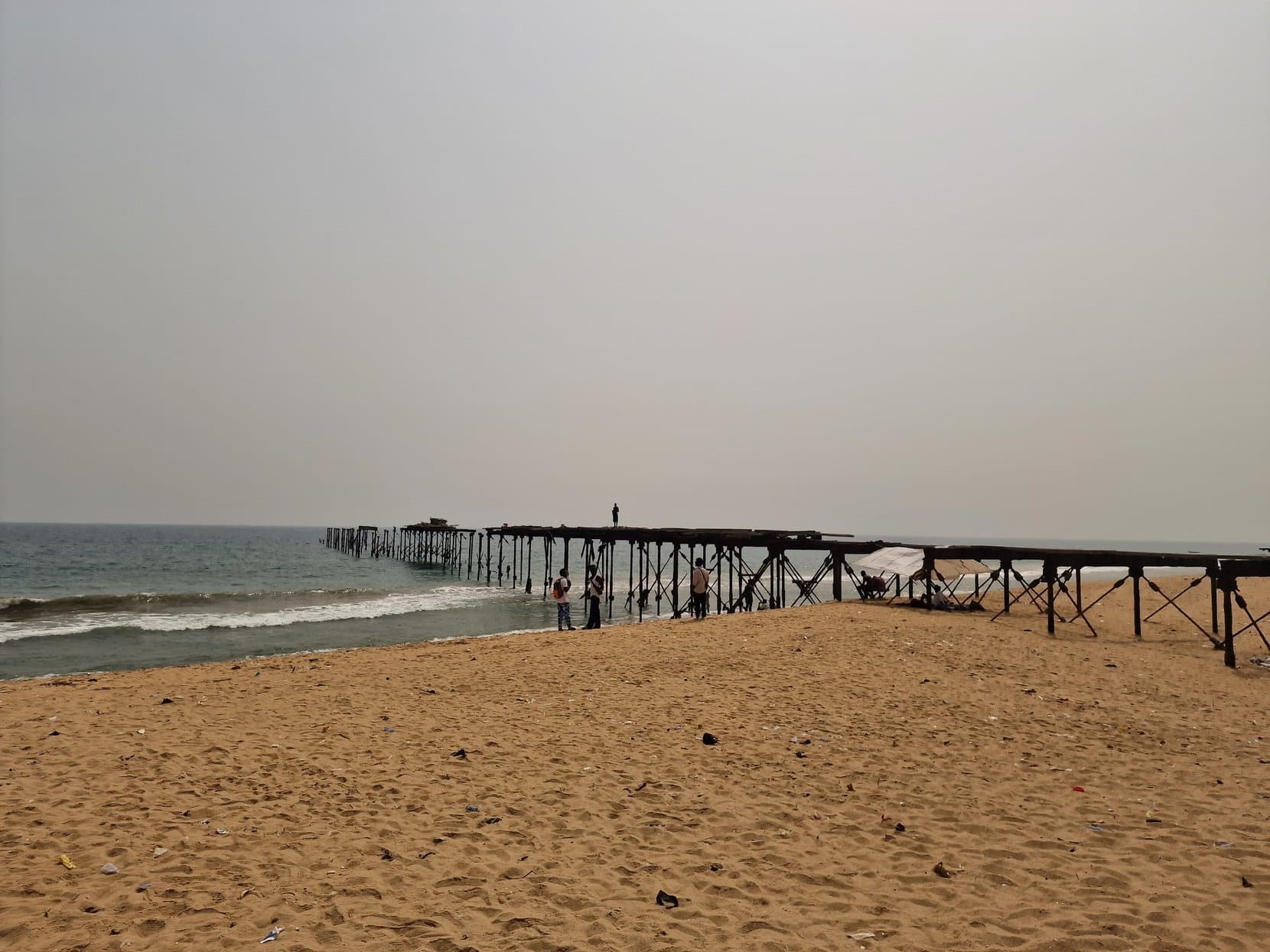
An old wooden pier running out into the surf from the sandy beach at Lomé, Togo

FAQ

Is Togo worth visiting?▾
Yes, as a day or two rather than a destination – and that is not a criticism so much as a description. Togo is a narrow country between Ghana and Benin, and the southern end of it, which is what almost everyone sees, is one compact capital and one shallow lagoon. What makes it worth stopping for is that both are unusual: Lomé holds Akodessawa, billed as the largest fetish market in the world and very much a working one, plus a restored German colonial palace on the seafront; and an hour east a boat with no engine is poled across Lake Togo to the old royal village of Togoville. The far north, which we did not reach, is where the country's one internationally famous sight is – the Batammariba compounds of Koutammakou, a UNESCO World Heritage site – and that would make it a week rather than a day.
How many days do you need in Togo?▾
One, if you are passing through on the coast, and that is the honest answer most sources will not give you. A single day in Lomé covers the market, the palace, the museums and the feel of the city. Two days lets you add Lake Togo and Togoville, which is the better half of the trip. Anything more only makes sense if you are going north to Kpalimé, Fazao or Koutammakou, and that is a week-long proposition in its own right. We had a day and a half and left having seen the south properly.
What is the Akodessawa fetish market, and should you visit?▾
It is a market in Lomé supplying the materials of Vodun practice – dried and preserved animals, skulls, bones, plants, carved figures – with priests on site who prepare and activate what is bought. Sources date it to the seventeenth century and it is widely billed as the largest of its kind in the world. It is not a museum, an exhibit or a tourist attraction dressed as one: the people buying there are locals doing ordinary business. Should you go? If you want to understand a country where a large minority follows traditional religion, yes. It is confronting – the smell is the part nobody warns you about – and it deserves to be approached as somebody else's church rather than as a curiosity. Ask before photographing anyone.
Is Togo safe to visit?▾
Check your government's current advice and let it outrank this page. Togo has generally sat at the middle of the caution scale – the US had it at Level 2, exercise increased caution, at the time of our trip – with two specific carve-outs worth knowing: the far north near the Burkina Faso border, where the regional jihadist insurgency reaches, and demonstrations in the capital, which can flare around political events. The south, which is what this page covers, was calm and ordinary. The realistic risk on a normal Togolese trip is the traffic, not crime: this is a country that moves on motorbikes.
When is the best time to visit Togo?▾
November to March, the dry season. The trade-off is the harmattan haze from December into February, which dulls the light and puts dust over everything. The main rains run from April into mid-July with a shorter wet season in September and October, and there is a real drier gap on the coast in August. We went in early February and the conditions were as good as they get: hot, dry, and the lake flat enough to pole a boat across.
Do you need a visa for Togo?▾
Most visitors do, and it is one of the more accommodating systems in the region – there is an online e-visa, and visas are also issued on arrival at the airport and at land borders. A yellow fever vaccination certificate is a genuine entry requirement. Entry rules in this part of West Africa change with some regularity, so confirm against your own foreign ministry before you travel rather than against a page written months ago.
Is Togo expensive?▾
No, and getting there is the one cost that matters: return flights from western Europe run about €650 booked ahead, most practically through Paris or Brussels, or on the regional carrier via another West African hub. That is what reaching Togo costs, not what the trip costs. On the ground it is one of the cheaper countries on this coast – food, transport and beds are all modest, and because there is very little tourism there is very little tourist pricing. The currency is the West African CFA franc, which is pegged to the euro, so prices are easy to read if you are coming from Europe.
What is there to do in Lomé?▾
More than a city this size usually offers, and you can do it in a day. Akodessawa fetish market is the one people come for. The Palais de Lomé is the one that surprised us: the German governor's residence from 1905, closed for decades and reopened at the end of 2019 after a full restoration, now an exhibition space with gardens running down toward the sea. The Musée International d'Art d'Afrique du Golfe de Guinée is the other serious collection in town. Add the independence monument, the seafront, and the grand marché, and you have the city – which is a walkable, low-rise, motorbike-driven place quite unlike Accra or Cotonou.
What is Togoville, and is it worth the trip?▾
It is an old royal village on the far shore of Lake Togo, about an hour east of the capital, and it was the best half-day we had in the country. The lake is less than two metres deep, so the crossing is made in a wooden boat with no engine – the captain stands and poles it across, and it takes the time it takes. There is no landing stage on the far side, so somebody carries you the last few metres. The village is where the treaty establishing the German protectorate was signed in the 1880s, it has a Vodun tradition sitting alongside a strong Catholic one, and Pope John Paul II visited in 1985, which the village has not stopped talking about. It is quiet, strange and entirely unlike the capital.
Why is Togo French-speaking if it was a German colony?▾
Because it was divided. German Togoland was taken by British and French forces during the First World War and split between them under League of Nations mandates. The British-administered western strip voted to join the Gold Coast and became part of Ghana at independence; the French-administered east became independent Togo in 1960. That is why the border with Ghana runs where it does, why French is the working language, and why you will find German colonial architecture in a francophone capital. It is also why the history you get told in Lomé depends quite a lot on who is telling it.
Can you combine Togo with Ghana and Benin?▾
Yes, and it is the natural way to see it – Ghana, Togo and Benin sit end to end along the Gulf of Guinea, with Lomé about three hours from the Ghanaian border and Cotonou about the same again to the east. We drove the whole stretch. Togo is the short leg in the middle: a day, or two if you take the lake. Doing it by bus and shared taxi is straightforward and extremely common. Bringing your own vehicle is a different order of problem, and it is the paperwork rather than the roads that costs you the time.

Stories from Togo

Akodessawa: what is actually for sale at Lomé's fetish market

Akodessawa: what is actually for sale at Lomé's fetish market

A working market for a working religion – and we were the strange ones in it.

One day in Togo: Lomé, Togoville and why that was enough

One day in Togo: Lomé, Togoville and why that was enough

A day and a half in the south – what it buys, and why one day is the unit to plan with.

Poled across Lake Togo, and carried the last few metres

Poled across Lake Togo, and carried the last few metres

No engine, a lake under two metres deep, and a landing on somebody's back.

The rest of the drive

Togo was the sixth of seven countries on one drive down the West African coast that began in Guinea. It sits between Ghana, which needs about five days and came last on our list, and Benin, which we added at the end and which was the best of the three. Taken as a circuit, the three are one road and about ten days.