Is Benin worth visiting?▾
Yes, and of the countries we crossed on one long drive down this coast it was the one we were most glad we had added – which is telling, because it was not on the plan at all. We only went because the roads had held and we had days in hand. What it has, in a very small area, is a town of thirty-seven thousand people built on stilts over a lagoon to escape slave raiders; the old slave port at Ouidah with the memorial route running down to the door the ships loaded from; a temple of live pythons across the road from a basilica; and a capital that moves entirely on the back of motorbikes. The ratio of remarkable things to driving hours is the best on this coast.
How many days do you need in Benin?▾
Two, for the southern circuit that is the reason to come: the lagoon at Ganvié, Ouidah, and Cotonou. That is what we had and it did not feel rushed, because everything is within about an hour of everything else. Four or five days would let you add the royal towns inland – Abomey, whose Royal Palaces are UNESCO-listed, and Porto-Novo, the official capital – though we reached neither, so that is the map's recommendation rather than ours. A week or more is what the north needs, and the north carries security warnings the coast does not.
When is the voodoo festival in Benin, and can you attend?▾
10 January is the national Vodun holiday, and it has been marked in Ouidah for decades. Since 2024 the government has built an expanded multi-day festival around it – Vodun Days – which in 2026 ran from 8 to 10 January and has drawn tens of thousands of visitors, including large delegations from Haiti, Brazil, Cuba and the United States. It is public, it is meant to be attended, and it is centred on Ouidah rather than the capital. We should be straight that we did not see it: we were in Benin at the beginning of February, about three and a half weeks after the first edition, and we missed it entirely. If the festival is why you are coming, build the trip around the second week of January and book a long way ahead – it is a town of forty thousand absorbing a crowd many times that.
What is Ganvié, and is it worth the trip?▾
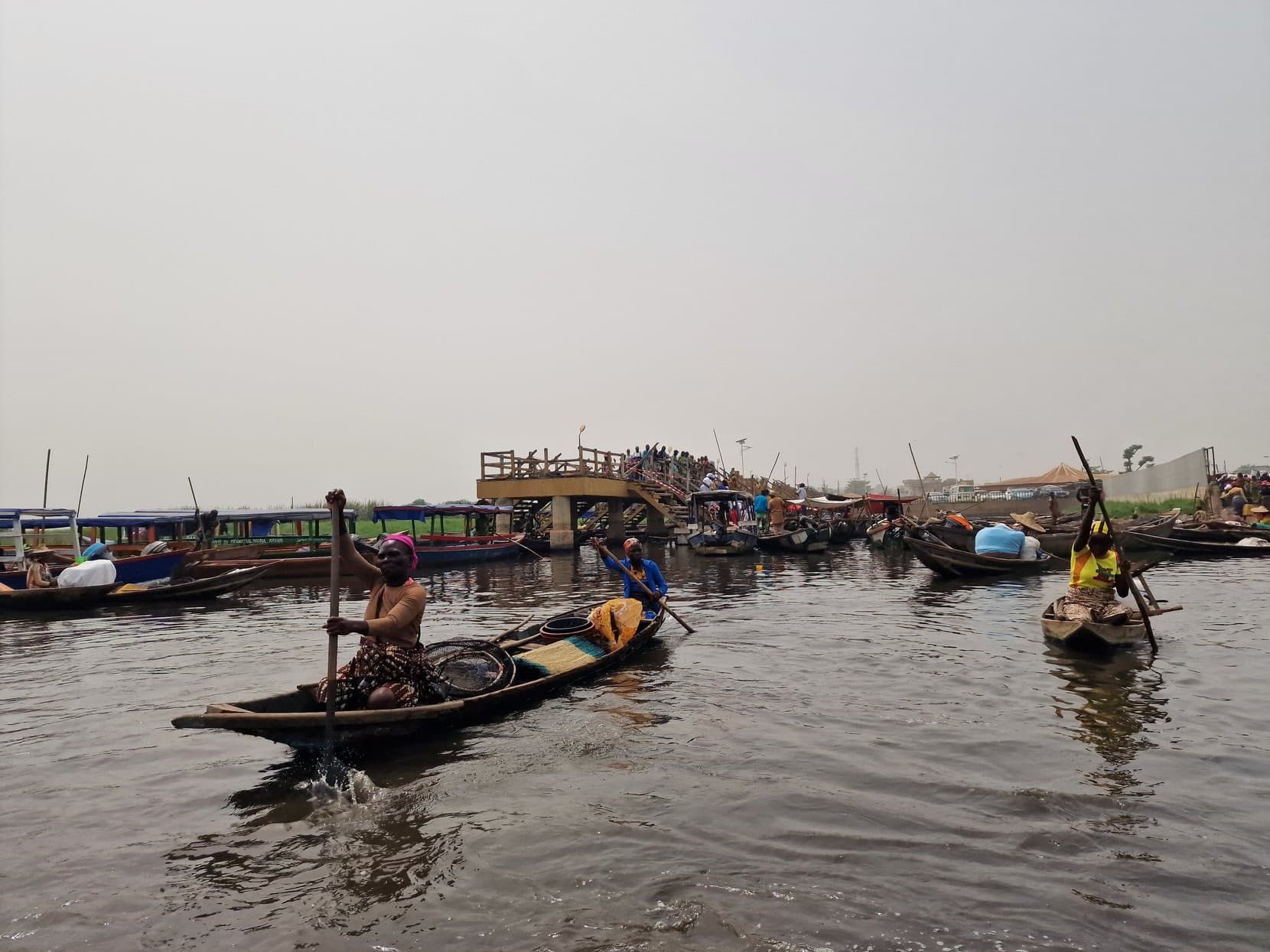
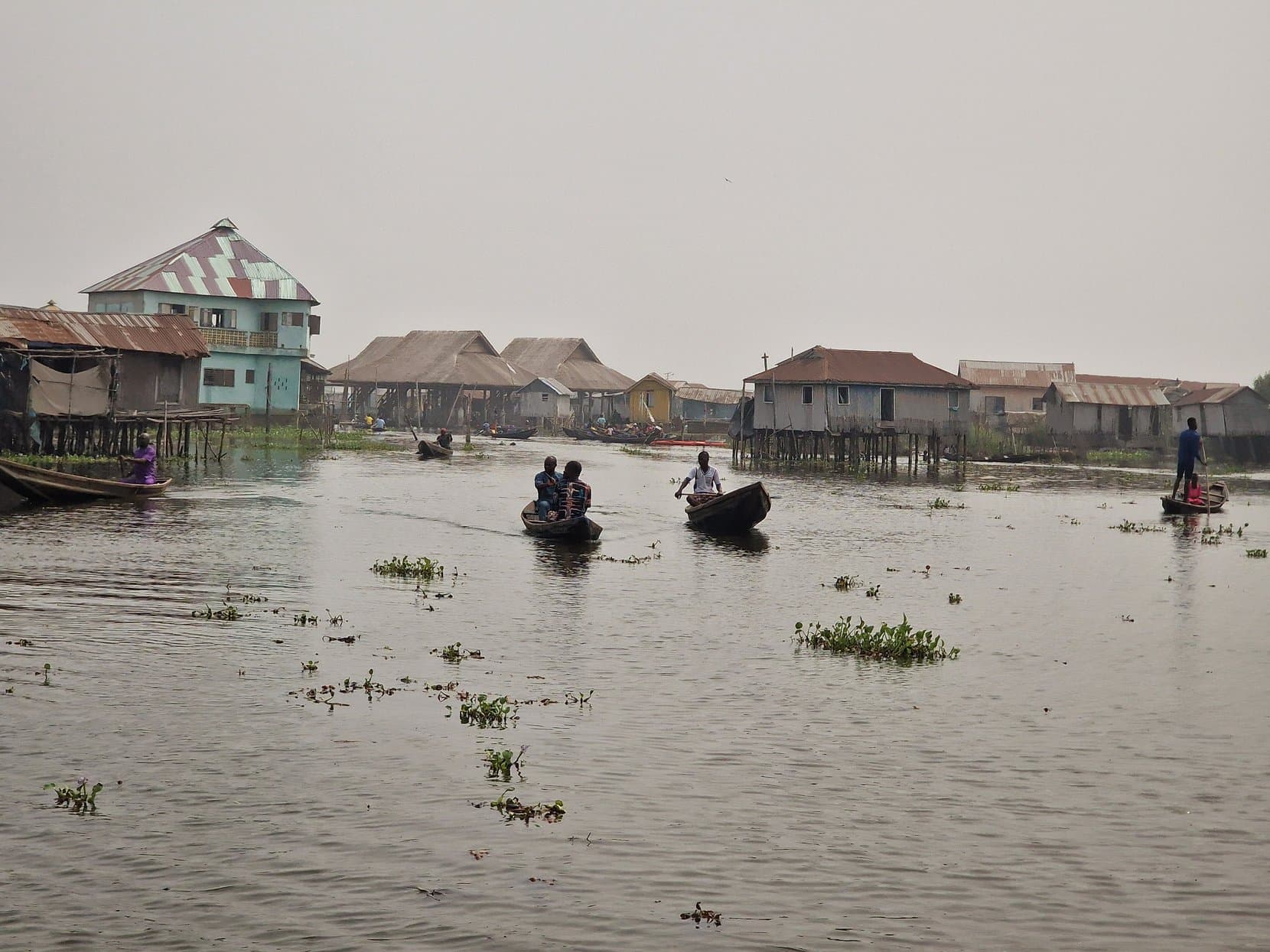
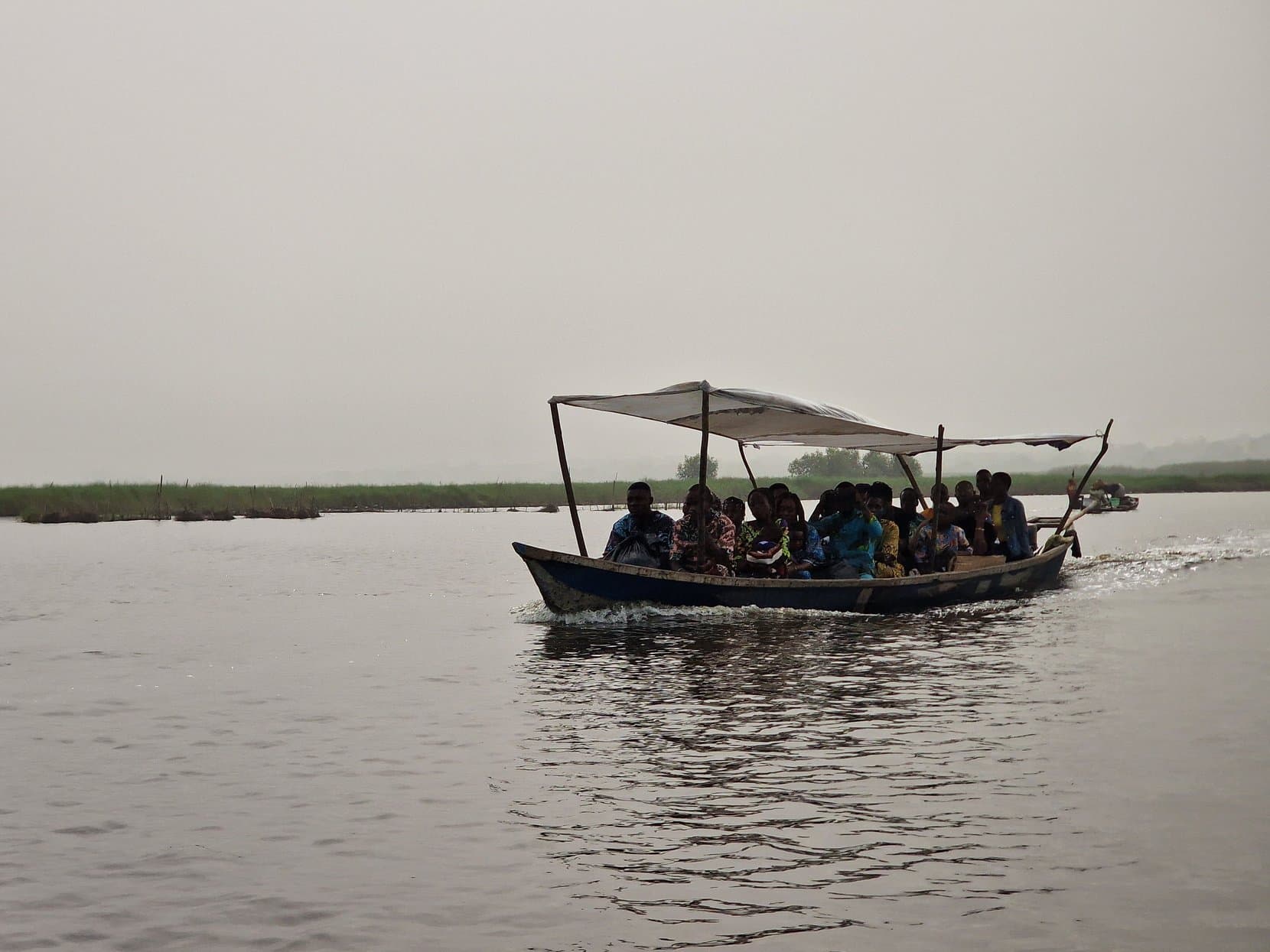
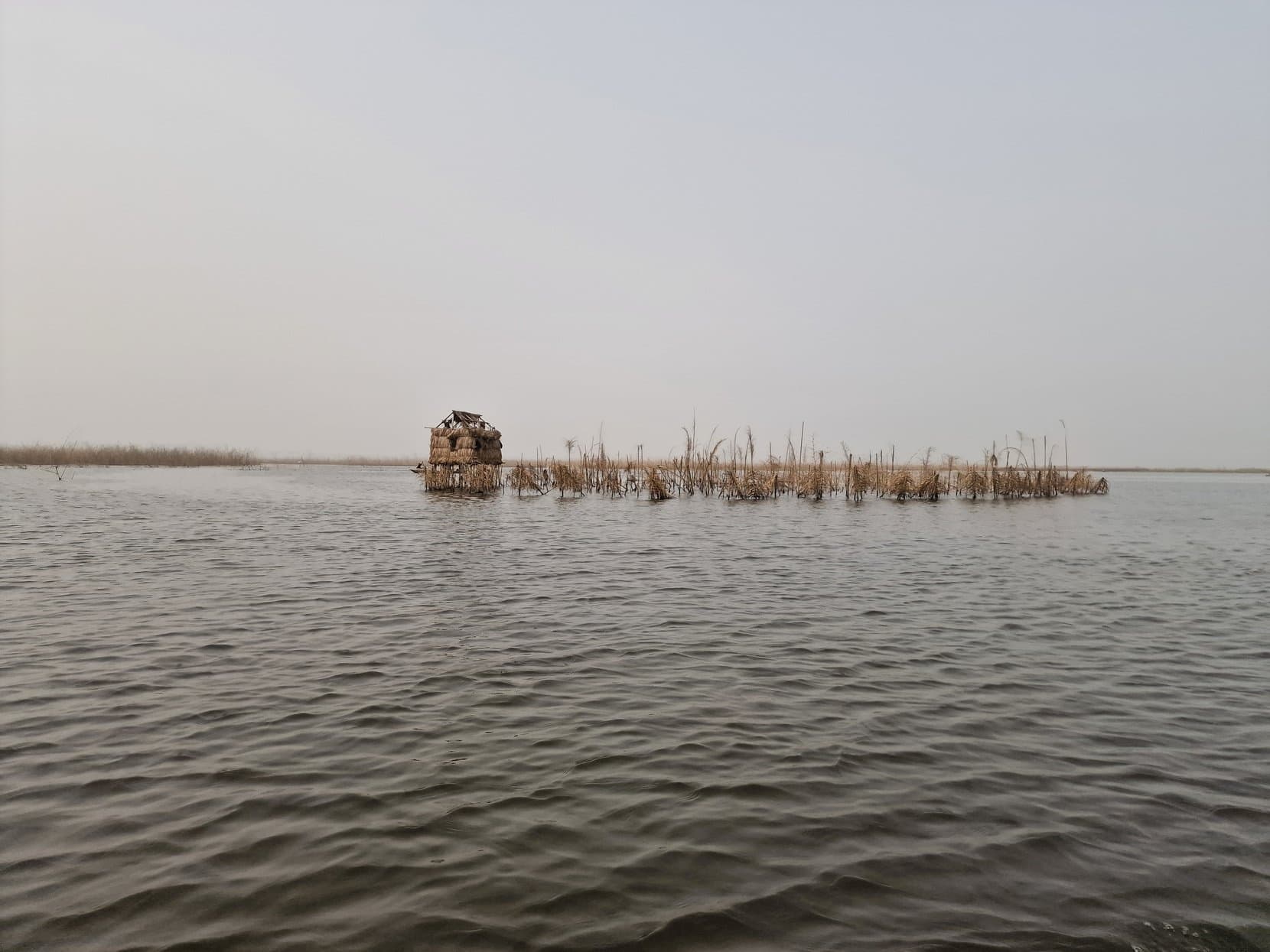
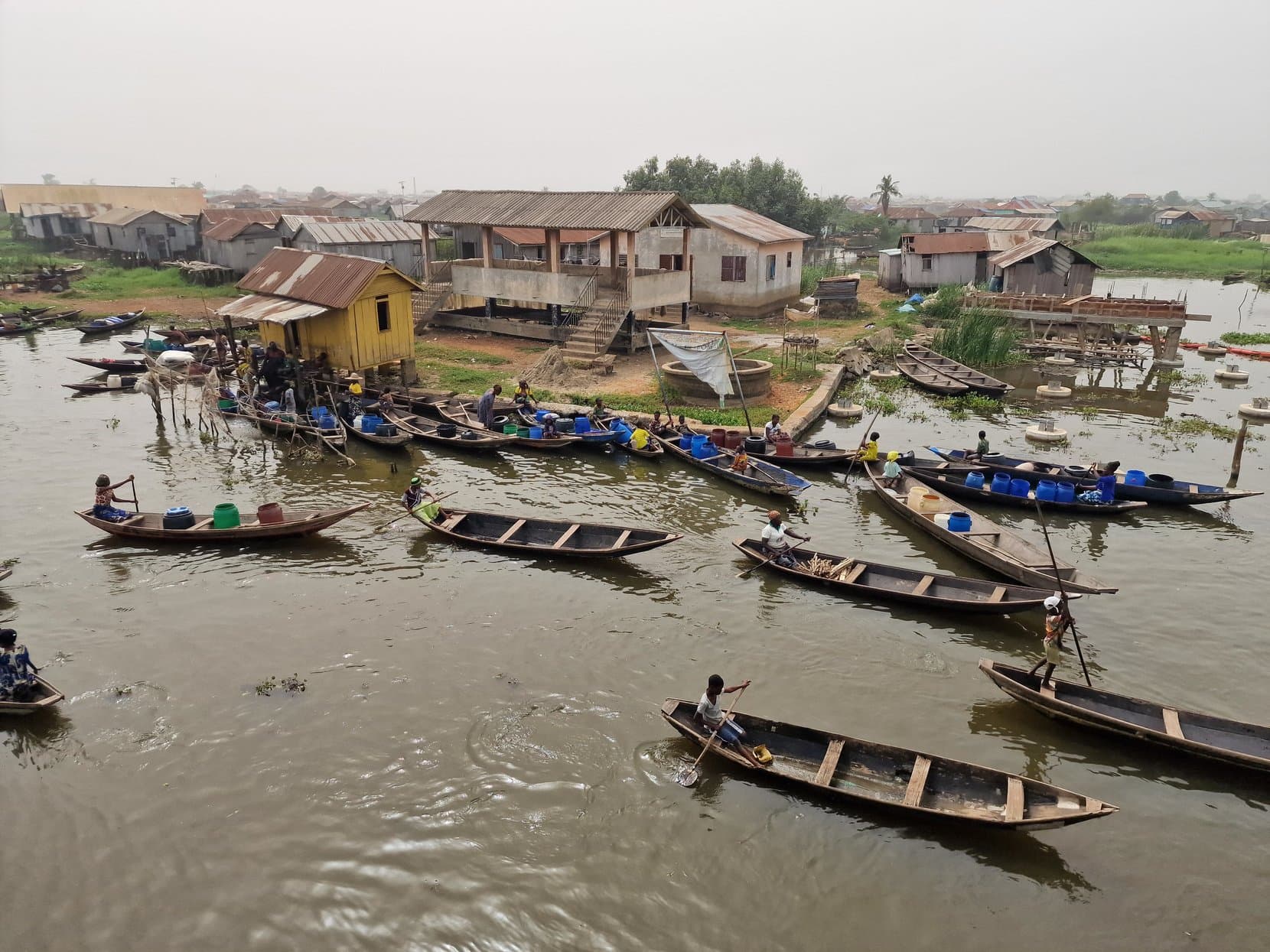
It is a town of around thirty-seven thousand people built on stilts over Lake Nokoué, north of Cotonou – the largest lake village in Africa, and the thing most people mean when they say the Venice of Africa. It is worth the trip, and the reason it exists is the reason it stays with you: generations ago people moved out onto the water to escape raiders supplying the Atlantic slave trade, who by custom would not follow them onto it, and the refuge became permanent. It is not a preserved site. There is a floating market where boats raft up to trade, a school, churches, a mosque, and children who paddle themselves to class alone from about the age of six. You see it from a boat, because there is no other way to see it.
Is Benin safe to visit?▾
Check your own government's current advice and let it outrank this page, but the southern part of the country – which is where essentially all visitors go – has generally been rated at the middle of the caution scale, Level 2 in US terms at the time of our trip. The important qualification is geographic: the far north, near the Burkina Faso and Niger borders, carries much stronger warnings because of the jihadist insurgency spilling south across the Sahel, and that includes the approaches to Pendjari. The coastal strip is a different proposition. Our own two days involved nothing more alarming than the traffic, which is genuinely the main risk here.
When is the best time to visit Benin?▾
November to February, the dry season, with the harmattan haze as the trade-off from December into February. Early January is the single best window if you want the Vodun festival, and the single worst if you want Ouidah quiet. The main rains fall from roughly May into July, with a drier gap in August and a shorter wet season in September and October; the south keeps working throughout, and it is the unpaved north where the season decides what is possible. We came at the start of February and the conditions were ideal – and three and a half weeks too late for the festival.
What is the Temple of Pythons in Ouidah?▾
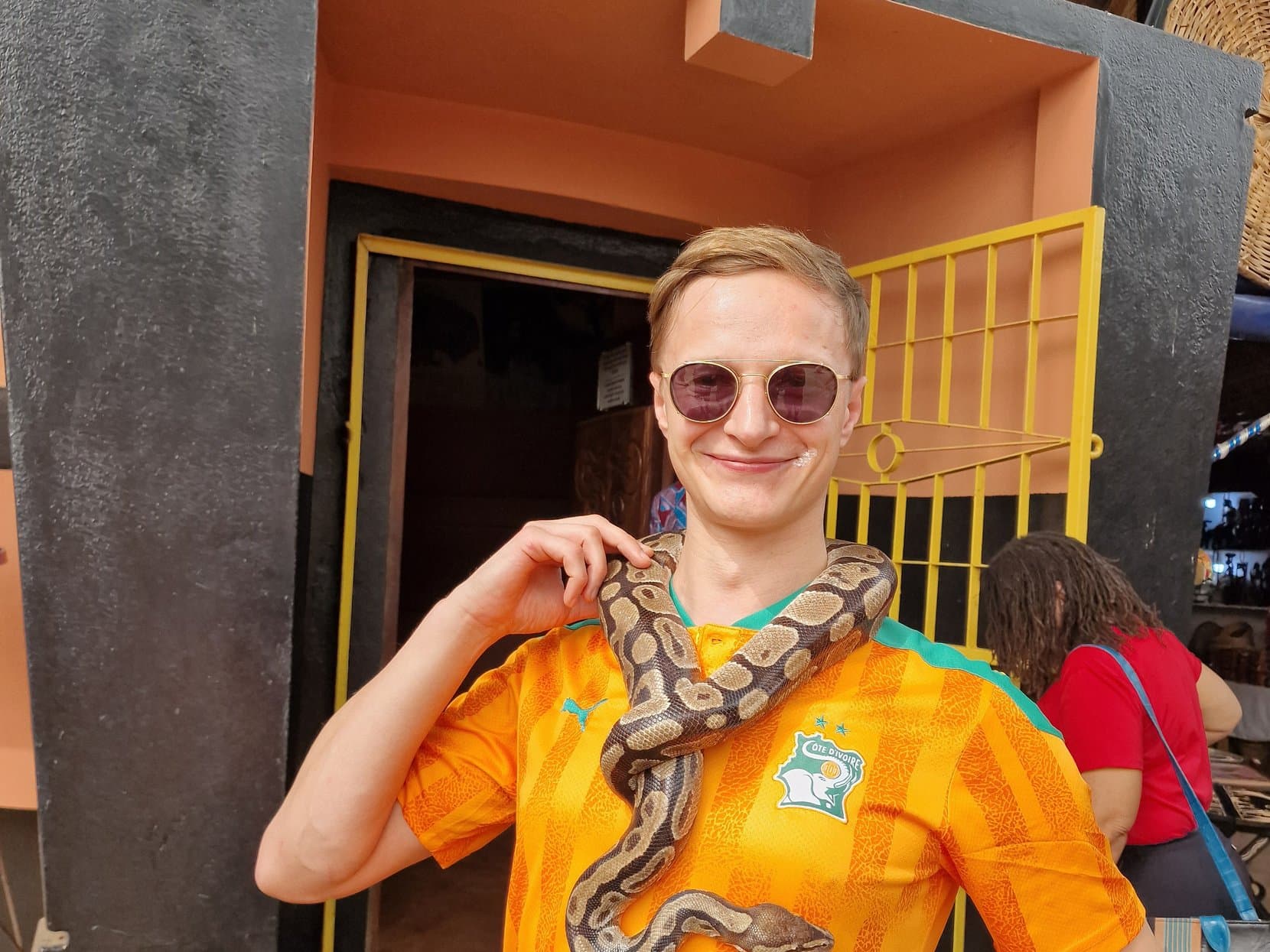
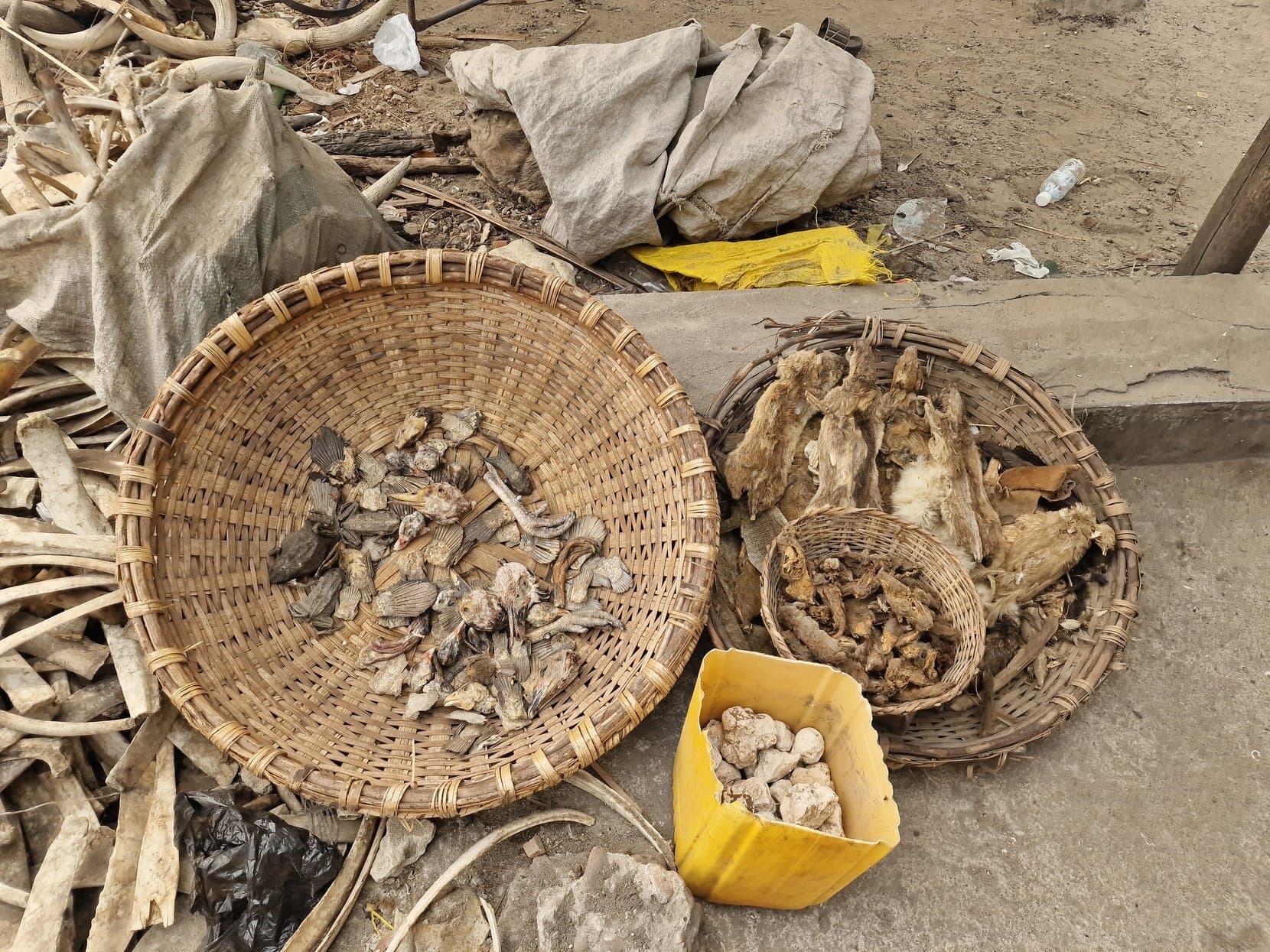
A working Vodun temple in the centre of Ouidah holding around sixty live royal pythons, which are sacred to Dan, one of the principal Vodun deities. The snakes are non-venomous and are handled; visitors are usually given the chance to have one placed around their neck, and they are periodically released into the town to feed and then collected again, which is a genuine local custom rather than a story told to tourists. What makes the place worth describing properly is where it sits: directly opposite the Basilica of the Immaculate Conception, across a normal street. Two religions facing each other at a road junction, both of them full.
What is the Door of No Return at Ouidah?▾
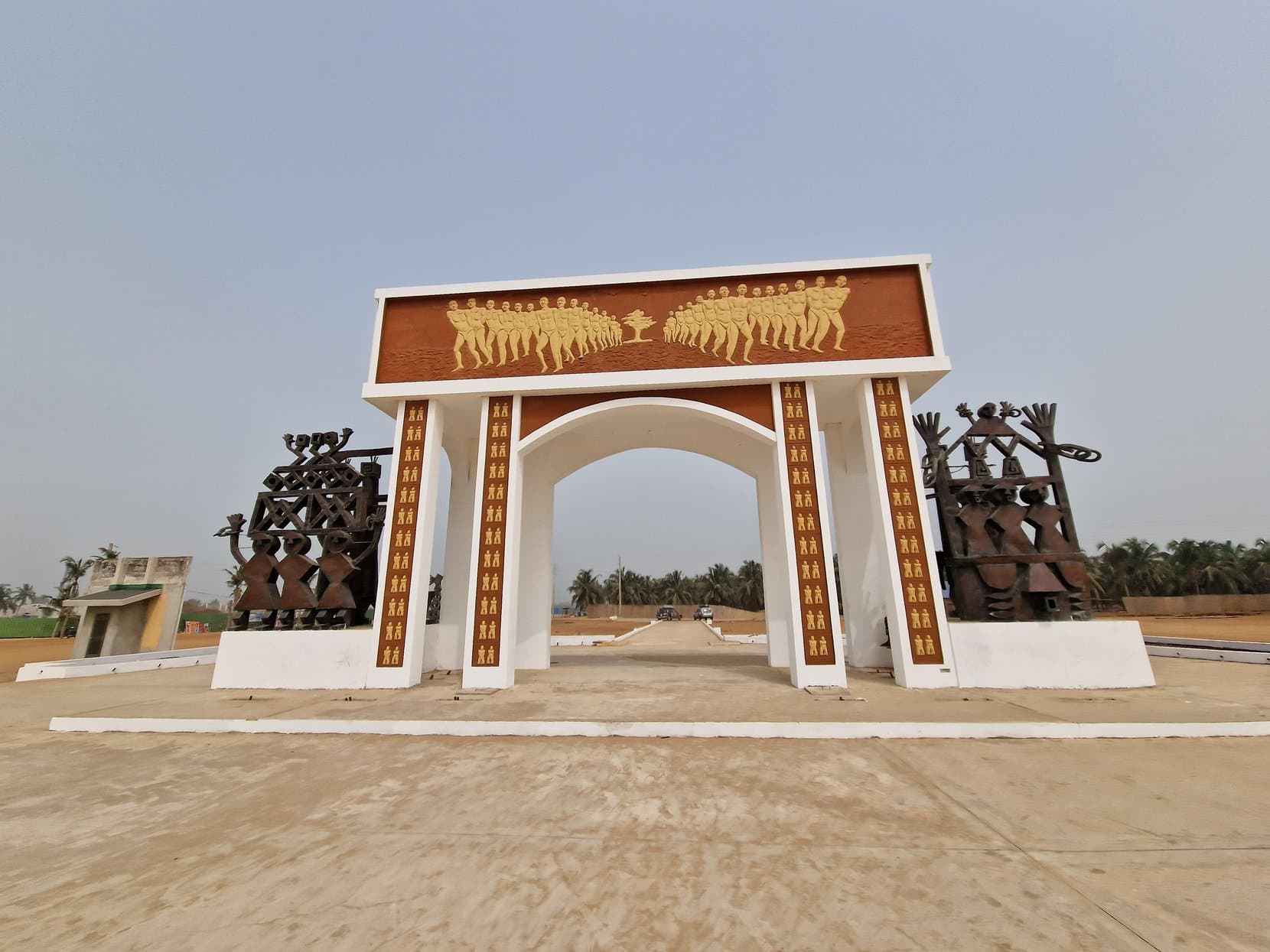
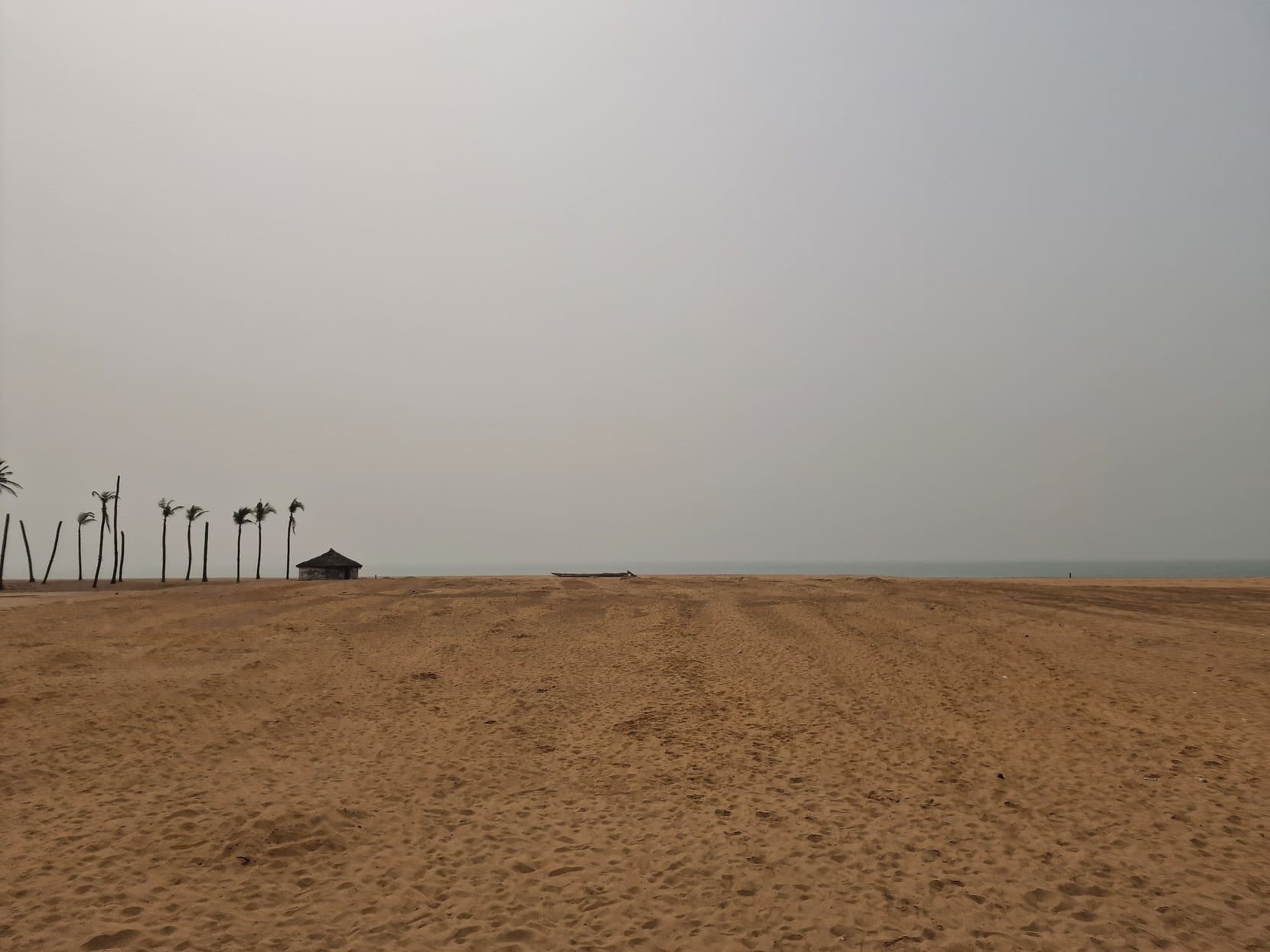
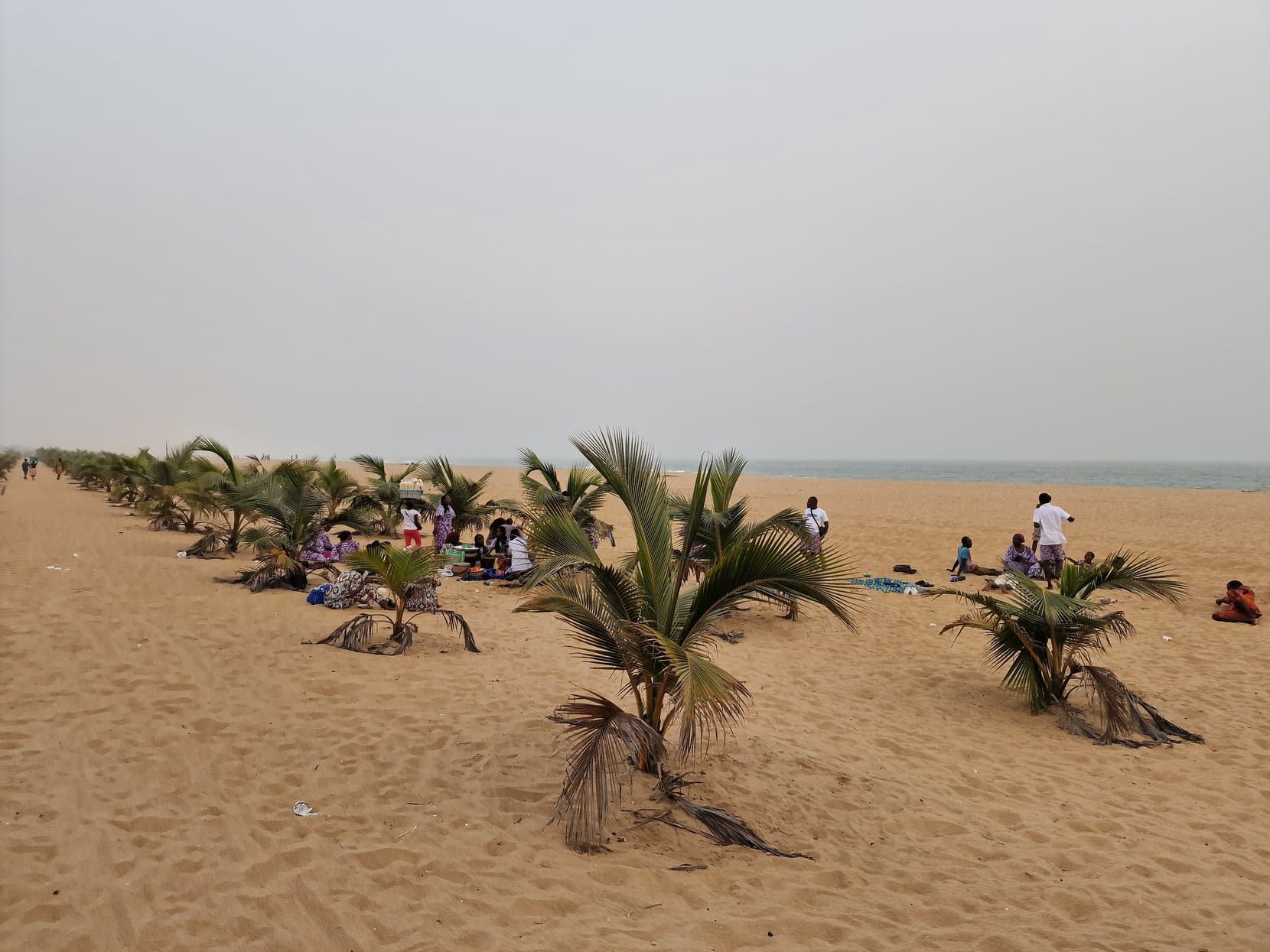
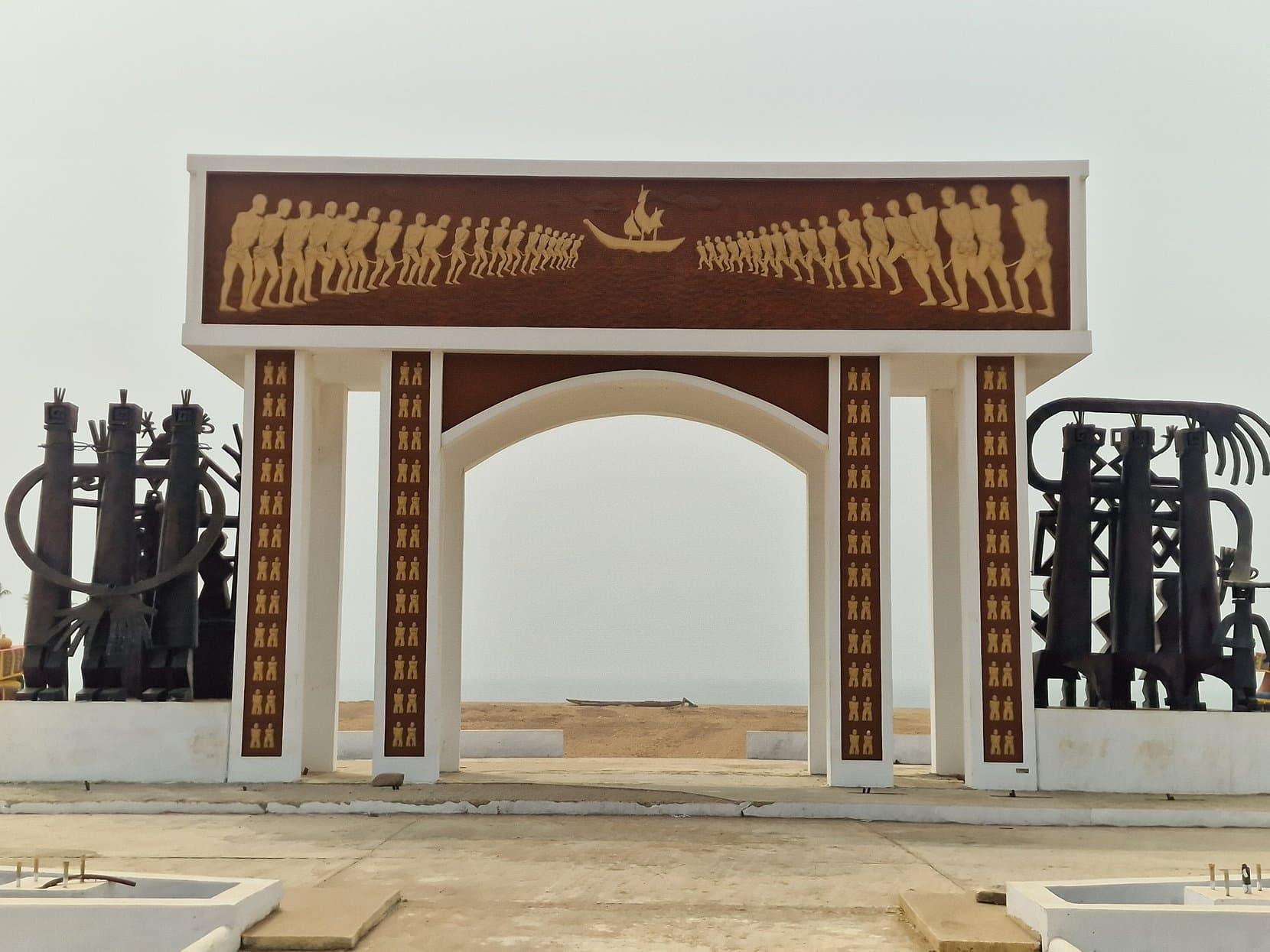
It is a memorial arch standing on the beach at Ouidah, at the end of a route of roughly four kilometres running from the square in town where enslaved people were auctioned down to the shore where they were put onto the ships. The route is marked by monuments and memorials along its length, and the arch at the end is deliberately placed on an empty stretch of sand with nothing beyond it but the Atlantic. Ouidah was one of the principal embarkation ports of the Atlantic slave trade, and roughly a million people are estimated to have been shipped from this coast. It is not a sight to be fitted between other things. Give it the morning.
Is Cotonou worth visiting?▾
For a day, and mainly as a way of seeing how the country actually works rather than for a list of sights. It is the economic capital rather than the official one – Porto-Novo holds that title – and it holds the port, the airport, and Dantokpa, one of the largest markets in West Africa. The landmark to know is the Amazon Monument, thirty metres of bronze raised in 2022 to the all-female regiment of the Kingdom of Dahomey. The best way to see it is the way everyone else does, on the back of a motorbike taxi, which is cheap, quick and gives you more of the city in an hour than a car does in a day.
Is Benin the same as Benin City in Nigeria?▾
No, and the confusion is entirely reasonable. Benin City is in southern Nigeria and was the capital of the historical Kingdom of Benin – the Edo kingdom the Benin Bronzes came from. The Republic of Benin is a separate country a few hundred kilometres west, which was called Dahomey until 1975 and took its new name from the Bight of Benin, the stretch of coast rather than the kingdom. The two are not related in any political sense. Confusingly, the Republic of Benin has its own royal history, the Kingdom of Dahomey, whose palaces at Abomey are UNESCO-listed and whose treasures were looted by France and have in recent years been returned.
Do you need a visa for Benin?▾
Most visitors do, and Benin runs one of the more painless systems in the region: an e-visa applied for entirely online before travel, issued within a few days. A yellow fever vaccination certificate is a genuine entry requirement rather than a formality. If you are bringing your own vehicle, the paperwork for the car is a separate and much larger problem than the paperwork for you – Benin is the point on this coast where the requirements tighten, and it is the reason our cars stopped here rather than carrying on east.
Is Benin expensive?▾
Getting there is the cost that matters: return flights from western Europe run about €600 booked ahead, most practically direct from Paris or Brussels. That is what reaching Benin costs, not what the trip costs. On the ground it is inexpensive by any European measure, and because the circuit is compact you are not spending much on distance either. The currency is the West African CFA franc, pegged to the euro, so prices are easy to read if you are coming from Europe. The one caveat is that the coast west of Cotonou is being developed fast and the upper end of the market is rising with it.
Can you combine Benin with Togo and Ghana?▾
Yes, and it is the natural shape of a trip here – Ghana, Togo and Benin run end to end along the Gulf of Guinea, and we drove the whole thing in two elderly estate cars. Coming from the west you cross from Togo onto the coast road and pass Ouidah on your way to Cotonou, which means the slave port arrives before the capital rather than as a day trip from it. As a circuit the three countries are about ten days: five for Ghana, one or two for Togo, two for Benin. Doing it by bus and shared taxi is straightforward; bringing a vehicle is a different order of difficulty, and the paperwork rather than the roads is what costs you.