TestedRoutes
GuidesDestinationsInspireAbout me

TestedRoutes Newsletter

Field-tested travel routes, in your inbox when they drop.

© 2026 TestedRoutes. All rights reserved.

ContactFAQLegalTermsPrivacyRefundsSecurityAffiliate disclosureSitemap

We independently review everything we recommend. When you buy through our links, we may earn a small commission at no extra cost to you. More on how this works.

ExploreGuidesDestinationsInspireAbout
Destinations›Guinea

North & West Africa · The Fouta Djallon

Guinea

Is it safe, is it worth it, and how long you need – for the country that holds the water tower of West Africa behind some of the hardest roads on the continent.

Paulius Pikelis

Tested by Paulius Pikelis · 140 countries

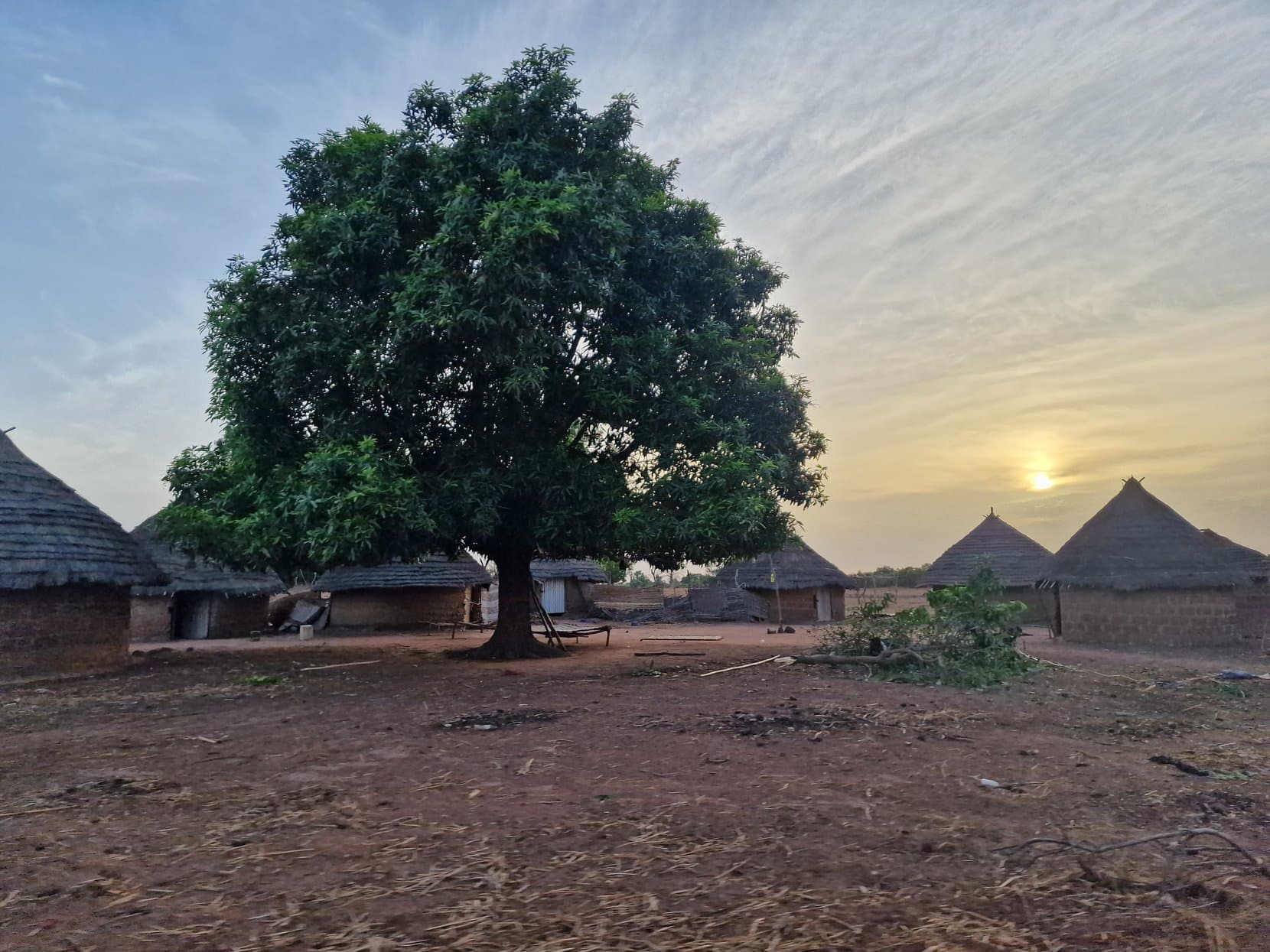
A large mango tree over a village of round thatched houses at sunrise near Koundara, Guinea

Is Guinea worth it, and what do you actually do there

Guinea is the country almost nobody means when they say Guinea, and the one with the most to look at. Behind a short, wet Atlantic coast the land climbs into the Fouta Djallon – a highland of sandstone plateaus and waterfalls that the World Bank calls the water tower of West Africa, because the Niger, the Senegal and the Gambia rivers all begin there. It is green, cool by the standards of this latitude, and visited by almost nobody.

What you actually do is drive, and then walk. The Fouta is a region of waterfall valleys, plateau edges and Peul villages where the reward is having it to yourself, and the price is the road that gets you there. There is no circuit, no tourist infrastructure to speak of, and no way to see the country quickly. Conakry, where every flight lands, is a working capital on a long thin peninsula – worth half a day rather than a trip.

The honest caveats are two. Guinea sits higher on every government's caution scale than its neighbours, and the roads are genuinely punishing – we crossed the country in four days at the end of a rally from Gibraltar, lost a car to them, and arrived in Conakry at three in the morning having seen the roads rather than the country. That is exactly why the answer further down this page is a week, not a long weekend.

When to go

Guinea has one of the sharper wet and dry splits in West Africa, and it decides everything – because what the rain affects is the road.

December to March

The season, and it is not a close call. Conakry records essentially no rain in January, February or March, the air is at its clearest, and every road on the map is at its best. If you have one window, this is it.

April to mid-May

Still dry, and getting hot and heavy as the monsoon builds. The country is browner than the photographs and the haze sits low, but the roads still behave and you will have the place largely to yourself.

Mid-May to mid-November

The rains, and they are not a formality – July and August can each drop more than a metre of rain on the capital. Everything green becomes spectacular and everything unpaved becomes a negotiation. We crossed at the very end of May, right on the turn, and even then the ground was already holding water.

What I would pick

January or February, for dry roads and clean light, accepting the harmattan haze that can flatten a long view. If you want the highlands green and the waterfalls actually running, take late October or early November instead – the rains have eased, the country is at its best, and you accept that a dirt road can still stop you.

How long to stay

Measure this trip in hours rather than kilometres and the answer becomes obvious quickly.

A stopover

Conakry and straight back out. A day gives you a market that seems never to end, the Grande Mosquée Fayçal, fishing boats on the shore and a great deal of traffic – but none of the reason you came to Guinea. Fine if a flight routing forces it. Not a trip.

A week

Enough to reach the Fouta Djallon and stay there – the plateaus, the waterfalls, the villages – and still get back to the coast without spending the week in a vehicle. This is the shape almost everyone should take, and it is the one we could not manage.

Two weeks

The Fouta Djallon properly, plus a second region: the forested southeast toward Nzérékoré, or the long run east to Kankan and the upper Niger. Distances here are measured in hours rather than kilometres, and two weeks is where the country stops fighting you.

What we actually had

Four days, driving, at the end of a rally from Gibraltar. We crossed a rope border, lost a car, and reached Conakry at three in the morning. It was enough to learn the roads and nowhere near enough to see the country – which is exactly why the honest answer above is a week.

The regions

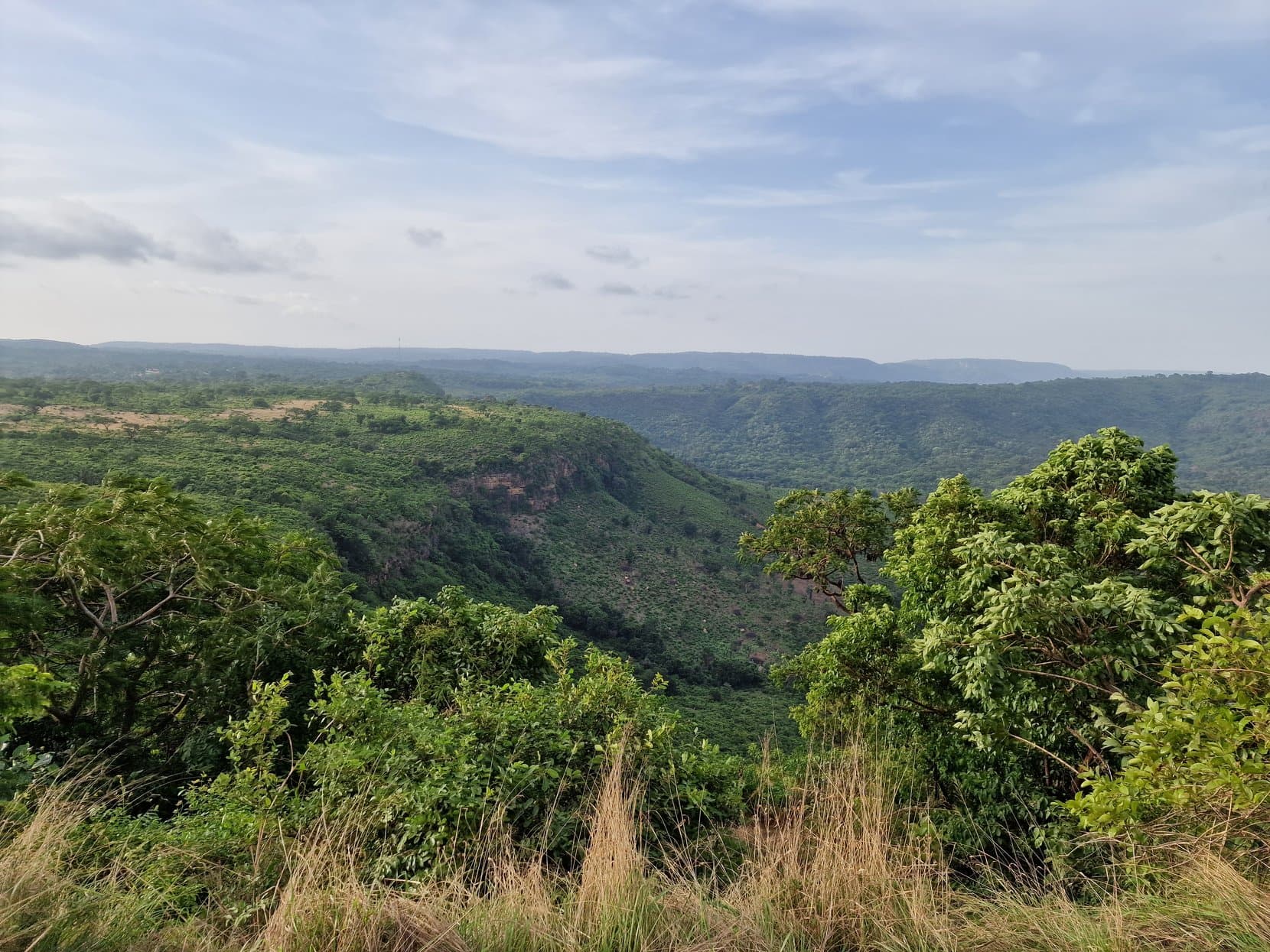
Wide green valleys and plateau edges of the Fouta Djallon seen from the roadside, Guinea

The Fouta Djallon

The highland heart of the country, and the reason to come: sandstone plateaus between roughly 500 and 1,500 metres, cut by gorges and waterfalls, noticeably cooler and greener than the coast. The World Bank calls it the water tower of West Africa, because the Niger, the Senegal and the Gambia rivers all rise here. It is the part of Guinea that rewards a week and punishes a weekend.

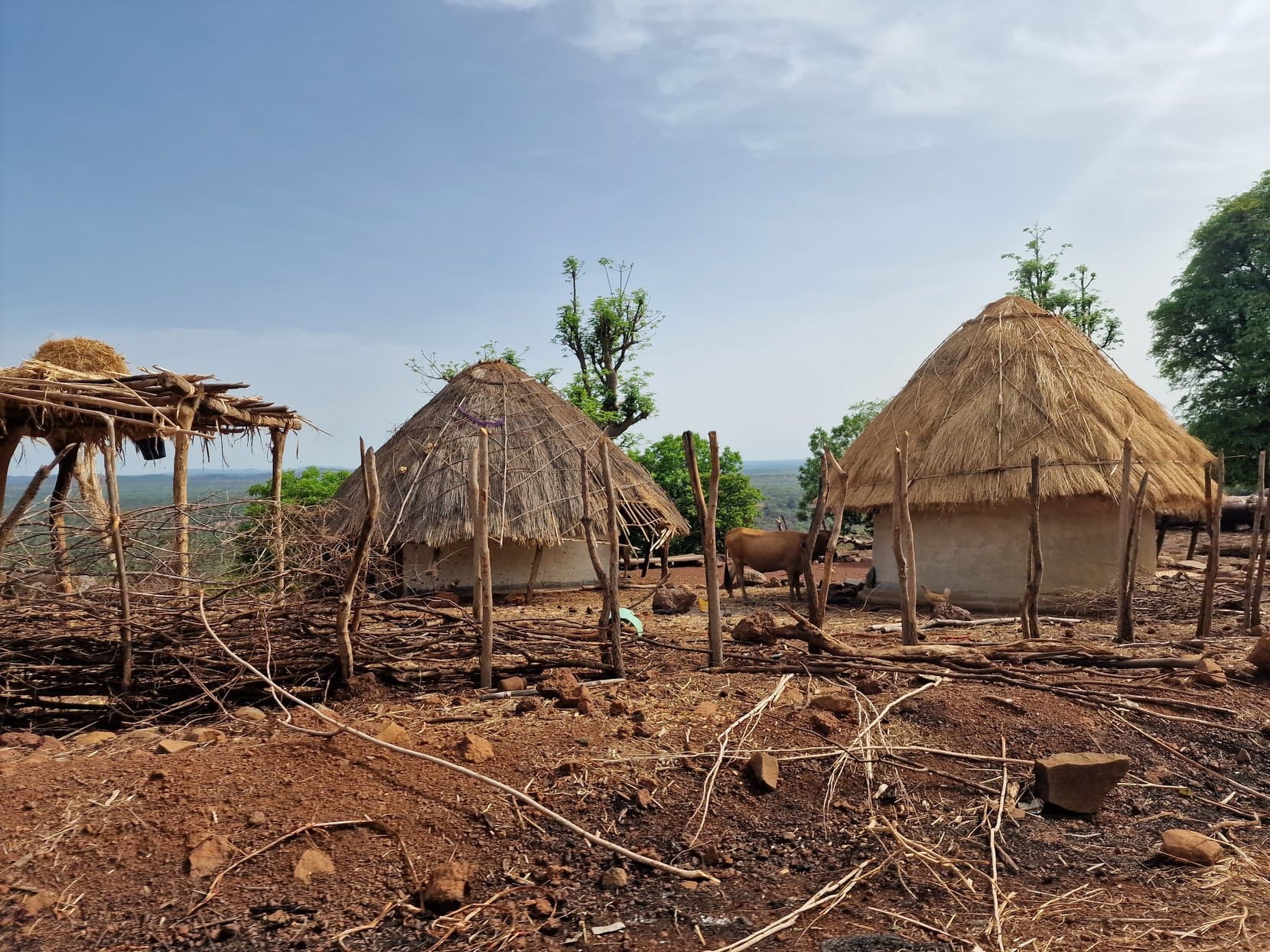
Thatched houses on a cleared ridge with hills beyond, Fouta Djallon foothills, Guinea

The northern borderlands

The country you enter through if you come overland from Guinea-Bissau or Senegal: Koundara, the long red laterite roads, and villages of round thatched houses under enormous shade trees. Brick and cement thin out, mud and straw take over, and the traffic becomes motorbikes. Almost nobody visits this corner deliberately, which is most of its charm.

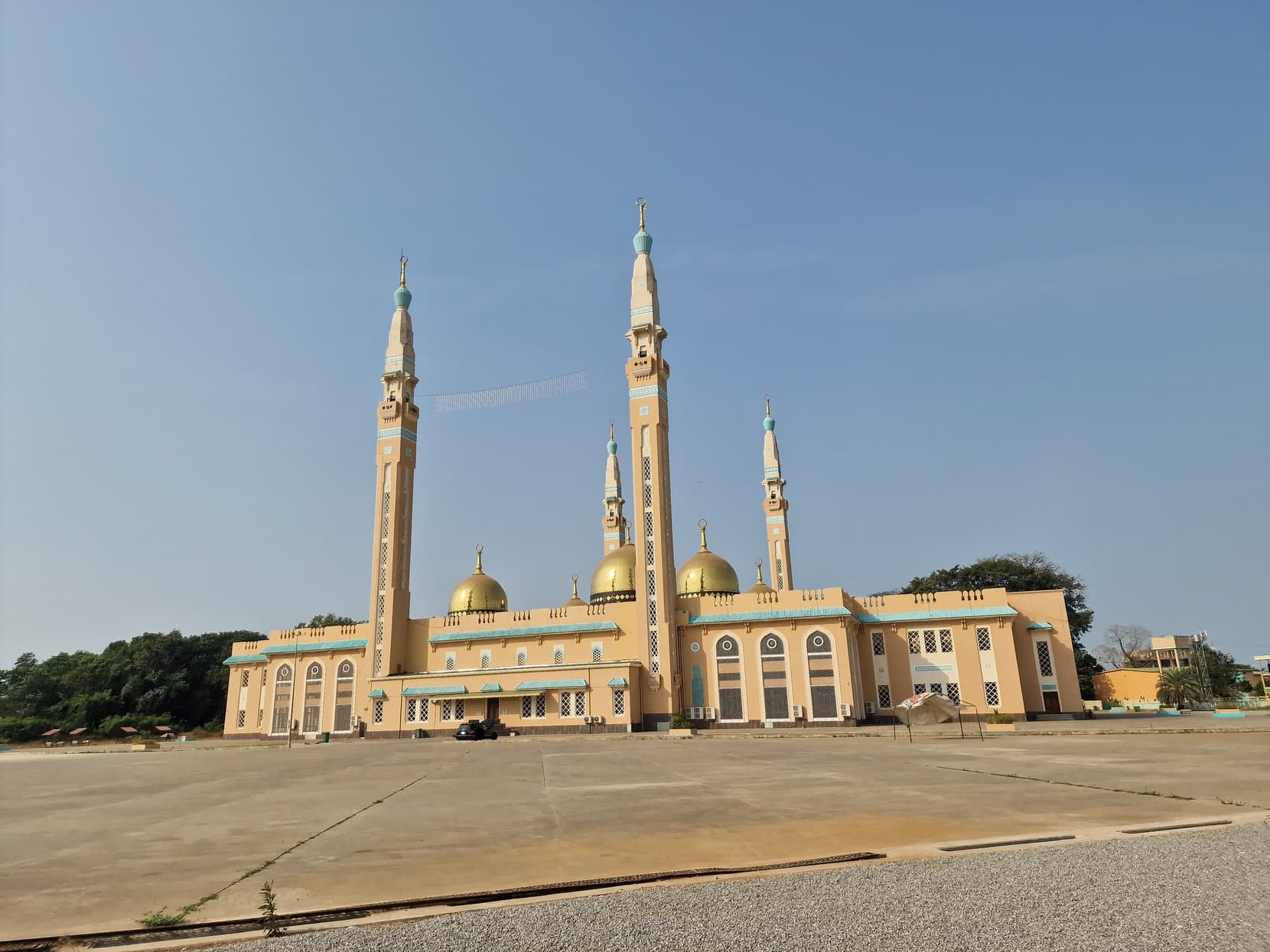
The four minarets and golden domes of the Grande Mosquee Faycal above its empty forecourt, Conakry

Conakry and the coast

The capital sits on a long thin peninsula pushed out into the Atlantic, which makes it one of the more geographically odd cities in West Africa and does nothing at all for its traffic. It is loud, wet in season, and not the reason you come – but what stays with you is that the whole place behaves like one continuous market. Madina is the famous one; the stalls simply never stop, out of the city and along the road as far as Coyah. Add the Grande Mosquée Fayçal, fishing boats pulled up on the shore, and the Atlantic at the end of the street.

Two more regions exist that we have no business describing: the forested southeast around Nzérékoré, where Guinea meets Liberia and Côte d'Ivoire, and the drier savannah east toward Kankan on the upper Niger. Both are long journeys from anywhere, and both are why two weeks beats one.

From the trip

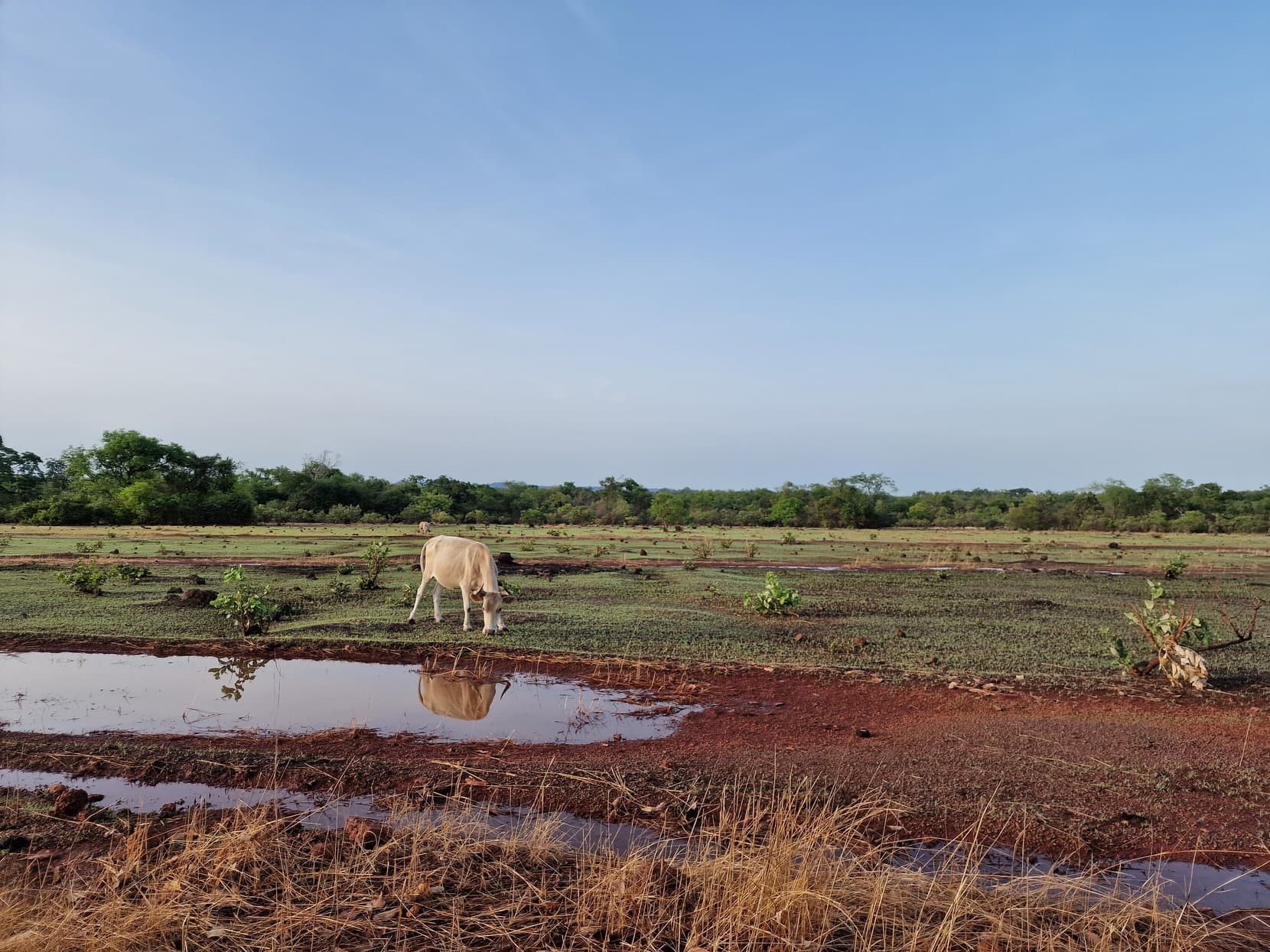
A white cow grazing beside standing water on green flats, northern Guinea
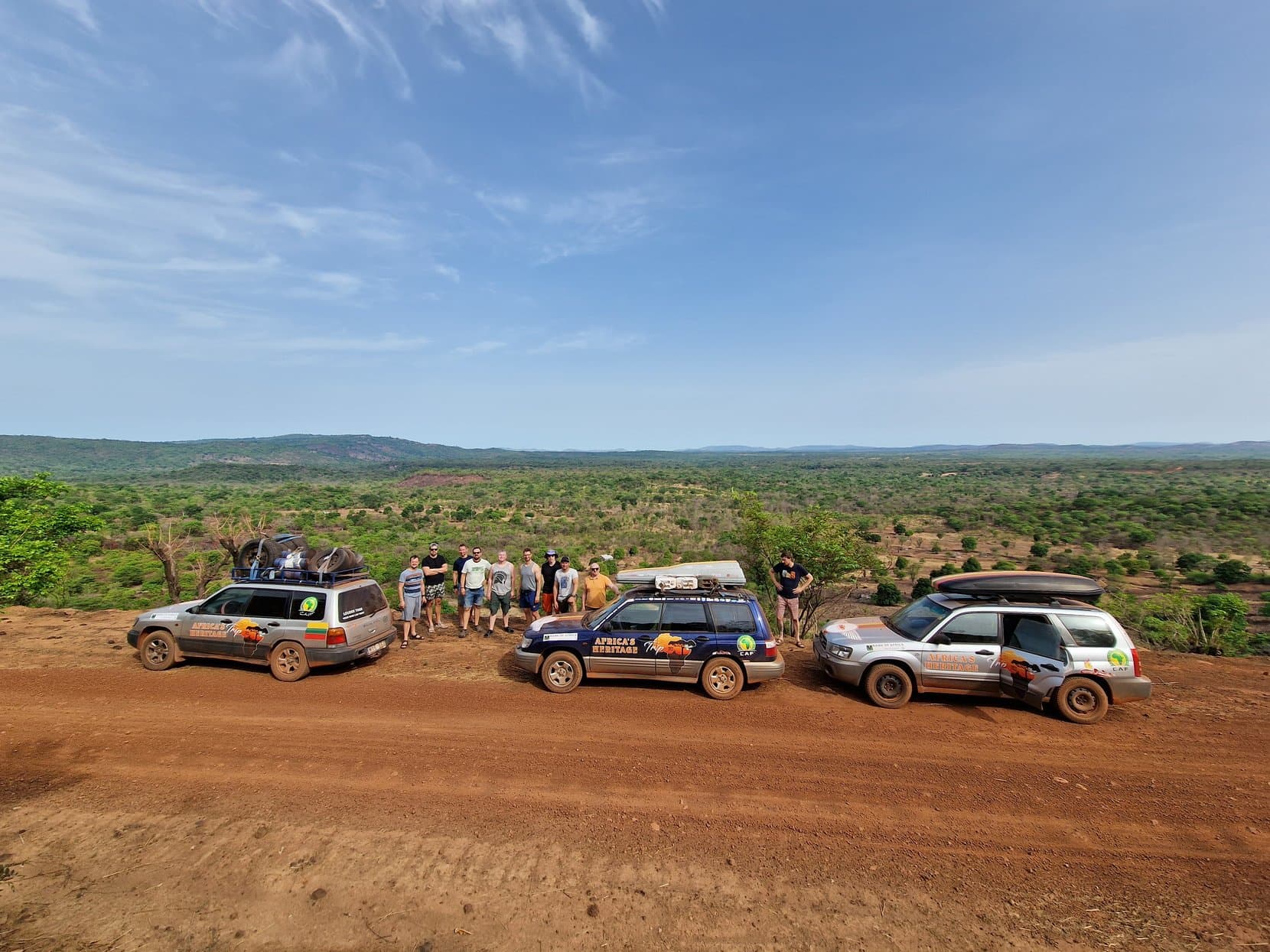
Three rally cars parked on a red dirt road with a long escarpment behind, Guinea
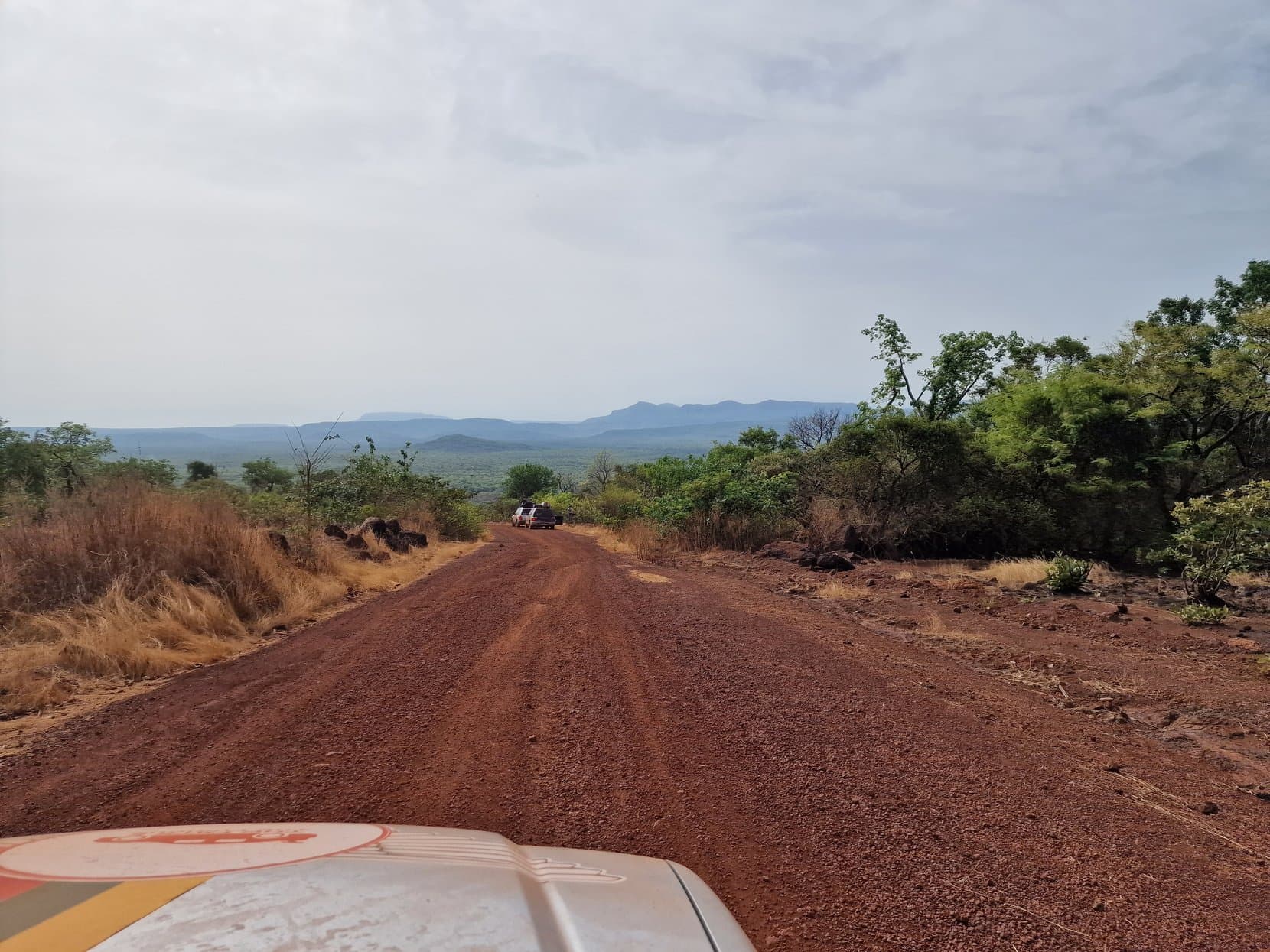
A red laterite road running downhill toward the blue hills of the Fouta Djallon, Guinea
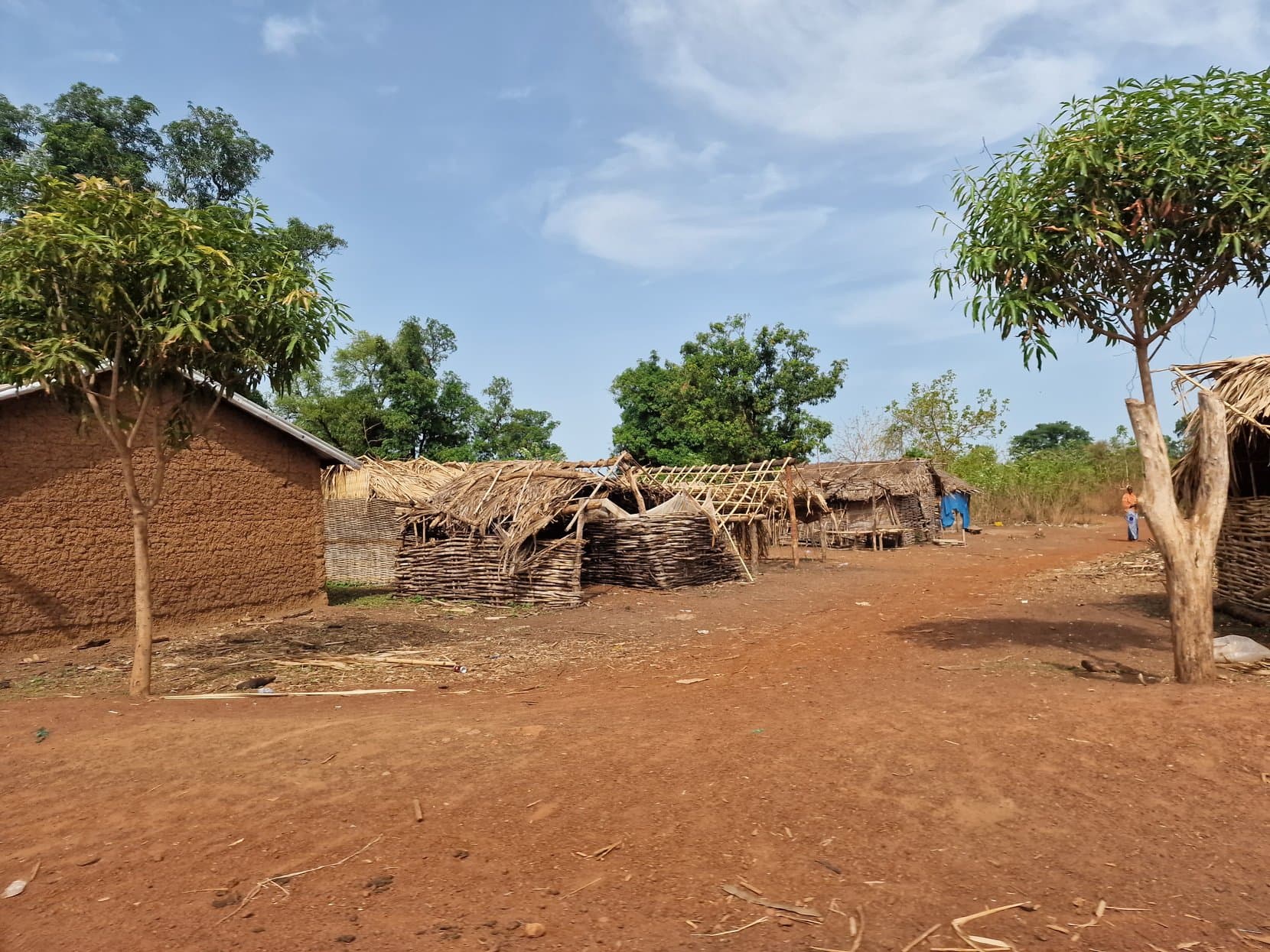
Mud-brick houses with thatched roofs and a mango tree in a village, Guinea
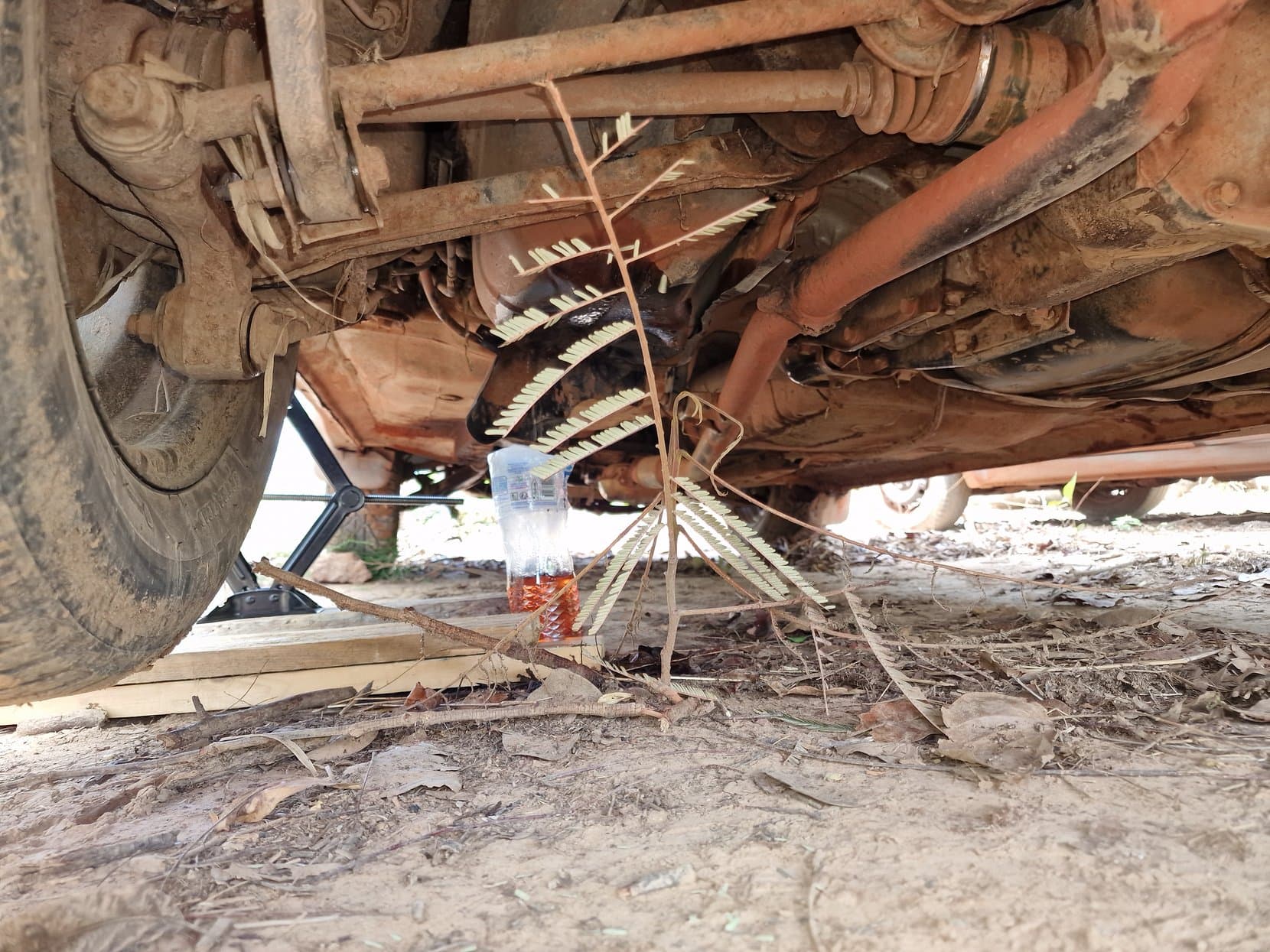
The underside of a jacked-up car showing the fuel tank and a bottle catching fuel
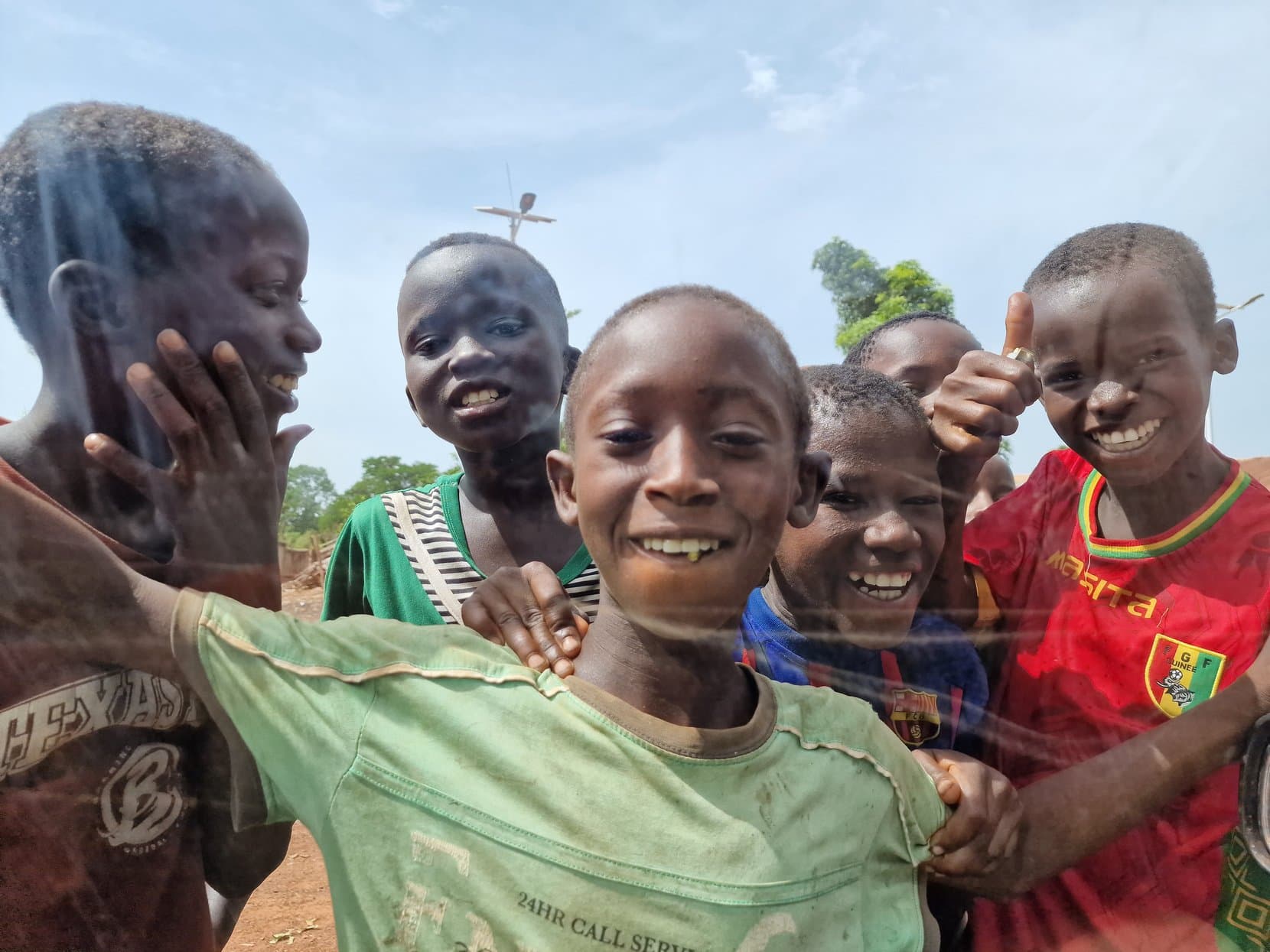
Village children smiling and crowding towards the camera, Guinea
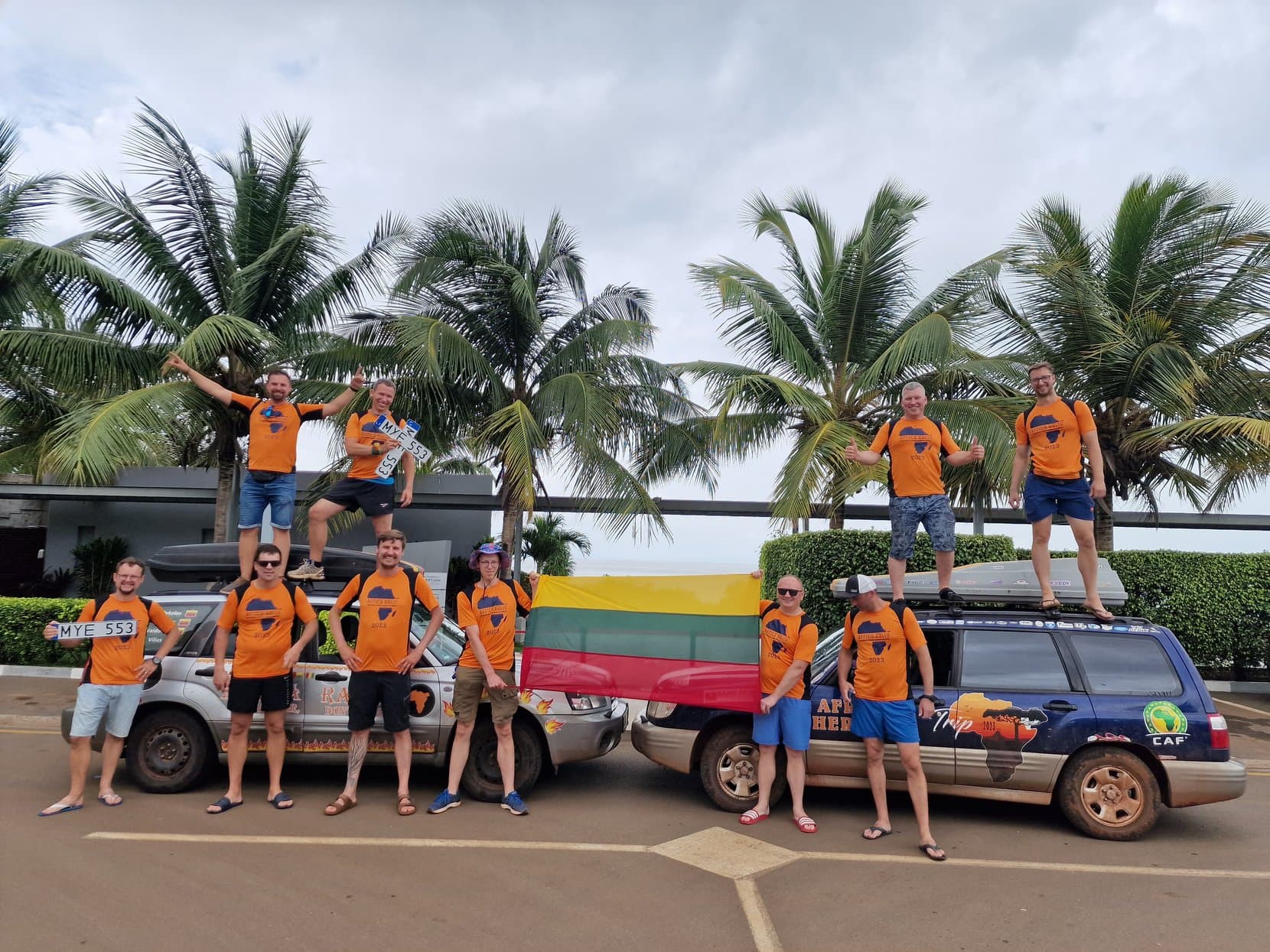
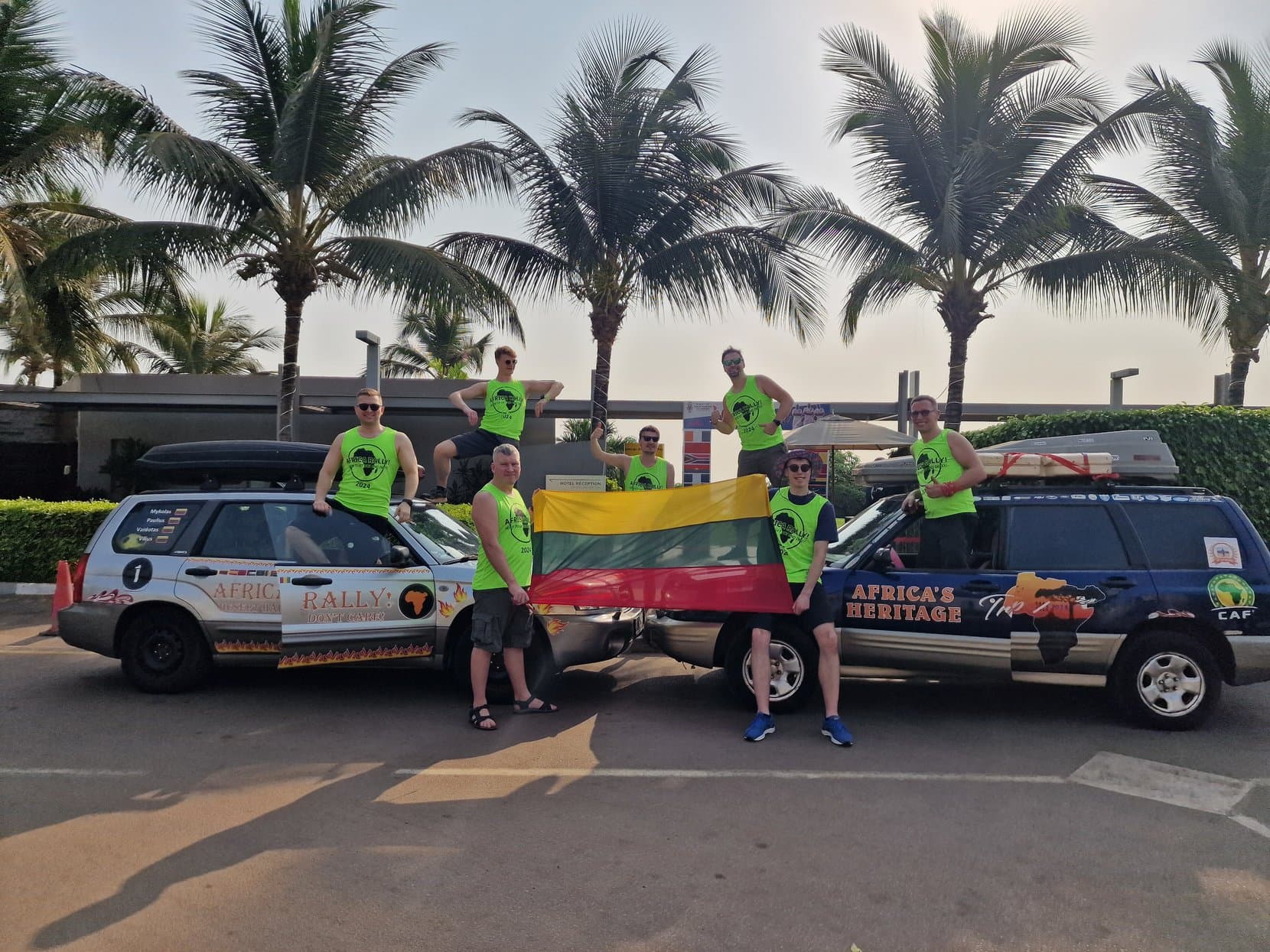
The rally crew and two Subarus with a Lithuanian flag under palms in Conakry, Guinea
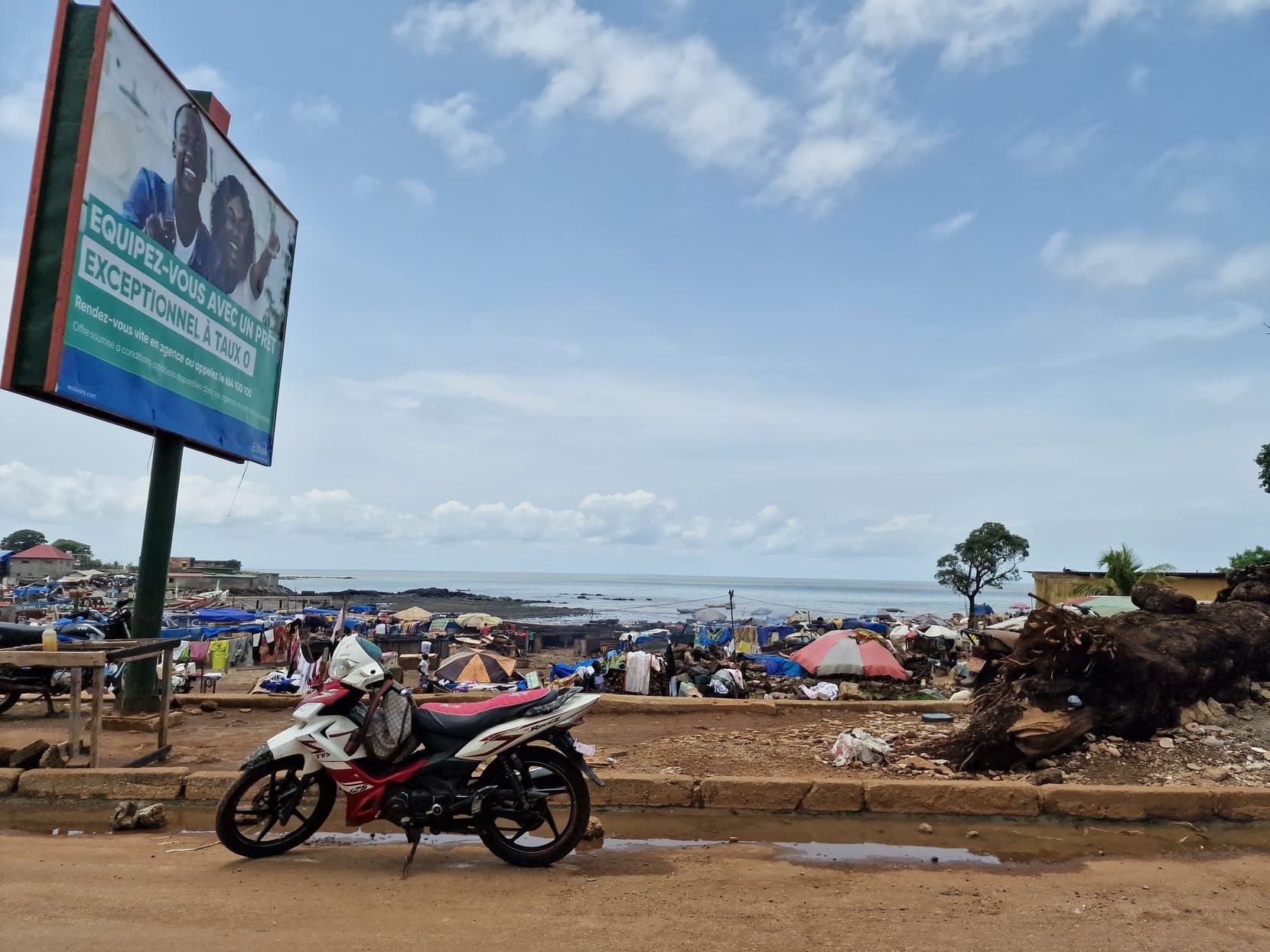
Stalls, low houses and the Atlantic along the shore in Conakry, Guinea
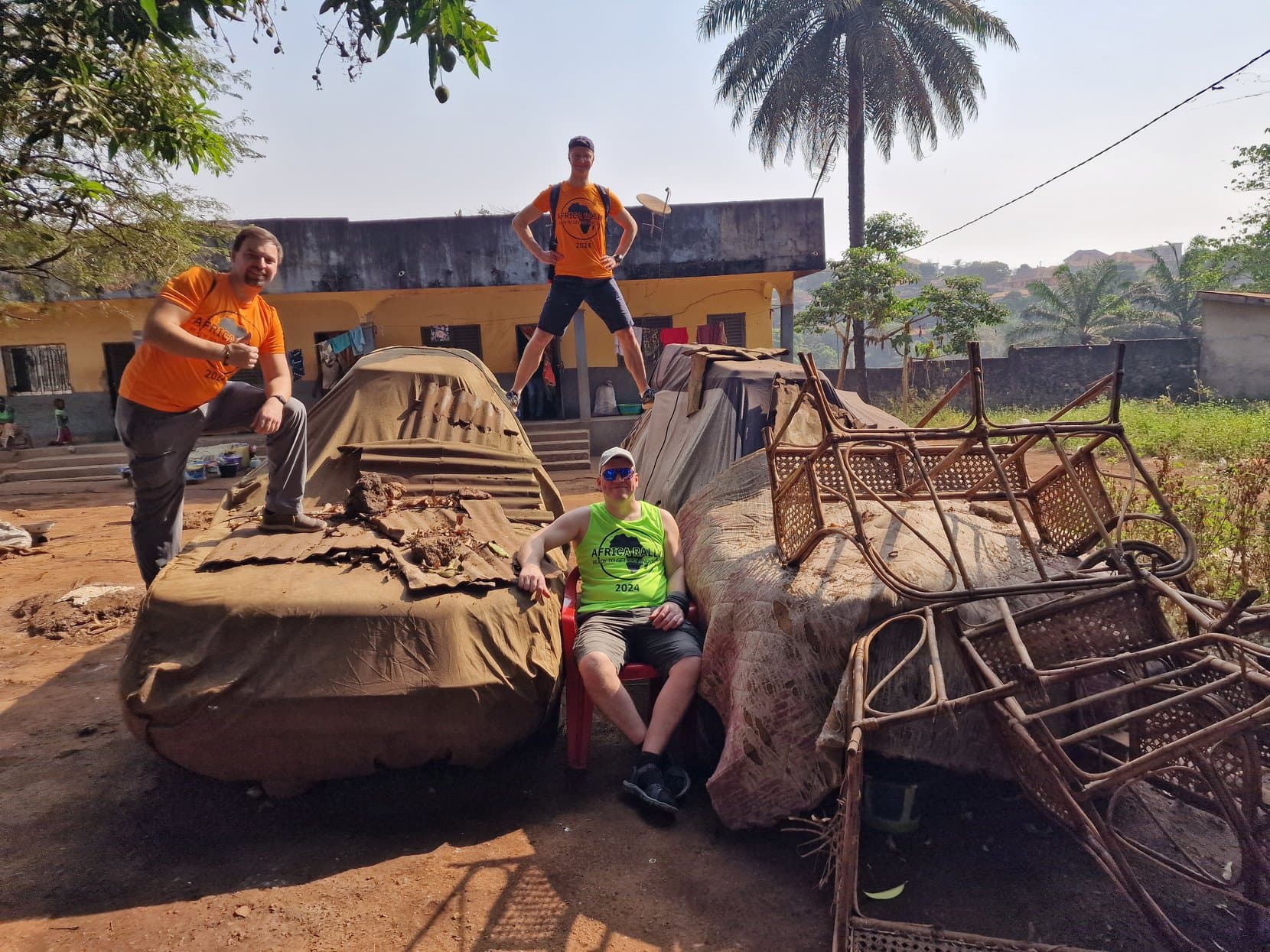
Two cars under dusty tarpaulins in a walled yard behind a house, Conakry, Guinea
The 2024 rally crew with a Lithuanian flag beside two Subarus under palms, Conakry
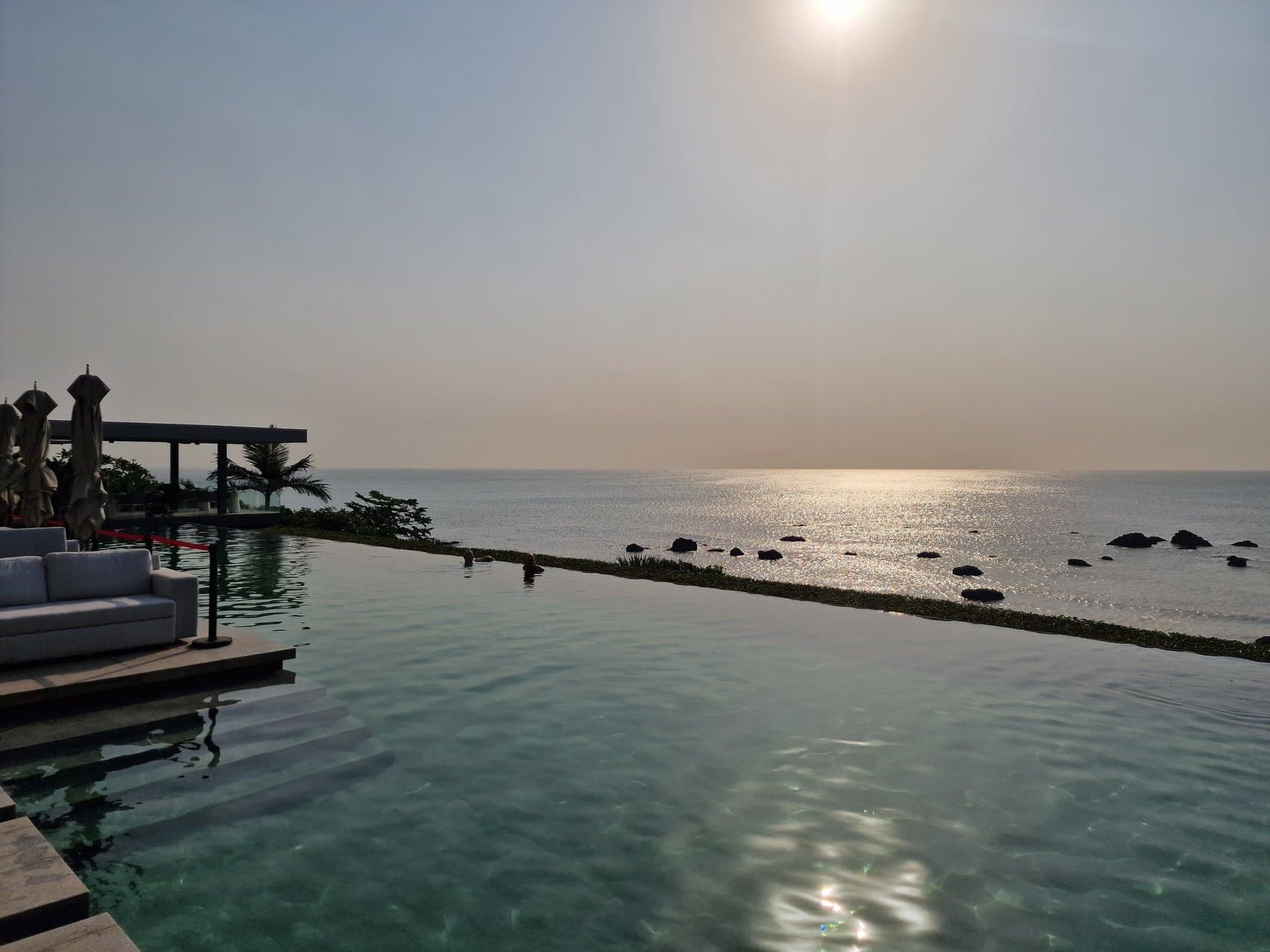
An infinity pool above the Atlantic at dusk in Conakry, Guinea
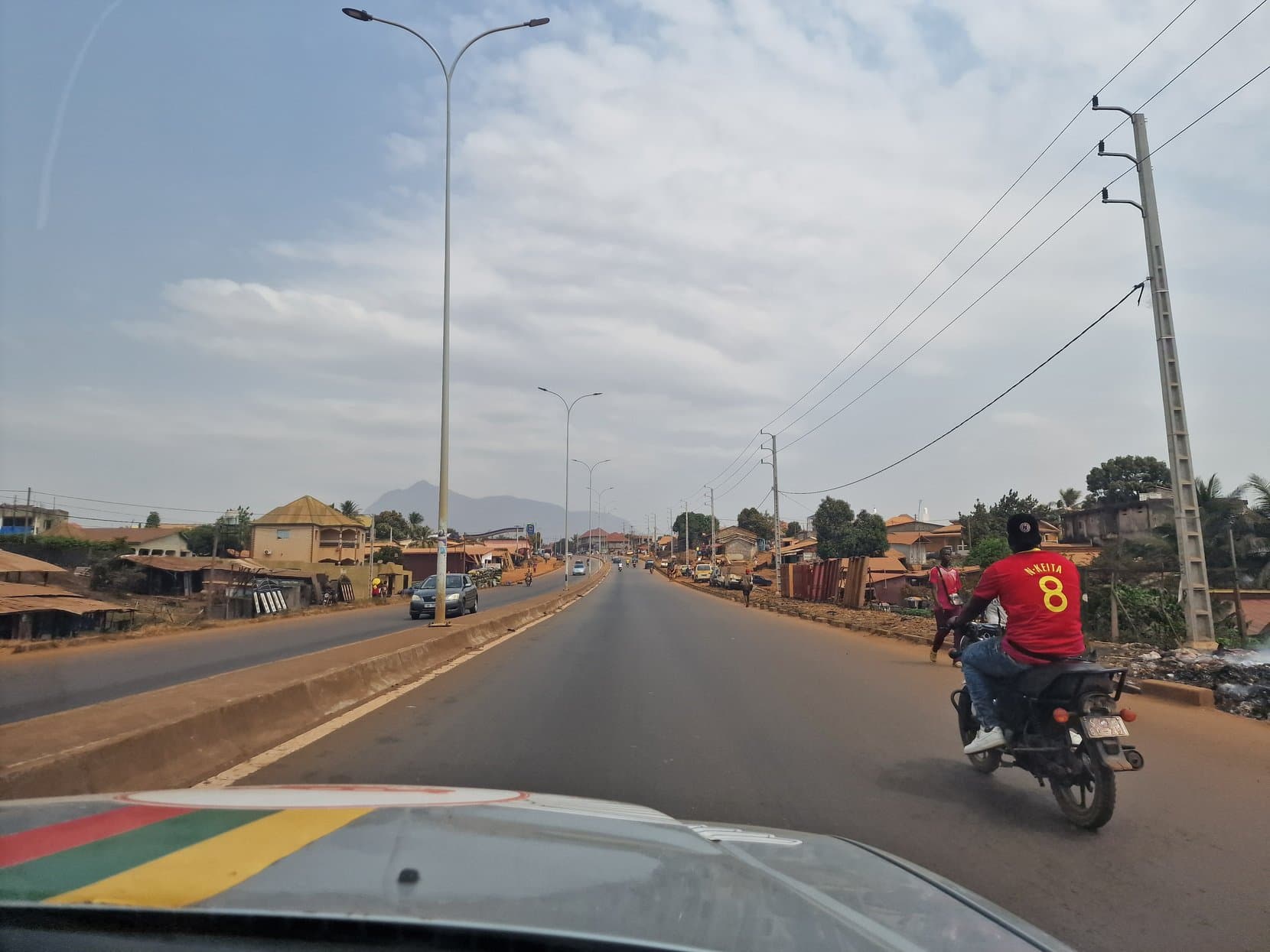
A motorbike rider in a Guinea football shirt on the divided highway out of Conakry
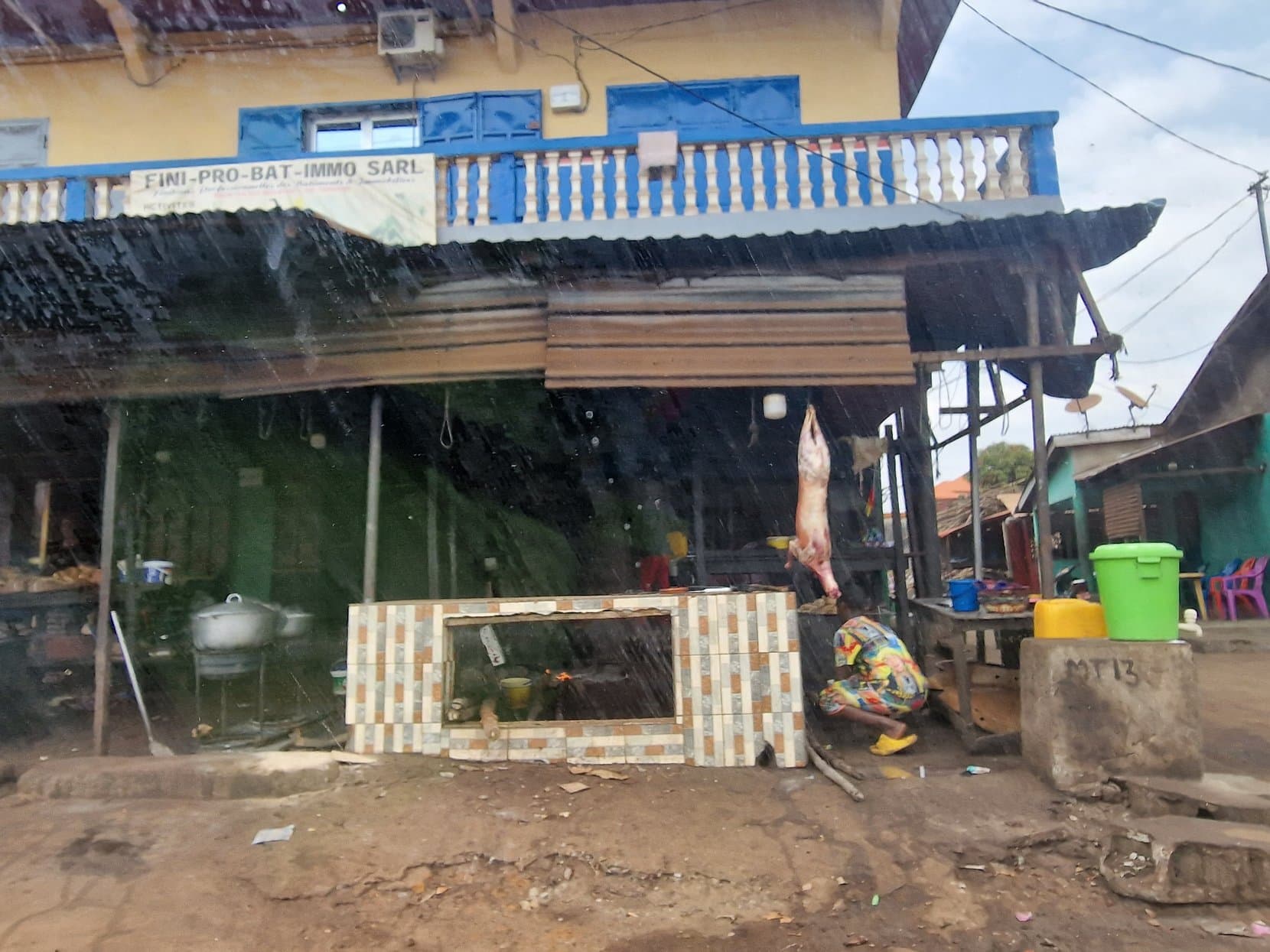
A roadside kitchen and butcher under an awning on the highway east of Conakry, Guinea
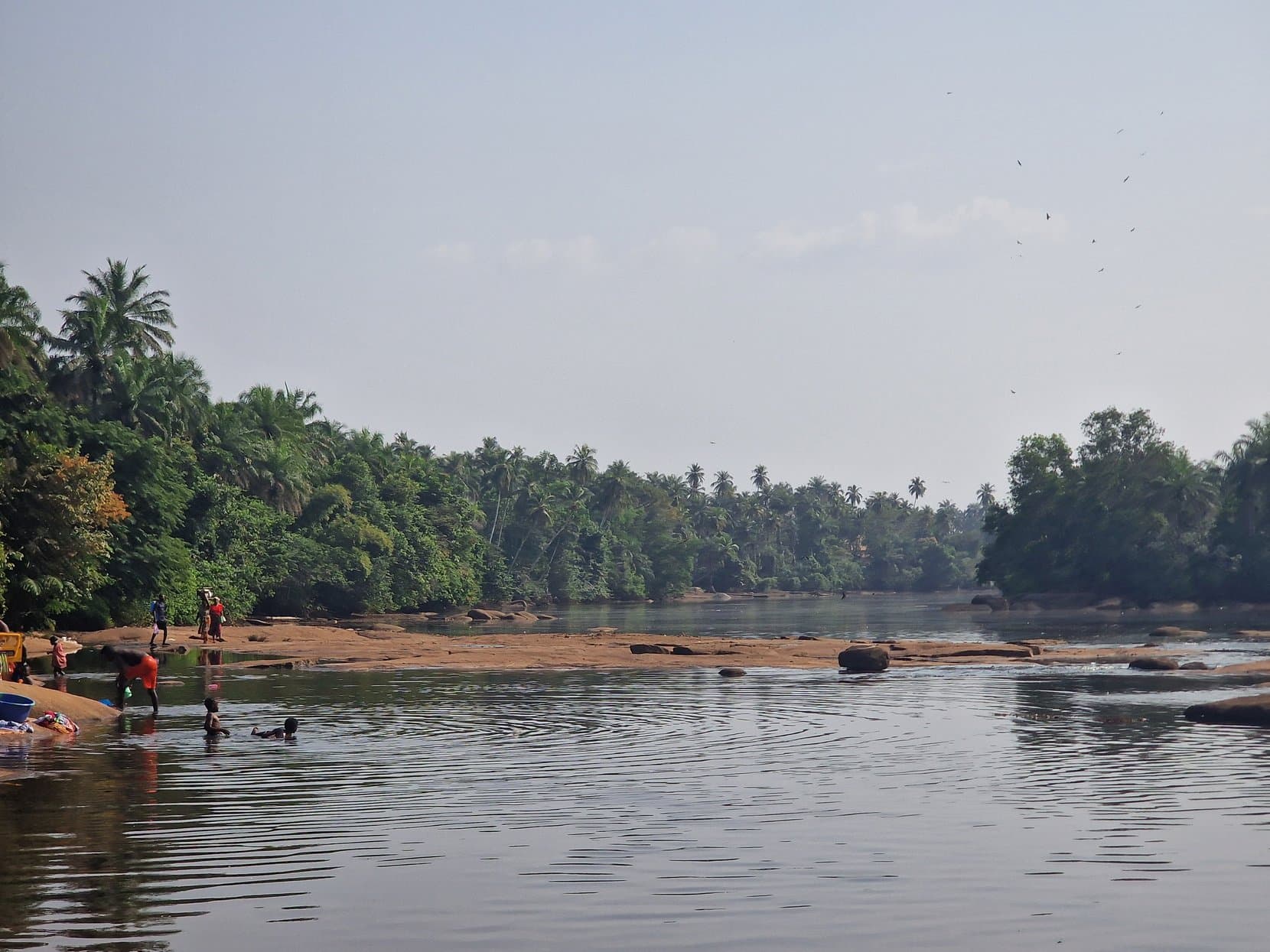
People bathing and washing clothes on rocks in a wide palm-lined river, Guinea

The rains had already started

Getting there and around

Fly into Conakry. The practical routings from Europe go through Paris, Brussels or Casablanca, and the flight is a little under seven hours from the French capital plus the connection. Most visitors need a visa, arranged online in advance through the government's own portal, and a yellow fever certificate is a genuine entry requirement rather than a formality. Overland arrival is entirely possible – we came in from Guinea-Bissau and left south into Sierra Leone on a later trip – but these are small, slow posts and the roads either side of them are the worst of the day.

On the ground, the vehicle is the trip. Shared bush taxis connect the towns cheaply and slowly; a hired 4x4 with a driver who knows the surface is the difference between reaching the Fouta Djallon and spending your week finding out you cannot. Self-driving is possible and we did it, but the roads punish ordinary cars badly enough that we finished the country with two of the three we started with.

Guinea's currency is the franc and it is a cash country outside the better Conakry hotels. French is the working language of everything official, and away from the capital it is the only one that will get you far.

What it costs

One number is worth publishing, because it is the part nobody can avoid: return flights from western Europe run about €600 booked ahead. That is what reaching Guinea costs, not what the trip costs. On the ground the country is inexpensive by any European measure, and the rest is a choice about how you sleep and – far more importantly here – how you move:

StyleWhat that looks like
LeanSmall local hotels and auberges, shared taxis and the bush taxis between towns, eating where the drivers eat. Guinea has almost no backpacker infrastructure, so lean here means local rather than cheap-for-tourists
CoreA decent hotel in Conakry and the regional towns, and – the line that actually decides this trip – a hired 4x4 with a driver who knows the roads, which turns an ordeal into a journey
SplurgeThe ceiling is low and mostly sits in the capital: a handful of international-standard hotels on the Atlantic. Outside Conakry there is very little to spend money on, and that is part of the appeal

Unusually for this site, the bed is not the line with real range here – transport is. Beds are modest almost everywhere and priced accordingly; what varies by a factor of several is whether you are moving in a shared taxi or in something built for the surface. Spend there, and the rest of Guinea is cheap.

Tested tips

The road decides the trip, not the distance.

Guinea is the country where a map lies to you most. Two roads run from Koundara down to Conakry – one 570 km, one 660 km – and both of them took us twenty-one hours. Plan in hours and halve your ambitions: a leg that looks like a morning is the whole day and part of the night.

Carry two warning triangles, not one.

Police stopped us many times and not one officer asked for the vehicle import paper we had failed to obtain. What they asked for, again and again, was two warning triangles, a fire extinguisher and a first-aid kit. That is the check that actually happens.

Arrive in Conakry in daylight if you possibly can.

We reached the city at three in the morning after two nights of driving, and the advisories are blunt about why that is a bad idea: armed robbery and carjacking are real risks in the capital, and the airport is named specifically as a place where foreigners are targeted. If your flight lands late, have the transfer arranged before you fly.

The advisory is the current document, and Guinea's is not a mild one.

Western governments place Guinea well above the caution level they give its neighbours – violent crime in Conakry, political tension that can escalate quickly, and essentially no emergency services outside a couple of private clinics. Read your government's travel advice before booking, and again before flying.

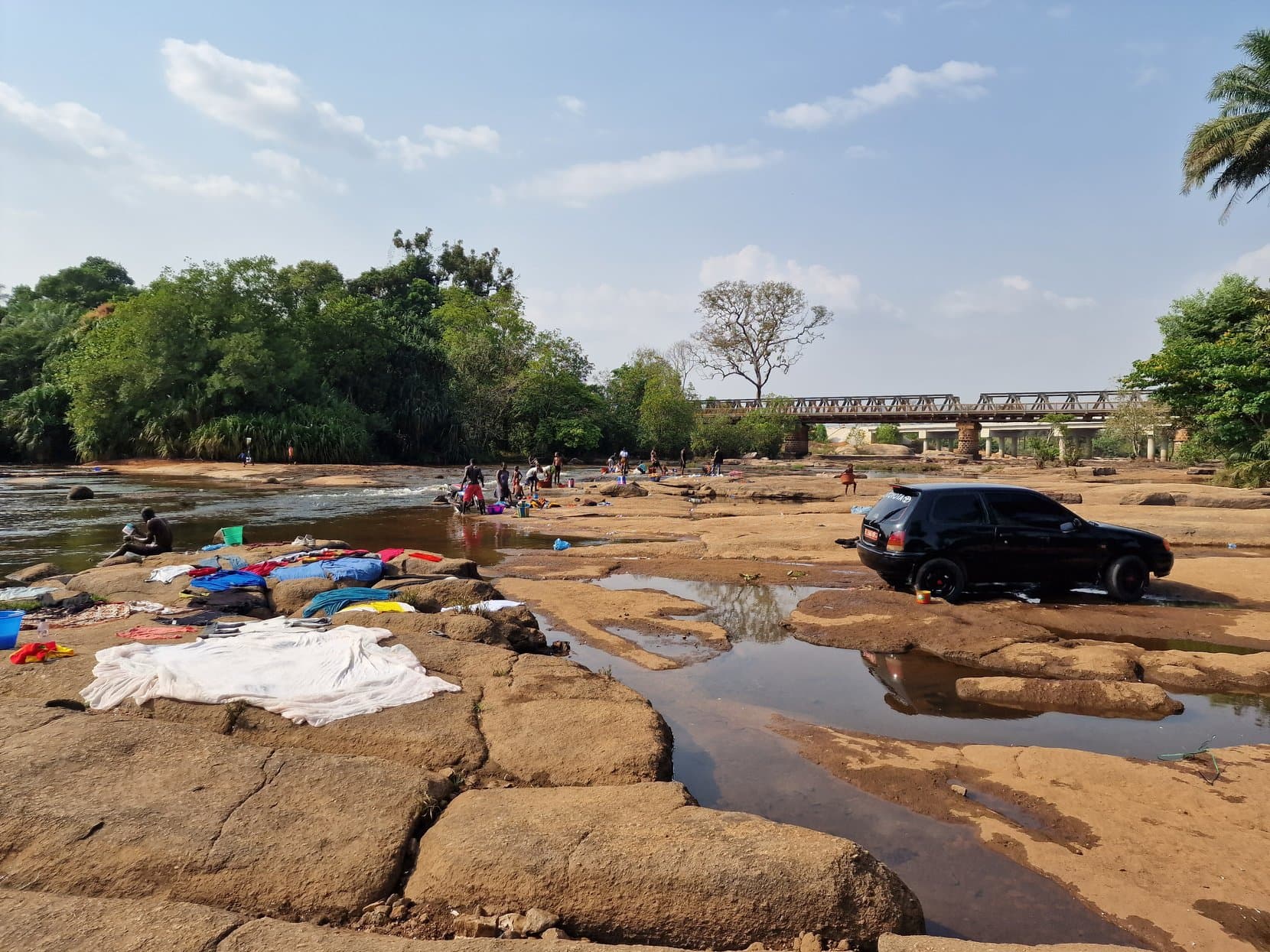
Washing spread to dry on river rocks below an iron truss bridge, Guinea

FAQ

Is Guinea safe to visit?▾
Read your government's travel advice first and let it outrank this page. Guinea sits meaningfully higher on the caution scale than its West African neighbours: the UK advises a high degree of caution, violent crime including armed robbery and carjacking is a genuine risk in Conakry, foreigners are specifically flagged as targets around the airport, political tension can escalate without much warning, and there is no functioning emergency service to call – medical help means getting yourself to a private clinic in the capital. That is the honest picture. What we experienced across four days of driving, including two nights on the road and repeated stops by armed men at checkpoints, was hassle and requests for tips rather than threat, and a great deal of ordinary kindness from people who had no reason to offer it. Both of those things are true at once.
Is Guinea worth visiting?▾
Yes, if you want a country with almost no tourism infrastructure and you are willing to pay for that in hours on the road. The draw is the Fouta Djallon: a highland region of plateaus and waterfalls that the World Bank calls the water tower of West Africa, because the Niger, the Senegal and the Gambia rivers all rise there. It is green, cool by West African standards, and almost entirely unvisited. What Guinea is not is an easy country, a beach country, or a place you see much of in a few days. If you want West Africa with the edges sanded off, its neighbours do that better.
Which Guinea is this – how is it different from Guinea-Bissau and Equatorial Guinea?▾
This is Guinea, sometimes written Guinea-Conakry after its capital: the largest of the three, and French-speaking. Guinea-Bissau is a much smaller Portuguese-speaking country on the coast to the northwest. Equatorial Guinea is Spanish-speaking, oil-rich and mostly on an island, over two thousand kilometres away in Central Africa. They share the name because Europeans called that whole stretch of West African coast Guinea for centuries before any of these countries existed, and three different colonial powers each ended up holding a piece of it. Our story below tells the full version, and corrects the explanation you will usually be given.
What are the roads like in Guinea?▾
They are the trip. Some of the main routes are asphalt and merely bad; others degrade into potholes deep enough that everyone drives on the verge, or stop being drivable at all. We spent five hours covering a hundred kilometres on one road, then found it simply ended in holes we could not cross. Both of the routes from the northern border down to Conakry took twenty-one hours, whichever one we picked. There is no road-condition service to consult – there is what other travellers say, and what you find. If you are driving yourself, budget generously and do not plan to arrive anywhere after dark.
How many days do you need in Guinea?▾
A week is the honest minimum for a real trip, and it should be built around the Fouta Djallon rather than the capital. Two weeks lets you add the southeast or the upper Niger without living in the car. We had four days and left knowing we had seen the roads rather than the country, which is the most useful thing we can tell you about it.
When is the best time to visit Guinea?▾
December to March. Conakry records essentially no rain at all in January, February and March, and that is what makes the difference on unpaved roads. The rains run from roughly mid-May to mid-November and are genuinely heavy – July and August can each bring over a metre of rain to the capital. Late October into early November is the connoisseur's window: the rains have eased, the highlands are still green, and the waterfalls are still running.
Do you need a visa for Guinea?▾
Most visitors do, and it is arranged online in advance through the government's own portal rather than on arrival. Apply through the official government site rather than an agency – there are a great many intermediaries charging a premium for the same document. A yellow fever vaccination certificate is a real requirement here rather than a formality: Guinea is an endemic country, and the vaccine has to be given at least ten days before you travel.
Is Ebola still a risk in Guinea?▾
No, and the confusion is worth clearing up because it costs Guinea a lot of visitors. The West African epidemic that began here ended in 2016, and a small flare-up in 2021 was contained within months. The Ebola outbreak in the news at the moment is in the Democratic Republic of Congo, on the other side of the continent – roughly five thousand kilometres away, in an entirely different region. The health precautions that actually matter for a trip to Guinea are the ordinary tropical ones: yellow fever vaccination, malaria prophylaxis, and care with water.
Is Guinea expensive?▾
Getting there is the one unavoidable cost: return flights from western Europe run about €600 booked ahead, mostly routing through Paris, Brussels or Casablanca. That is what reaching Guinea costs, not what the trip costs. On the ground it is inexpensive by any European measure, with one real exception – transport. This is a country where hiring a capable vehicle and a driver who knows the roads is not a luxury upgrade, and it is where a realistic budget actually goes.
What is the Fouta Djallon, and is it worth the journey?▾
It is the highland region filling the middle of the country: sandstone plateaus between roughly 500 and 1,500 metres, cut by waterfalls, cooler and greener than anywhere near the coast, and the source of three of West Africa's great rivers. It is the single best reason to come to Guinea, and it is the thing we did not get to. We were driving toward the highest ground in it when a gearbox ended the attempt, and we crossed the region afterwards without stopping. Take the week we did not have.
Can you combine Guinea with its neighbours overland?▾
It borders six countries, and we came in from Guinea-Bissau and, on a later trip, left south into Sierra Leone. Both crossings worked. What they are not is quick or predictable: these are small posts that see very few private vehicles, the roads immediately either side of a border are usually the worst roads of the day, and the process is unhurried in a way you have to accept rather than fight. Our border story below is the honest version of how that feels.

Stories from Guinea

Conakry is one long market

Conakry is one long market

The capital does not contain a market so much as consist of one, all the way to Coyah.

Driving through Conakry the night Guinea won

Driving through Conakry the night Guinea won

Twenty people climbed onto the car. The ones who got us out were in the same crowd.

The three Guineas: which one you actually mean

The three Guineas: which one you actually mean

Three African countries share the name. I have been to all of them.

Koundara to Conakry: 21 hours whichever road you take

Koundara to Conakry: 21 hours whichever road you take

Two roads, 570 km and 660 km – and both of them took us twenty-one hours.

Breaking down 8 hours from civilization (the Africa Rally)

Breaking down 8 hours from civilization (the Africa Rally)

Three holes in the tank, a football match with a whole village, then the gearbox went.

Into Guinea: the border that is a rope

Into Guinea: the border that is a rope

A rope across a dirt road, officers who had never processed a car, and two triangles.

The hotel in Koundara that made us rent twelve rooms

The hotel in Koundara that made us rent twelve rooms

We asked for six rooms for twelve people. The manager had other ideas.

Why we bring footballs to every village

Why we bring footballs to every village

A ball needs no shared language – you drop it, join in, and stop being tourists.