Lomé and Lake Togo, Togo · Togo · Africa
One day in Togo: Lomé, Togoville and why that was enough
A day and a half in the south – what it buys, and why one day is the unit to plan with.

Tested by Paulius Pikelis · 140 countries


Togo is a narrow strip of a country with about 8.7 million people in it, and on an
overland run down this coast it is the one you are most likely to treat as a gap
between Ghana and Benin. We gave it a day and a half. I want to be straight about what
that does and does not buy you.
What it does not buy you is the country. Everything we saw was the south: the capital,
and the lake half an hour east of it. The north, where the landscape is and where the
fortified villages Togo is actually known for are, we did not go near. So read this as
a report on southern Togo, and take the other half on somebody else's word.
Lomé runs on motorbikes. They are the taxis, the delivery vans and the family car, and
crossing a road means reading a river rather than waiting for a gap. The city has an
odd, layered feel that makes sense once you know the history: this was a German
colony, then split between Britain and France after the war. The British part went to
Ghana; the French part became Togo. That inheritance is still audible, and the French
end of it is not remembered with much warmth.
Two places are worth the time, and both are calm in a way the rest of the city is not.
The Palais de Lomé is the old colonial governor's residence, derelict for years and
since rebuilt into an exhibition space with a park around it. The Musée International
d'Art d'Afrique du Golfe de Guinée has a colonnade of tall carved figures along its
front and more inside, drawn from across this stretch of coast.
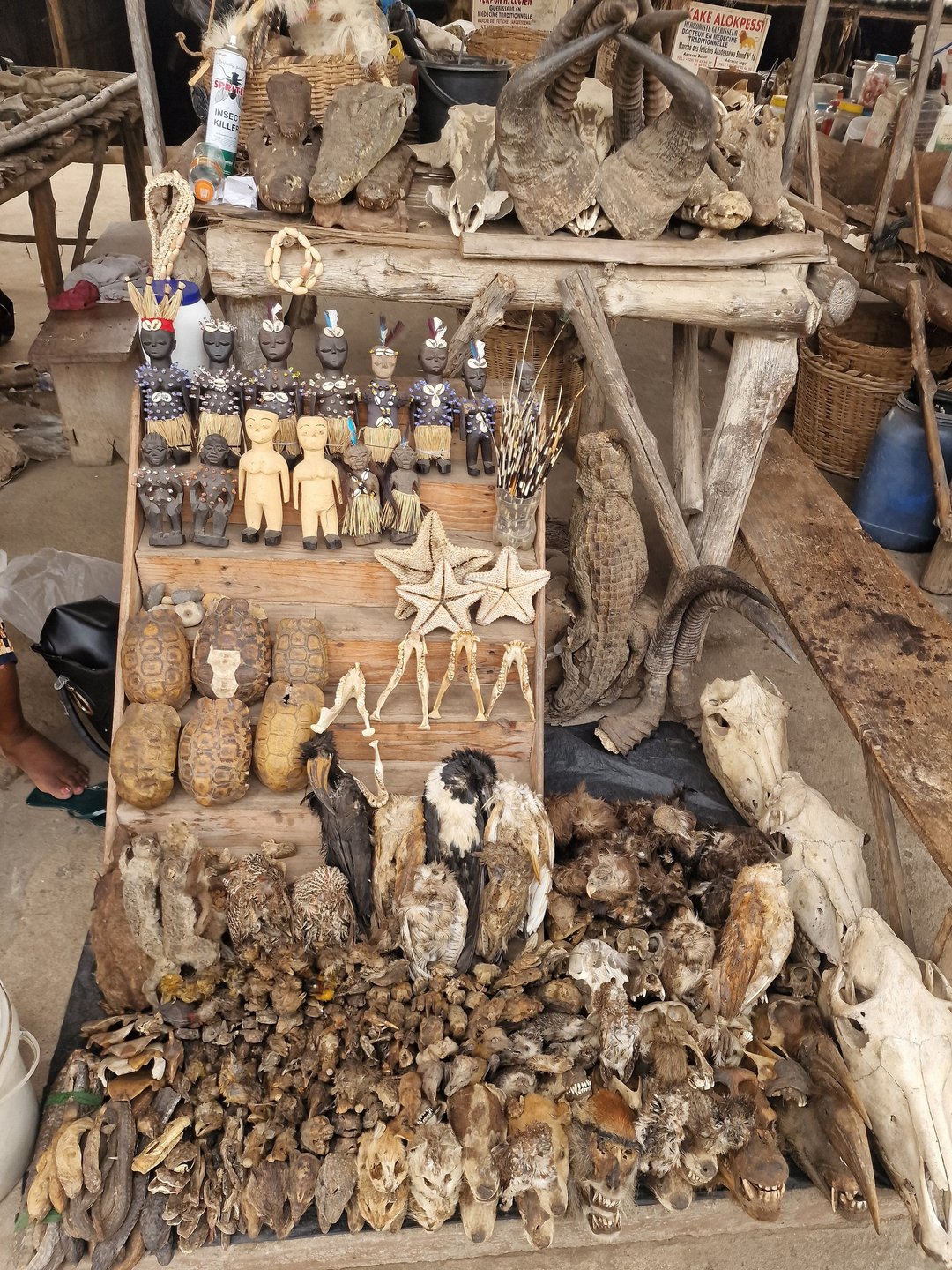
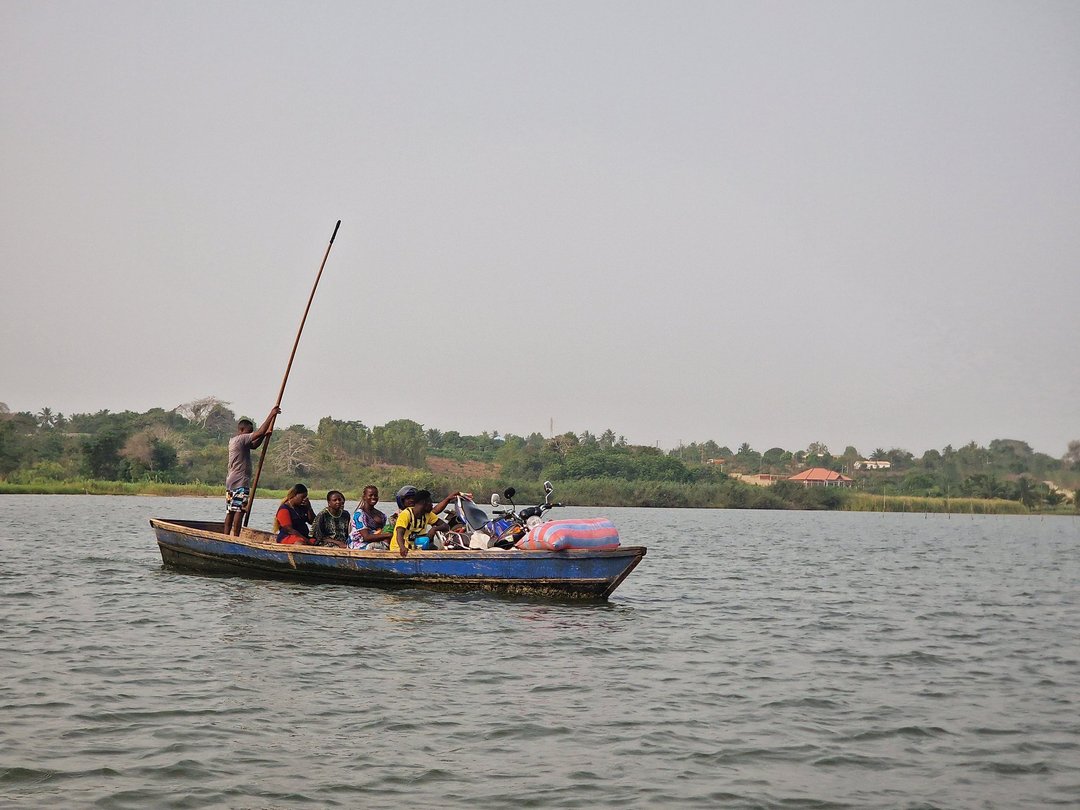
Add the fetish market on the edge of town and the lake crossing to Togoville, and you
have a full and genuinely good day.
So: worth stopping for, not worth rearranging a trip around, and a day is the right
unit to plan with unless you are going north.