TestedRoutes
GuidesDestinationsInspireAbout me

TestedRoutes Newsletter

Field-tested travel routes, in your inbox when they drop.

© 2026 TestedRoutes. All rights reserved.

ContactFAQLegalTermsPrivacyRefundsSecurityAffiliate disclosureSitemap

We independently review everything we recommend. When you buy through our links, we may earn a small commission at no extra cost to you. More on how this works.

ExploreGuidesDestinationsInspireAbout
Destinations›Ghana

North & West Africa · The Gulf of Guinea

Ghana

How long you need, what earns the trip and what to skip – from four days driving the coast, the far west and the hills on the Togo border.

Paulius Pikelis

Tested by Paulius Pikelis · 140 countries

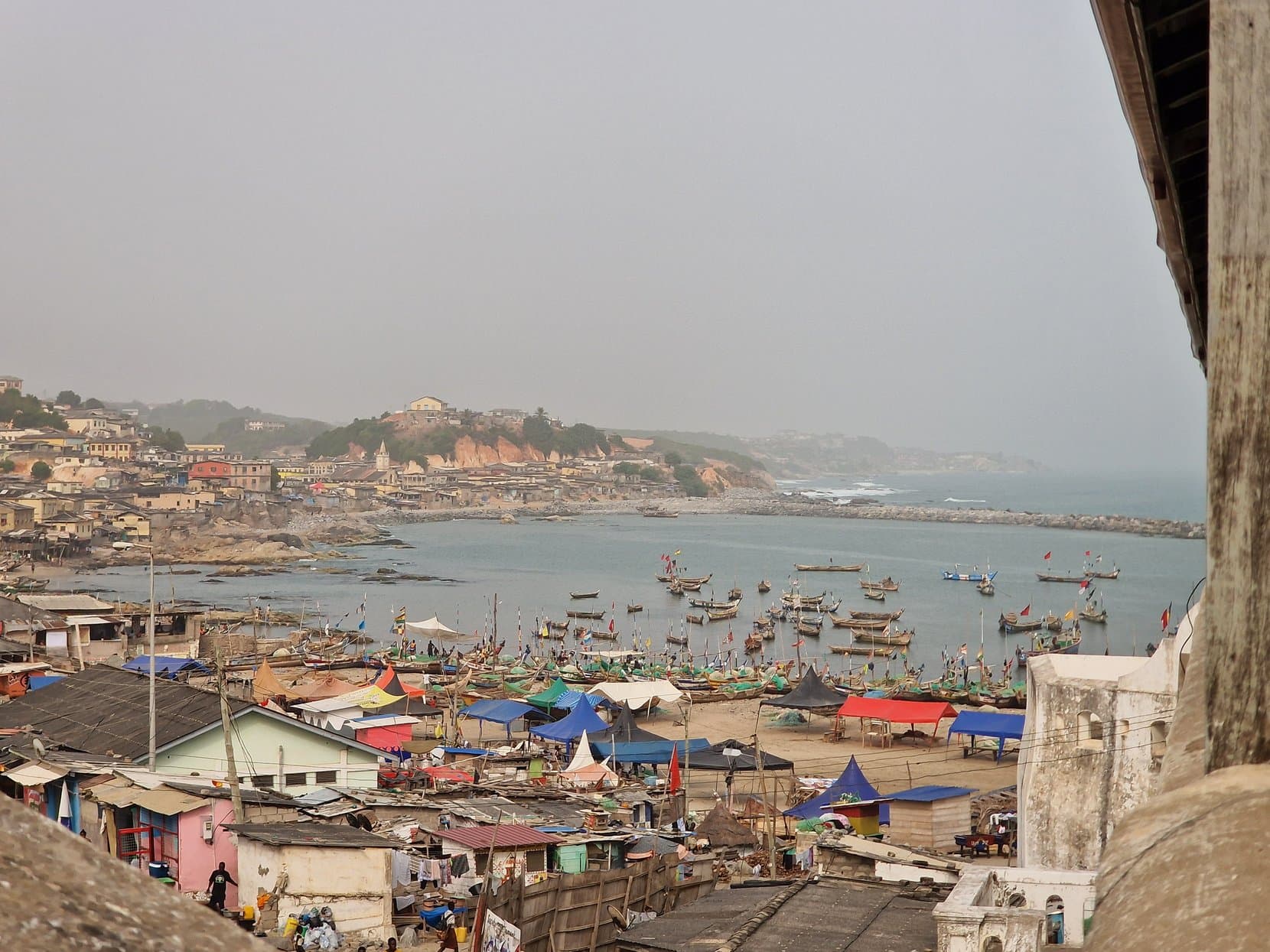
Cape Coast town and its harbour full of painted fishing boats, seen from the castle above, Ghana

Is Ghana worth it, and what is actually worth your days

I should declare the bias first. Of the seven countries we crossed on one drive down the West African coast, Ghana came last, and none of us was keen to go back. That is an unusual thing for a travel page to open with, so it is worth being precise about what it is a verdict on – because it is a verdict about a shape of trip, not about a country.

Three specific things produced it. Driving in took six hours at a land border where almost none of the delay was paperwork. The capital took a day and gave very little of it back. And the distances between the good parts are longer than they look, so a fortnight spent touring Ghana comprehensively is largely a fortnight spent in a car. None of that is a statement about Ghanaians, who were as straightforward and as generous as anyone on that drive.

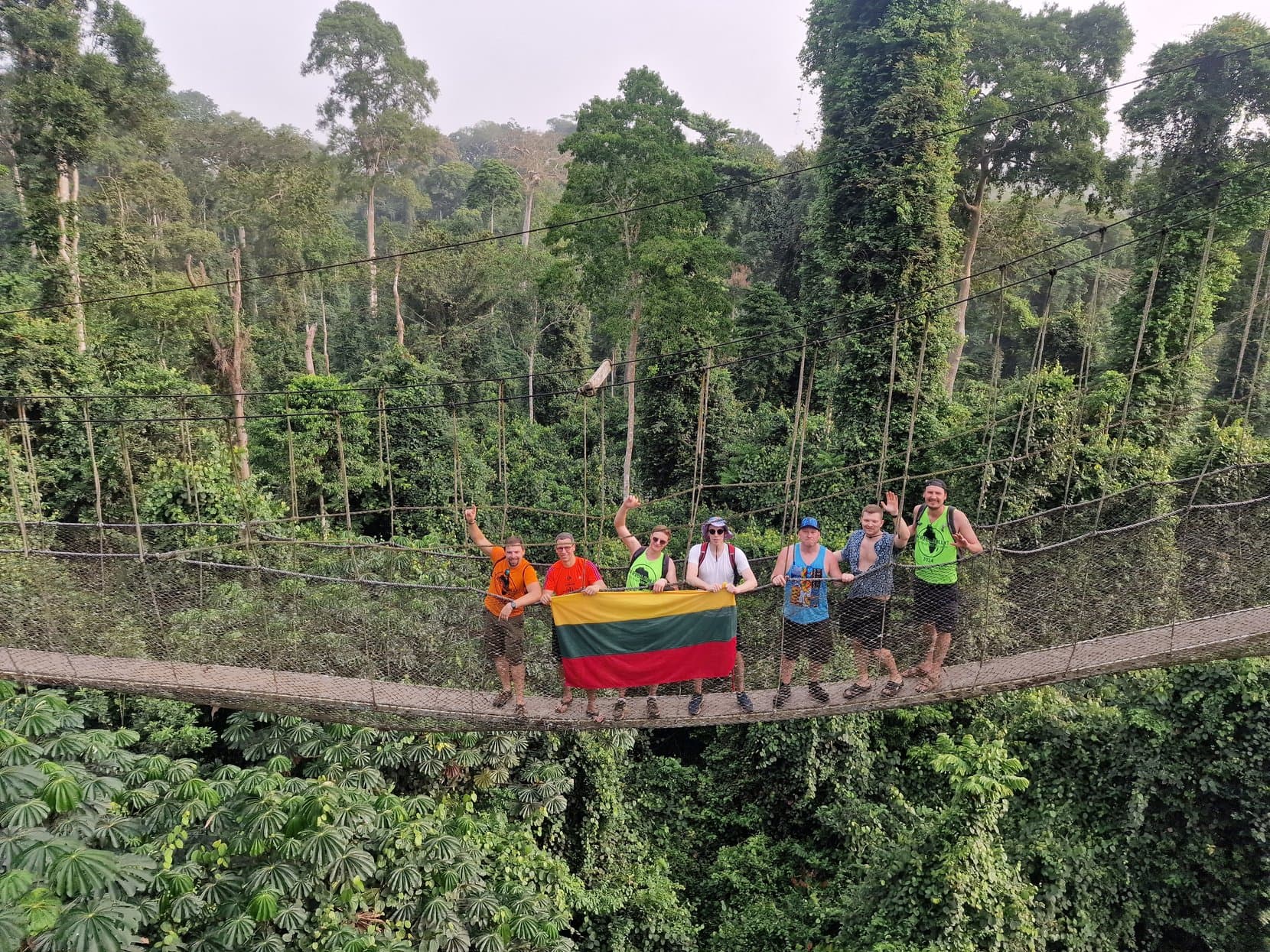
Now the useful half, which is the recommendation the verdict converts into: go narrow. Ghana has a short, genuinely strong run west of Accra – the two UNESCO forts on the central coast, a rainforest canopy walkway strung forty metres up behind them, and a stilt village on a lagoon in the far west that almost nobody reaches. Add the green hills and waterfalls on the Togo border and you have a week that is worth a long-haul flight. Skip the grand tour, give the capital half a day, and Ghana stops being the country we liked least and becomes a very good five days.

One thing on this page is deliberately not squeezed into that argument. The forts on the central coast are memorials to the Atlantic slave trade rather than sights to be weighed against a drive, and they are dealt with below and in their own story, where there is room for them.

When to go

Southern Ghana runs two rainy seasons and a dust season, and the choice between them is a real trade – because the thing the rain decides is whether the waterfalls exist.

November to March

The dry season, and the season almost everyone should pick. Roads behave, the coast is hot and bright, and nothing you have planned gets rearranged by weather. The cost is the harmattan: from December into February a dust haze blows down off the Sahara, flattens long views and settles on everything. We were there at the very end of it.

April to mid-July

The main rains, and they are the reason the country looks the way it does in photographs. Everything green becomes extraordinary and every waterfall actually runs. Unpaved roads stop being predictable and the humidity on the coast is serious.

August to September

A genuine lull on the coast – southern Ghana gets a short drier gap in August before the minor rains return through September and October. Quiet, green, and the least crowded window of the year.

What I would pick

Late October or early November, and I say that having gone in February. The rains have eased, the roads are back, the haze has not arrived and the waterfalls are still running – which matters more here than anywhere, because we reached one in the dry season and found it barely there. If you want certainty rather than water, January and February deliver it.

How long to stay

The honest answer is shorter than most itineraries you will be sold, and that is the most useful thing on this page.

Two or three days

Accra and one thing near it. Honest, and not much of a trip – the capital is the weakest part of the country and the good material starts a few hours west. Fine if you are here for work and have a weekend attached to it.

Four or five days

The coast west of Accra: the forts, the rainforest canopy behind them, and the lagoon village in the far west near the Côte d'Ivoire border. This is the narrow trip, it is the one I would actually recommend, and it is the version of Ghana that earns a long-haul flight.

A week

Add the Volta east – the hills along the Togo border, the waterfalls, the lake. Greener and cooler than the coast, almost nobody goes, and it is where the country stops feeling like a drive between sights.

Two weeks

The north as well: Mole and its elephants, the old mud-and-stick mosques, the savannah up toward Burkina Faso. We did not go, so this is the honest limit of what we can tell you – it is a long way up and it is a different country when you get there.

What we actually had

Four days, driving, in the middle of a rally from Guinea to Benin. Six hours of the first one went on the border. That is why the recommendation above is narrow rather than comprehensive: we saw what four days buys, and four days buys the coast.

From the trip

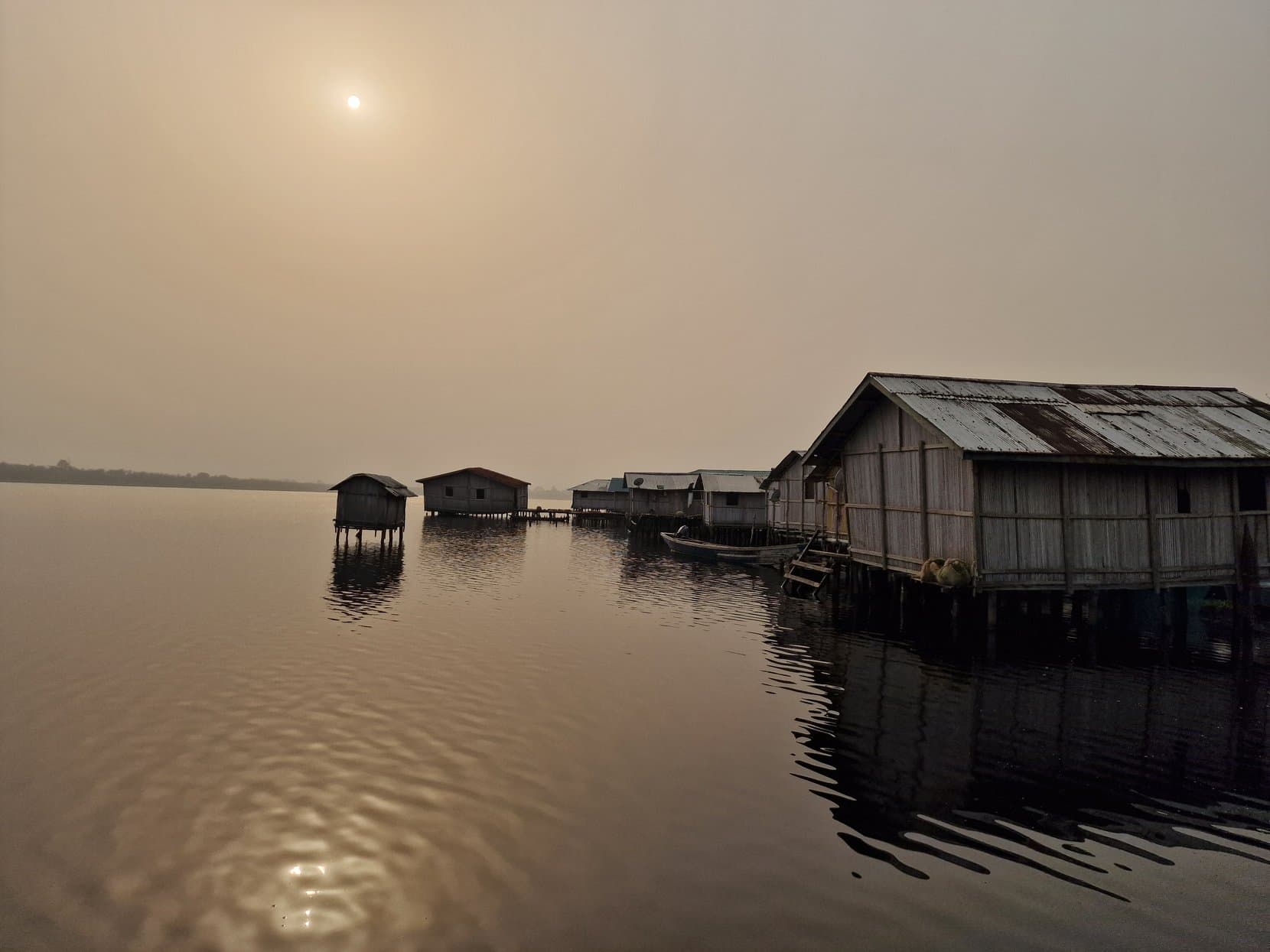
Wooden stilt houses over a still lake in morning haze, Nzulezo, Ghana
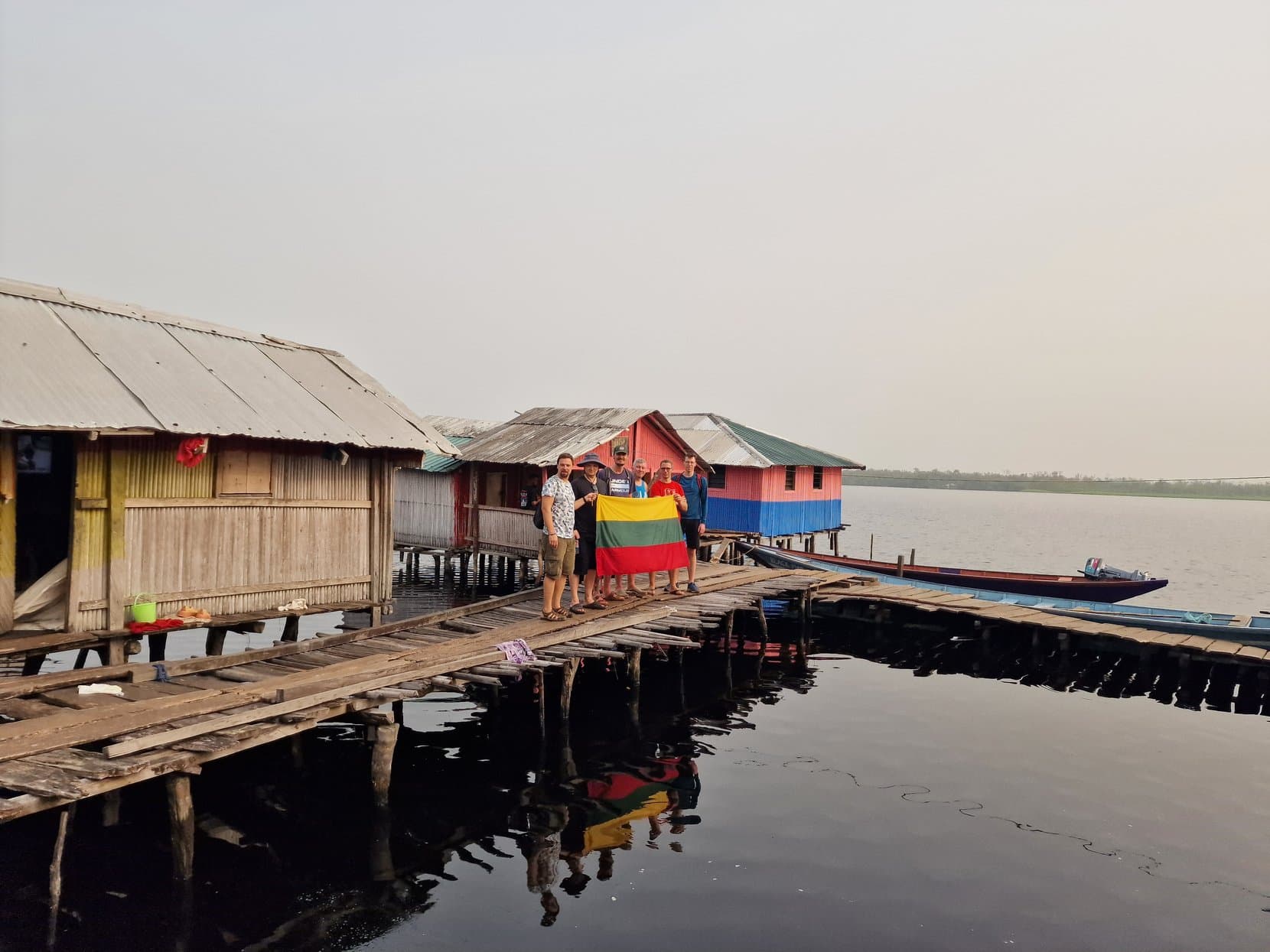
A timber boardwalk between painted stilt houses with the open lake beyond, Nzulezo, Ghana
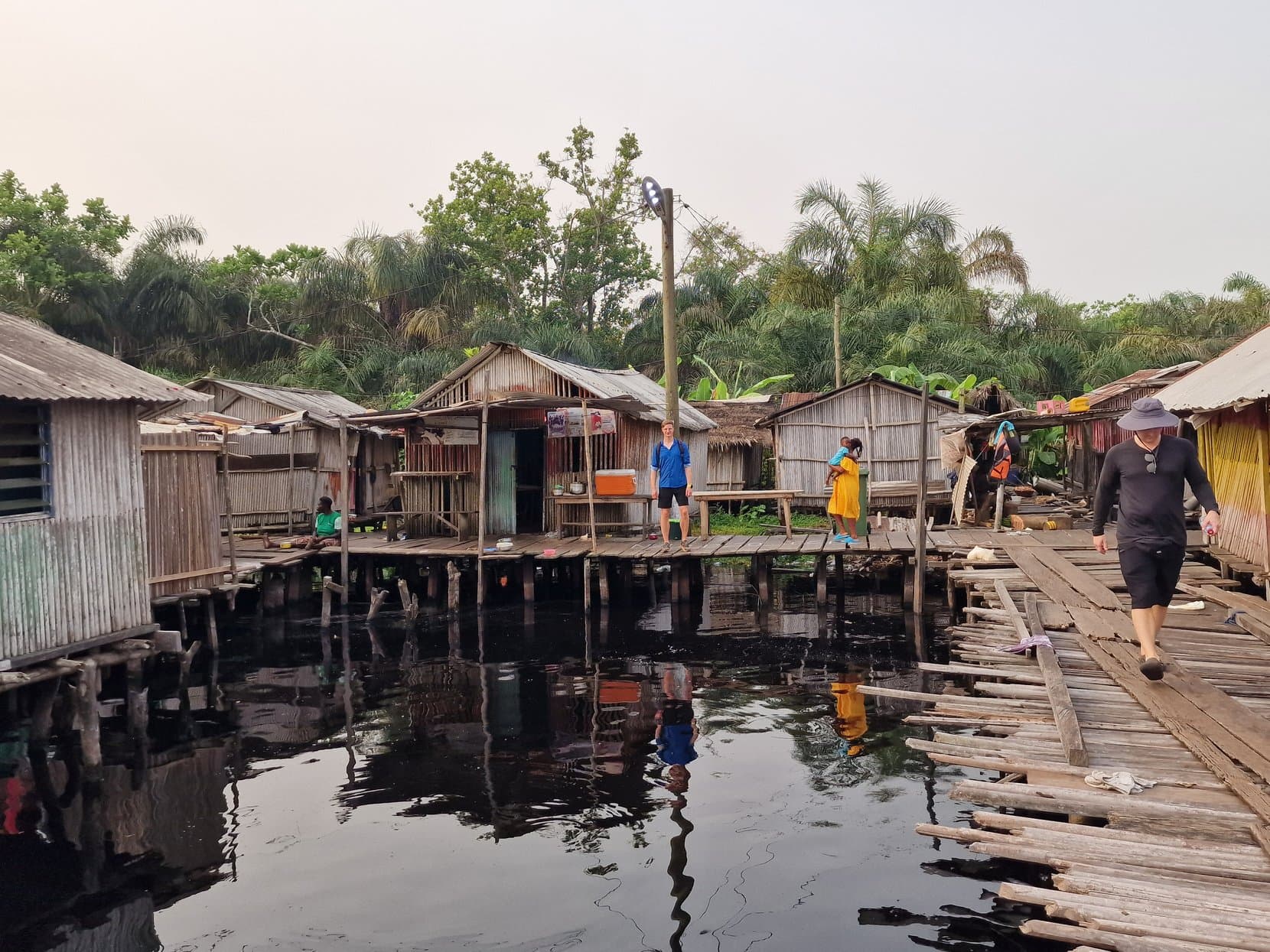
A woman walking the boardwalk between stilt houses and moored dugouts, Nzulezo, Ghana
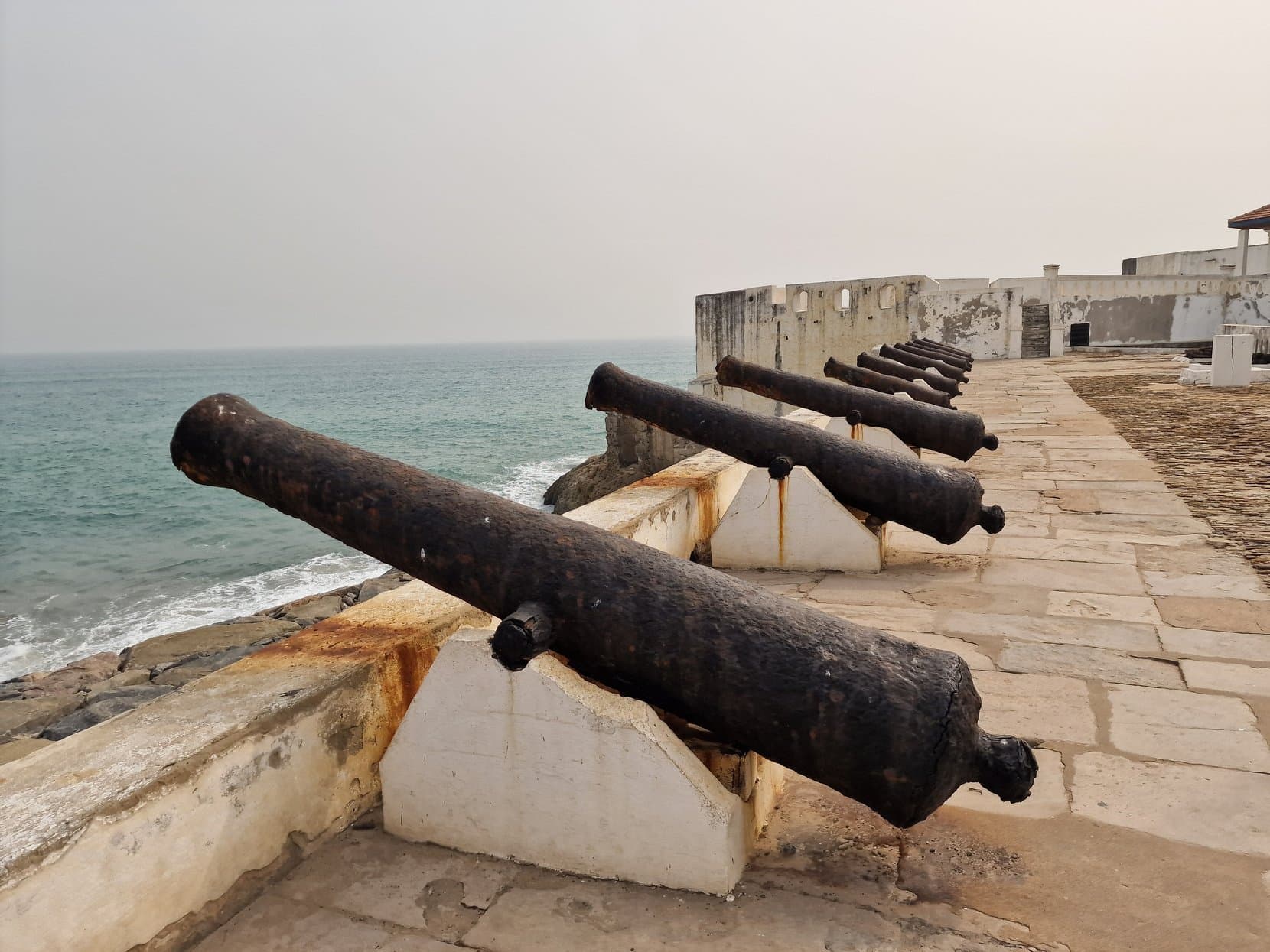
An iron cannon on the whitewashed rampart of Cape Coast Castle pointing out to sea, Ghana
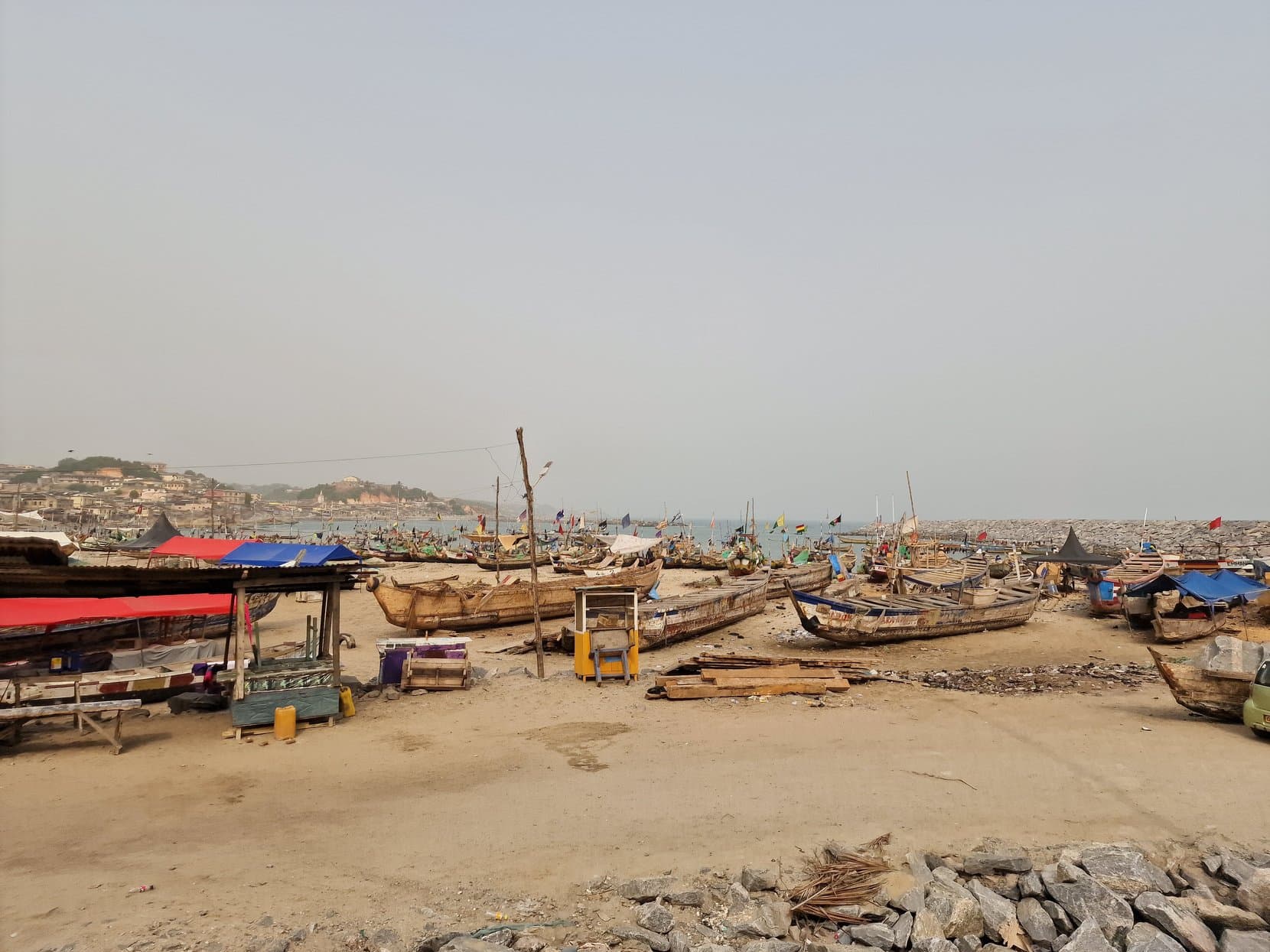
Wooden fishing boats and stalls on the beach directly below the castle walls, Cape Coast, Ghana
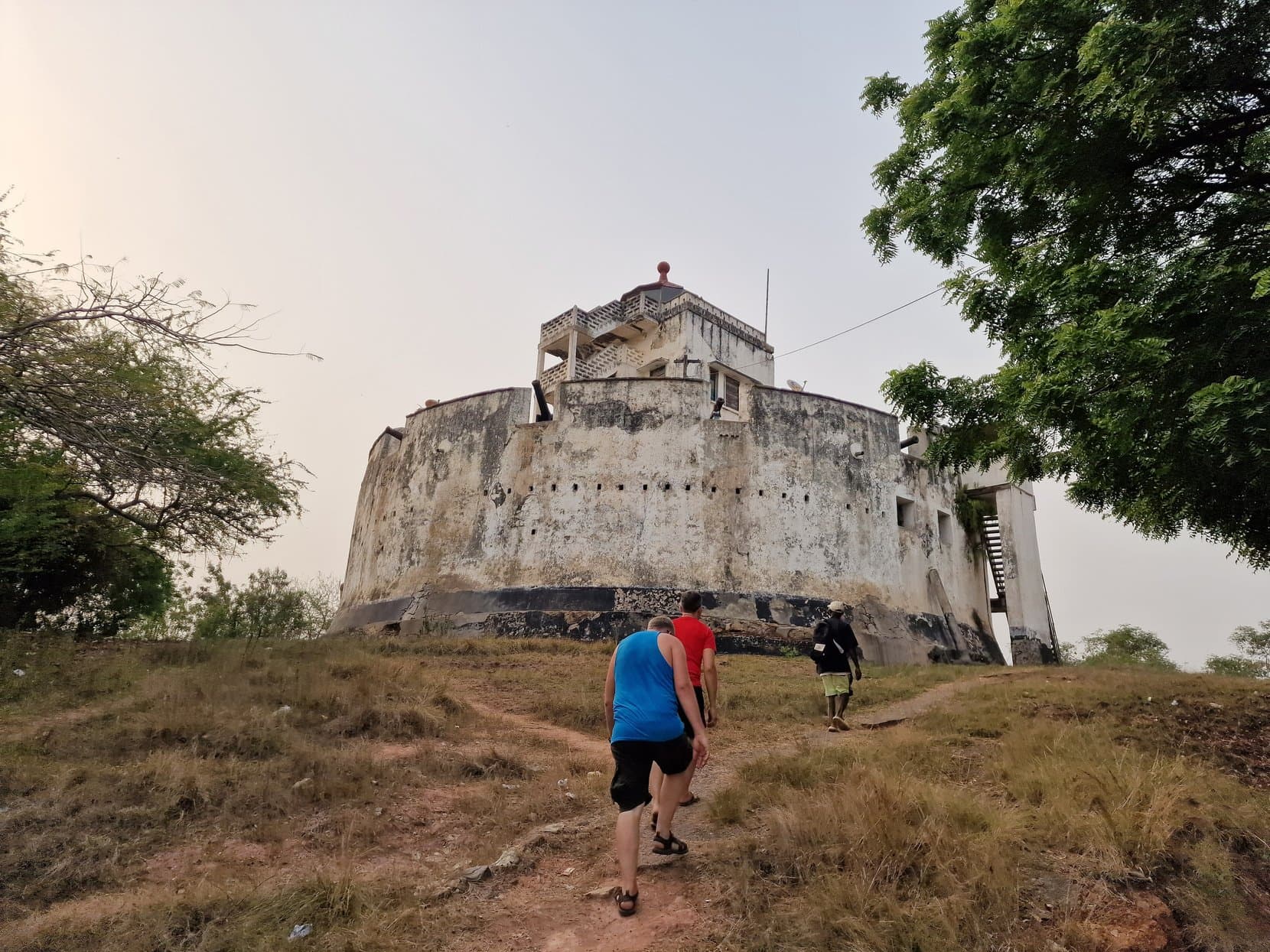
A small round hilltop fort on dry grass above Cape Coast town, Ghana
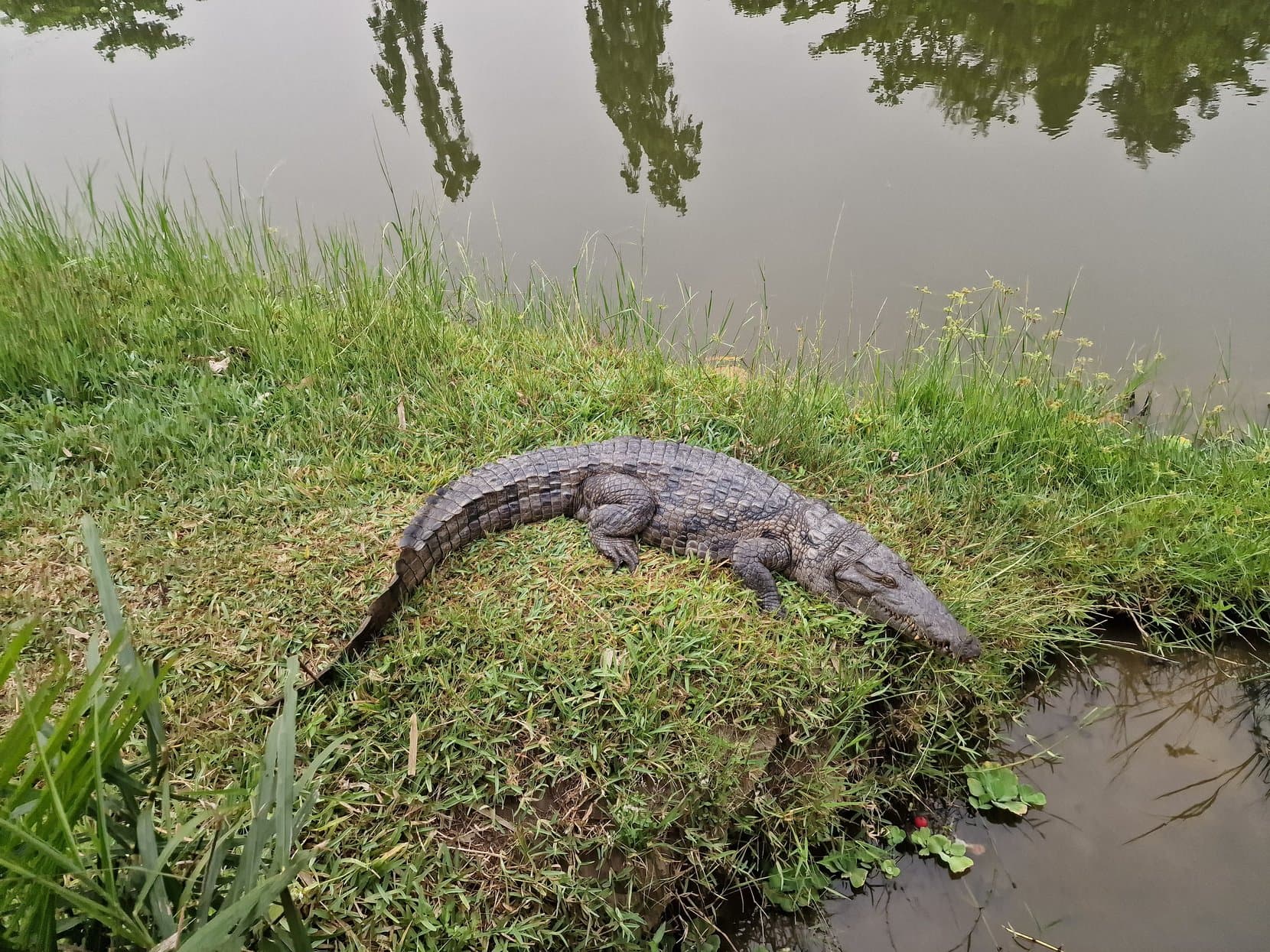
A crocodile lying on green grass beside a pond, Ghana
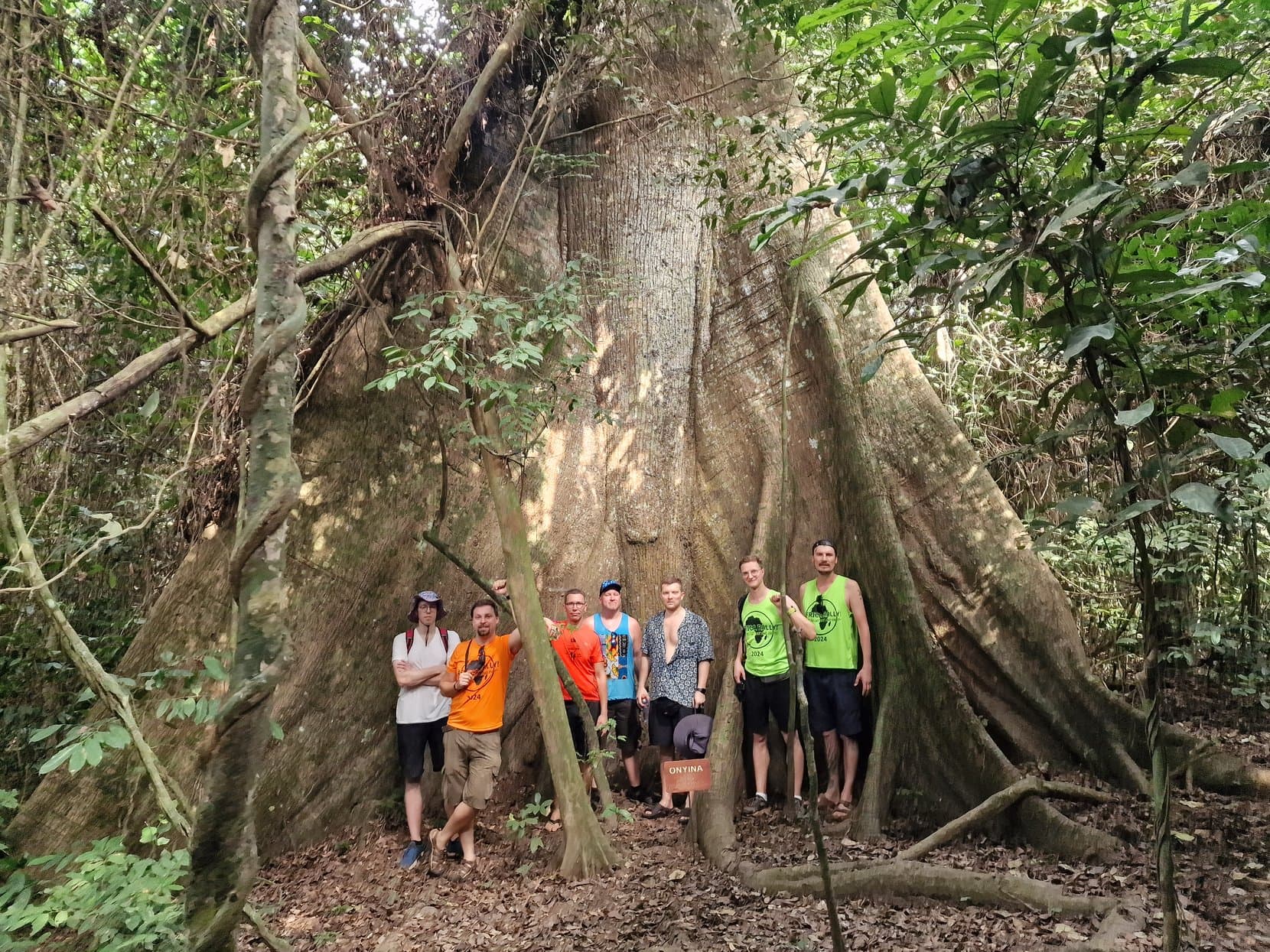
The rally crew standing between the huge buttress roots of a rainforest tree at Kakum, Ghana
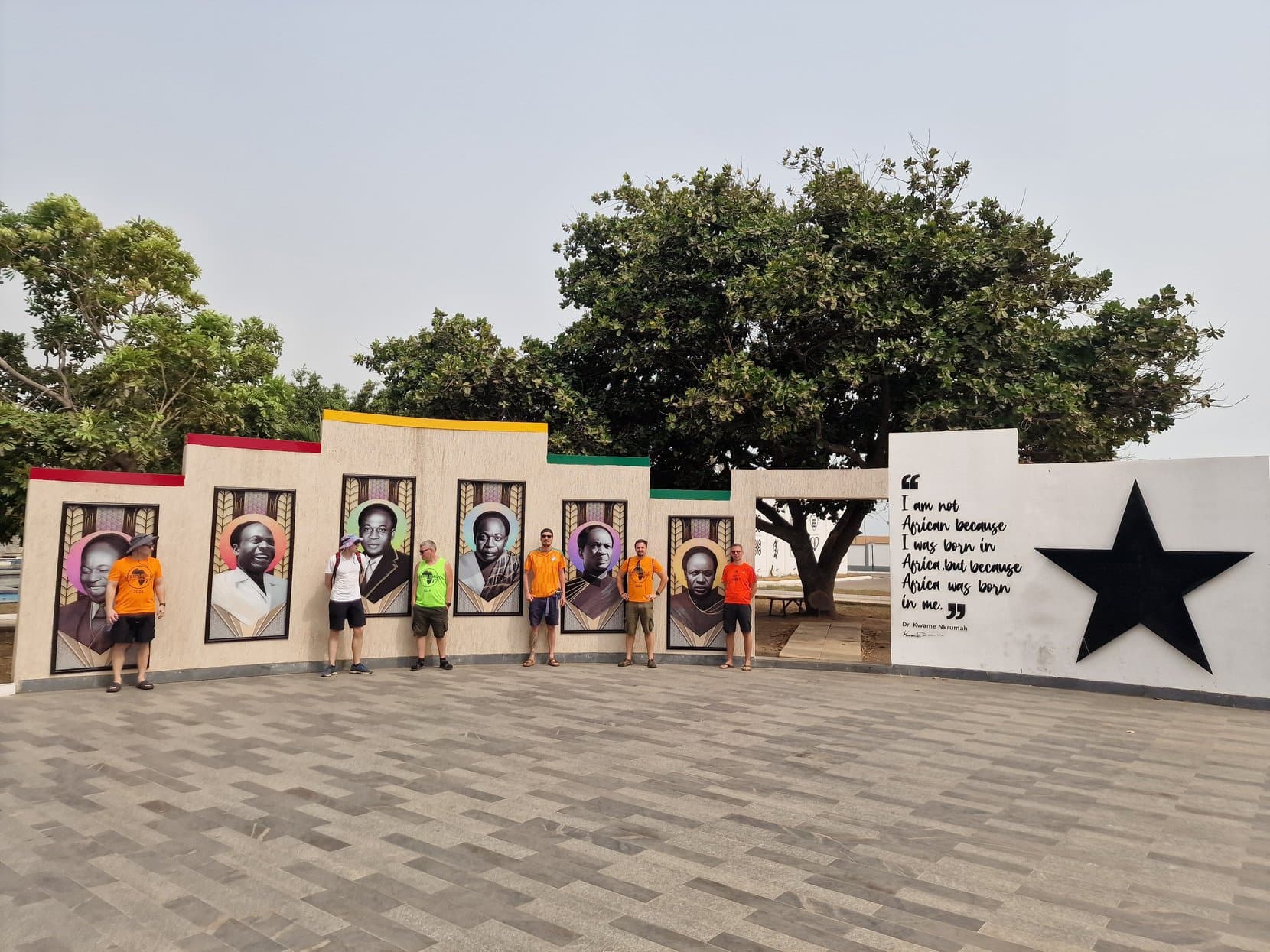
An outdoor wall of portraits of Ghana's past presidents beside a Black Star, Accra
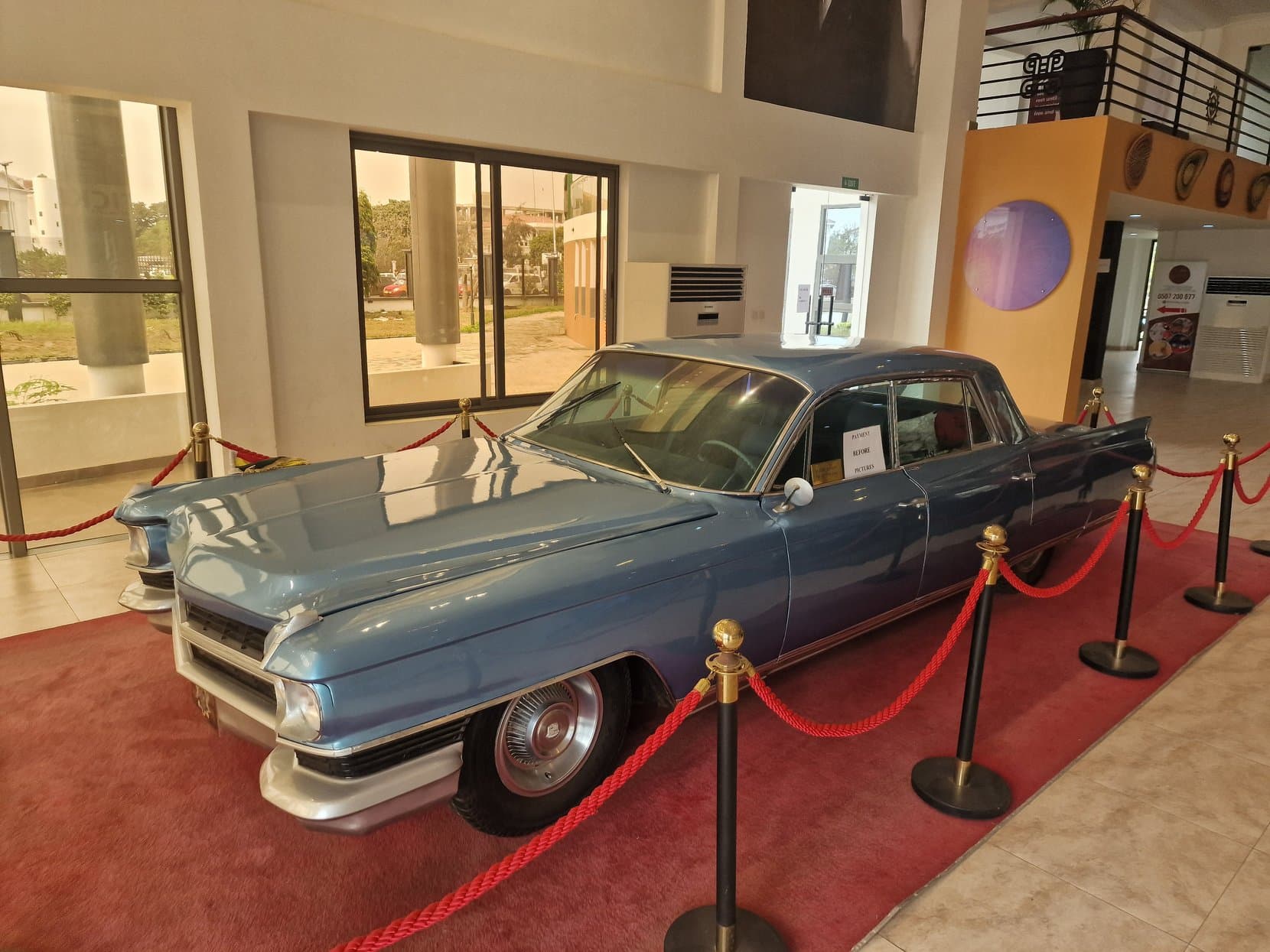
A preserved blue state car on a red carpet behind a rope inside a museum, Accra, Ghana
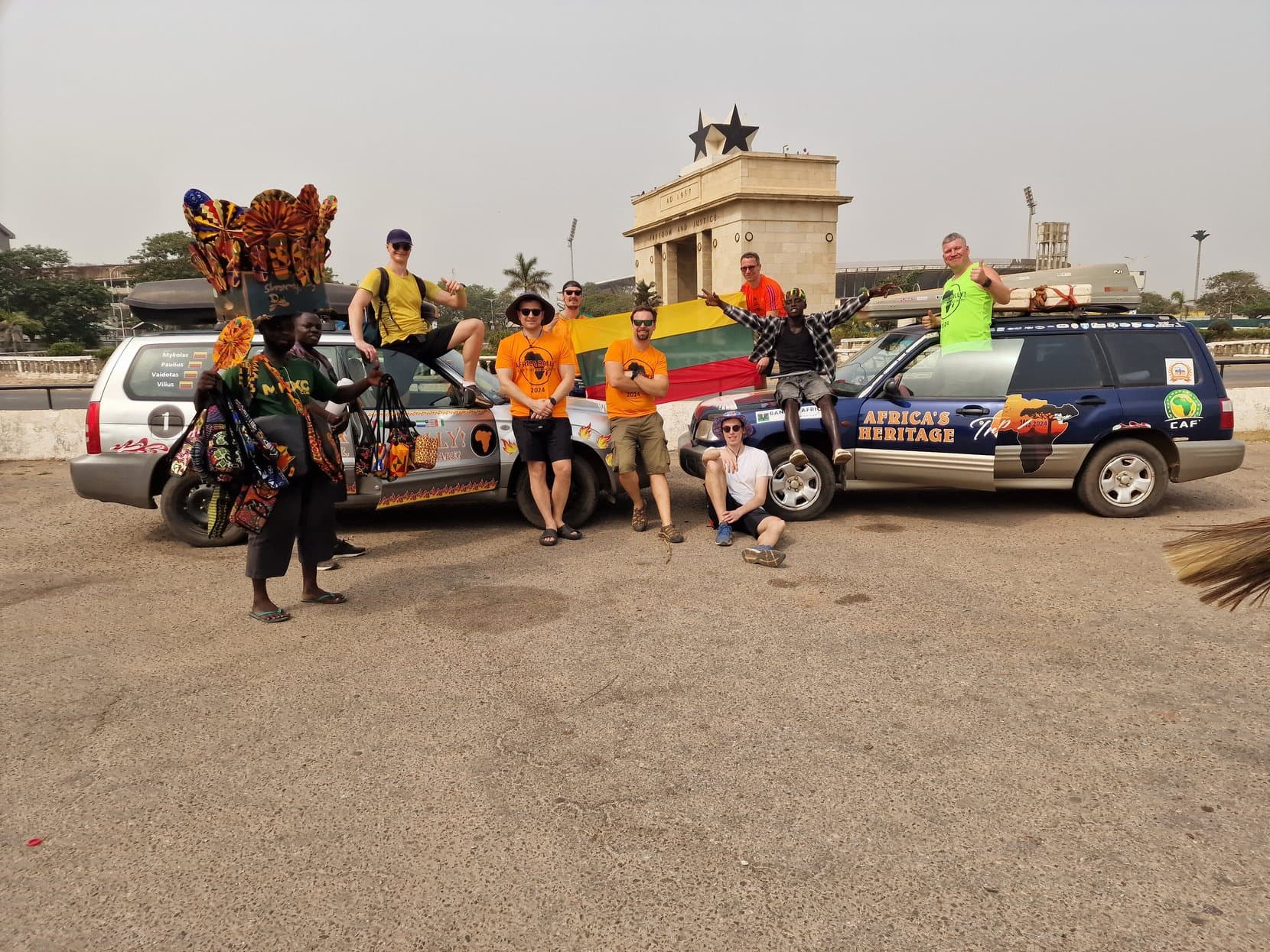
The rally crew and two decal-covered cars in front of the Black Star Gate, Accra, Ghana
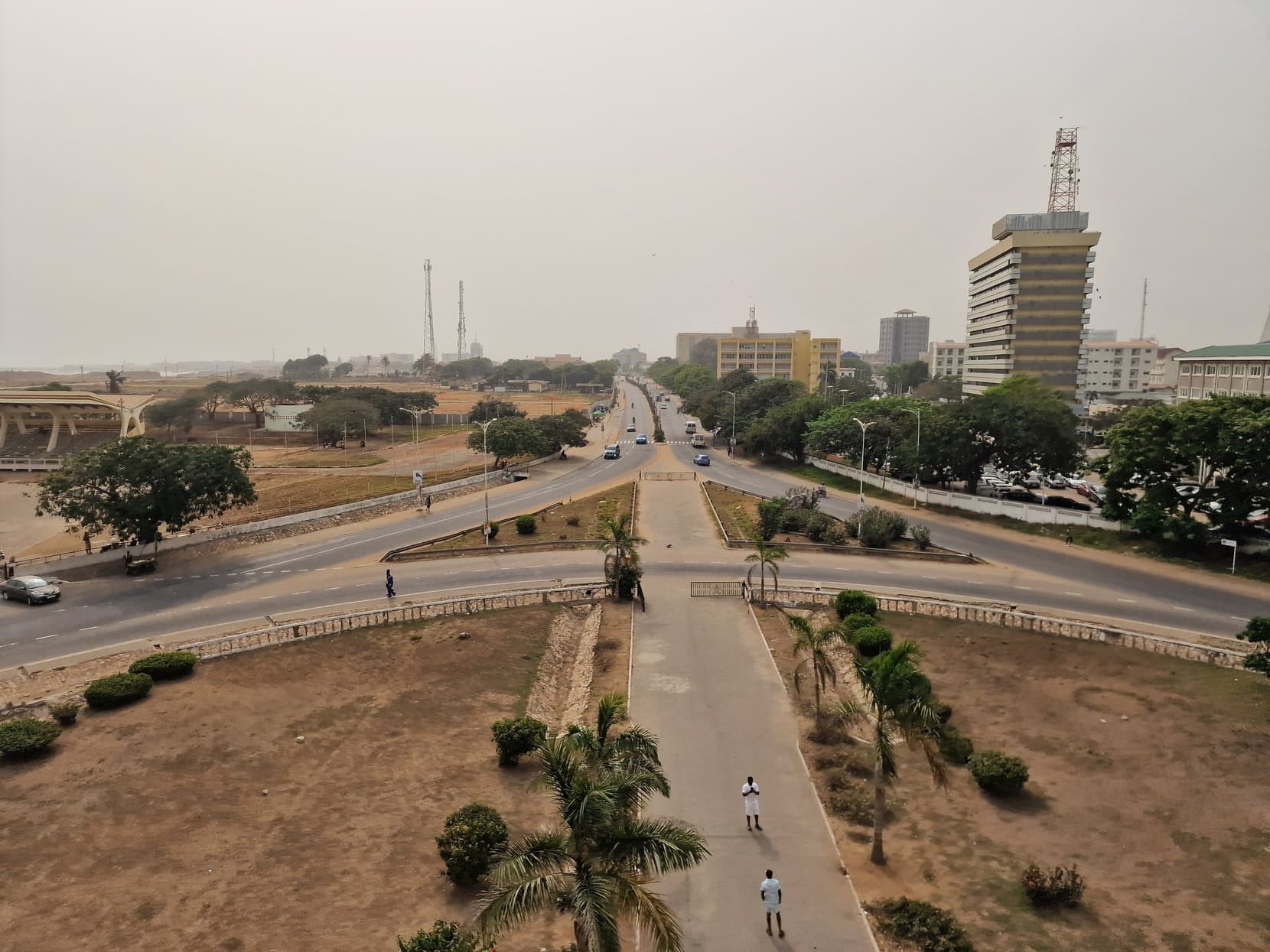
A wide divided boulevard running toward tower blocks in harmattan haze, Accra, Ghana
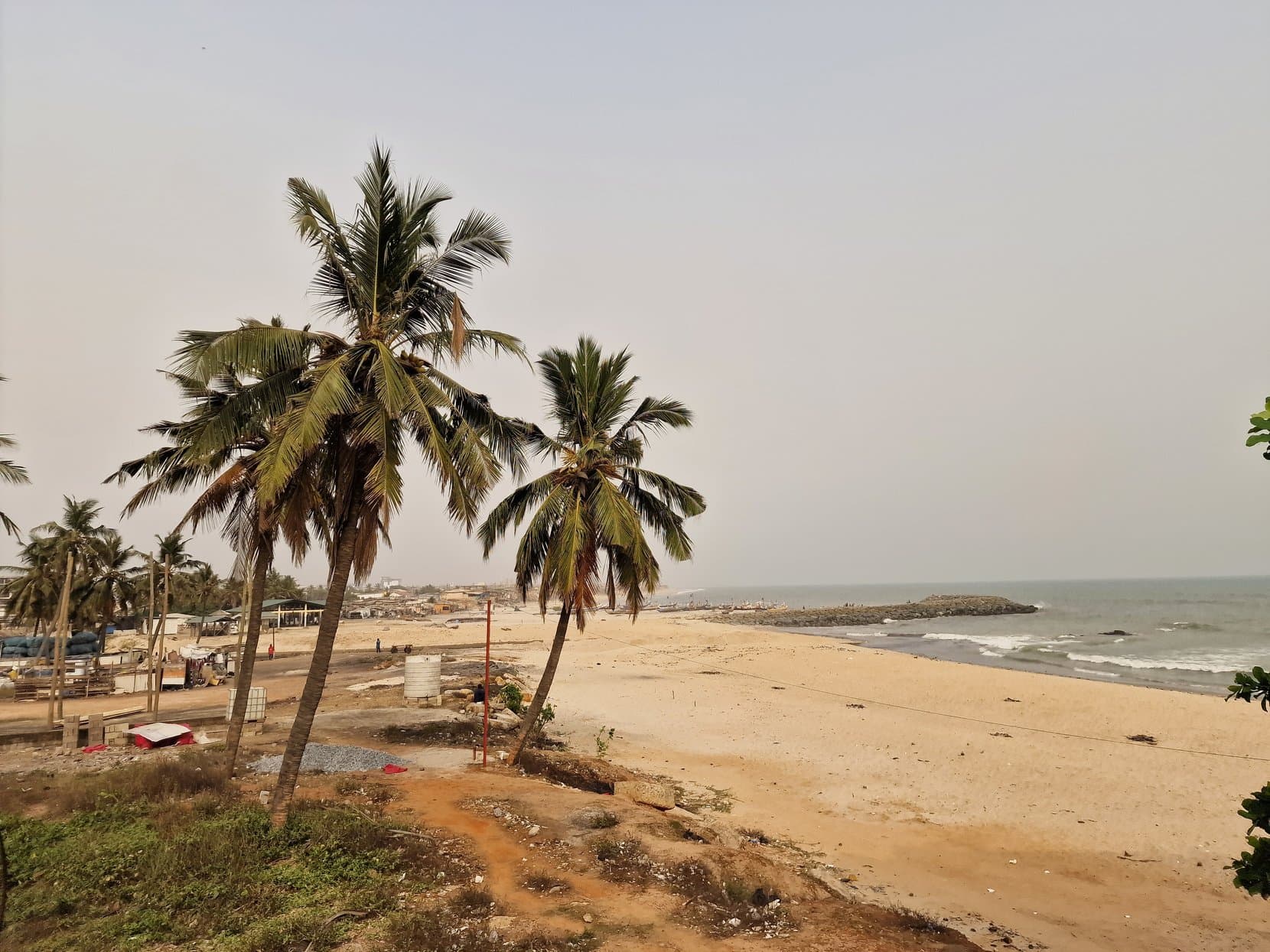
Coconut palms leaning over a sandy beach and the Atlantic, Accra, Ghana
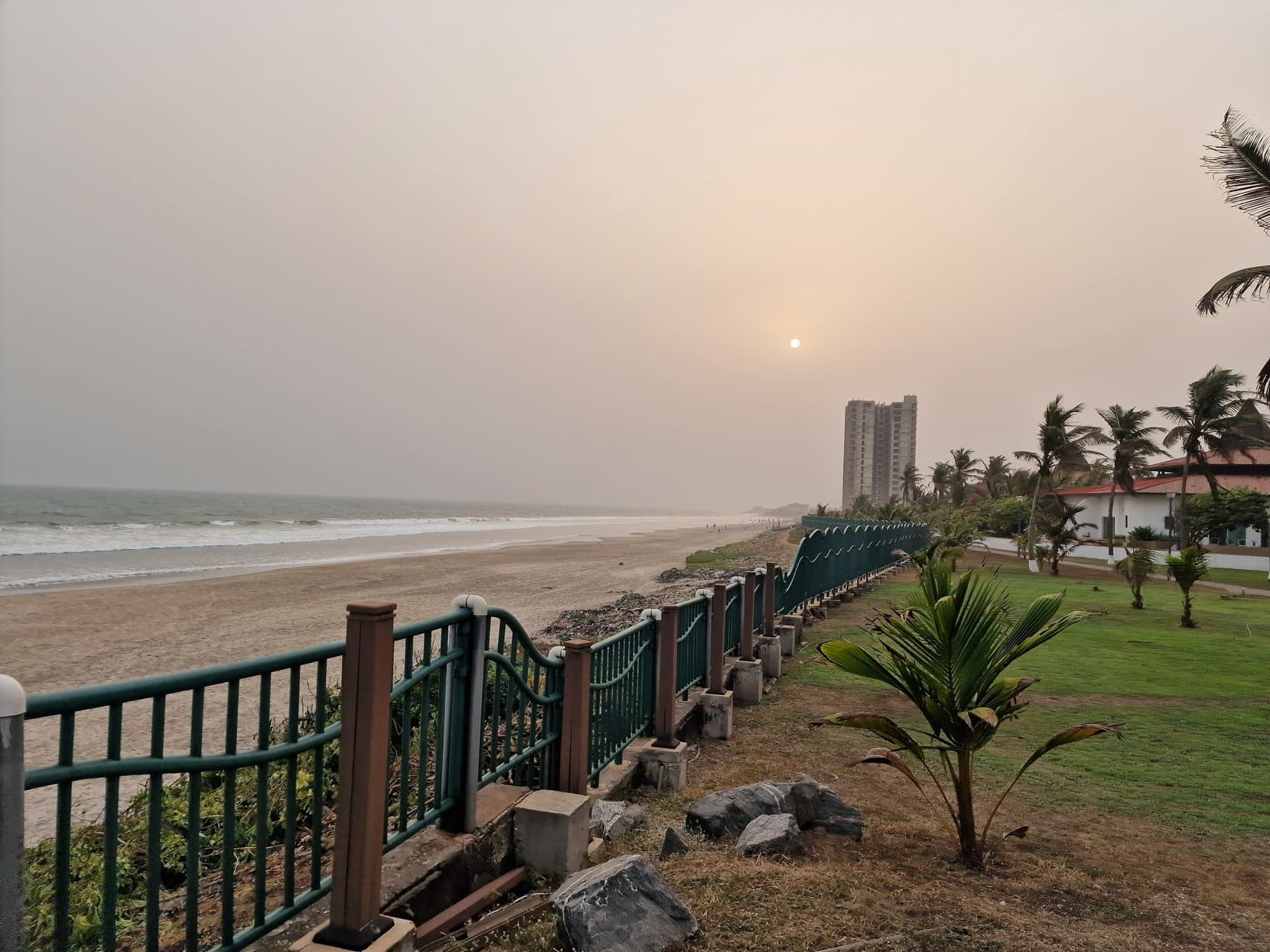
A railing above the beach at dusk with a tower block beyond, Accra, Ghana
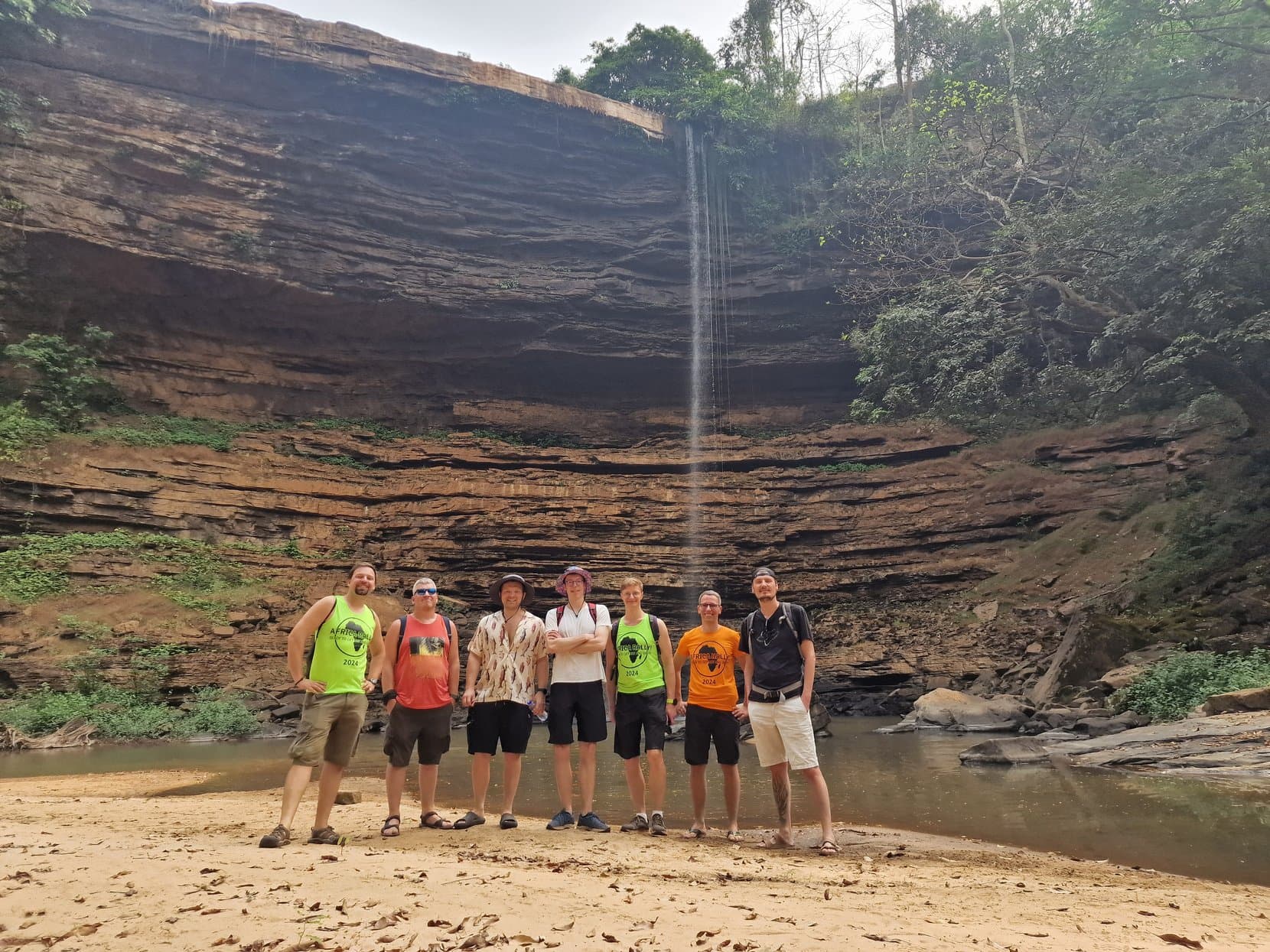
The rally crew standing on the dry sandy floor of the Boti gorge below a thin thread of water, Ghana
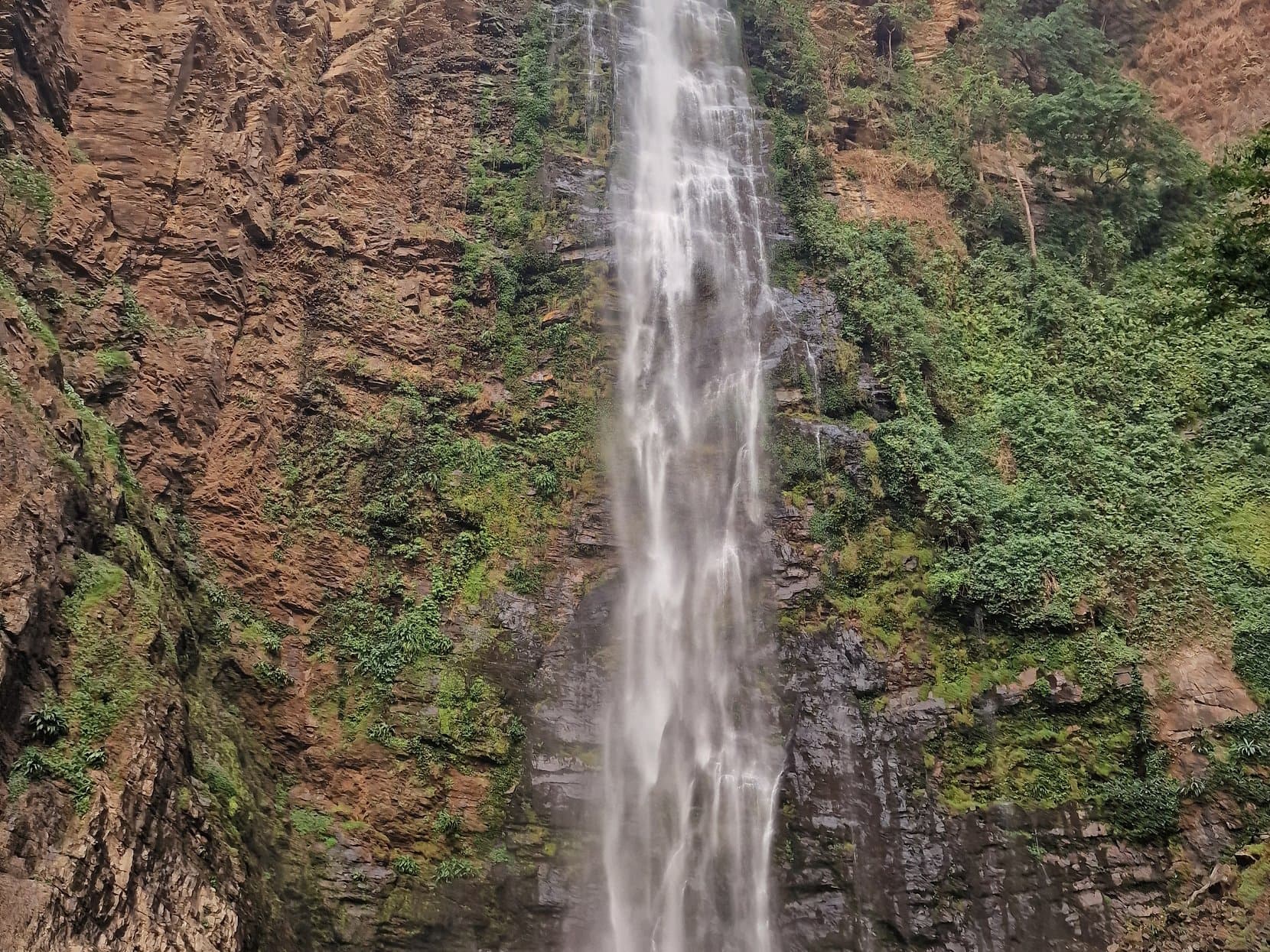
Wli Falls dropping as a single white column down a cliff crowded with trees, Volta Region, Ghana
The rally crew holding a Lithuanian flag on a rope bridge above the rainforest canopy at Kakum, Ghana

Nzulezo at first light

The regions

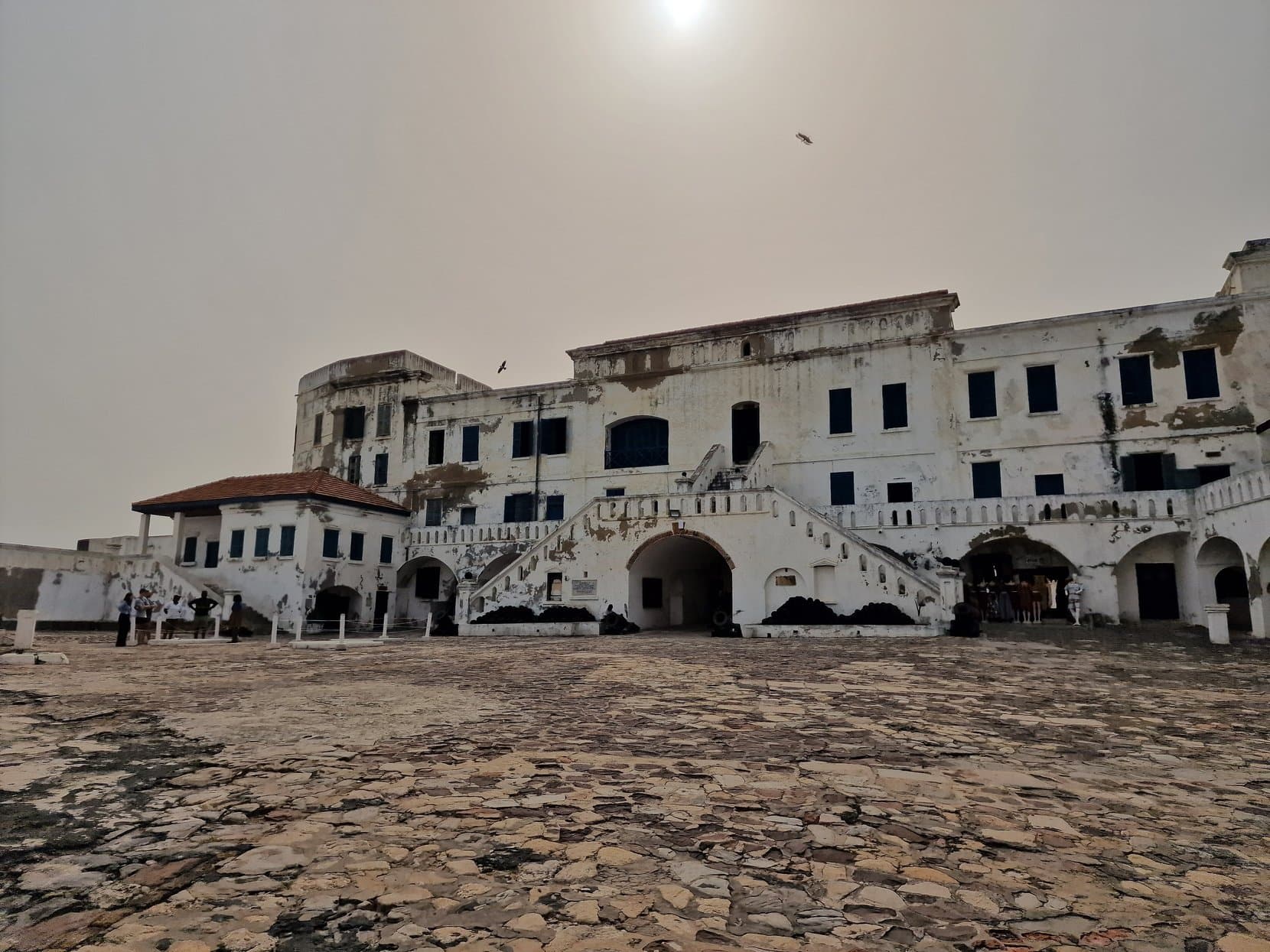
The whitewashed courtyard and upper storeys of Cape Coast Castle under a hazy sky, Ghana

The central coast

Two European forts a dozen kilometres apart, both UNESCO World Heritage: Elmina, built by the Portuguese in 1482 and the first European trading post anywhere on the Gulf of Guinea, and Cape Coast, the largest of the coast's slave-trade fortresses. They are not sightseeing. They are the reason a great many people come to Ghana at all, and they need a day rather than a stop. Half an hour inland the rainforest starts, with a canopy walkway strung forty metres up through it, and below the fort walls a working fishing beach carries on exactly as it always has.

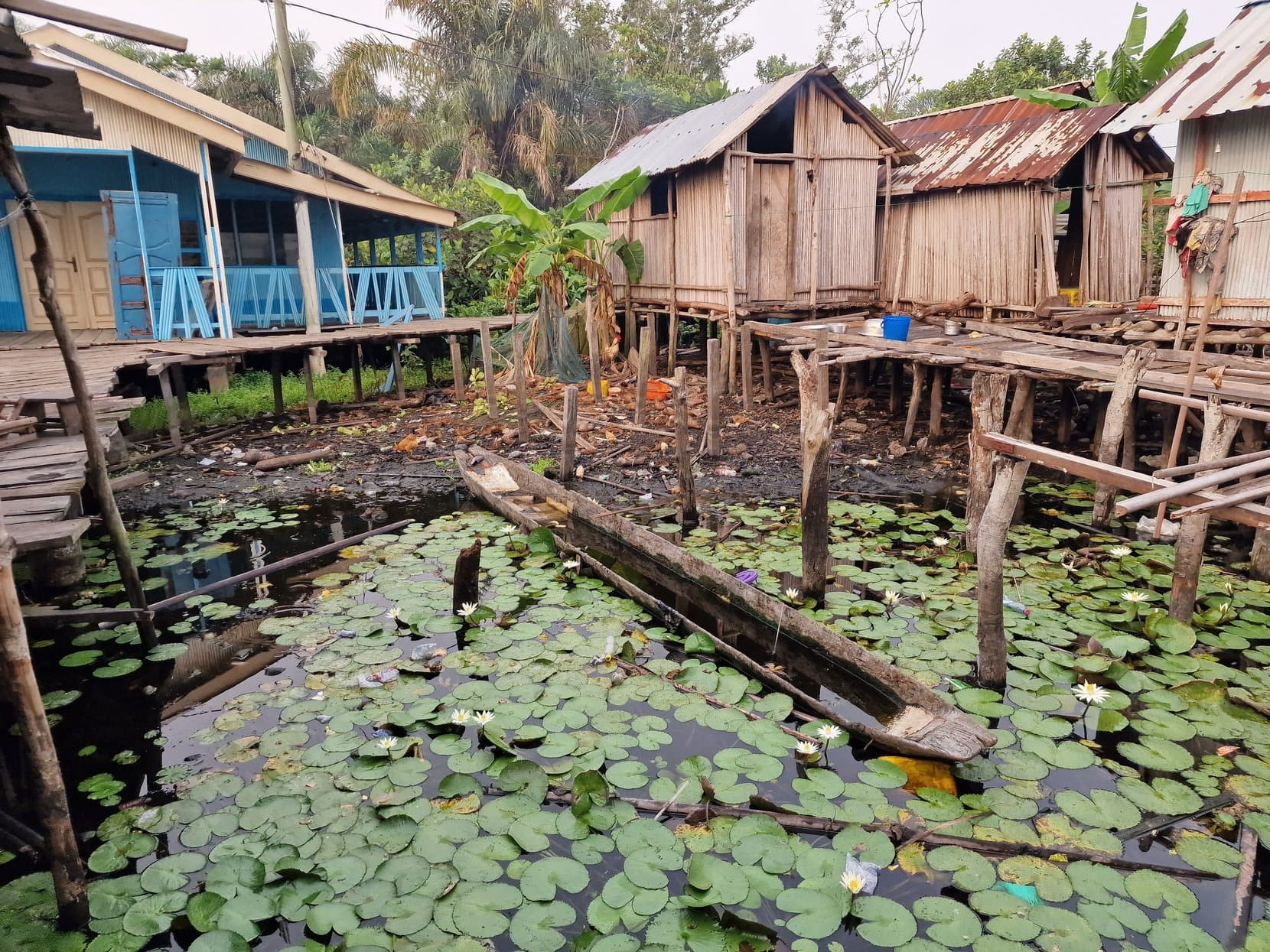
Wooden stilt houses standing over water lilies, Nzulezo, Ghana

The far west

The quiet corner between Takoradi and the Côte d'Ivoire border, and the least-visited thing on this list. Nzulezo is a village of around five hundred people built entirely on stilts over Lake Tadane, reached by boat through creek and swamp – founded, the village says, by people hiding from enemies who would not follow them onto water. The wetland around it is the largest of its kind in the country. It is a long way west of everything else and worth the detour.

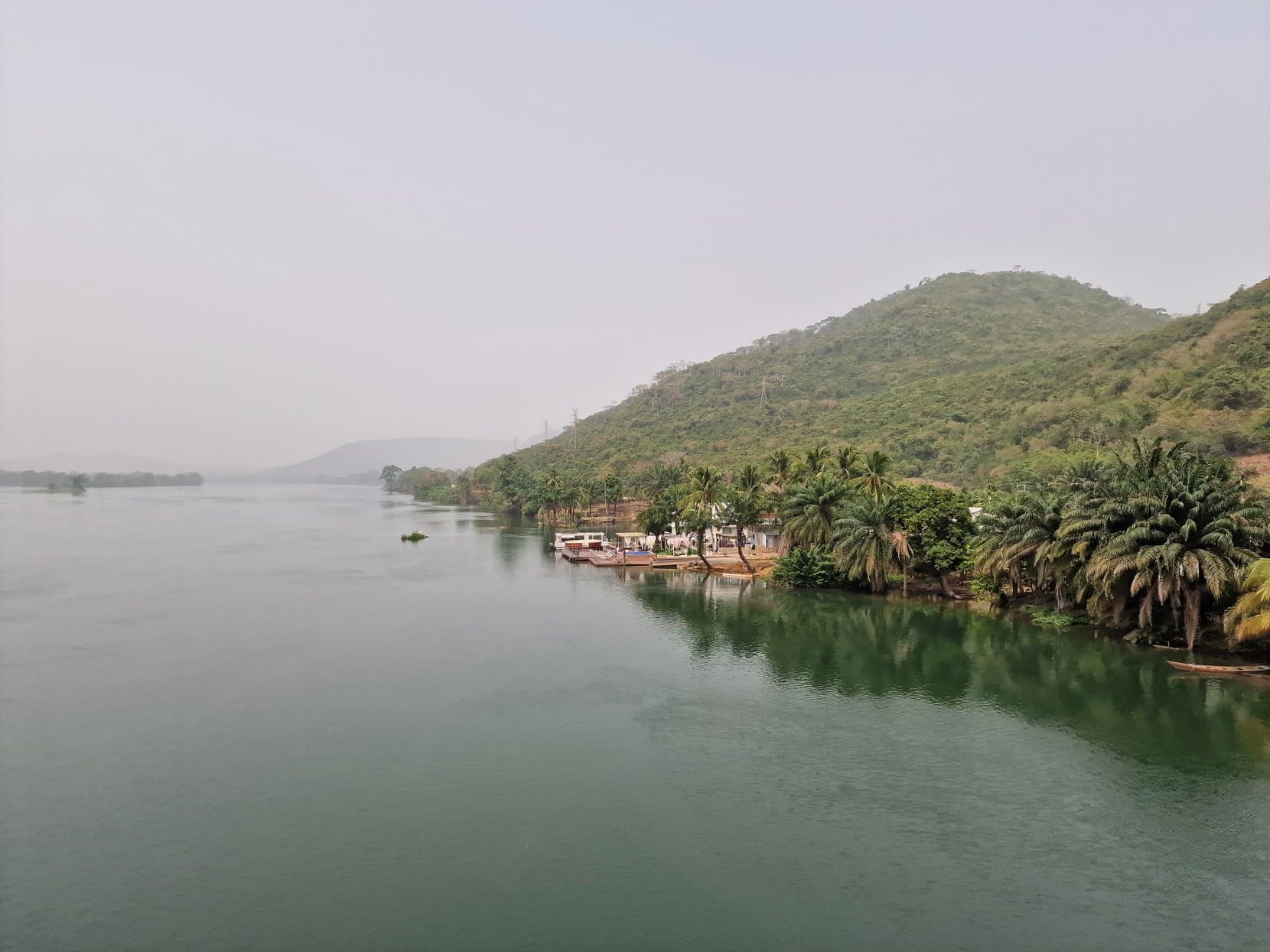
A wide river below green forested hills on the road east into Ghana's Volta region

The Volta east

The strip of hills running up the Togo border, and the greenest, coolest part of southern Ghana. Wli is the headline – an eighty-metre upper cascade generally counted the tallest in West Africa, though Owu in Nigeria disputes it – reached on a flat walk through forest rather than a climb. Boti is the other name you will see, and it is a rainy-season proposition rather than a year-round one. The region is also how you leave for Togo.

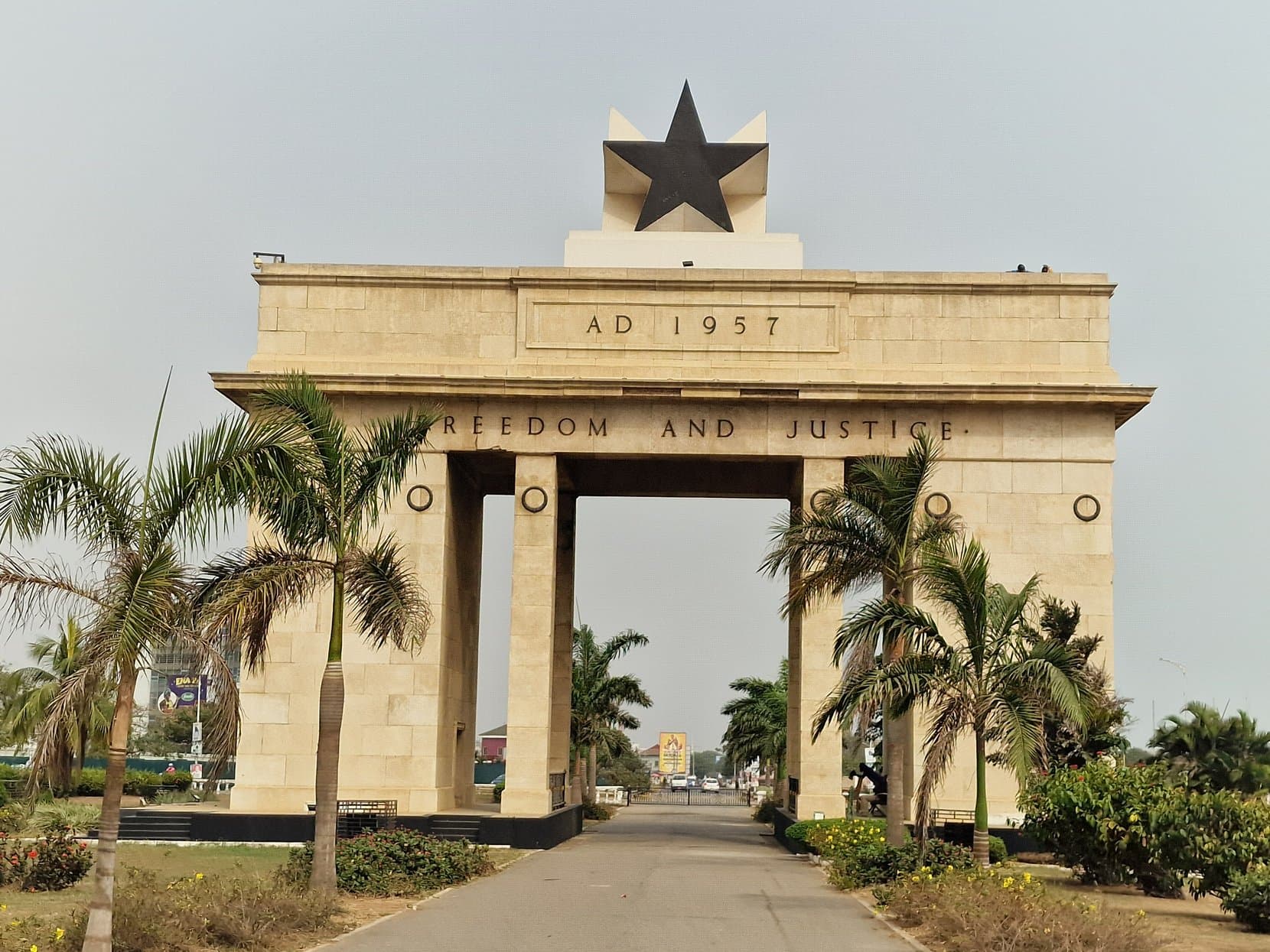
The Black Star Gate above the empty parade ground of Independence Square, Accra

Accra

The capital is a working West African city of several million, and it is not why you come. What it does well is memory: Ghana gives prime ground to its past presidents, and the Nkrumah memorial park and the vast parade ground at Independence Square are genuinely impressive pieces of civic space. What surprised us was how empty the monumental quarter felt on an ordinary weekday, and how quickly it gives way to traffic, dust and mile after mile of small stalls selling much the same goods. Half a day, deliberately.

One region is missing from that list on purpose. Northern Ghana – Mole and its elephants, the old mud-and-stick mosque at Larabanga, the savannah running up to Burkina Faso – is a genuinely different country from the coast, and we did not go there. It is the part of Ghana we would add if we went back, and everything we could tell you about it would be research rather than experience.

Getting there and around

Fly into Accra. It is one of the better-connected airports in West Africa, with direct services from Brussels, Amsterdam, Paris, London, Istanbul and Casablanca among others, and the flight is around six and a half hours from northwest Europe. Most visitors need a visa, arranged in advance rather than on arrival, and a yellow fever certificate is a genuine entry requirement rather than a formality.

On the ground, Ghana is better supplied than most of its neighbours. Intercity coaches actually run to a timetable, shared minibuses fill in everywhere else, and domestic flights cover the long haul north to Tamale. For the coastal trip this page recommends, a car with a driver is what changes the week – the distances are modest on paper and slow in practice, and the good things are spread along two hundred kilometres of road. Driving yourself is entirely possible; bringing your own vehicle across a land border is a different and much larger undertaking.

English is the official language and is spoken widely, which makes Ghana markedly easier to travel in than its French-speaking neighbours on either side. The currency is the cedi, mobile money is everywhere, and cards work in the cities and nowhere else.

What it costs

One number is worth publishing, because it is the part nobody can avoid: return flights from western Europe run about €550 booked ahead. That is what reaching Ghana costs, not what the trip costs. On the ground the country is inexpensive by any European measure, and the rest is a choice about how you sleep and how you move:

StyleWhat that looks like
LeanSmall local hotels, shared taxis and tro-tros between towns, eating where the drivers eat. Ghana has more of this infrastructure than most of its neighbours, and it works
CoreA decent hotel on the coast and in the capital, and a car with a driver for the days you are covering ground – which is where the real difference in this country is bought
SplurgeBeach resorts west of Accra and international-standard hotels in the capital. The ceiling is higher than anywhere else on this stretch of coast, and almost none of it is near the things worth seeing

The line worth spending on is the car. Beds on the coast range from basic to resort and the difference is comfort rather than access; the difference between covering the coast in a hired vehicle and covering it in shared transport is whether you see three things in a day or one.

Tested tips

The waterfall season is not the road season, and you have to choose.

We reached Boti at the wrong end of the dry season and found almost no water in it, which is exactly what the rains are for. Wli was still running and still worth the trip. If waterfalls are the reason you are going, go at the end of the rains in October, and accept that a dirt road can stop you. If reliability matters more, go in January and treat any water you find as a bonus.

Budget a day for the border, not an hour.

Driving in took us six hours, and almost none of it was paperwork. Nobody was hostile and nothing was dangerous; we simply were not being processed, and there was no hurry to explain why. What broke it was the anti-corruption telephone numbers Ghana's customs service posts on the wall of the hall – we started calling them and knocking on managers' doors, and we were through in twenty minutes. Those numbers are real and they work.

Measure this country in hours, not kilometres.

The coast road west of Accra is asphalt and still slow, the Volta run is longer than the map suggests, and four hundred kilometres is a full day with stops. Plan half of what looks reasonable and you will enjoy twice as much of it.

The castles are the day, not a stop on it.

Cape Coast and Elmina are memorials to the Atlantic slave trade, and the visit is a guided walk through holding cells and out through the door the ships were loaded from. People arrive expecting a fort and leave quiet. Give it the time it needs and do not schedule something cheerful immediately afterwards.

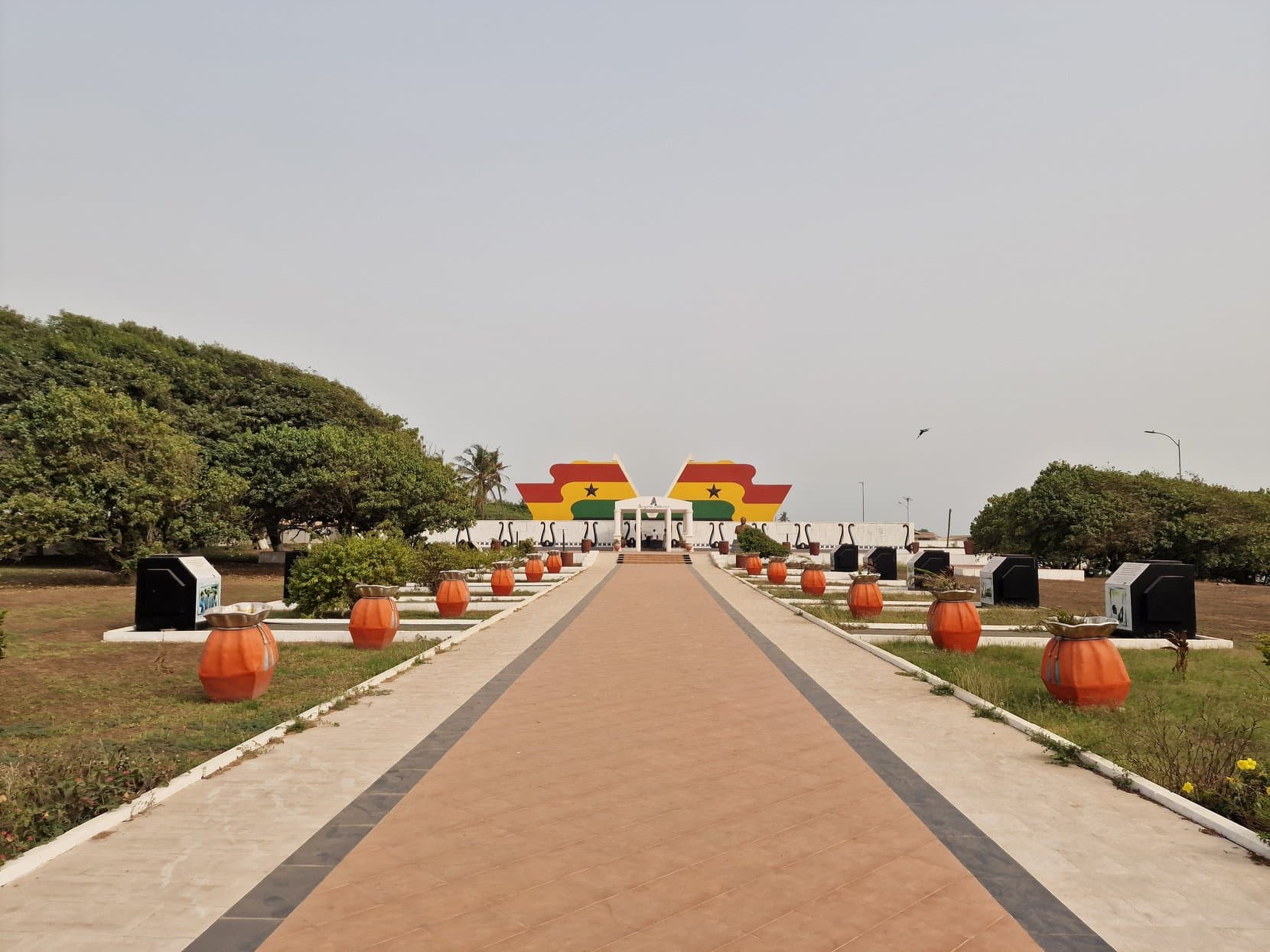
A paved memorial avenue lined with lanterns leading to a gateway in Ghana's colours, Accra

FAQ

Is Ghana worth visiting?▾
Yes, narrowly – and I should declare the bias before anything else, because Ghana came last on our list of the countries we crossed on that drive and none of us was keen to go back. That verdict is about a shape of trip rather than about the country: we crossed it in four days, spent six hours of the first at the border, and gave the capital a day it did not repay. What Ghana genuinely has is a short, strong run west of Accra – the two UNESCO slave-trade forts on the central coast, a rainforest canopy walkway behind them, and a stilt village in the far west that almost nobody reaches – plus a green strip of hills and waterfalls on the Togo border. Flown for on its own and done in five days, that is a good trip. Toured comprehensively over a fortnight, it is the thing that made us say Ghana was our least favourite of seven countries.
How many days do you need in Ghana?▾
Five is the answer I would give almost everyone: four on the coast west of Accra and one to get to it. A week lets you add the Volta hills on the eastern border, which is the part we liked best after the coast and the part fewest visitors see. Two weeks is what the north needs – Mole, the old mud mosques, the savannah – and we did not go there, so treat that as research rather than a recommendation. Under three days you are looking at Accra and one thing near it, and Accra is the weakest part of the country.
Is Ghana safe to visit?▾
Check your own government's current advice and let it outrank this page, but Ghana is one of the calmer countries in the region and is usually rated as such – the US placed it at Level 2, exercise increased caution, when we went, the same level it gives a great deal of Europe. The realistic risks are ordinary ones: petty theft and street crime in Accra, particularly after dark, and road safety, which is by a distance the most dangerous part of a Ghanaian trip. Our own trouble was bureaucratic rather than physical. We spent six hours at the land border being told nothing, and we left with a tracking device fitted under a passenger seat. That is a frustration and an expense; it was never a threat.
When is the best time to visit Ghana?▾
November to March for certainty: dry roads, reliable days, and the trade-off being the harmattan haze that blows dust down from the Sahara between December and February. Late October or early November is the better window if you can take it – the rains have just eased, the country is still green, and the waterfalls are still running. The main rains fall from April into mid-July, with a short drier gap in August and a minor wet season through September and October. Nothing closes in the rains; what changes is whether an unpaved road is a road.
Cape Coast or Elmina – which castle should you visit?▾
If you have one day, Cape Coast. It is the larger of the two, it is the one with the fuller interpretation, and it is generally described as the largest of the fortresses built on this coast for the Atlantic slave trade. Elmina is the older by a wide margin – the Portuguese built it in 1482, making it the first European trading post anywhere on the Gulf of Guinea – and it is the more architecturally striking of the two, standing over a working fishing harbour. They sit about a dozen kilometres apart and both are UNESCO World Heritage, so doing both in a day is possible. Whether you should is a different question: one of these visits is a great deal to absorb and two is more than most people want.
Is Cape Coast Castle worth visiting, and what is it actually like?▾
It is the single most worthwhile thing we did in Ghana, and it is not a pleasant morning. The visit is a guided walk through the castle: the holding cells below ground where captured people were held before being loaded, the cells used for those who resisted, the governor's quarters directly above, and the doorway onto the beach known as the Door of No Return, through which people were taken out to the ships. The building is whitewashed and beautiful and sits over a busy fishing beach, which makes the contrast harder rather than easier. Give it a half day, go with the guide rather than alone, and do not stack anything light immediately after it.
Is Wli Falls the highest waterfall in West Africa?▾
It is generally counted as such, and that claim is worth stating carefully rather than flatly. Wli, in the Volta region on the Togo border, drops in two stages – an upper cascade of roughly eighty metres and a lower one of around sixty-five – and most Ghanaian and international sources describe it as the tallest in West Africa. Owu Falls in Nigeria is the standing rival claim, and measurements of both vary by source. What is not in dispute is that the lower fall is reached on an easy walk through forest rather than a climb, that it runs all year, and that it was one of the highlights of our trip.
Are Ghana's waterfalls worth it, and when do they actually run?▾
Wli runs year-round and is worth the journey east on its own. Boti, the other name you will see on every list, really does need the rains – we got there in the dry season and there was barely water in it, which is not a complaint about the place so much as a fact about the calendar. The distinction matters when you are planning: if your trip is built around waterfalls, aim for the end of the rains in October rather than the middle of the dry season, and if your dates are fixed in January or February, plan around Wli and treat everything else as a bonus.
Do you need a visa for Ghana?▾
Most visitors do, but the answer now depends on your passport. In May 2026 Ghana became the first country on the continent to open fee-free entry to every African passport holder – still an online application through the government e-visa portal, but with the fee removed. Travellers from Europe, the UK and North America still need a visa, and it is arranged in advance rather than on arrival. A yellow fever vaccination certificate is a real entry requirement here rather than a formality, and it has to be given at least ten days before you travel. If you are driving your own vehicle in, the paperwork for the car is an entirely separate problem from the paperwork for you, and it is the one that will cost you the day.
Is Ghana expensive?▾
Getting there is the one unavoidable cost: return flights from western Europe run about €550 booked ahead, through Brussels, Amsterdam, Paris, Istanbul or Casablanca. That is what reaching Ghana costs, not what the trip costs. On the ground it is inexpensive by any European measure, and by the standards of the region it is well supplied – there are real hotels, real restaurants and a functioning bus network, which is not true everywhere on this coast. The line where money actually changes the trip is transport: a car and a driver for the days you are covering ground turns a week of long, hot hours into a week of seeing things.
Is Accra worth visiting?▾
For half a day, and not as the point of the trip. What the capital does well is civic memory – Ghana gives prime ground to its past presidents, and the Nkrumah memorial park and the enormous parade ground at Independence Square are impressive pieces of public space, quiet enough on an ordinary weekday to be slightly eerie. What surrounds them is a hot, dusty, heavily trafficked city of several million where retail happens in tens of thousands of small stalls rather than in shops, and where getting anywhere takes longer than it should. We expected more of it than we got. Everything we would tell you to fly for is west or east of it.
Can you drive into Ghana, and combine it with Togo and Benin?▾
Yes, and it is a natural piece of road – Ghana, Togo and Benin sit end to end along the Gulf of Guinea, and the whole stretch from the Côte d'Ivoire border to Cotonou is a few long days of driving. We did exactly that in two elderly estate cars. What you should know is that taking a vehicle across these borders is a different order of difficulty from crossing on foot or by bus: the paperwork for the car is where the hours go, the arrangements vary sharply between one post and another, and the difference between the right crossing and the wrong one is measured in hundreds of euros. If you are not bringing a vehicle, the same route by bus and shared taxi is straightforward and people do it constantly.

Stories from Ghana

Ghana: the one country we were not keen to come back to

Ghana: the one country we were not keen to come back to

Last of seven countries on our drive – and the narrow version that still earns the flight.

Wli Falls, and the one that was dry

Wli Falls, and the one that was dry

Two falls in one day – the famous one was dry, the far one a highlight of the whole rally.

The Kakum canopy walk, and the sweat that comes with it

The Kakum canopy walk, and the sweat that comes with it

Seven rope bridges forty metres up – a short walk, and the heat nobody warns you about.

Cape Coast Castle and the Door of No Return

Cape Coast Castle and the Door of No Return

A white fort over a fishing beach, cellars beneath a chapel, and a door onto the sea.

Nzulezo: the Ghanaian village you reach by boat through a swamp

Nzulezo: the Ghanaian village you reach by boat through a swamp

Half an hour by boat through a green tunnel, and then a village standing on the lake.

Six hours at the Ghana border, and a tracking device under the seat

Six hours at the Ghana border, and a tracking device under the seat

Six hours, almost none of it paperwork – and the numbers on the wall that ended it.

The rest of the drive

Ghana was the fifth of seven countries crossed on one drive down the West African coast, from Guinea to the Nigerian border. Immediately east are Togo, which is honestly a single day, and Benin, which we added at the end because the roads had held – and which turned out to be the best of the three.