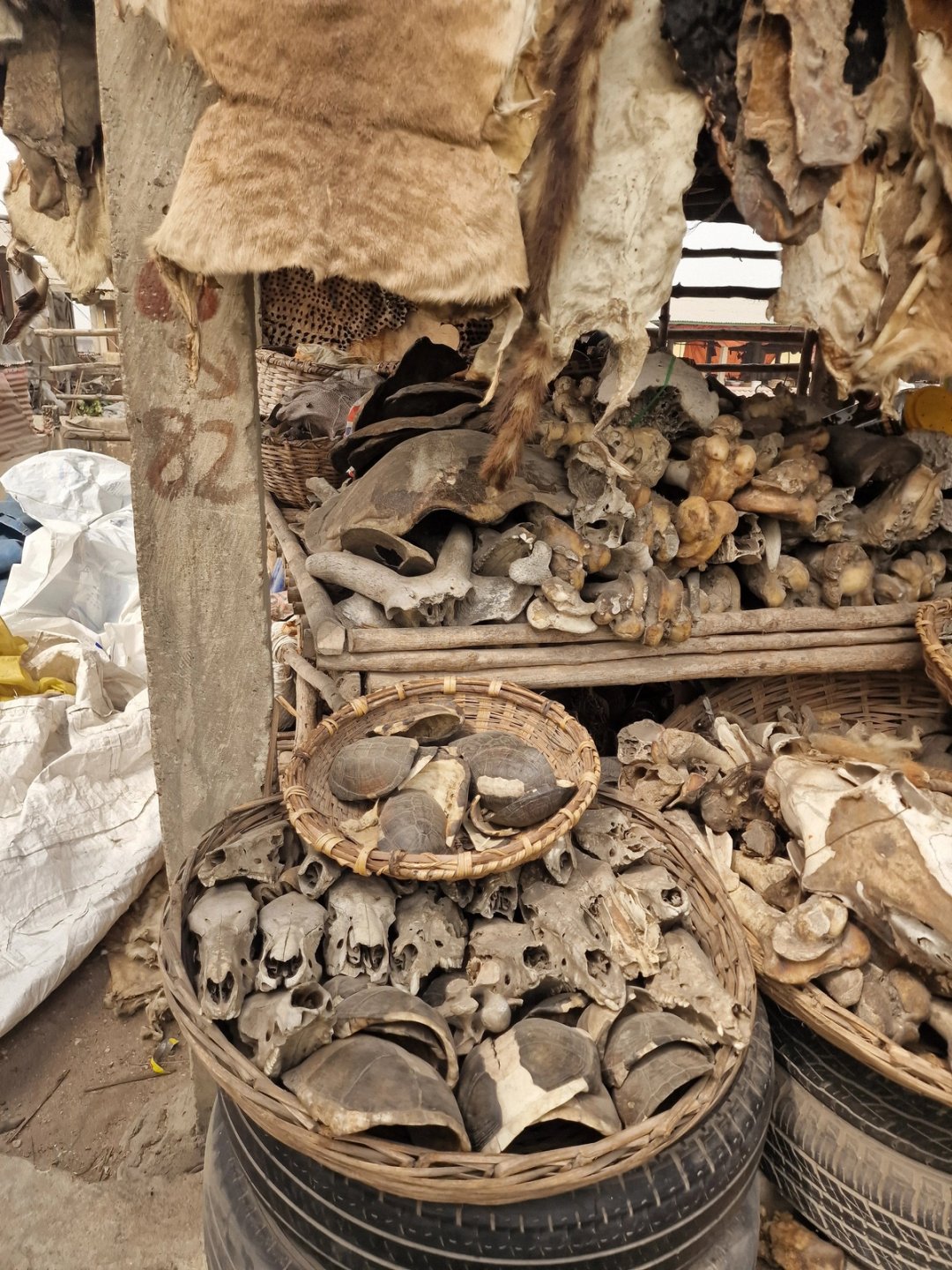
Fetish market, Cotonou, Benin · Benin · Africa
We went to see the chief priest in Cotonou, just in case
Four of us on moto-taxis to ask a chief priest to look after two parked Subarus.

Tested by Paulius Pikelis · 140 countries


We had two cars to leave in a country we had not planned to visit, a long way still to
drive on a future trip, and a run of luck that had held all the way down the coast.
So on our last morning we went to see the chief priest.
Benin is where Vodun comes from. Not a version of it, not an echo of it: this coast is
the source, and what crossed the Atlantic on the slave ships and became voodoo in Haiti
and in Louisiana started here. In Cotonou that is not history. It is a functioning
religion with priests and a market that supplies them.
Getting there was its own thing. Cotonou moves on moto-taxis, and the way you use one
is to stand at the edge of the road until a man on a scooter slows down, agree where
you are going, and get on the back. There were four of us by then, two having flown
home from Lomé the day before, so four bikes weaving through the traffic in loose
formation. It is the most efficient and least reassuring transport I have used.
What we asked for was protection and luck, which in our case meant two old Subarus
sitting in a backyard for a year. We went in the spirit of it cannot hurt.
He took it seriously. He asked what it was for, laid the cowries out across the table
and read them properly, and it took as long as it took. Then we paid. And then the
cowries were consulted again, and it emerged that a further payment was required.
I have thought about that more fondly than I expected to. He was a professional doing
a job for a customer, the customer was four foreigners who had turned up on hired
scooters, and he priced accordingly. I would have done the same.
The cars were still there a year later, incidentally.
More from Benin
The abandoned airliner parked on the beach in Cotonou
When the voodoo festival happens in Benin, and what you get if you miss it
Ganvié: Benin's city built on water to escape the slave trade