Gyeongbokgung and Bukchon, Seoul, South Korea · South Korea · Asia
Exploring Seoul's palaces in a hanbok
Rent the dress, walk in free, and stop being a tourist for an afternoon.

Tested by Paulius Pikelis · 140 countries


Planning this trip?
The full guide covers the route, logistics, costs, booking links and timings – everything you need to plan this yourself.
Seoul in 2 Days: A Weekend Itinerary
See the guide →I came back from the DMZ in the middle of a Saturday afternoon and walked into
Gwanghwamun Square, which after a day of old lanes and teahouses felt like
arriving in a different city. Then I reached the gate of Gyeongbokgung and
noticed that a good share of the people going in were not in shorts and
trainers but in hanbok, the flowing traditional Korean dress. I had to have
one. I followed the costumes around the corner, found a rental shop, picked a
piece that fitted, gave my name as Pau-Lee, and went in to conquer the old
city.
There is a practical reason so many people do it: wear a hanbok and the grand
palaces let you in for free. The better reason is how it feels. Walking the
courtyards of Gyeongbokgung, the first and largest of the Joseon palaces,
through its painted gates and past the throne hall in full costume, you stop
being someone photographing the place and become, a little, part of it.
Emperor Pau-Lee explored every corner. The one catch is July: a hanbok holds
heat astonishingly well, and I was fascinated, delighted and soaked through.
The old city had already won me over the day before. Changdeokgung, the
prettier palace to my eye, has a Secret Garden at the back that you can only
see with a guide, which made getting in feel like a privilege. Between the
palaces sit the hanok villages, whole neighbourhoods of tiled-roof houses
somehow preserved in the centre of a mega-city: Namsangol, calm and cared for,
and Bukchon, where I arrived at the end of the working day and fitted in like
a fish in a barrel.
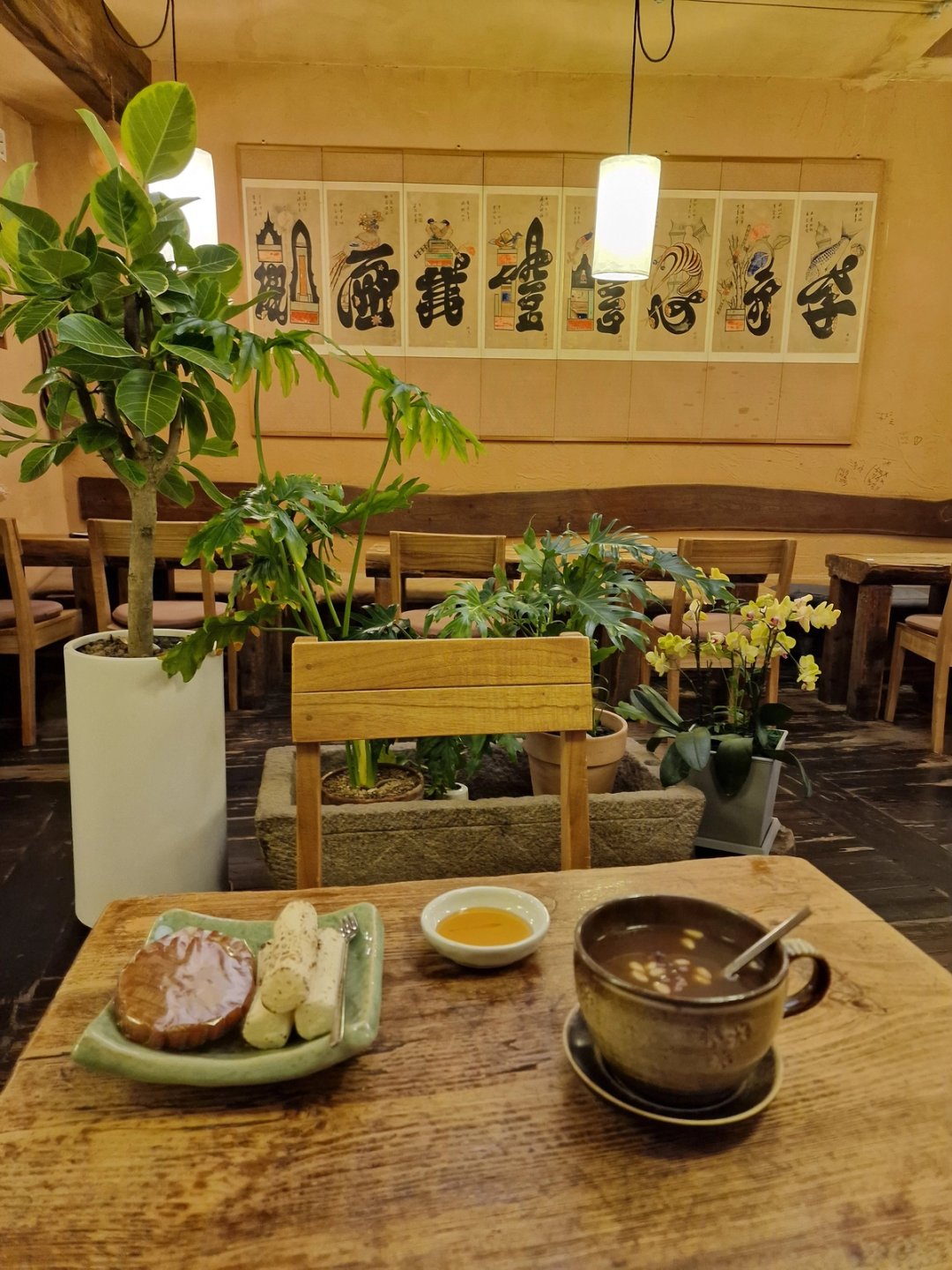
I liked Bukchon enough to abandon my tiny hotel for a night in a hanok there:
sliding doors, low tables you sit on the floor to use, tea and cookies on
arrival, a view over the city, and in place of a bed, a mattress laid straight
on the floor. If that is traditional, I can do traditional. I slept like a
king.