Banjul · Gambia · Africa
Banjul: an afternoon in one of Africa's smallest capitals
The ferry lands you in a capital so quiet you can hear it – an hour was enough.

Tested by Paulius Pikelis · 140 countries


Capitals announce themselves. You feel the traffic thicken, the buildings
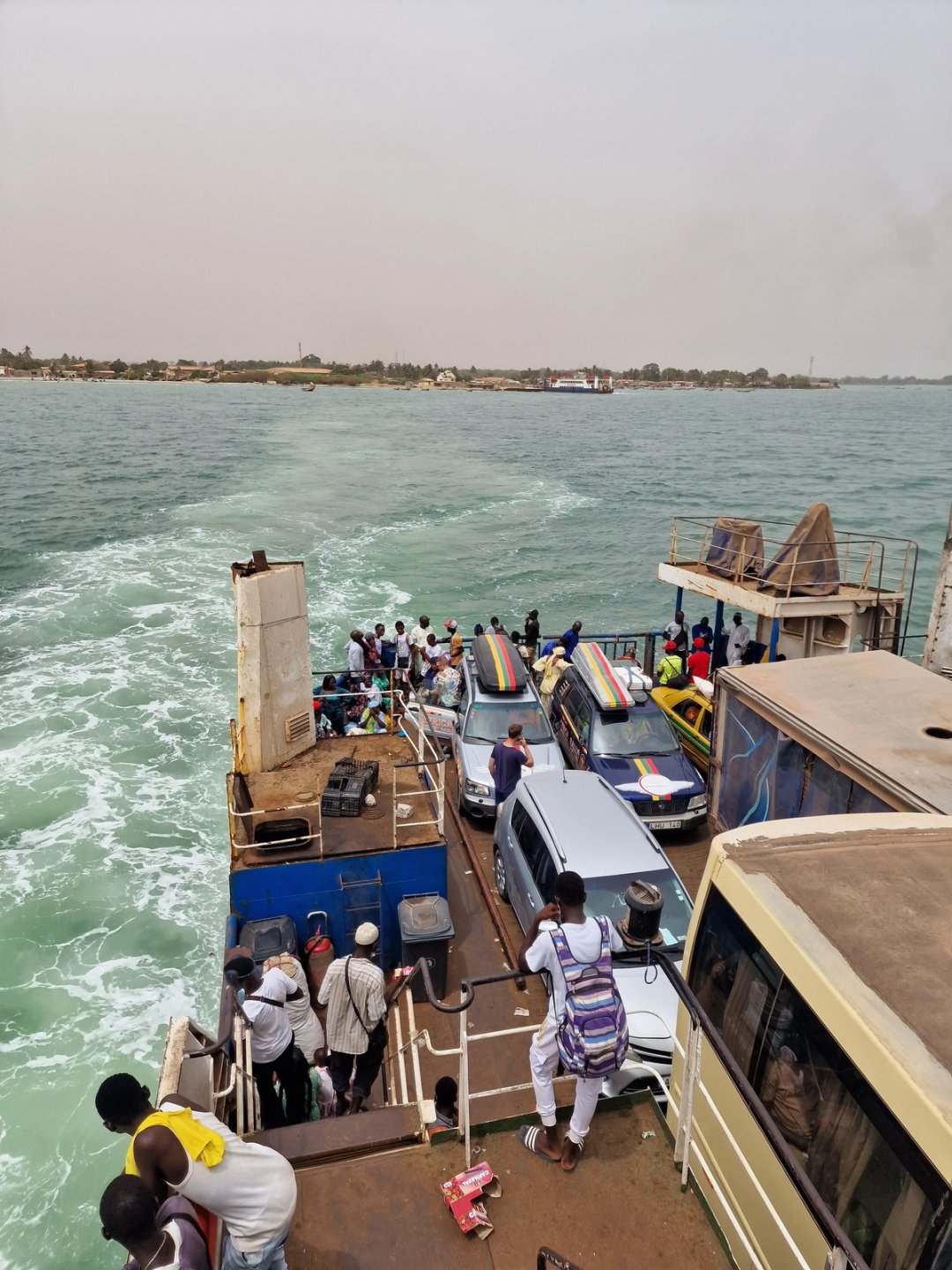
climb, the noise arrive. Banjul does the opposite. We drove off the Barra
ferry straight into the centre of The Gambia's capital – there is no
approach, the port is the city – and found it almost silent.
It was a Sunday afternoon, which may explain some of it. It does not
explain all of it. Banjul is one of Africa's smallest capitals, squeezed
onto an island between the river mouth and the sea, and most of the
country's actual life has long since moved down the coast. What is left
has a faded, handsome stillness: colonial-era arcades over empty
pavements, shuttered shopfronts, a market street where the few traders
out seemed mildly surprised to see anyone.
Our errands were modest. We walked the streets. We found an ATM and fed
it our cards – first dalasi of the trip, a small ceremony in a country
where cash still does the work. A vendor leaned in at the car window. A
mural wall ran its whole length in blues and yellows with nobody there to
look at it but us.
Then Arch 22, the one unmissable structure in town: a huge cream arch
over an empty avenue, with a curved arena roof floating beside it. We
parked the rally cars underneath, took the photographs you take, and had
the monument entirely to ourselves – a national landmark with no queue,
no ticket line, no one else.
That was Banjul, or at least our Banjul: an hour or so of pleasant,
slightly eerie emptiness. Then we pointed the cars at Bakau, where
several dozen crocodiles were waiting to make the day considerably less
quiet.
More from Gambia
Oysters and crocodiles: a rest day on the Gambia river
Into The Gambia: the Karang border and the Barra ferry
Bijilo forest: monkeys beside the resort strip