TestedRoutes
GuidesDestinationsInspireAbout me

TestedRoutes Newsletter

Field-tested travel routes, in your inbox when they drop.

© 2026 TestedRoutes. All rights reserved.

ContactFAQLegalTermsPrivacyRefundsSecurityAffiliate disclosureSitemap

We independently review everything we recommend. When you buy through our links, we may earn a small commission at no extra cost to you. More on how this works.

ExploreGuidesDestinationsInspireAbout
Destinations›Senegal

North & West Africa · The Atlantic coast

Senegal

Is it safe, is it worth it, and how long you need – for Dakar, the colonial river island in the north, and the lake that is not always pink.

Paulius Pikelis

Tested by Paulius Pikelis · 140 countries

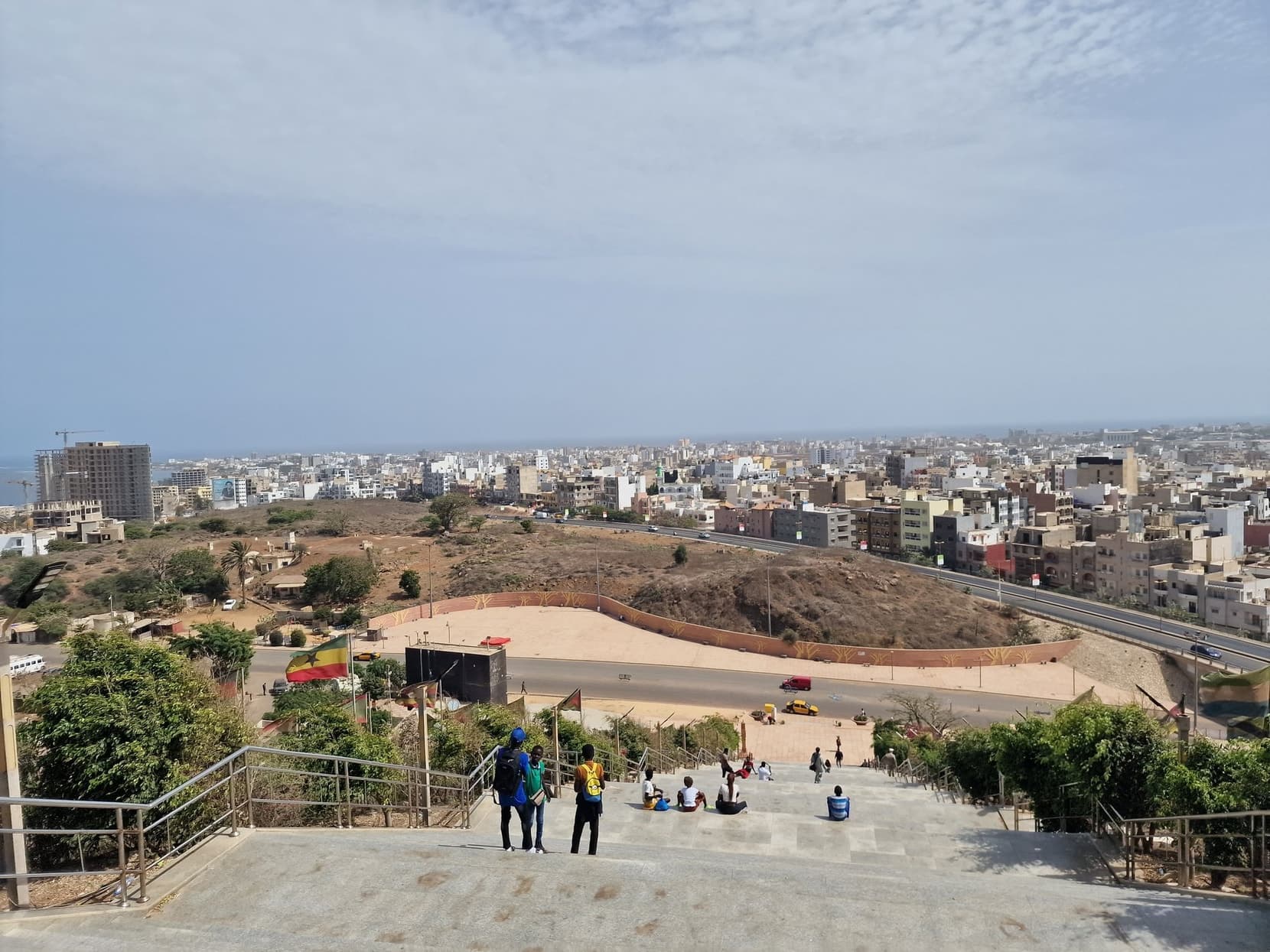
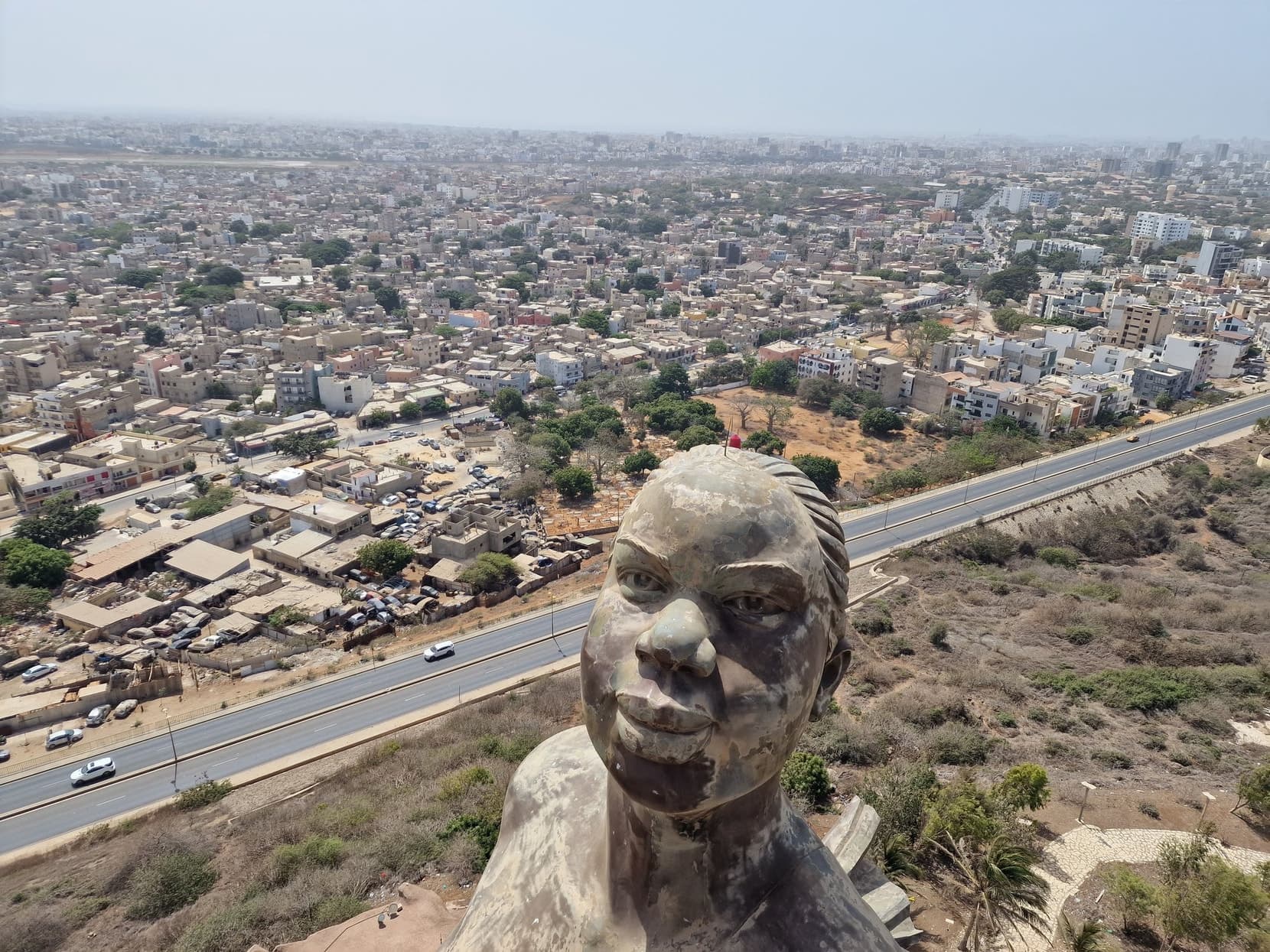
Dakar spreading below the hill of the African Renaissance Monument, Senegal

Is Senegal worth it, and what do you actually do there

We arrived in Senegal out of Mauritania, after a week of desert and a border crossing that took most of a day, and the change was immediate: trees, traffic, restaurants, a country that felt like it had somewhere to be. That contrast probably flatters it. It also explains why Senegal is the West African country to choose first – it gives you the region without asking for the same tolerance the countries around it do.

What you actually do: give Dakar a full day and climb inside the monument standing over it; drive north to Saint-Louis and walk a colonial island at dusk with the river on both sides; go out to the salt lake north of the capital and see what colour it is that week; and then drive – past baobabs standing alone in dry fields, through villages where the market has spilled onto the tarmac. The famous island of Gorée sits off Dakar, and getting onto its ferry is a real part of the plan rather than a formality.

The honest caveats: the headline sights are fewer than the brochures suggest, and one of the most famous – the pink lake – may not be pink at all. Dakar is hot, loud and not built to charm you. The south carries travel advisories the rest of the country does not. And the distances are real: on a week-long trip, a good share of the days are driving days. None of that is a reason to skip it. It is a reason to arrive expecting a country rather than a set of photographs.

When to go

The dry season is the answer, and the only complication in the near term is a fortnight of sport in the capital.

November to February

The season, and it is not close. Dry, warm days and cool nights, the coast at its best and the roads at their easiest. It is also when the lake stands its best chance of showing colour, because the pink depends on the water staying salty.

March to June

Hotter every week, and dusty. Still workable – we crossed at the end of May and drove the whole country without weather ever being the problem – but the middle of the day starts making the decisions for you.

July to October

The rains. Green, dramatic, far fewer visitors, and the season when unpaved side roads turn unreliable. The coast still works; the deeper you go, the more the sky sets the schedule.

A date to know about

Dakar hosts the Youth Olympic Games from 31 October to 13 November 2026, across Dakar, Diamniadio and Saly. Expect beds and flights around those dates to price and fill like a different country. Go then for the atmosphere, or deliberately avoid the fortnight – either is a good decision, but make it on purpose.

What I would pick

Late November or early December: the dry season open, the heat gone, and the Youth Olympic surge behind you. If I wanted it cheaper and emptier I would take late June and accept hot middays and a real chance of early rain – the trip still works, you just start earlier and rest at noon.

How long to stay

Senegal scales cleanly around its driving: the capital is the core, the north is the reason to stretch to a week, and adding The Gambia turns it into a two-country trip.

Three or four days

Dakar and its edges: the monument, the coast road, the markets, and the lake north of the city. Enough to like the place and to see why the capital is not the whole story – not enough to leave it.

A week

The trip most people should take: Dakar, north to Saint-Louis for the colonial river island, the lake, and the baobab country running south. It is the length the country is shaped for, and the one we would build a guide around.

Two weeks

Senegal plus The Gambia, the way we drove it – a second country inside one trip, the river crossing that joins them, and the road south into Casamance. More borders, more paperwork, and a genuinely different holiday from the week-long version.

The regions

Dakar's low rooftops spreading below the hill of the African Renaissance Monument

Dakar and Cap-Vert

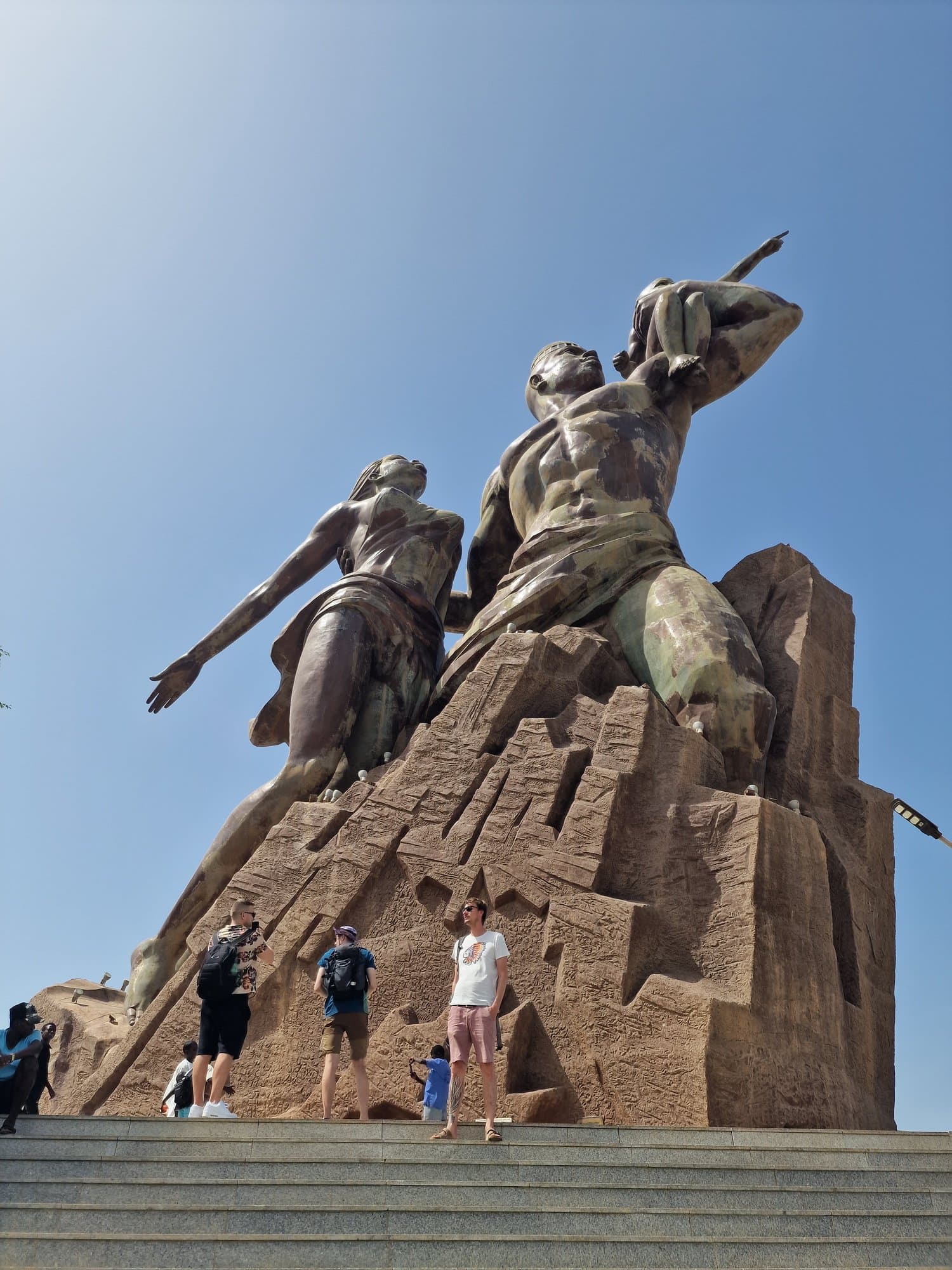
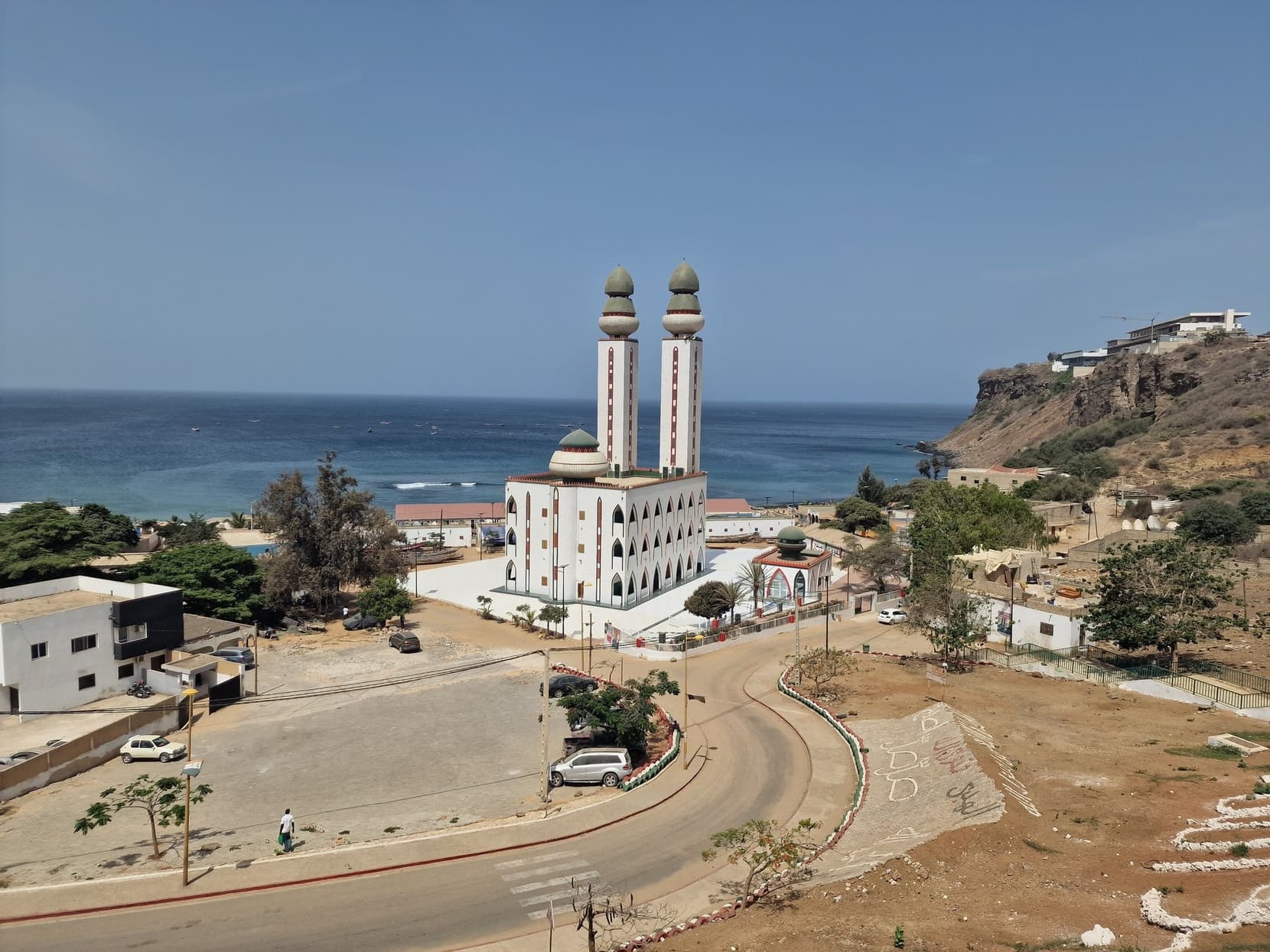
The capital sits on a peninsula that runs further west than anywhere else on the continent, and it is loud, hot and immediately likeable. The African Renaissance Monument stands above it all and can be climbed from the inside; the coast below carries fishing beaches, a mosque built almost in the Atlantic, and the ferry pier for Gorée. It is a city to give a full day, not an afternoon on the way somewhere.

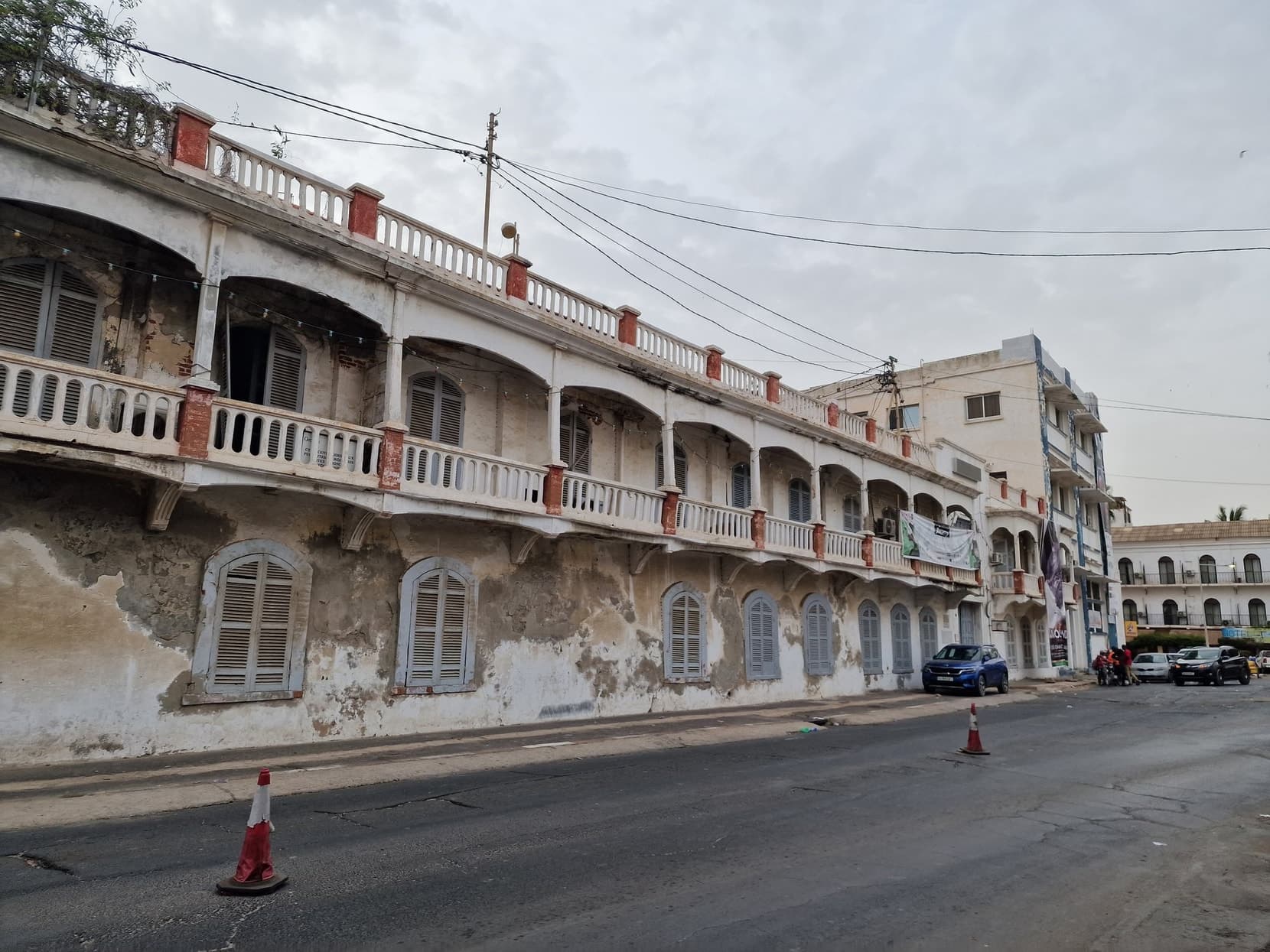
A row of balconied colonial buildings with peeling paint on the island of Saint-Louis

Saint-Louis and the north

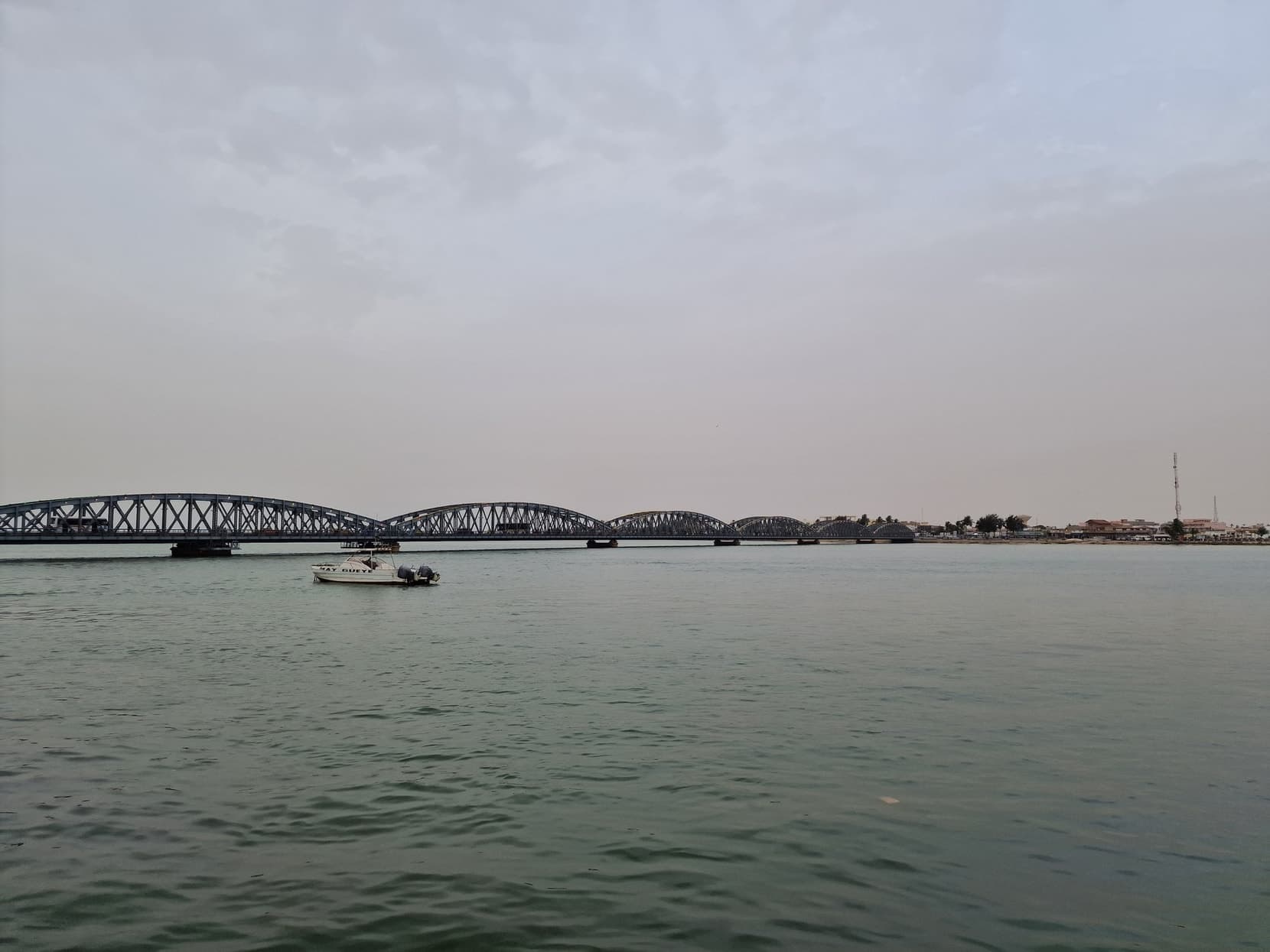
The old French colonial capital sits on a narrow island in the Senegal River, reached over an iron bridge, and it wears its history on its facades – balconies, shutters, paint that gave up decades ago. After the desert to the north it feels like an easy town, and that is the point. Restaurants, an evening walk, and the river on both sides of you.

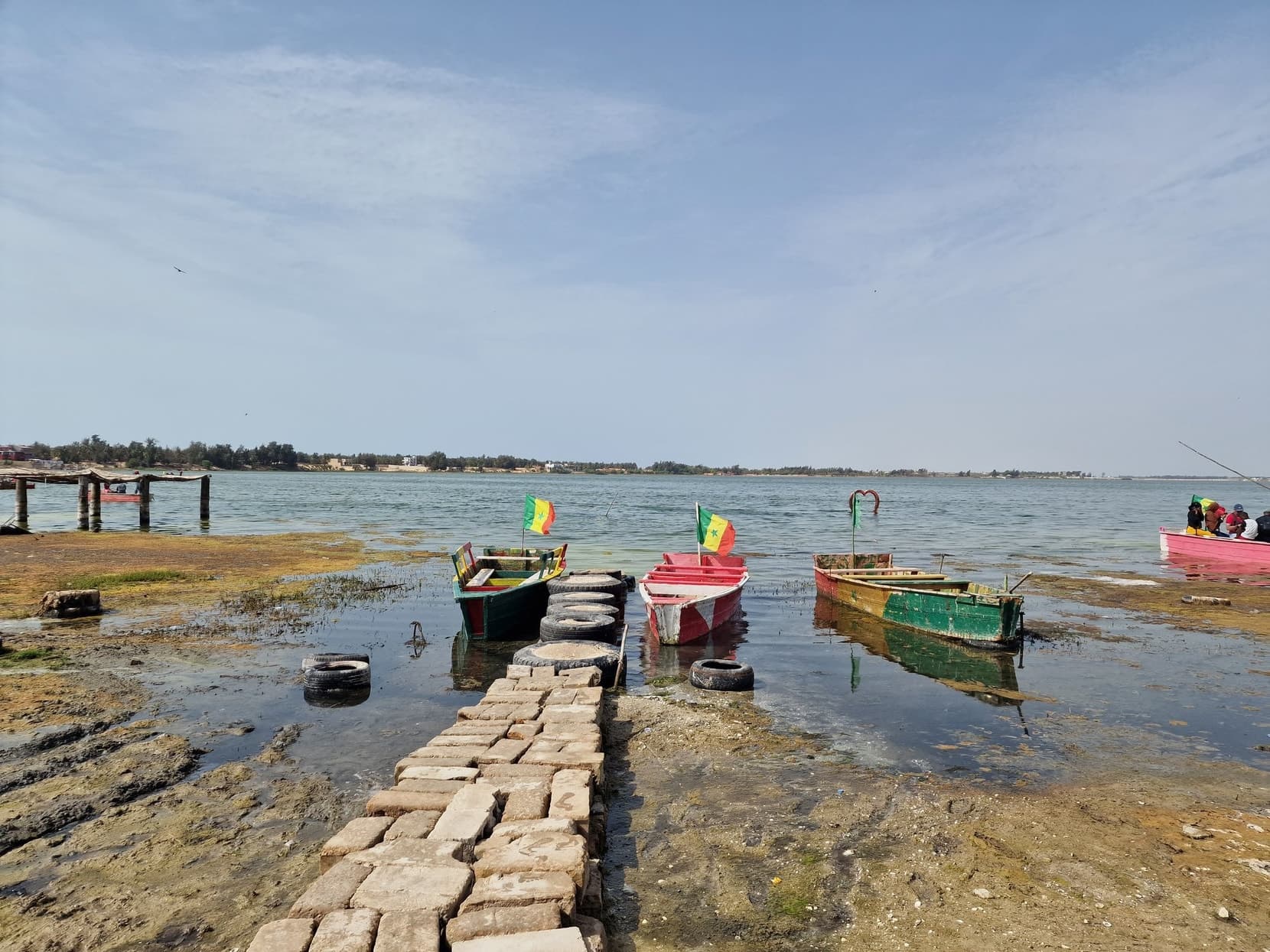
Painted pirogues moored along the shallow shore of Lac Rose near Dakar

The lake and the coast north of Dakar

Lac Rose – Lake Retba – is the famous one, a shallow salt lake ringed with souvenir stalls and wooden boats, and the reason most itineraries come north out of the city. Whether it is pink when you arrive is a separate question, and one worth checking before you drive out. The coast either side of it is working shoreline: salt, fishing and long empty sand.

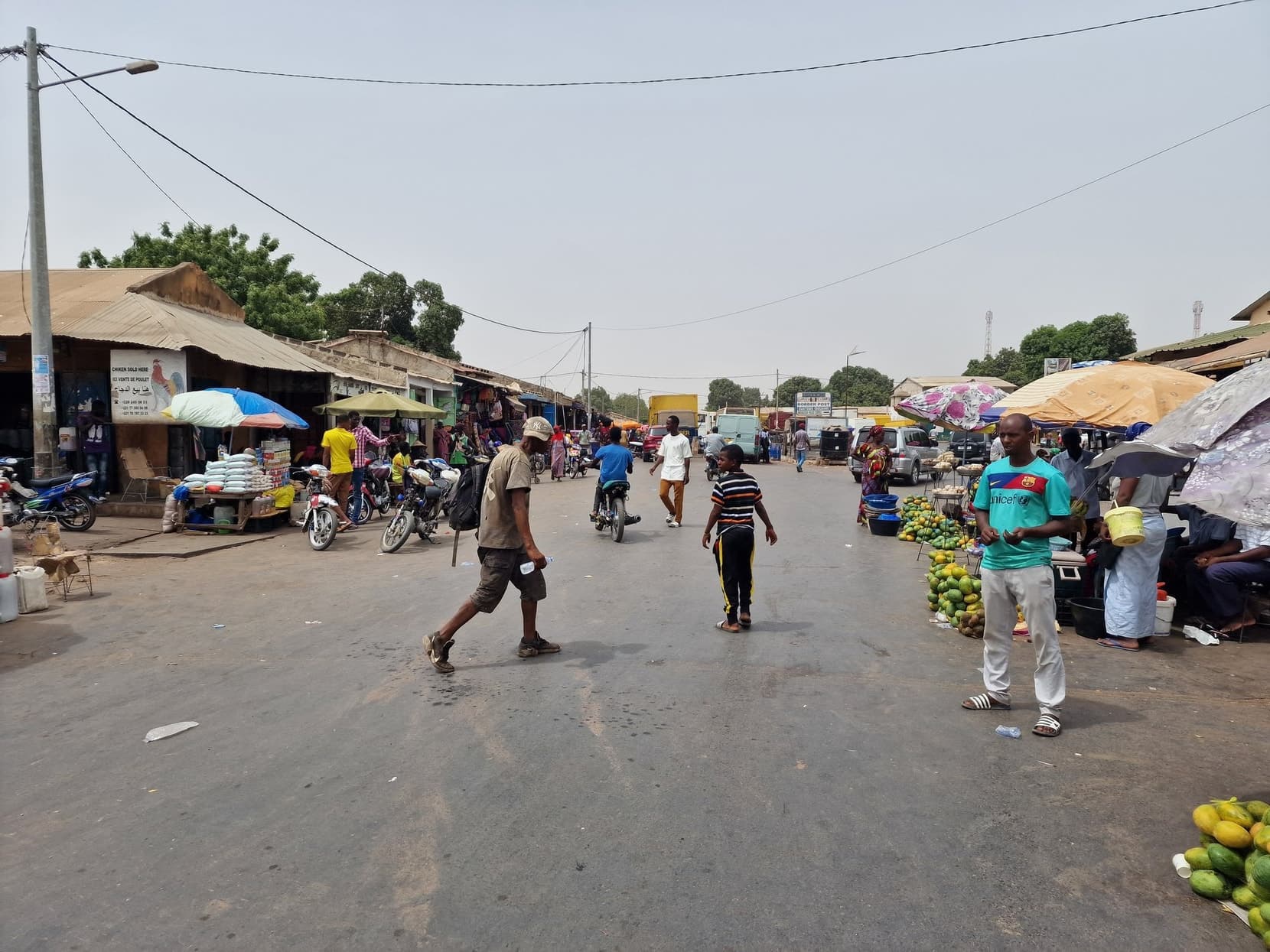
A village street market beside the road in southern Senegal, stalls and traffic

The road south

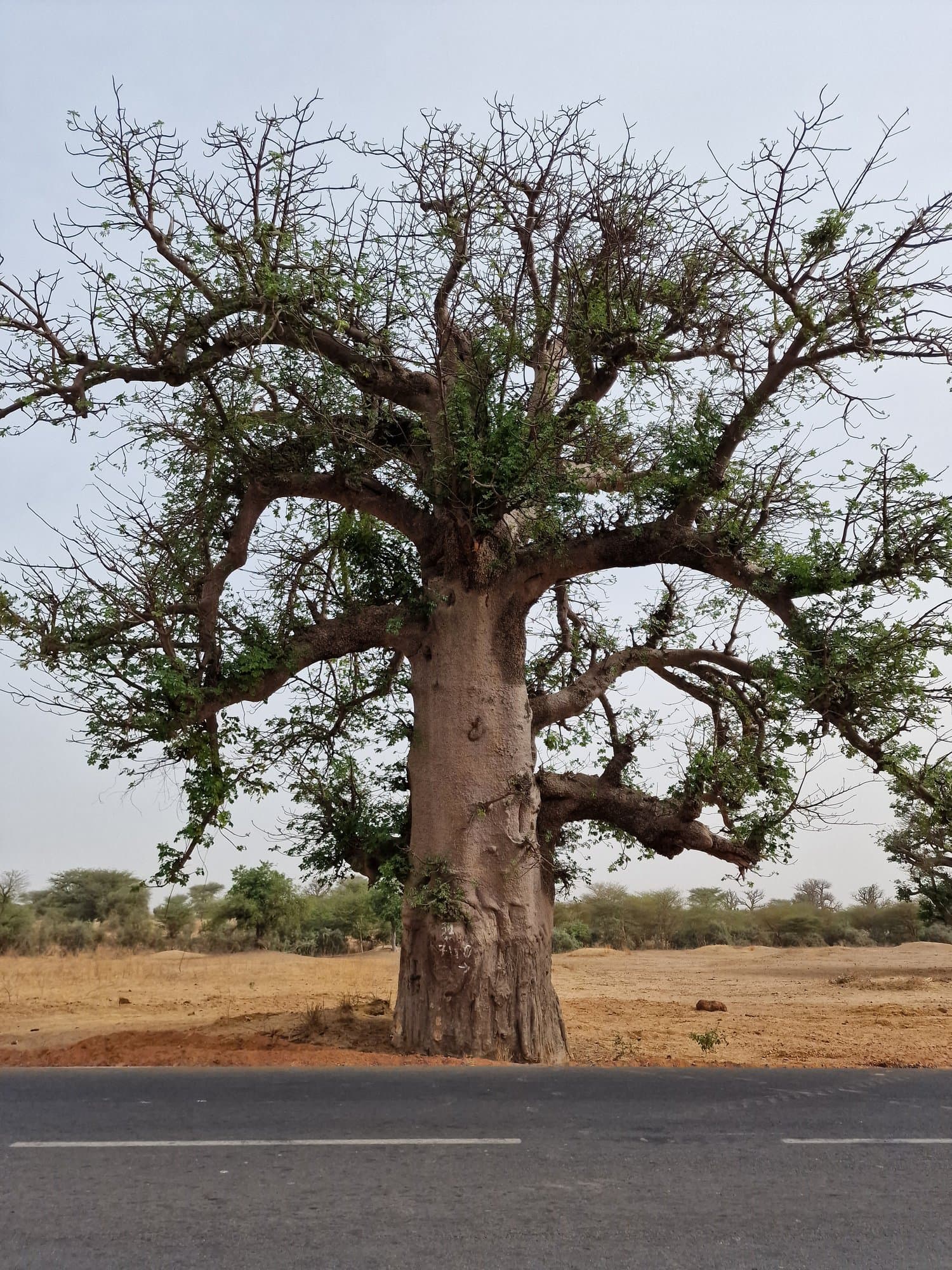
South of Dakar the country flattens into the Senegal everyone pictures: single-lane tarmac, roadside markets, and baobabs standing alone in dry fields with the road bending around them. This is where most of the driving happens on a longer trip, and where the trip stops being about sights and starts being about the country between them.

Casamance, the green strip south of The Gambia, is the region this page cannot show you: we drove its main road to reach Guinea-Bissau and photographed almost none of it. It is the part of Senegal that carries travel advisories, and the part with a coastline people go out of their way for.

From the trip

The iron Pont Faidherbe crossing the Senegal River at Saint-Louis
Balconied colonial buildings on the island of Saint-Louis
The bronze African Renaissance Monument above Dakar with visitors on the steps
Dakar spreading below the hill, seen from the monument
The white twin-minaret Mosquee de la Divinite at the edge of the Atlantic below the Mamelles
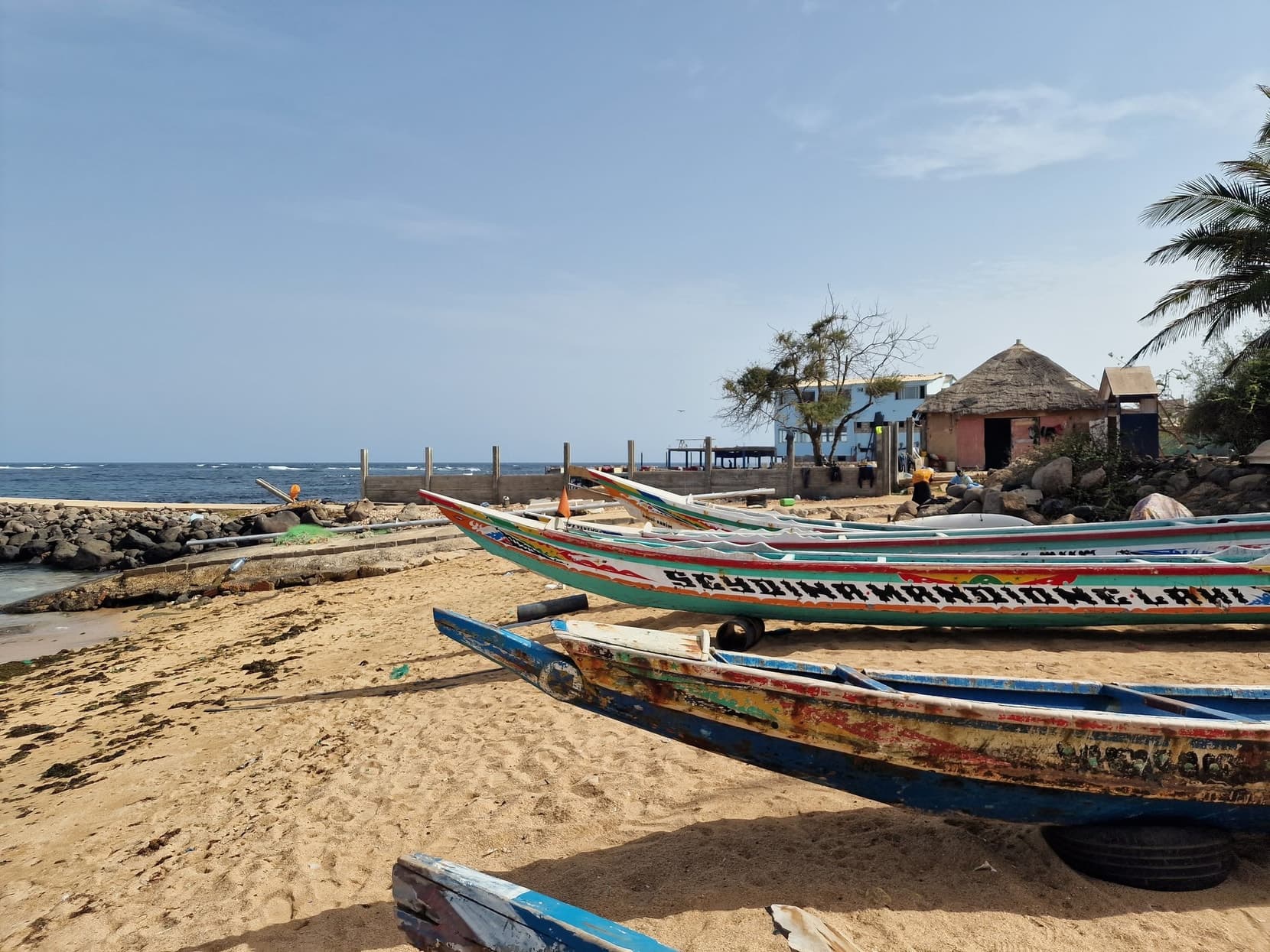
Painted fishing pirogues drawn up on a beach in Dakar
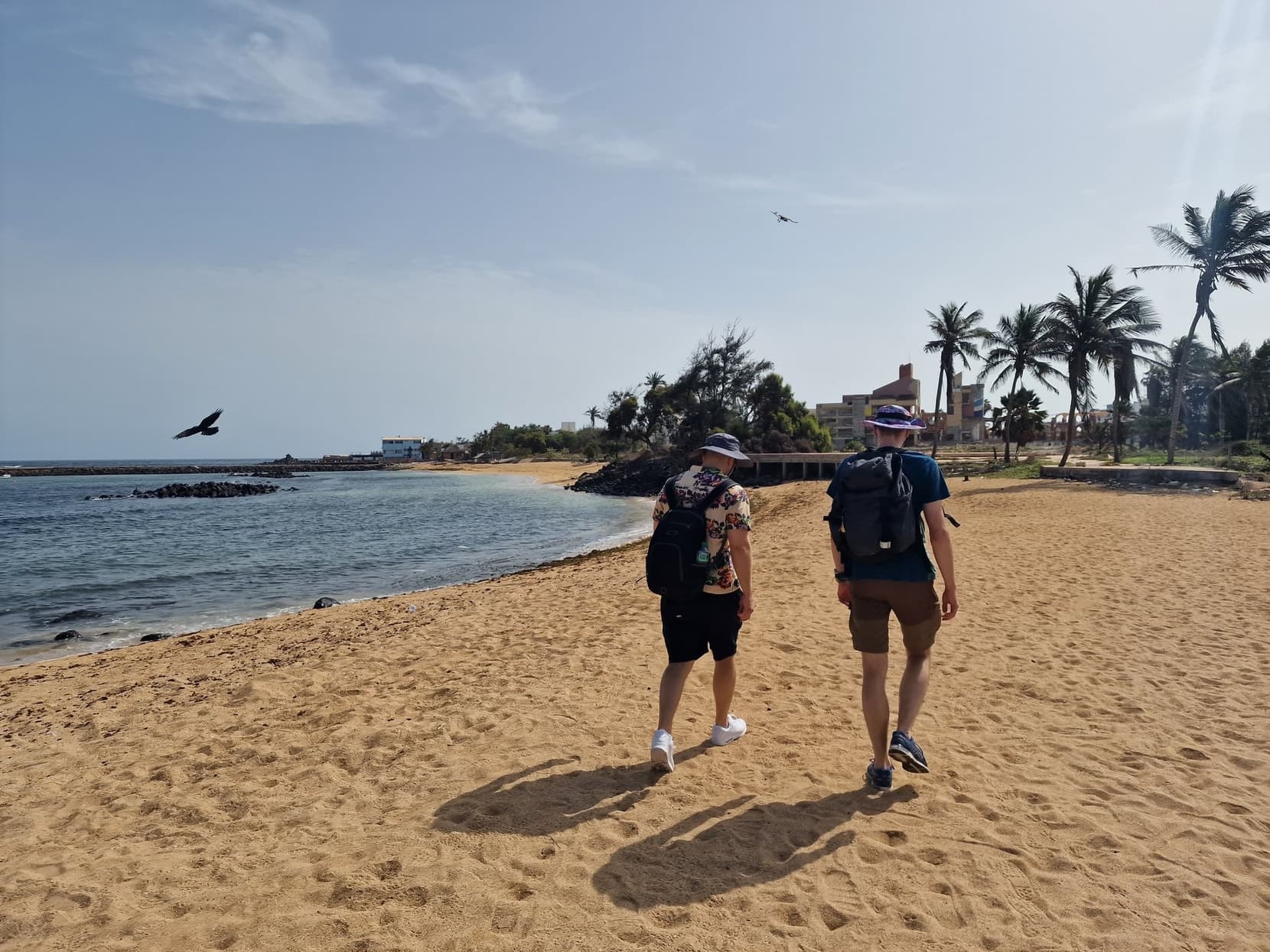
Two travellers walking a sandy beach on the Dakar coast
Painted pirogues moored at the shallow edge of Lac Rose
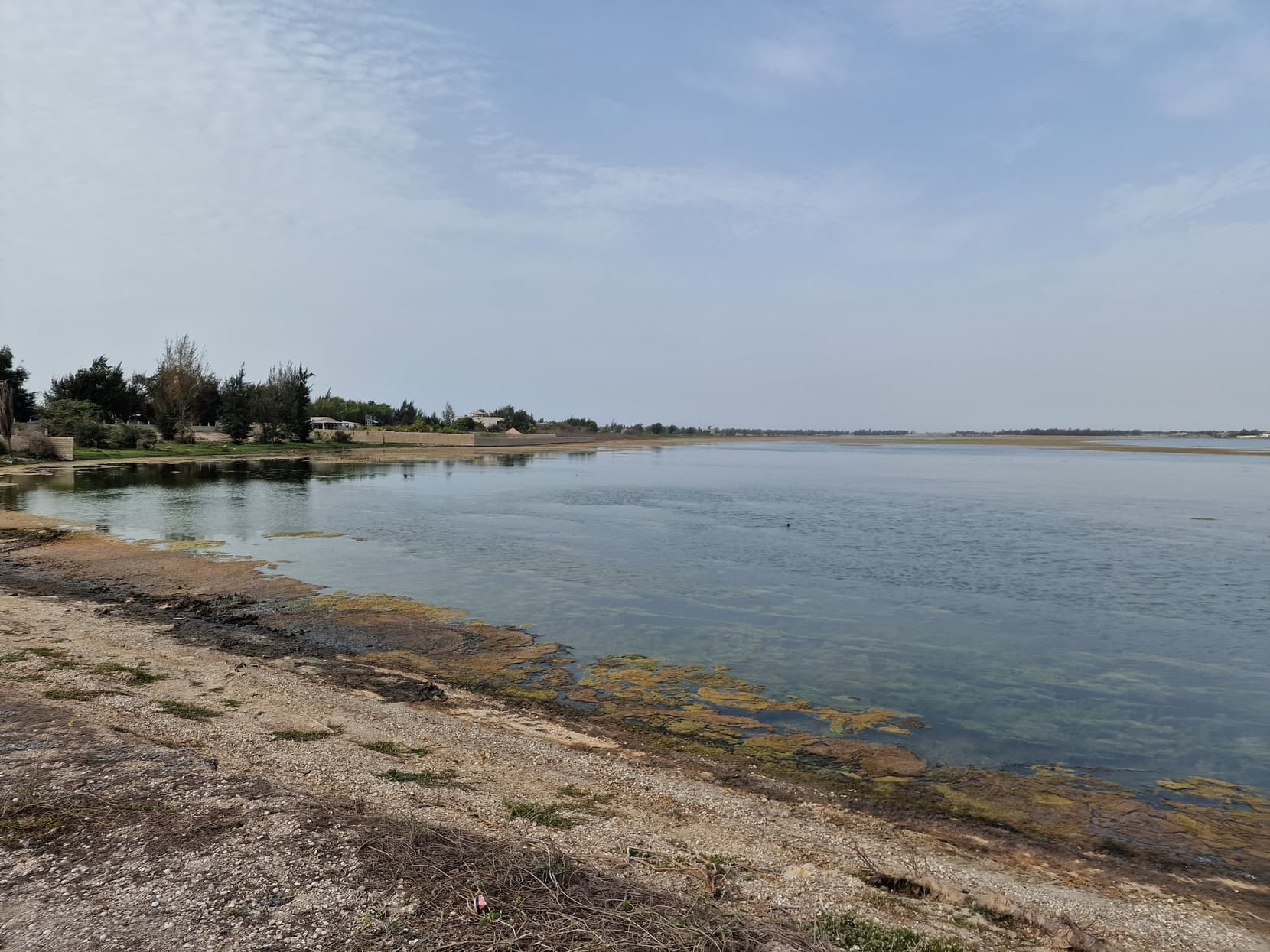
The pale shallow shore of Lac Rose under a flat sky
A large baobab standing beside the tarmac road in southern Senegal
A busy village street market beside the main road in Senegal

The bridge onto the island, Saint-Louis

Getting there and around

Fly into Dakar – Blaise Diagne is the main international airport and one of the better-connected in West Africa, with direct routes from several European cities. Overland, Senegal sits between Mauritania in the north and The Gambia and Guinea-Bissau in the south, and all three borders are drivable; that is how we arrived and left. Most Western passports need no visa for a short tourist stay, but verify close to travel.

On the ground the main roads are properly surfaced and ordinary cars manage them without drama – this is not a country that demands a 4x4. What it demands is time: the distances between Dakar, Saint-Louis and the south are long enough that a week-long trip spends real days behind the windscreen. Shared taxis and buses cover the same routes cheaply if you would rather not drive.

Two things worth knowing before you go. If you bring your own vehicle across a land border, the car's paperwork is slower and more expensive than your own entry, and you will be asked for it again on the road. And the ferry to Gorée is the one piece of transport in the country that can quietly cost you an afternoon – treat it as a plan, not a detail.

What it costs

Getting there is the unavoidable line: return flights from western Europe run about €400 booked ahead. That is what reaching Senegal costs, not what the trip costs – on the ground this is an inexpensive country, and most of what you came for is free to stand in front of. The rest is a choice about how you sleep and move:

StyleWhat that looks like
LeanSmall guesthouses, eating where the taxis stop, shared transport between towns, and the sights that cost nothing – which along this coast is most of them
CoreDecent guesthouses and small hotels, a hired car or a driver for the days that need one, and the paid visits taken without thinking about it
SplurgeSenegal does sell comfort, mostly on the coast south of Dakar: resort beds, a private driver, and somebody else handling the logistics. It buys ease rather than access – the country itself is the same either way

The line with real range is the bed, and it swings hardest on the coast south of the capital, where the resorts are. Everywhere else the beds are modest and priced accordingly. Transport is cheap however you take it; the thing that costs you on this trip is time, not money.

Tested tips

Check the lake's colour before you drive out to it.

Lac Rose is sold everywhere on its pink, and the pink is not permanent – it depends on the water staying extremely salty, and flooding has knocked it out for long stretches. When we went it was green, and no angle or boat ride changed that. Look for a photograph taken in the last week or two, not the one on the poster, and decide with that in front of you.

Gorée has a queue, and the queue is the trip.

The island is the thing everyone puts first, and the only way over is the ferry. We joined the line and stood in it for two hours without getting aboard, then gave the afternoon back to the city. It is not a stop to slot in between two other plans – give it its own half-day, early, or accept that it may not happen.

Bring the paperwork for the car, and expect it to take a while.

If you are driving in rather than flying, the vehicle paperwork is the part that eats the day, not the passport stamp – and once you have it, keep it: it gets asked for again on the road and at the next border. Every land crossing we used ran on human time rather than posted opening hours.

Read the advisory for the south, then read what it actually says.

Casamance, the strip below The Gambia, carries warnings that the rest of the country does not, and they are worth respecting. What they describe is a region with a long-running local conflict, not a closed road: we crossed it on the main road in daylight and nothing happened. Check your government's current advice before you plan around it either way.

Walking a sandy beach on the Dakar coast, Senegal, with palms behind

FAQ

Is Senegal safe to visit?▾
For most of the country, yes – Senegal is one of the more relaxed places to travel in West Africa, and Western governments treat it that way, with normal-precautions advice for the bulk of it. The exception is Casamance in the south, below The Gambia, where a long-running separatist conflict keeps a stay-on-main-roads warning attached. We drove the coast, the capital, the north and the Casamance road, and the risks we actually managed day to day were traffic and heat. Read your own government's current advice before booking, and let it outrank this page.
Is Senegal worth visiting?▾
Yes, and it is an easier yes than most of the countries around it. You get a capital with real weight to it, a colonial river island in the north, an Atlantic coastline that works for fishing towns and resorts alike, and baobab country in between – with infrastructure that mostly does what it says. It is not an untouched-frontier destination and it does not pretend to be. It is the West African country to choose first.
How many days do you need in Senegal?▾
A week is the right answer: Dakar, north to Saint-Louis, the lake, and the road south. Three or four days covers the capital and its edges honestly but leaves the country unvisited. Two weeks lets you add The Gambia and the drive into Casamance, which is a different and more demanding trip. The country scales cleanly – the only thing that does not compress is the driving.
When is the best time to visit Senegal?▾
November to February. Dry, warm, cool at night, and the season when everything from the coast to the interior roads is at its easiest. March to June gets progressively hotter, and July to October is the rainy season – greener and quieter, with unpaved roads that stop being predictable. One date to note: Dakar hosts the Youth Olympic Games from 31 October to 13 November 2026, which will move prices and availability across Dakar, Diamniadio and Saly.
Is Lac Rose still pink?▾
Not reliably, and it was not pink when we stood on its shore – it was green. The colour comes from algae that need extremely salty water, and flooding diluted the lake badly enough to switch the pink off for a long period; reports since say some of it returns in the dry months. It remains a pleasant enough afternoon with boats and souvenir markets, but go because you want to see the lake, not because you are promised a colour. Check a recent photograph before you commit the drive.
Is Gorée Island worth visiting?▾
We cannot tell you from the island itself – and that is the honest answer. Gorée is the sight every list puts first, a short ferry from Dakar and a place of real historical weight. We queued two hours for that ferry on an ordinary weekday in late May, never got aboard, and spent the afternoon back in the city instead. So take this as the one thing we can prove: the queue is real and it can eat a half-day. If Gorée matters to you, build the day around it rather than fitting it in.
Is Dakar worth visiting?▾
Yes, and it deserves a full day rather than an airport transfer. The African Renaissance Monument is the anchor – you can go up inside it, and the view over the peninsula is the reason to, though the interior is visibly neglected and does not feel especially cared for. Beyond it there is the coast road, a mosque standing almost in the Atlantic, markets, and the ferry pier for Gorée. It is a working capital rather than a pretty one, and it is better for that.
Is Casamance safe?▾
It carries the warnings the rest of Senegal does not, and those warnings are about a long-running local conflict rather than a closed region. We drove across it on the main road in daylight to collect a visa in Ziguinchor, and nothing happened – ordinary traffic, road construction, villages. That is one uneventful crossing and it should be weighed as exactly that. Stay on the main roads, travel in daylight, and read your government's current advice before you plan the leg.
Senegal or The Gambia?▾
Senegal if you are choosing one: it is bigger, more varied, and holds the capital, the colonial north and the coast. The Gambia is a narrow country along its river, easy to reach, and strong on birdlife, river trips and beach resorts. The more interesting answer is both – they share a border you can drive, and the two tourism boards now actively sell the combination. We did it in one trip, and the river crossing between them is genuinely part of the experience.
Do you need a visa for Senegal?▾
Most Western passports do not need one for a short tourist stay – you arrive and get stamped. Rules change, so verify against an official source close to your travel date rather than a forum thread. If you are bringing a vehicle rather than flying, the car's paperwork is a separate and much slower process from your own.
Is Senegal expensive?▾
Getting there is the line that matters: return flights from western Europe run about €400 when booked ahead, and that is the figure to plan around. On the ground it is inexpensive by European standards – simple beds and food cost little, transport is cheap, and most of what you came to look at is free. The coast south of Dakar is where the money can go if you want it to, because that is where the resorts are.

Stories from Senegal

Driving through Casamance, the Senegal the advisories flag

Driving through Casamance, the Senegal the advisories flag

We crossed the one region the advisories single out, and nothing happened.

Driving into Dakar, the end of the desert

Driving into Dakar, the end of the desert

Up inside the Renaissance Monument, then two hours in a ferry queue we walked away from.

Lac Rose: the pink lake that was green

Lac Rose: the pink lake that was green

The pink lake was green – so we rowed out to see if we were missing something.

Rosso or Diama: choosing the border into Senegal

Rosso or Diama: choosing the border into Senegal

We took the easy crossing into Senegal. It still took four hours.

Saint-Louis: the faded French capital on a river island

Saint-Louis: the faded French capital on a river island

After a week of Mauritania, an island of colonial streets – and the first beer in days.