TestedRoutes
GuidesDestinationsInspireAbout me

TestedRoutes Newsletter

Field-tested travel routes, in your inbox when they drop.

© 2026 TestedRoutes. All rights reserved.

ContactFAQLegalTermsPrivacyRefundsSecurityAffiliate disclosureSitemap

We independently review everything we recommend. When you buy through our links, we may earn a small commission at no extra cost to you. More on how this works.

ExploreGuidesDestinationsInspireAbout
Destinations›Canary Islands›Gran Canaria

Canary Islands · Spain

Gran Canaria

How many days you need, when to go, and why the mountain interior – not the beach strip – is the island's real product.

Paulius Pikelis

Tested by Paulius Pikelis · 140 countries

Roque Nublo and El Fraile standing over the plateau with pine forest dropping away behind, Gran Canaria

Is Gran Canaria worth it, and what do you actually do there

Gran Canaria opened our four-island November run, and it is the island that first argued me out of my Canaries prejudice. On paper it is the number-two island, the one with the resort strip at the bottom. In the car it turned out to be a machine for producing viewpoints: hairpin roads, palm gorges, the highest village on the island with houses built into the rock, and mirador after mirador of bare, sculpted terrain. Nothing here matches Teide one island over - and it does not matter, because the density per driving hour is the best in the archipelago.

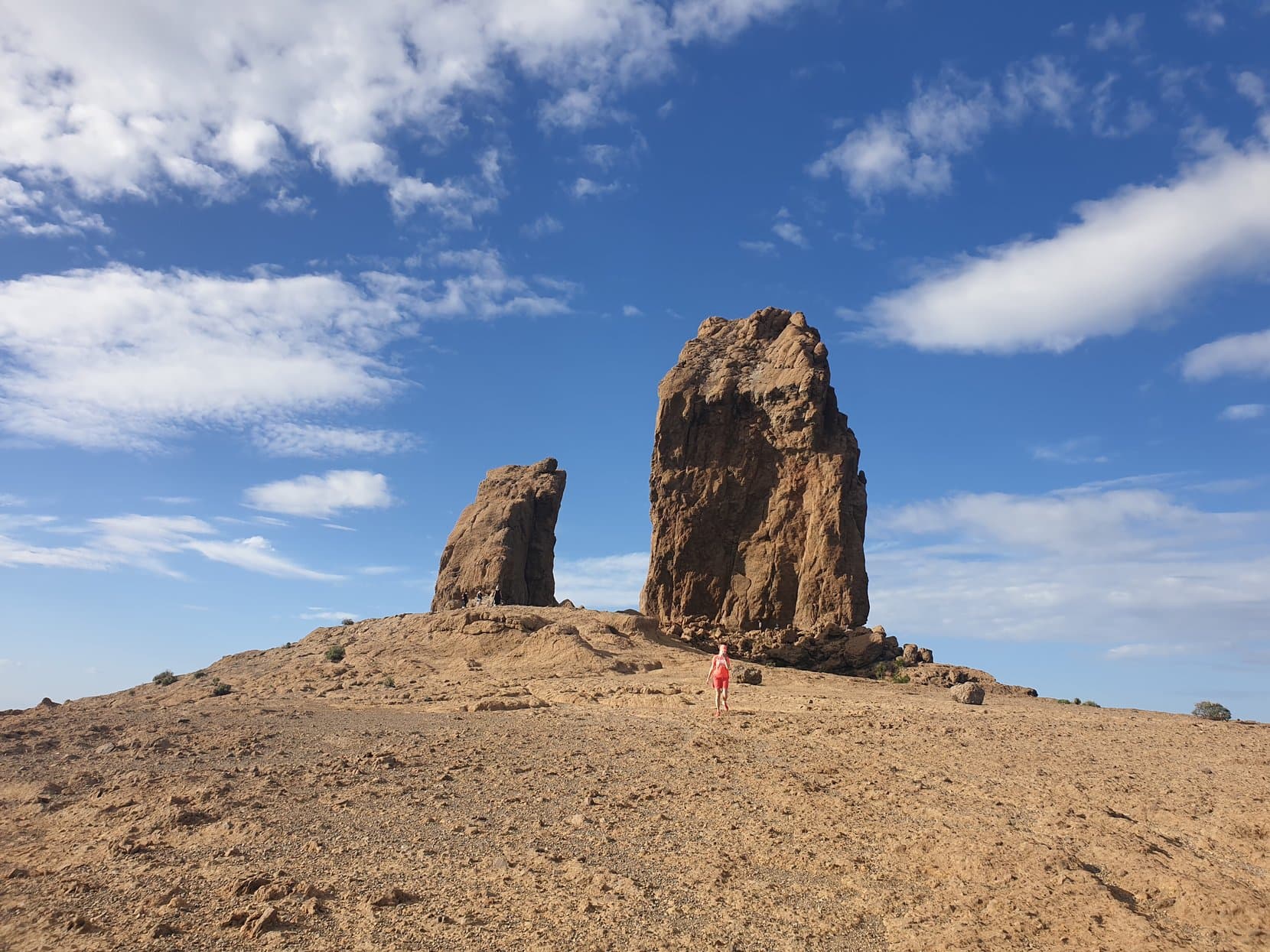
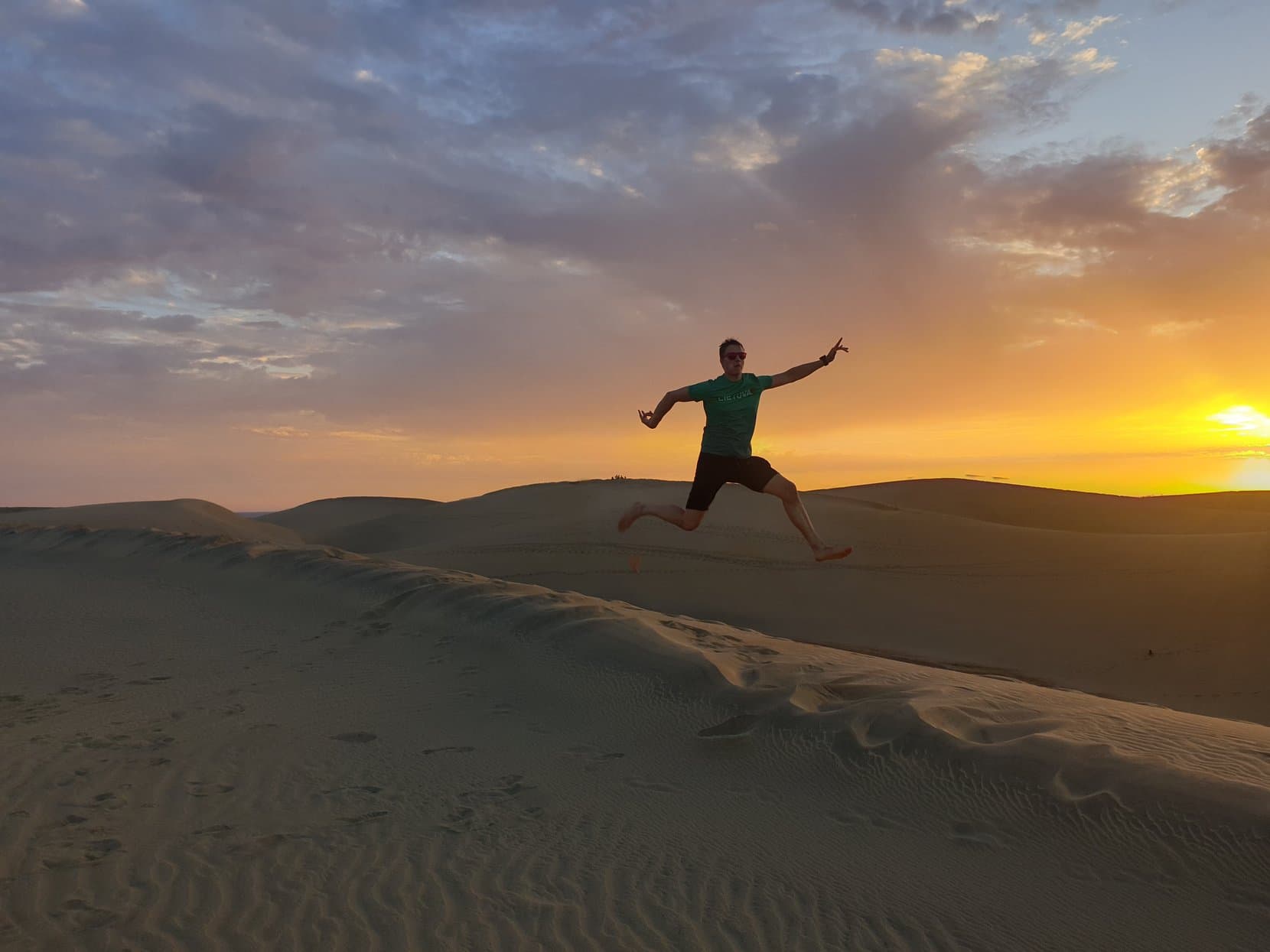
What you actually do is drive, walk and stare, in that order. One day belongs to the mountain interior: Tejeda, Artenara and its cave houses, the pine forests, and the short walk to the feet of Roque Nublo, the stone giant that keeps appearing in the windscreen all day before you finally stand under it. Another belongs to the southeast: a ravine where the island still lives in caves - houses, storerooms, whole restaurants dug into the rock - and a little slot canyon in terracotta curves that we once had entirely to ourselves. And every day can end the same way: barefoot in the Maspalomas dunes, where the sunset does a convincing impression of the Sahara.

The honest version of the reputation: yes, the south coast is a resort machine, and no, you should not fight it - use it. It is the reliable warmth, the easy bed, the evening pool. The trick of Gran Canaria is that the crowds concentrate themselves so completely along that strip that a rental car makes the rest of the island feel half-discovered, even in high season. We were there in November: full sightseeing days, warm evenings, an interior running brown after the summer - greener in spring - and not one regret about choosing the number-two island first.

When to go

No closed season - the month picks your trade-offs. The coast and the mountains run different weather on the same day.

November to March

The winter-sun season and the island's high season: shirt-sleeve afternoons on the south coast and a swimmable sea while home is grey. We tested mid-November - full sightseeing days, warm evenings by the dunes, and an interior that runs brown after the long summer.

April to June

The interior at its greenest and the mountain roads at their best. The lull between the winter escape and the summer holidays keeps the miradors quiet.

July and August

Hottest and busiest, with the south coast at full family capacity. The mountain interior stays cooler than the coast and is the smart place to spend the middle of the day.

September and October

The warmest sea of the year and the thinnest crowds - the quiet sweet spot for a swimming-first trip.

What I would pick

November to February for the winter-escape magic, accepting the browner interior - that is the tested version. Late spring if the mountain half matters most, paying with a cooler sea.

How long to stay

A long weekend

Winter sun on the south coast plus one interior day. It works, but the interior day will be the one you remember, and you will wish you had planned two.

Five days

The bottom of the sensible range: the mountain interior, the southeast ravines, the dunes and a rest day fit - tightly.

Seven days

Comfortable. The interior twice (it deserves it), the ravine day, the north coast, and beach days that are actually restful rather than scheduled.

Pairing islands

Gran Canaria pairs naturally with Tenerife by ferry - we did exactly that, and the contrast is the trip. The archipelago page compares all four islands if you are still choosing.

Choosing between islands rather than within one? The Canary Islands page compares all four.

The island, in four parts

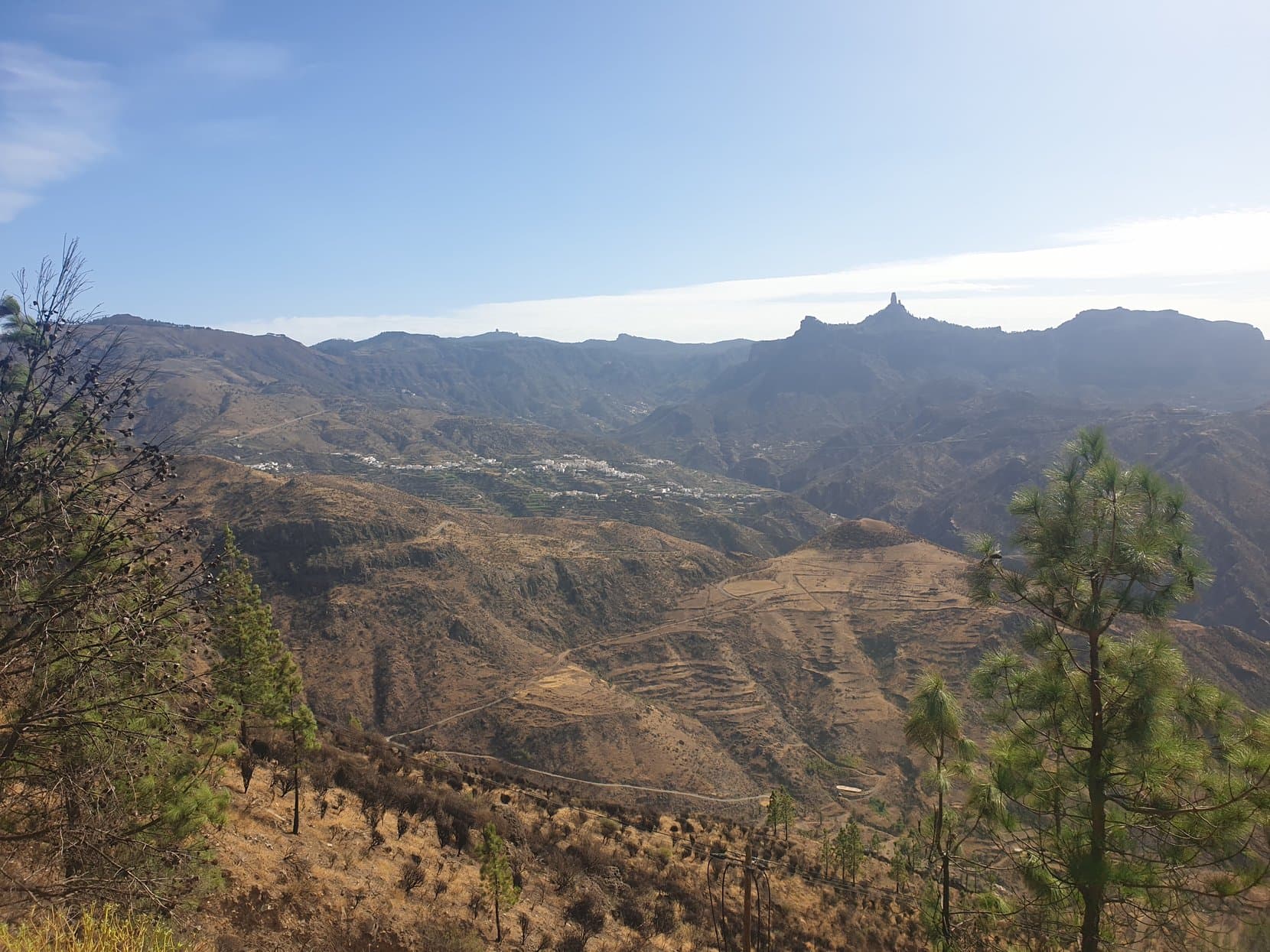
The central massif of Gran Canaria, ridge behind ridge with Roque Bentayga on the skyline

The mountain interior

The island's real product: hairpin roads that produce a mirador every few bends, villages like Artenara living half inside the rock, pine forest around high reservoirs, and the stone giant of Roque Nublo crowning the middle. This is where the driving hours go, and where they pay best.

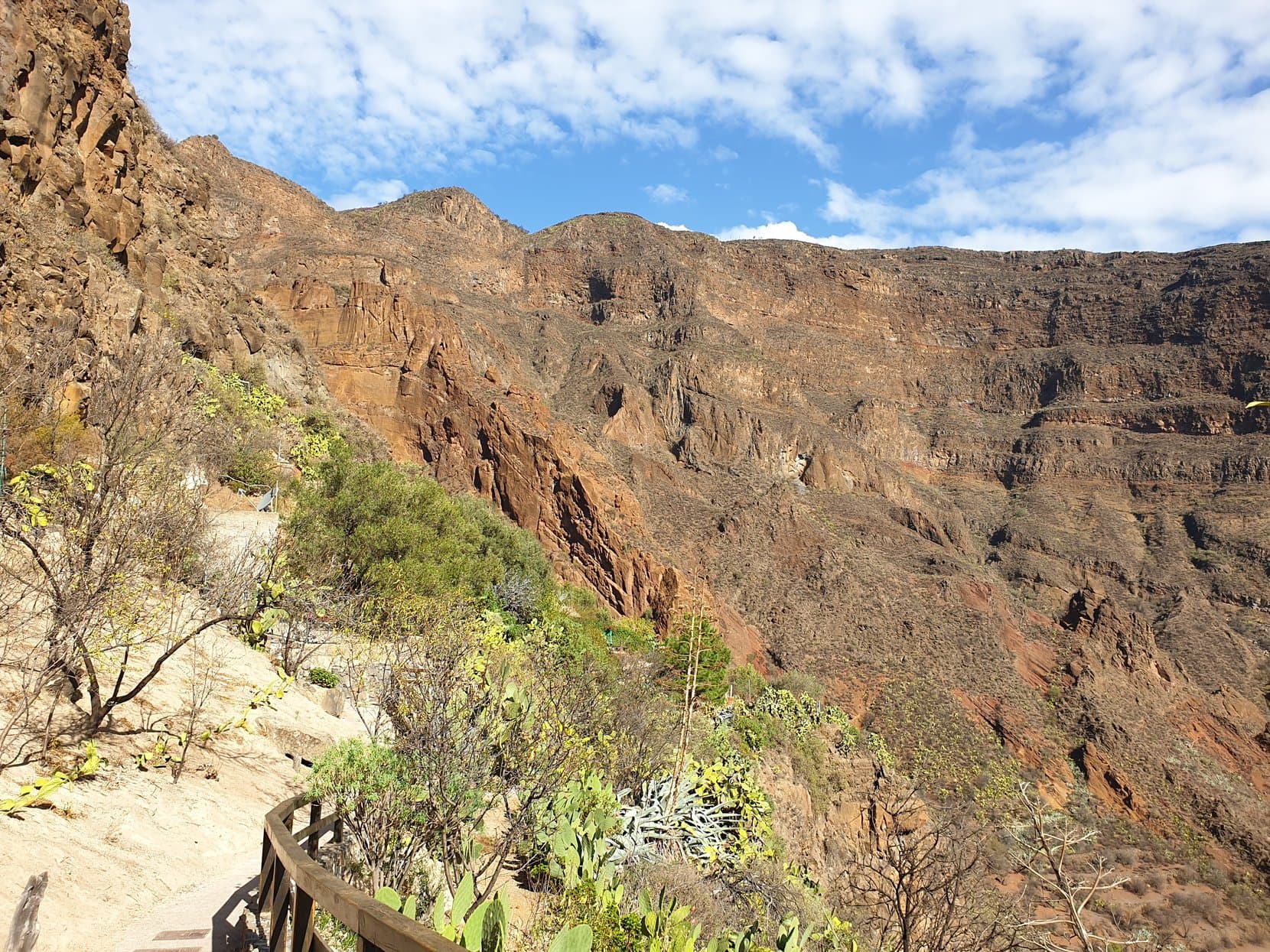
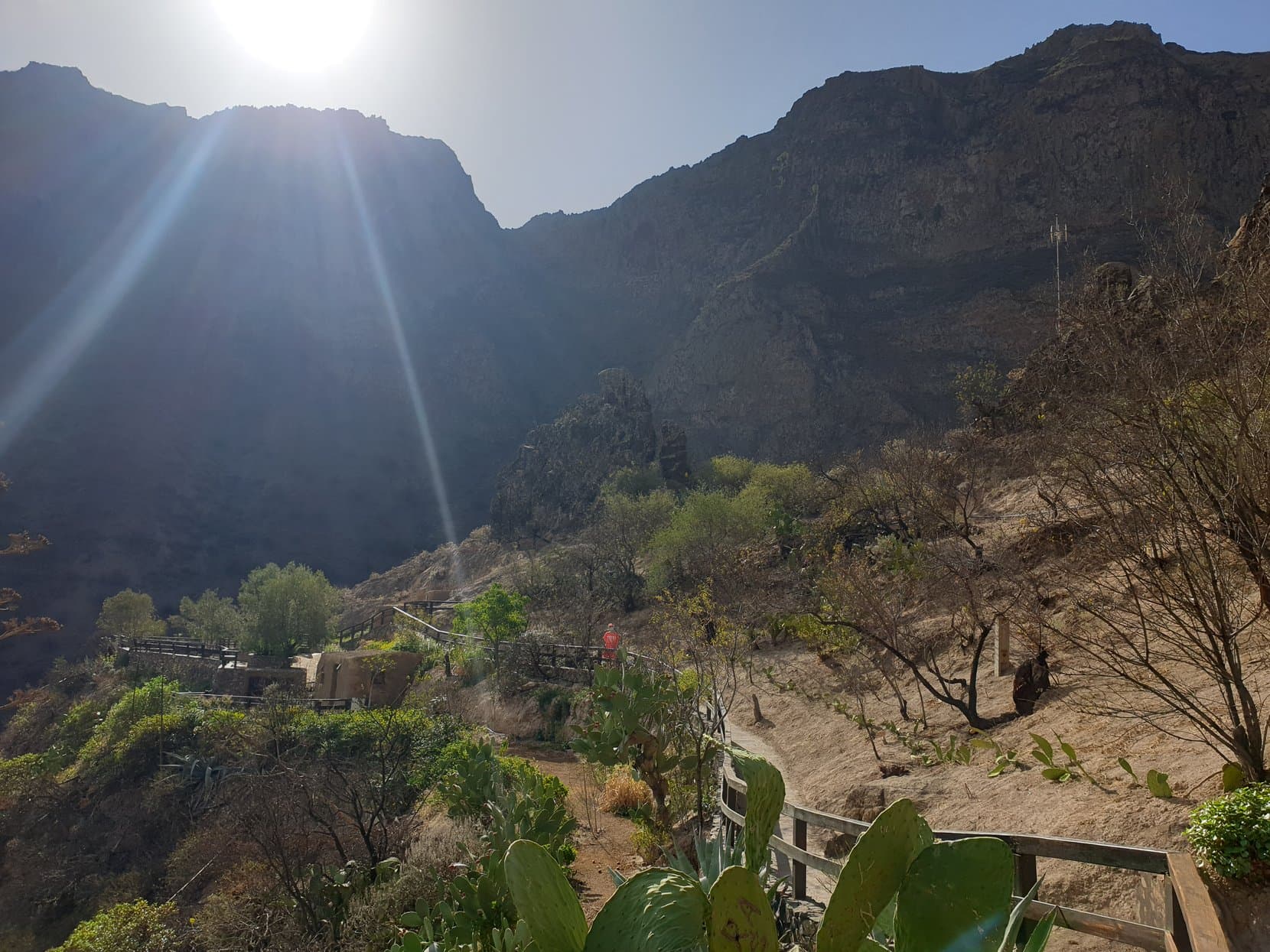
The steep red walls of the Barranco de Guayadeque above a railed path, Gran Canaria

Guayadeque and the southeast

Deep ravines cut the island's east, and two of its most particular sights hide in them: a valley where houses and restaurants are carved into the rock, and a little slot canyon whose terracotta curves pass for a pocket Arizona. Neither takes long; both are unlike anywhere else on the island.

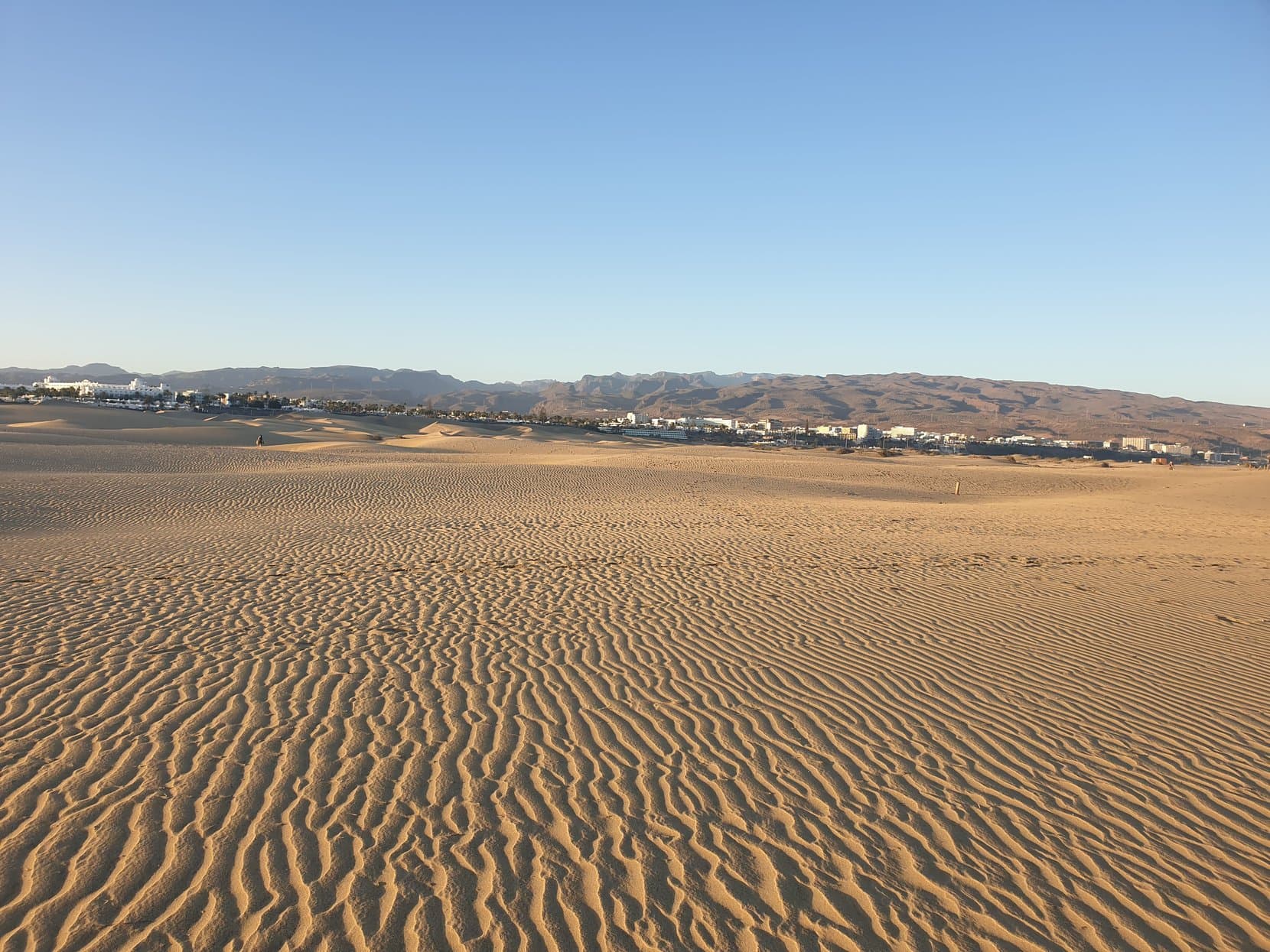
Rippled sand dunes running toward the resort strip and mountains at Maspalomas, Gran Canaria

The dunes and the south

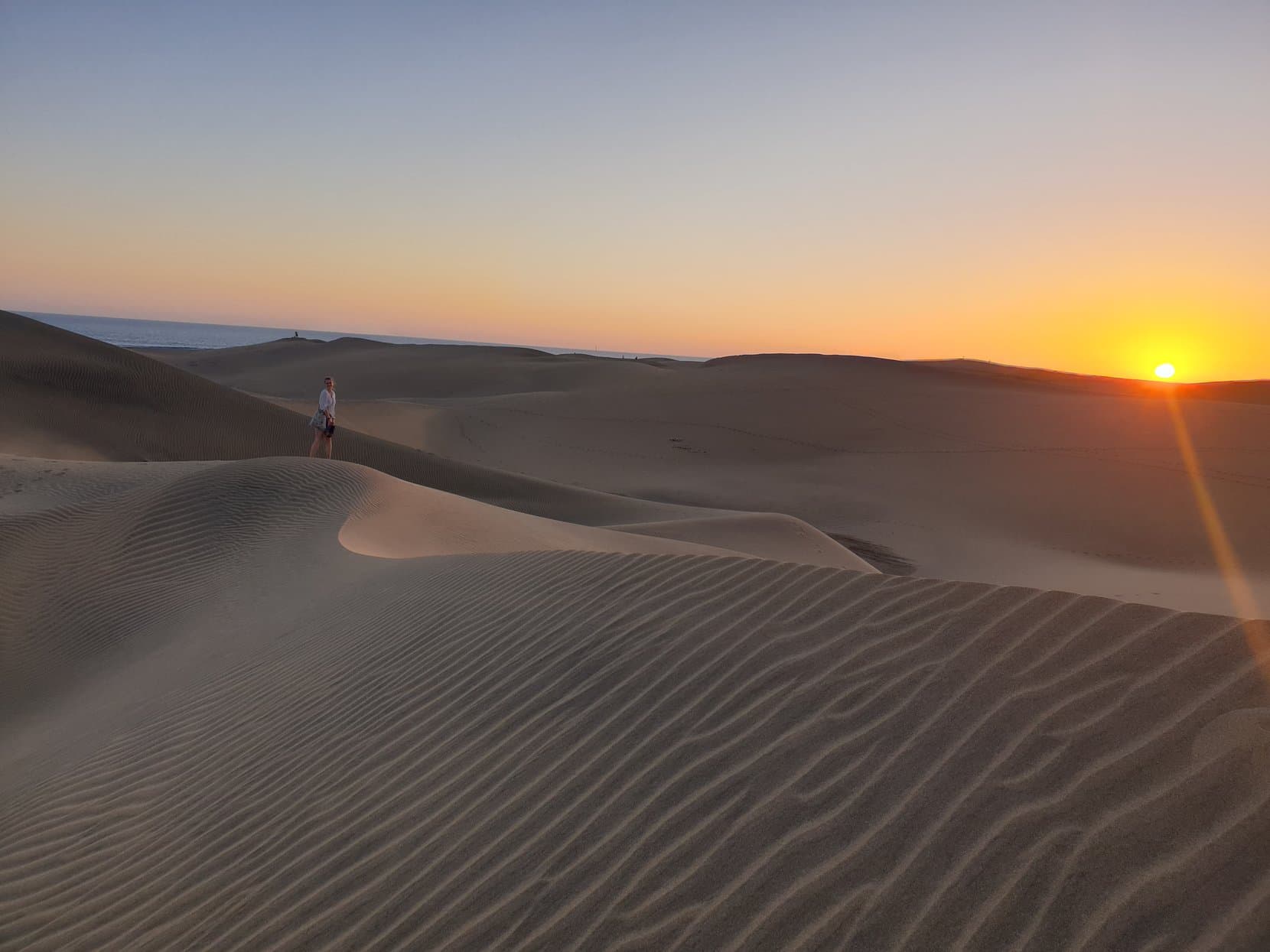
Maspalomas is the resort machine, and directly beside it lies the reason to come anyway: a field of true desert dunes rolling to the lighthouse, doing a full Sahara impression at sunset. The strip is the base and the warmth; the dunes are the show.

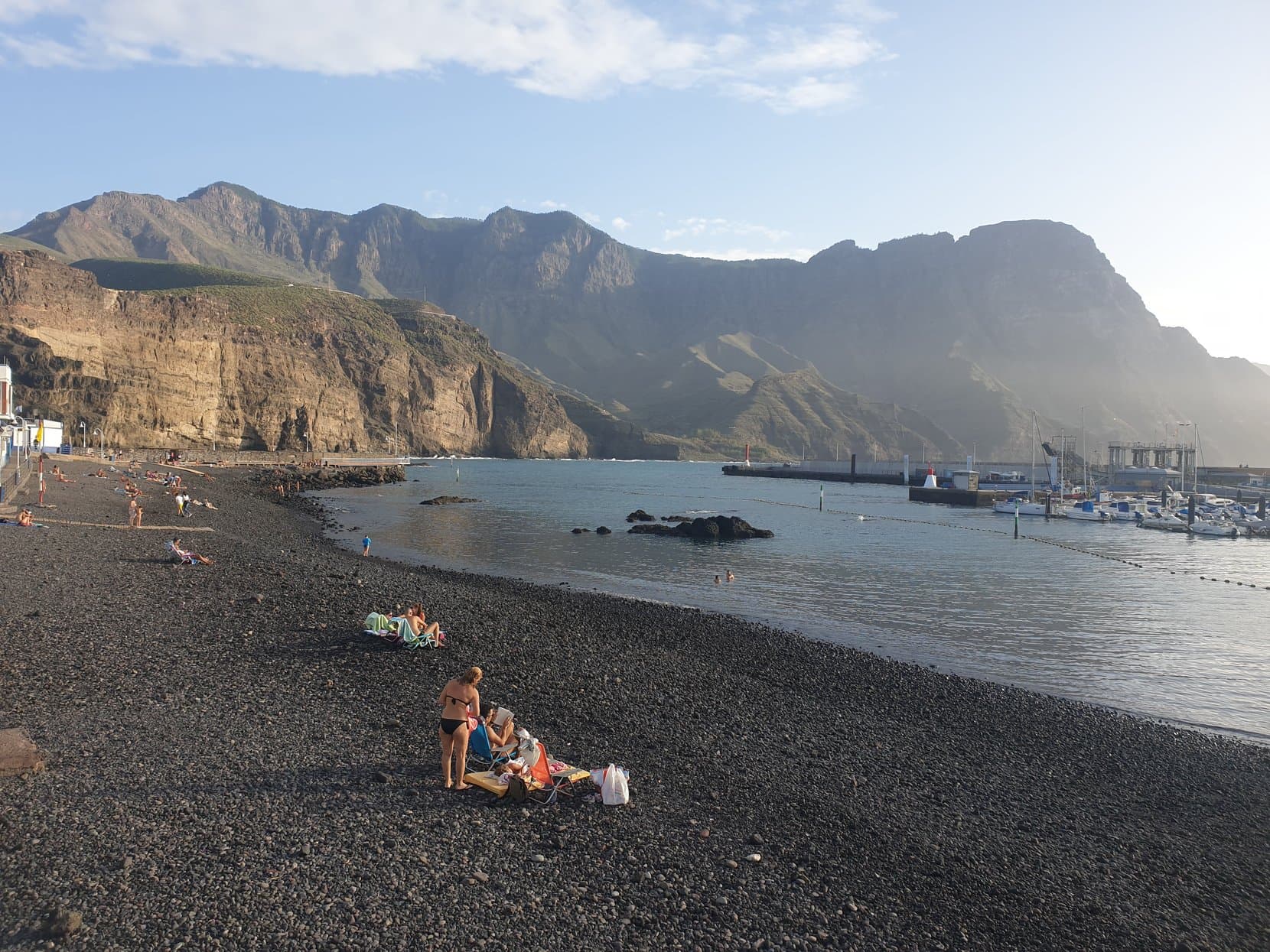
The dark pebble beach of Playa de las Nieves under high cliffs at Agaete, Gran Canaria

The north coast and Agaete

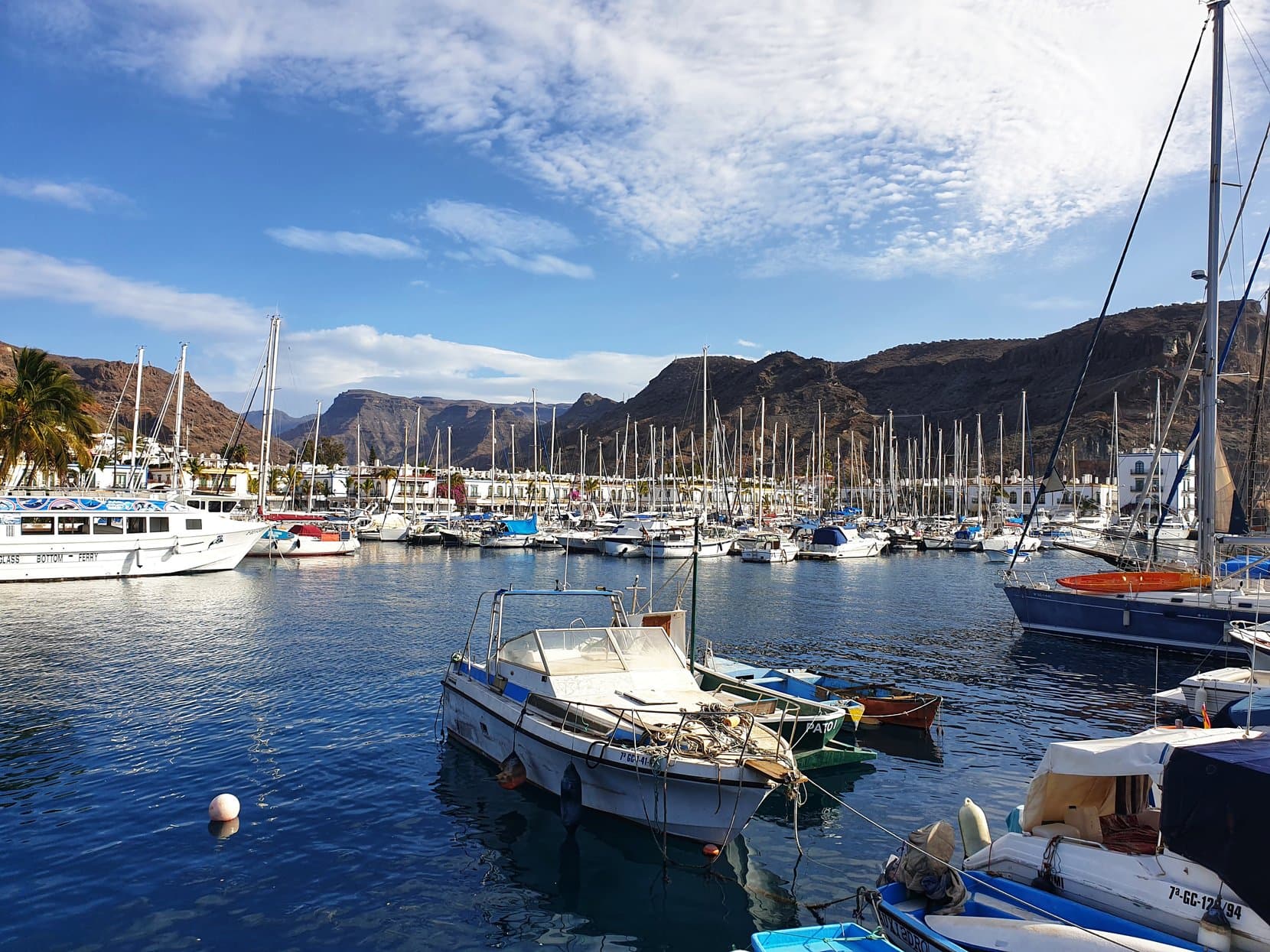
Quieter, greener at the edges, and more local: Agaete's harbour village under big cliffs, a dark-pebble beach worth a swim after a mountain day, and Gáldar's old streets nearby. Also the island's ferry corner - Tenerife is a short crossing from this coast.

From the trip

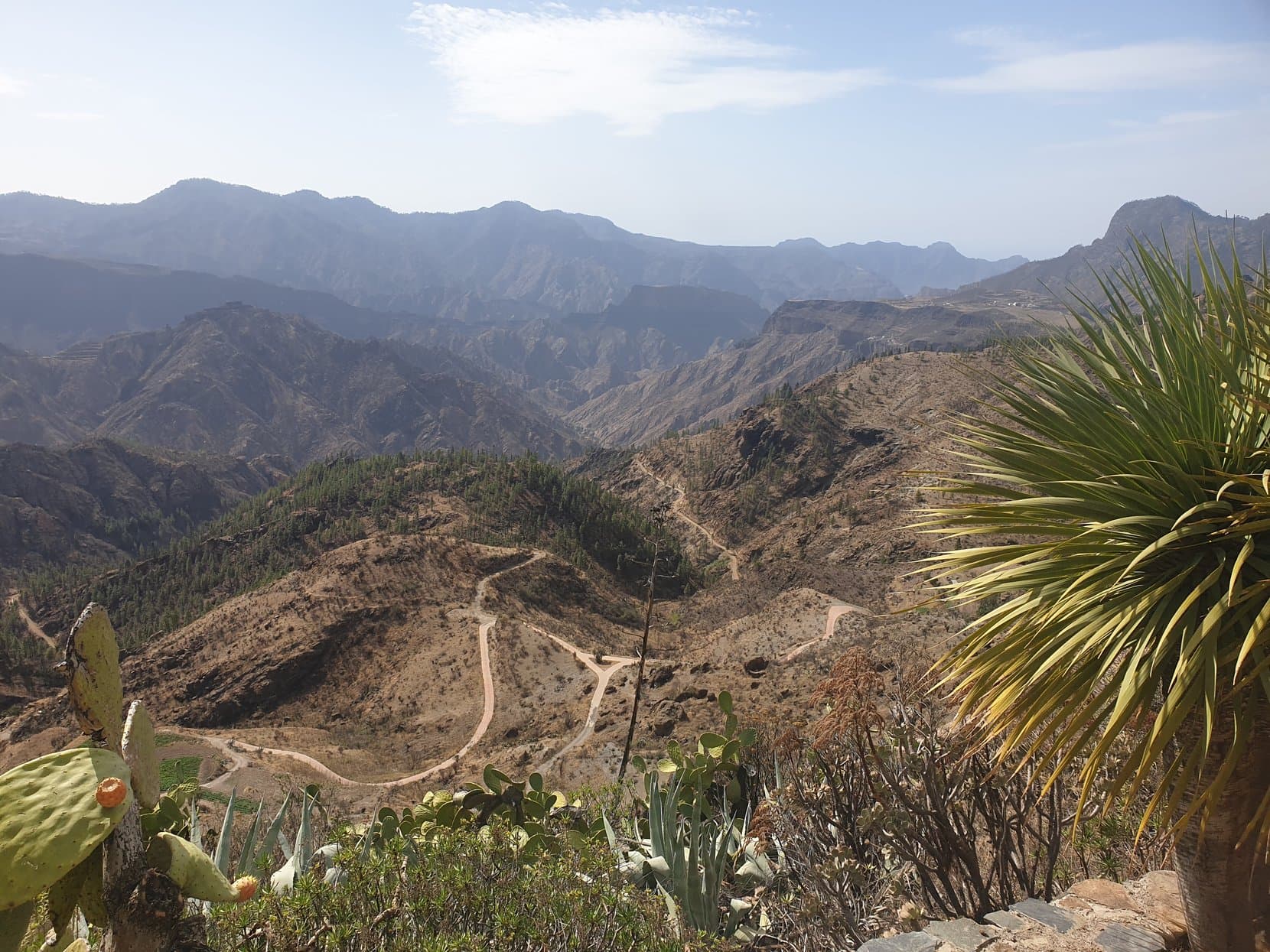
Dirt tracks winding through the bare mountain interior of Gran Canaria, palms in the foreground
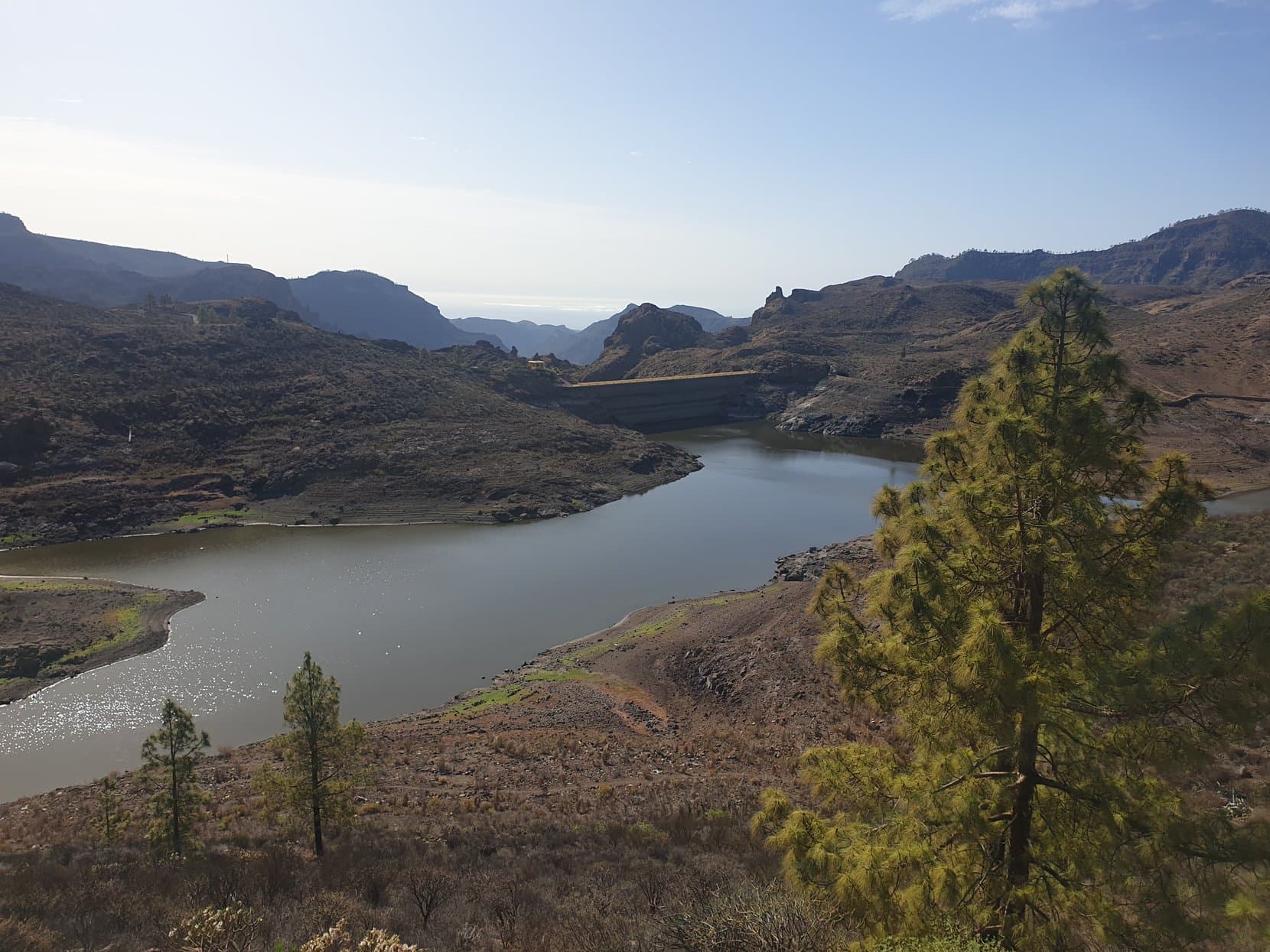
A reservoir ringed by pines below bare ridges in the Gran Canaria mountains
Roque Nublo and El Fraile standing over the bare summit plateau, Gran Canaria
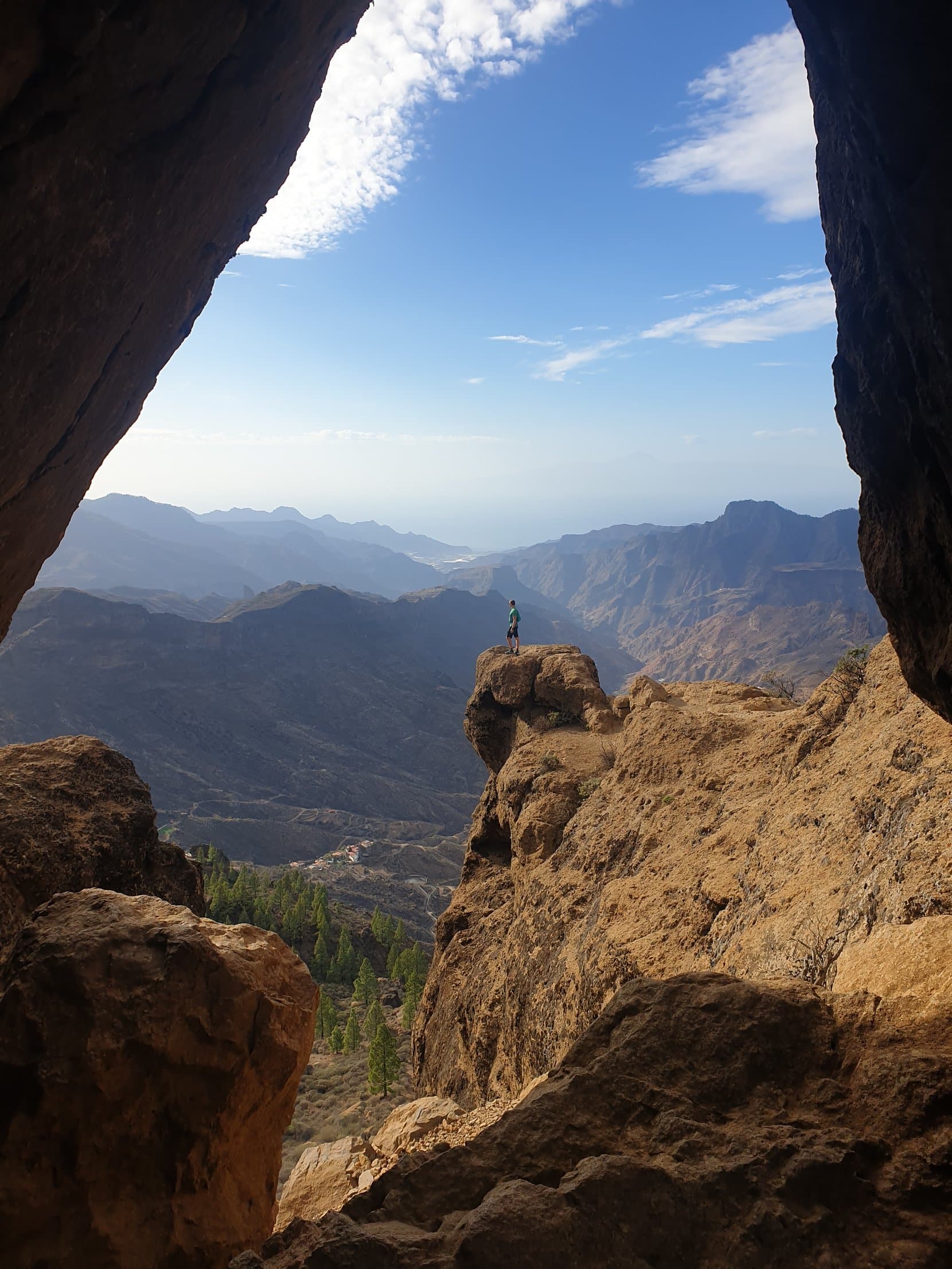
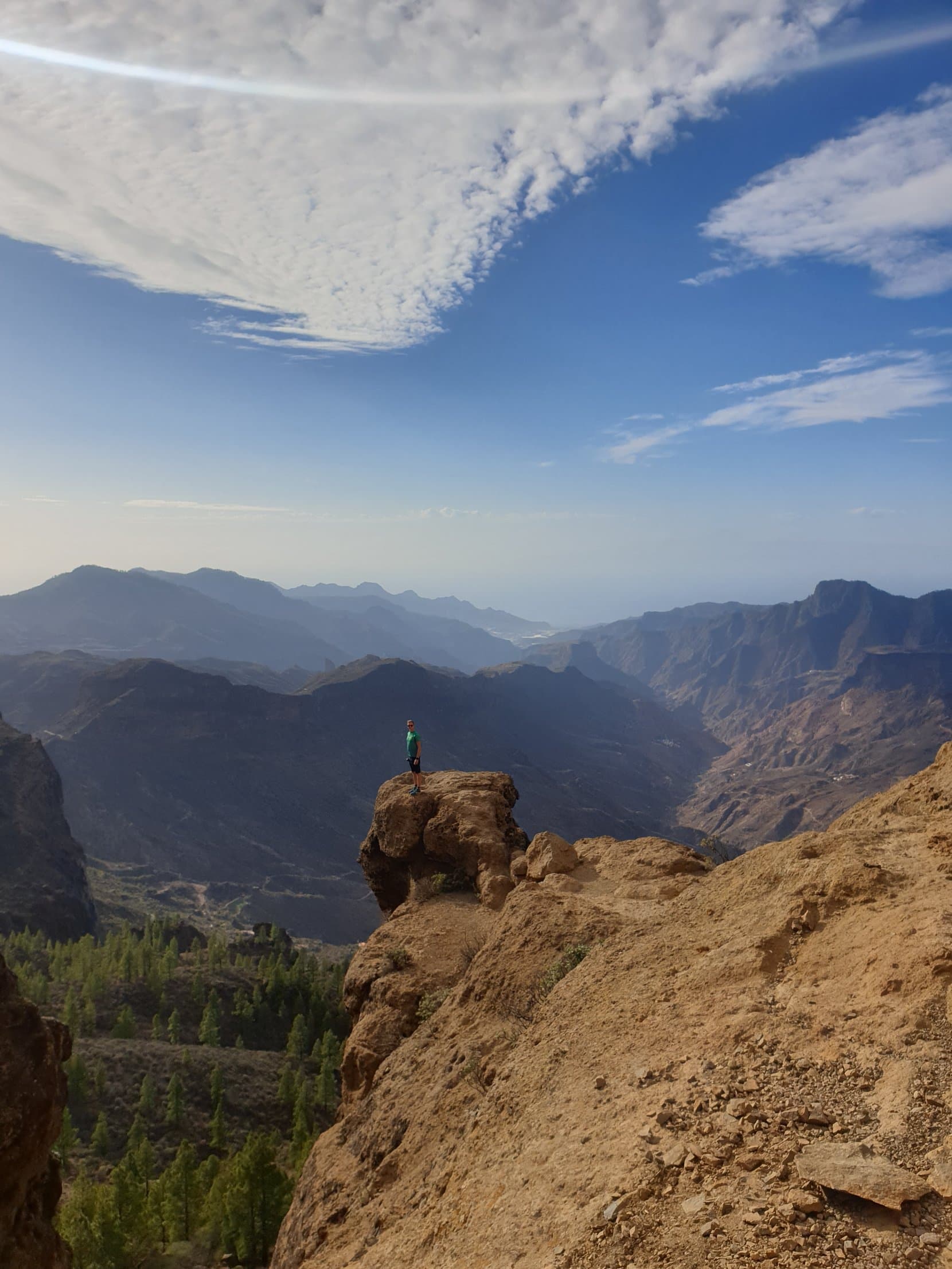
A hiker on the balcony rocks beside Roque Nublo, ridges fading behind, Gran Canaria
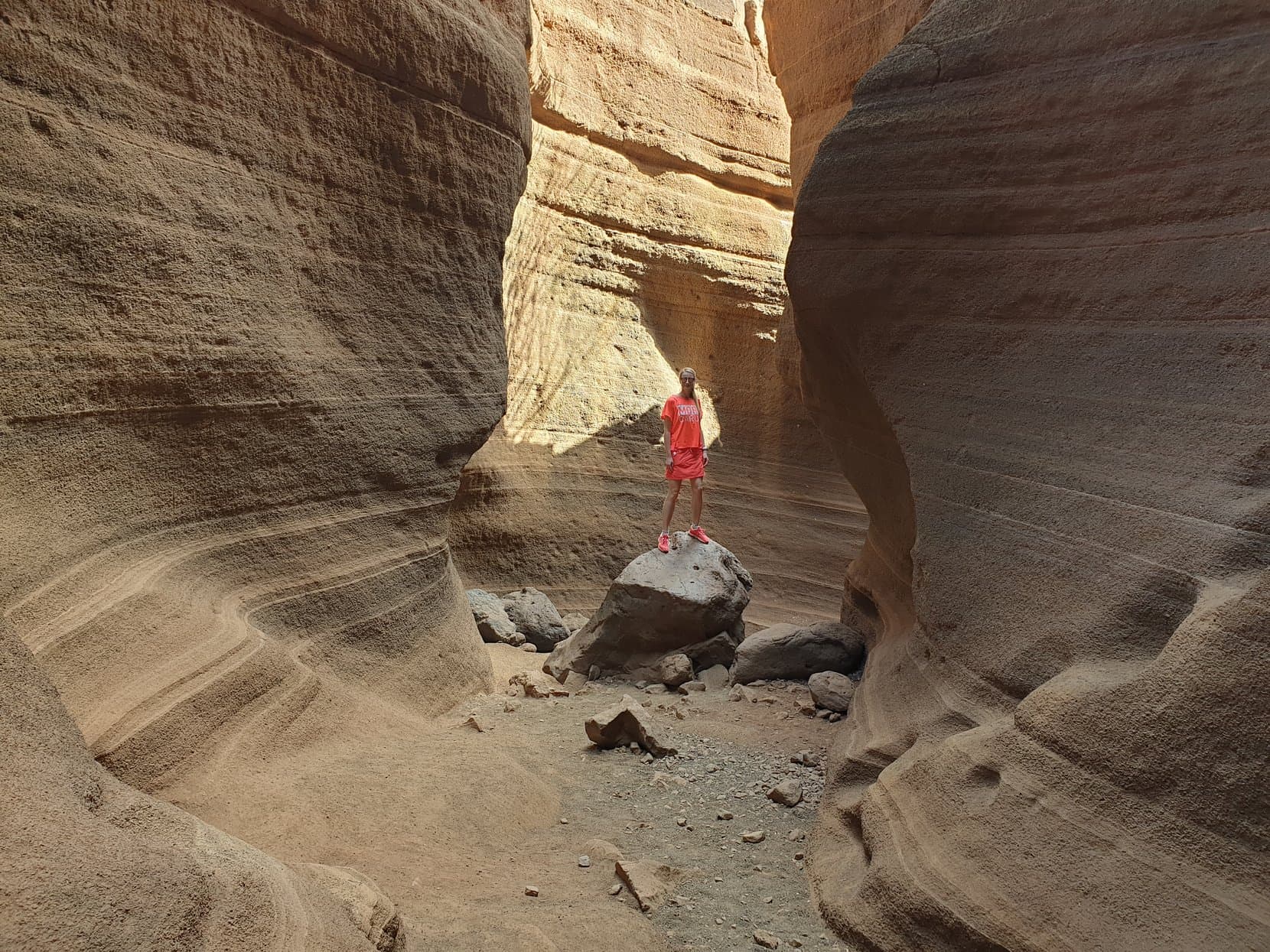
A figure standing under the curved terracotta arch of the Barranco de las Vacas slot canyon, Gran Canaria
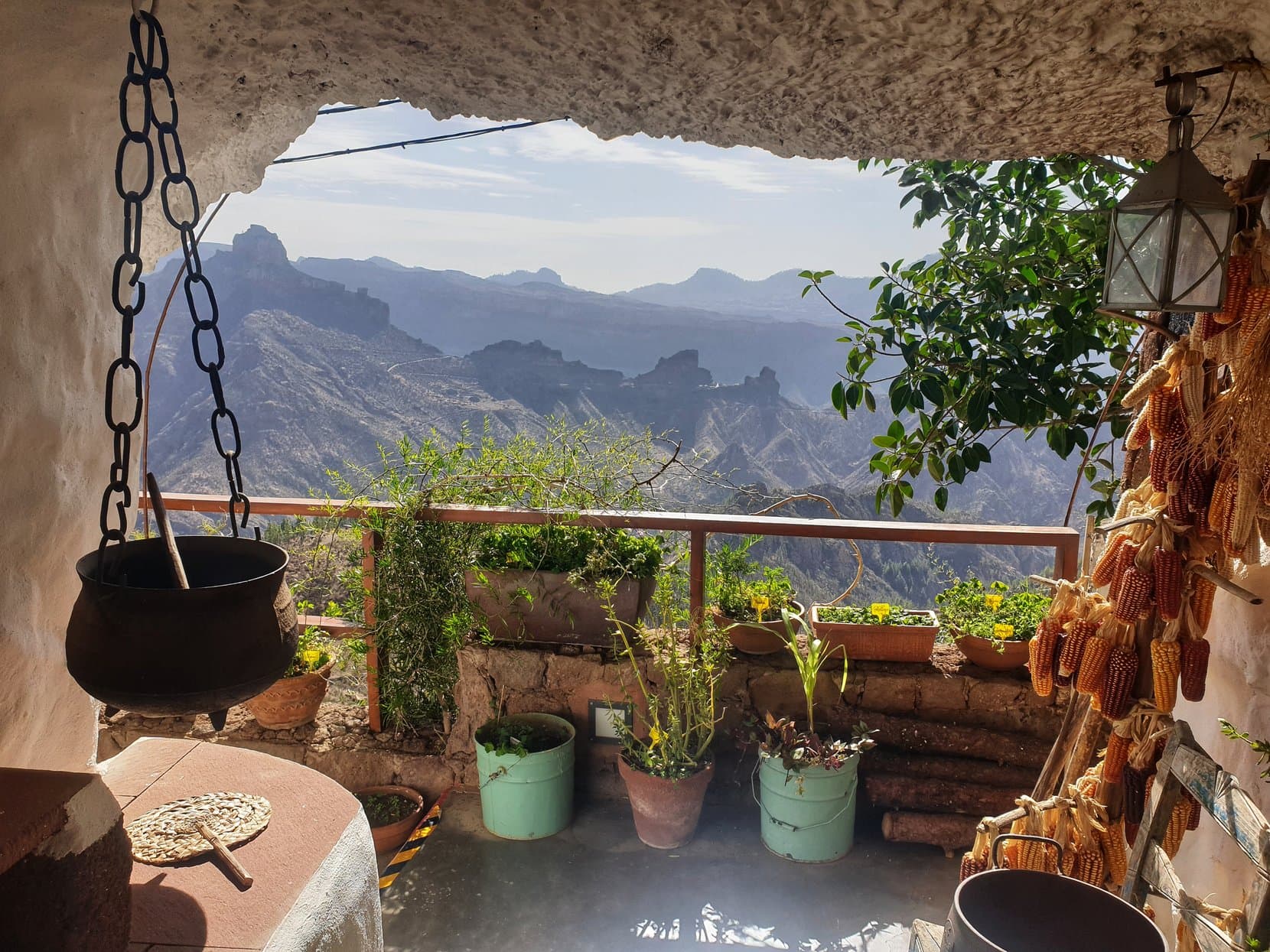
Cave houses built into the cliff at Montaña Las Tierras, Barranco de Guayadeque, Gran Canaria
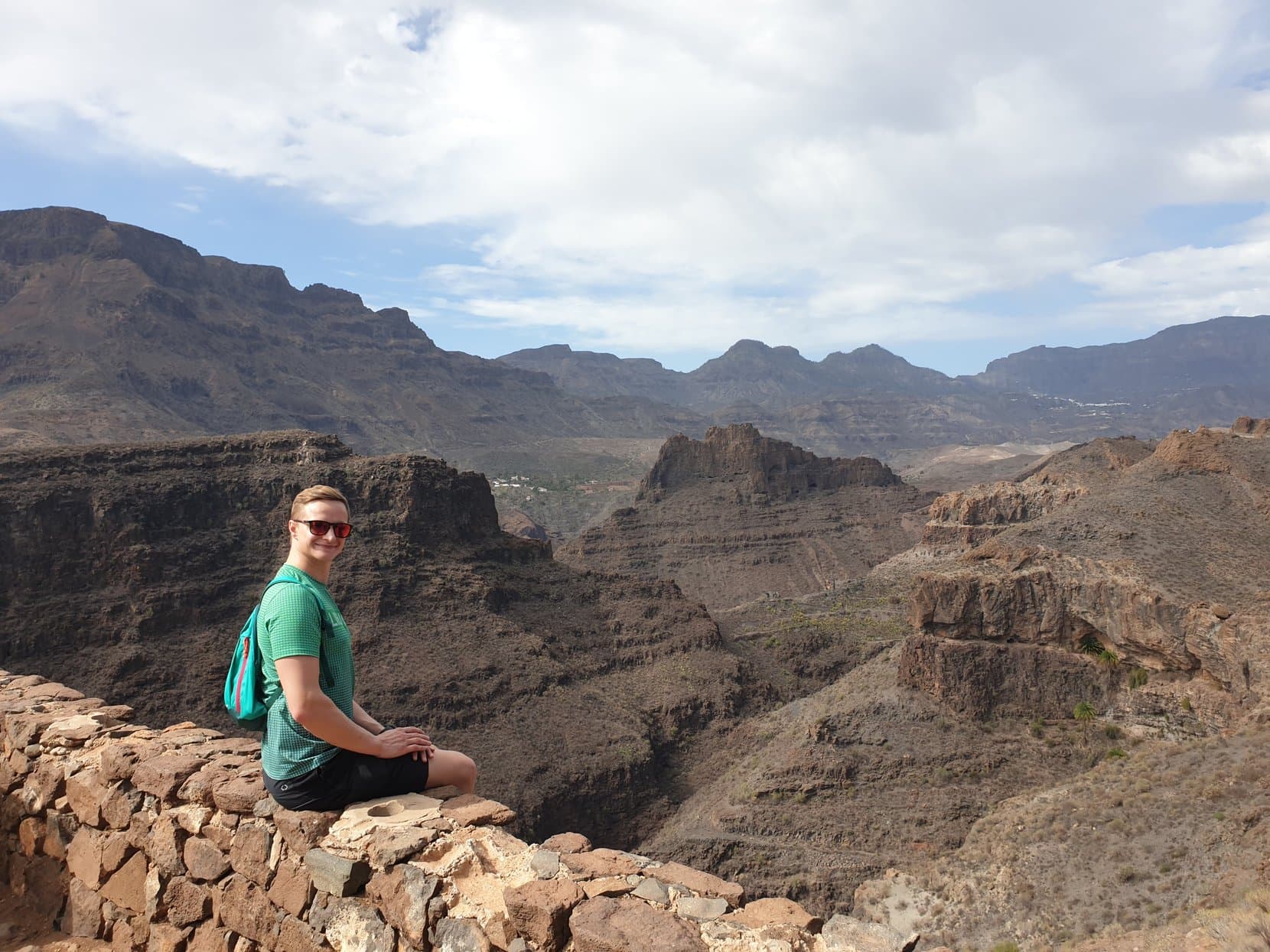
Bare layered ridges of a southeast barranco running toward the sea, Gran Canaria
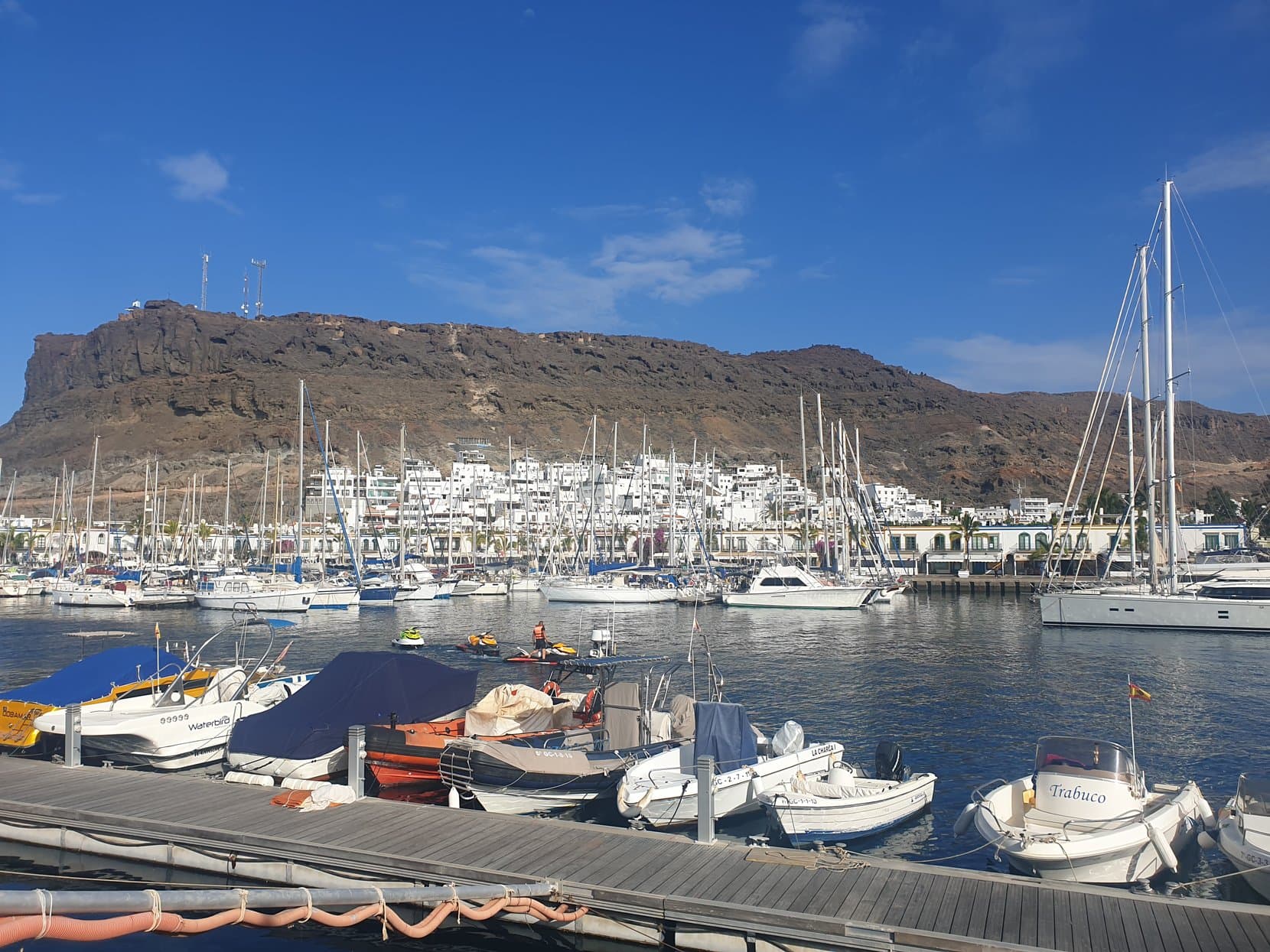
Boats in the harbour of Puerto de las Nieves under the Agaete cliffs, Gran Canaria

The interior, mid-drive

Getting there and around

Gran Canaria's airport sits on the east coast with direct flights from all over Europe year-round - one of the densest winter-sun networks on the continent. This is Spain: euros, EU roaming, Schengen rules, and a clock level with London, one hour behind Madrid.

Rent a car - the whole case for this island is drive-to. The mountain roads are magnificent and slow; treat map times as optimistic, and treat the driving itself as part of the sightseeing rather than the cost of it.

Ferries connect the island onward - Tenerife from the Agaete corner in the northwest, Fuerteventura from Las Palmas. We arrived by air, left by ferry, and carried the same rental car across every crossing of a four-island trip. Which pairings are worth it is the archipelago page's question.

What it costs

Getting there is the line every alternative loses to: return flights from most of western and northern Europe typically come in under €150, and sale fares go far lower. On the ground, prices sit at or below mainland-Spain levels - and the island's best material is free.

StyleWhat that looks like
LeanA self-catering base away from the strip, supermarket picnics for the mountain days, and an island whose best material - the miradors, the dunes, the ravines - charges nothing
CoreSmall hotels or a south-coast base plus an interior night, restaurant dinners, and the few paid bookings that exist here
SplurgeThe resort tier along the southern coast - money buys the pool landscape and the spa, not access

The bed is the only line with real range, and winter - the high season here - is when it moves most. The car and the fuel stay cheap in every month.

Tested tips

At the slot canyon, timing beats fame.

Barranco de las Vacas went from secret to Instagram queue in a few years - on a busy afternoon twenty people share fifty metres of rock. Early on a weekday morning it is still close to the place we had entirely to ourselves. And skip it outright if rain is possible in the mountains: slot canyons flash-flood fast.

Do the ravines early, the dunes late.

By mid-morning the heat is already running the show in Guayadeque - we walked at ten and were glad we had not started later. The dunes work the opposite way: late afternoon light turns Maspalomas into the Sahara, and sunset there is the best free show on the island.

Walk to Roque Nublo's feet - and past them.

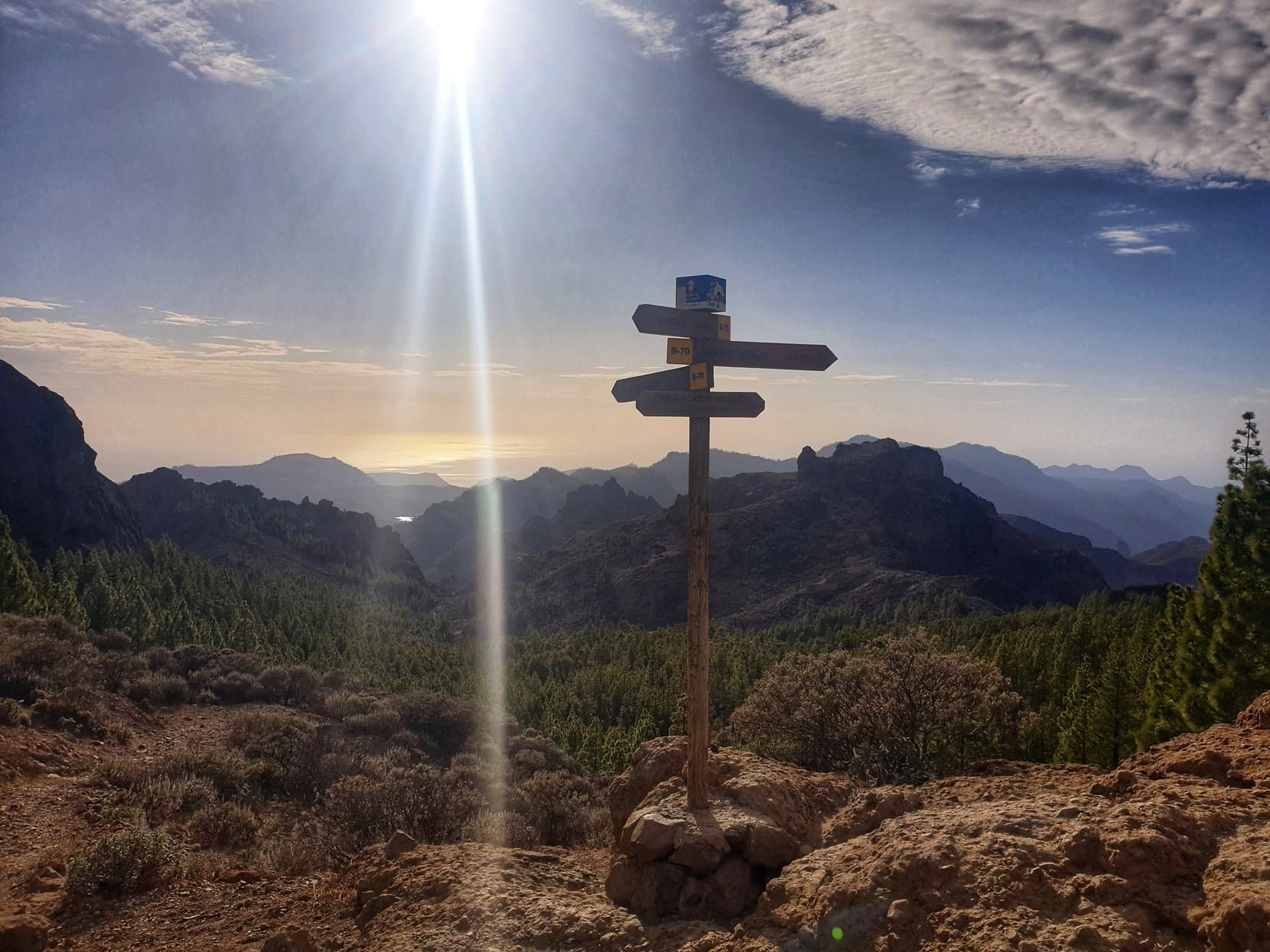
Everyone photographs the monolith from the miradors; far fewer take the short walk up, and almost nobody continues onto the balcony rocks just beyond, where the whole mountainous heart of the island opens up. On clear days Teide floats on the horizon one island over.

Sunset over the dune ridges of Maspalomas with the lighthouse on the horizon, Gran Canaria

FAQ

How many days do you need in Gran Canaria?▾
Five to seven. Five covers the mountain interior, the southeast ravines and the dunes at a brisk pace; seven makes the trip comfortable and gives the interior the second day it deserves. A long weekend works only as winter sun plus a single interior day - which will promptly convince you the island needed more.
Is Gran Canaria worth visiting?▾
Yes - as a road-trip island above all. Nothing here matches Teide next door, and it does not matter: the density per driving hour is the best in the archipelago. Mirador after mirador, cave villages, a slot canyon, the Roque Nublo walk, and desert dunes at the bottom of it all. If your idea of a trip is a car, corners and variety, this is the Canary island to pick.
Gran Canaria or Tenerife?▾
Drivers, hikers and viewpoint collectors: Gran Canaria - more variety per kilometre, fewer coaches. First visit for the biggest single sights: Tenerife. We drove both on the same trip and wrote the comparison up properly - and since a ferry links them, pairing both in one week is barely more logistics than choosing.
What is Roque Nublo, and is the hike hard?▾
A stone monolith the height of a city block, standing on a plateau at the island's heart - and no, the walk is one of the easiest big-reward hikes we know: well under an hour each way from the road, through pines and onto open rock. The move most people miss is continuing onto the neighbouring balcony rocks for the full panorama.
Is the Barranco de las Vacas slot canyon worth it?▾
Yes, with expectations set: it is roughly fifty metres of wave-curved terracotta rock, a pocket edition of Arizona's famous canyons, and it takes half an hour. It is no longer a secret - expect company and a queue for the photo rock at busy times, go early on a weekday, and stay away entirely when mountain rain is possible.
Are the Maspalomas dunes free, and worth the stop?▾
Free, open, and genuinely worth building an evening around - a real dune field rolling to a lighthouse, big enough to lose the crowds in, doing a convincing Sahara impression at sunset. Walk in barefoot, keep to the marked routes where posted, and give it the golden hour rather than midday.
Do you need a car in Gran Canaria?▾
For the island this page describes, absolutely. The coast strips survive without one, but the entire interior - the miradors, Artenara, Roque Nublo, the ravines - is drive-to, and the mountain roads are the attraction as much as the destinations. Budget more time than the map says; nothing up there is straight for a hundred metres.
Is Gran Canaria warm enough to swim in winter?▾
Yes - the south coast runs shirt-sleeve warm through winter and the Atlantic sits around 19 to 20 °C: refreshing, entirely swimmable on a sunny afternoon. We swam at Playa de las Nieves after a mountain day in mid-November. The interior is its own cooler, windier country - pack a layer for the miradors.
Is Las Palmas worth visiting?▾
We can only answer honestly: we passed through it to the ferry and did not test it, so this page will not pretend. The island we can vouch for is the interior, the ravines, the dunes and the Agaete coast - and a week fills completely without the capital.
Is Gran Canaria expensive?▾
No. Return flights from most of western and northern Europe typically come in under €150 with sale fares far lower, and on the ground prices sit at or below mainland-Spain levels. The bed is the only line with real range - winter is the high season here. The best of the island is free.
Stories from Gran Canaria

Four Canary Islands, one trip, by ferry

Four Canary Islands, one trip, by ferry

Four islands, one car on every ferry – and every landing felt like a new country.

Winter sun in Europe: the Canaries in January

Winter sun in Europe: the Canaries in January

Swimming in the Atlantic in November, four hours from a grey home – the honest maths.

Tenerife vs Gran Canaria: which island?

Tenerife vs Gran Canaria: which island?

The big-ticket island against the road-trip island, driven on the same trip.

Barranco de las Vacas: Gran Canaria's little Antelope Canyon

Barranco de las Vacas: Gran Canaria's little Antelope Canyon

Fifty metres of terracotta curves we once had to ourselves – now it is a timing game.

Guayadeque: the Gran Canaria ravine that lives in caves

Guayadeque: the Gran Canaria ravine that lives in caves

Coffee inside the mountain, in a ravine where the island still lives in caves.

Roque Nublo: the walk to Gran Canaria's stone giant

Roque Nublo: the walk to Gran Canaria's stone giant

A short walk to the feet of a stone giant – and the island's best half-day after it.