TestedRoutes
GuidesDestinationsInspireAbout me

TestedRoutes Newsletter

Field-tested travel routes, in your inbox when they drop.

© 2026 TestedRoutes. All rights reserved.

ContactFAQLegalTermsPrivacyRefundsSecurityAffiliate disclosureSitemap

We independently review everything we recommend. When you buy through our links, we may earn a small commission at no extra cost to you. More on how this works.

ExploreGuidesDestinationsInspireAbout
Destinations›Canary Islands›Fuerteventura

Canary Islands · Spain

Fuerteventura

How many days you need, which end to stay on, and when to go – the beach island of the Canaries, from the easy sands to the wild ones.

Paulius Pikelis

Tested by Paulius Pikelis · 140 countries

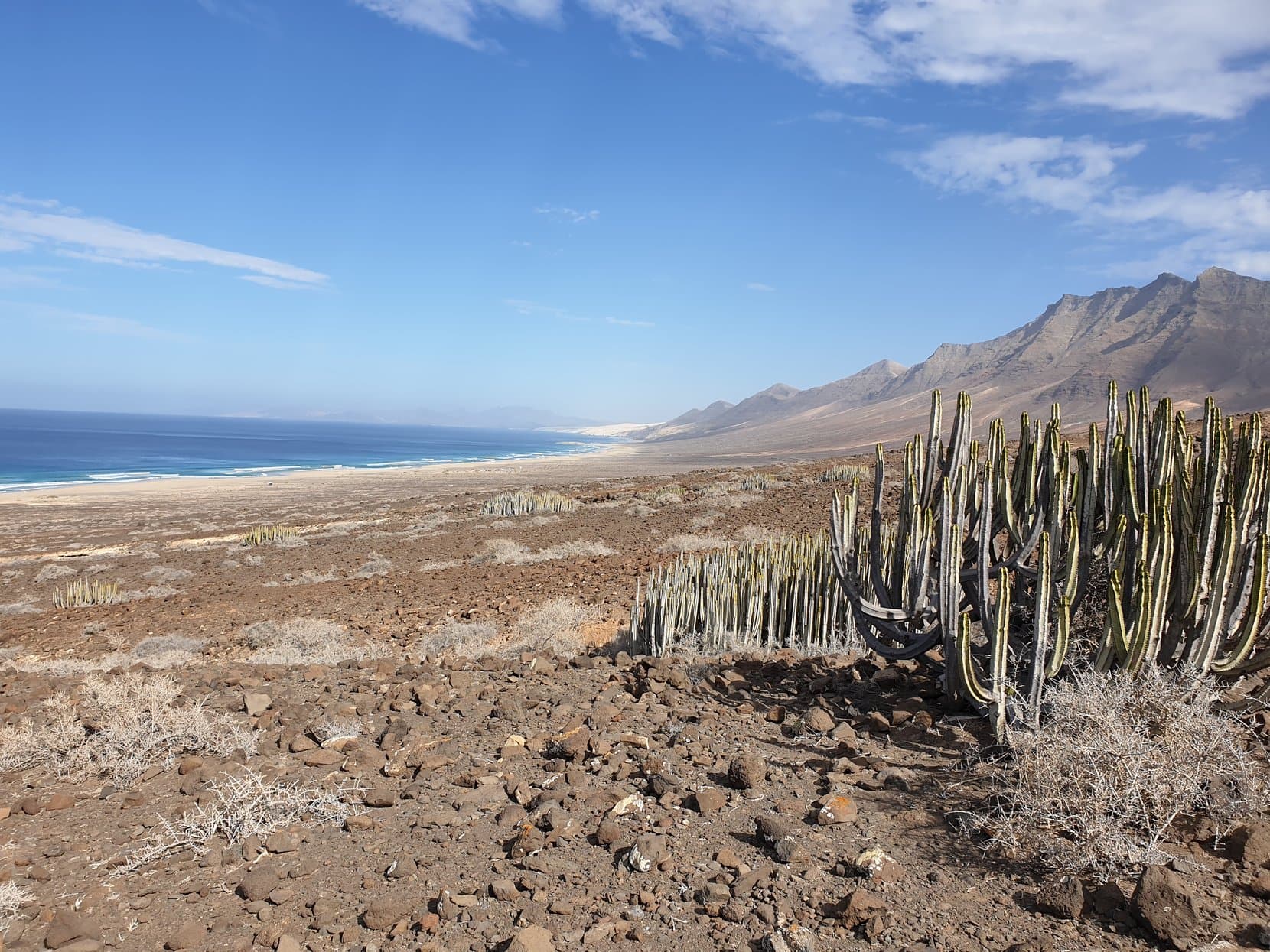
Cofete beach and the Jandía mountain wall seen past a candelabra cactus, Fuerteventura

Is Fuerteventura worth it, and what do you actually do there

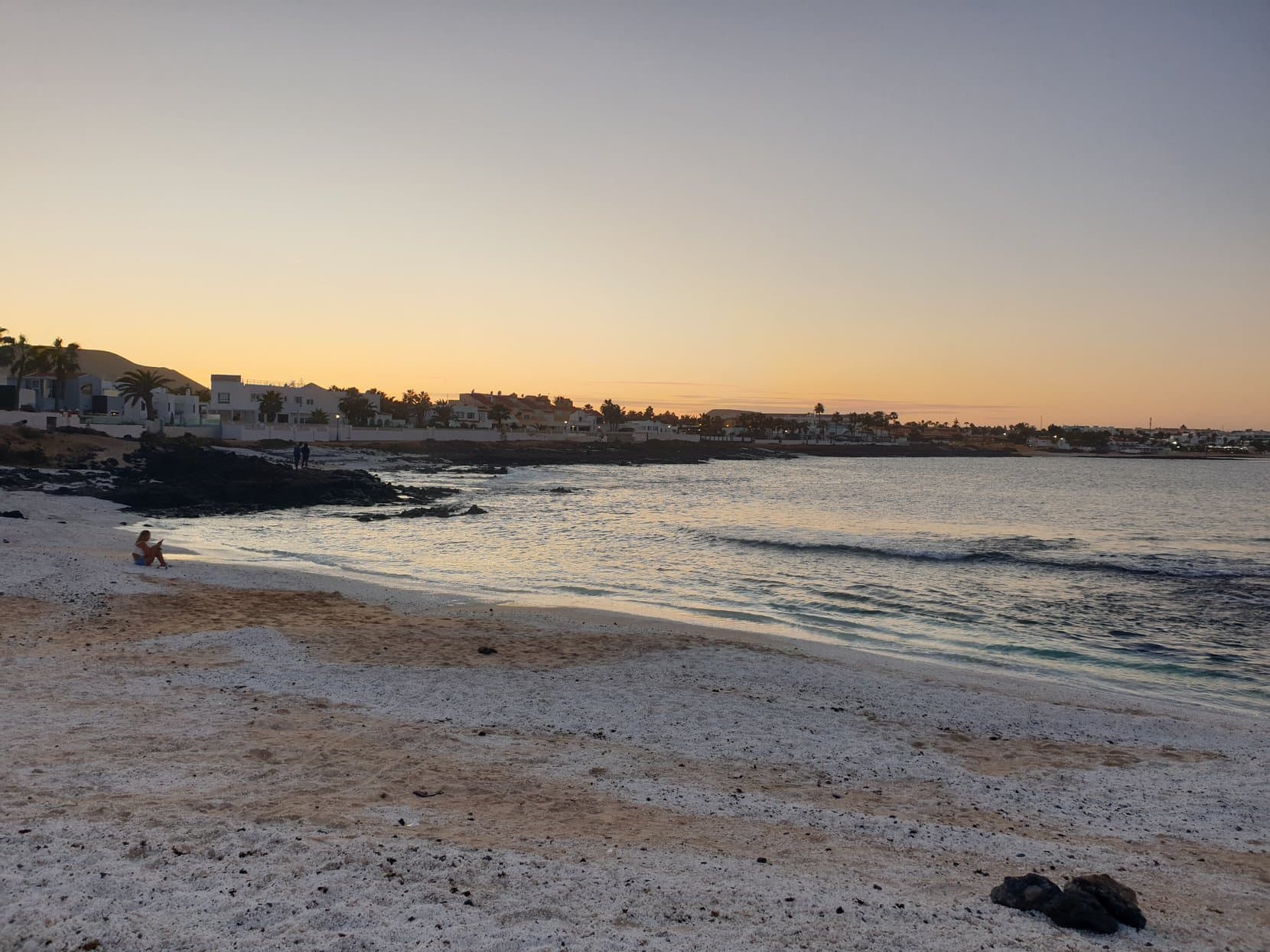
Fuerteventura announced itself before we left the port: we came off an early ferry from Gran Canaria and the island immediately felt like a different country - flatter, barer, windblown, all beaches and horizon. On a four-island November run it played two roles: the easy one, two resort nights by Corralejo's enormous sands as a deliberate change of register, and the wild one, the day we drove over the Jandía ridge on an unpaved road and came out above Cofete.

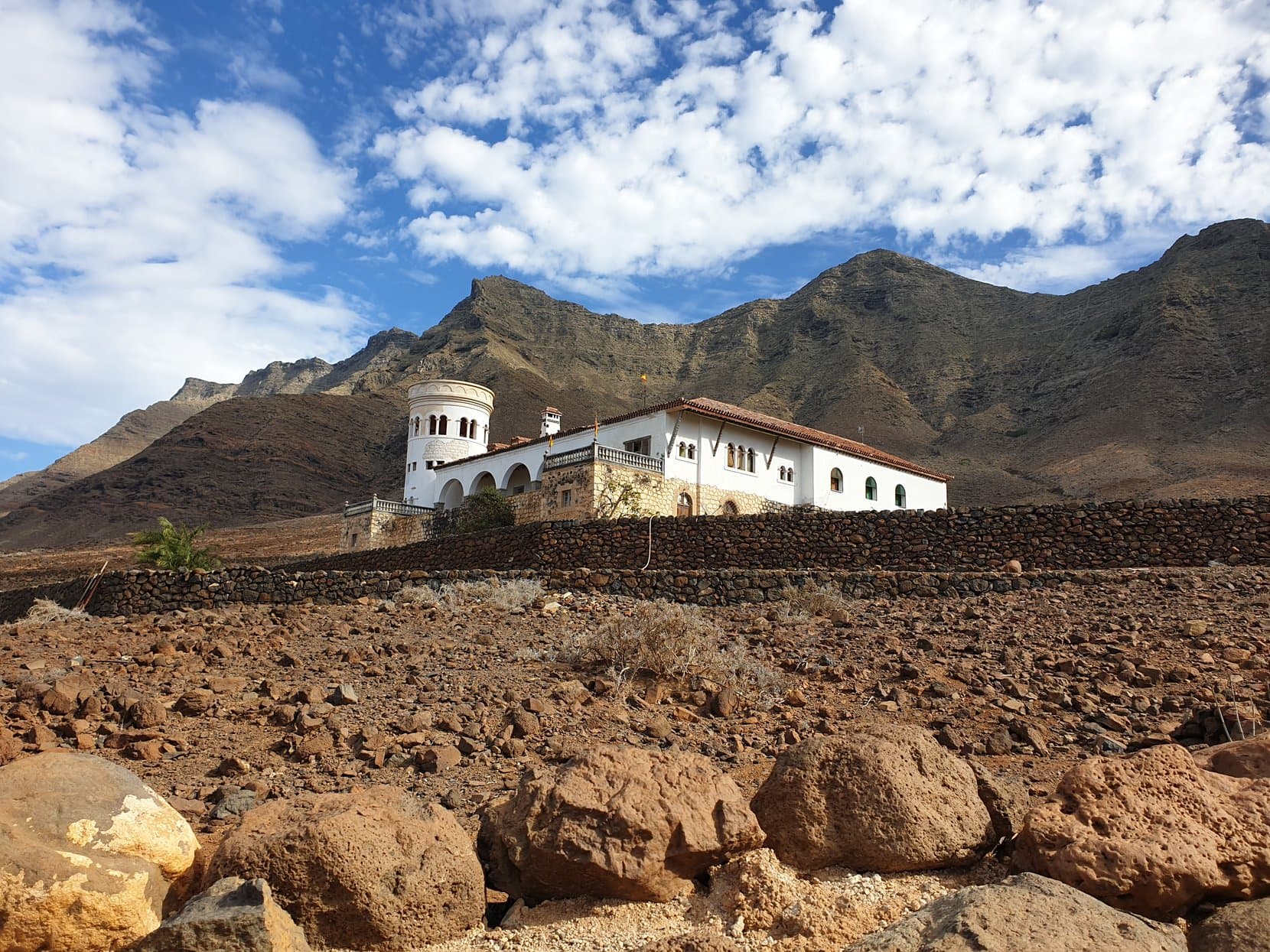
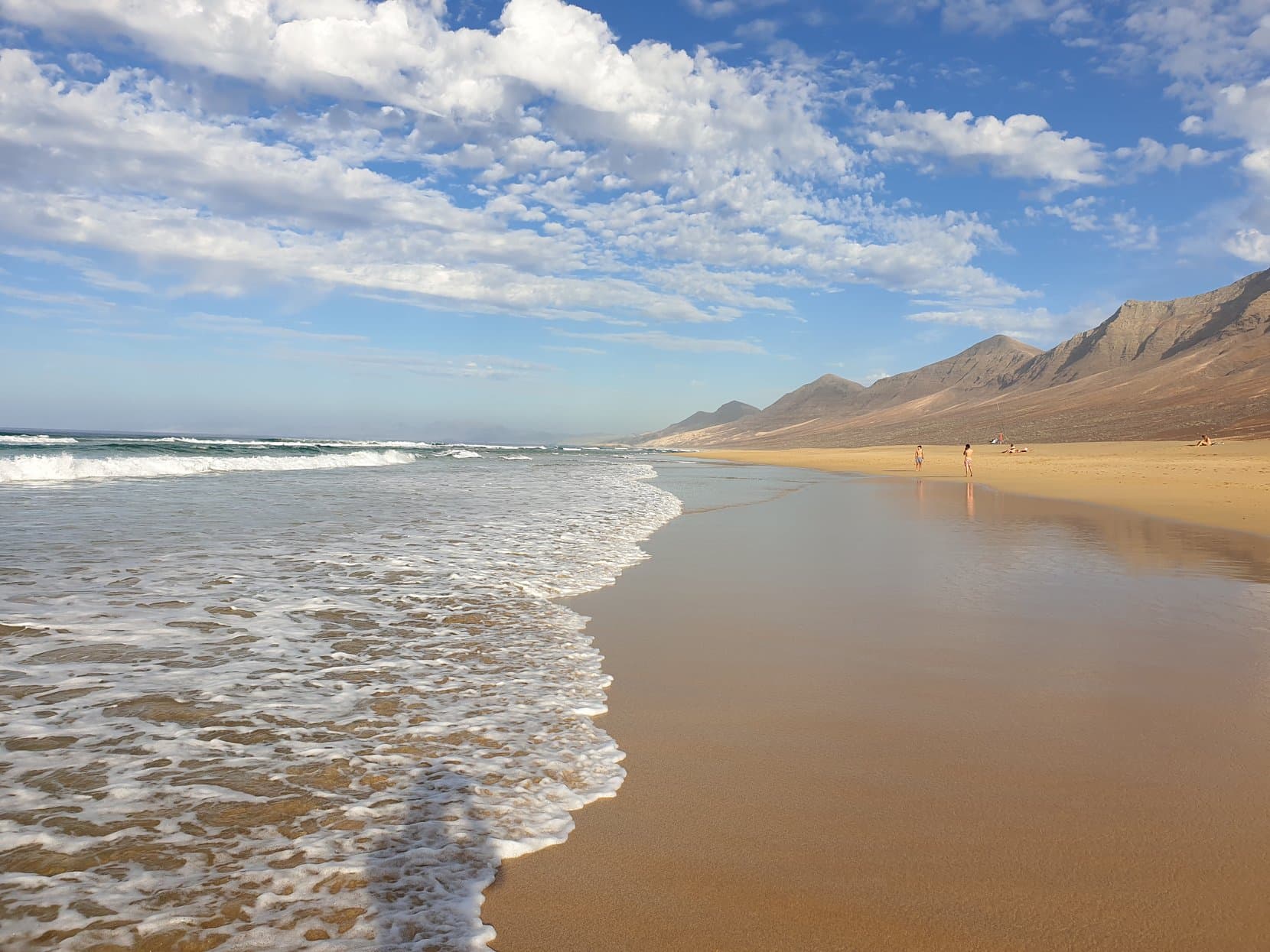
Those two beaches are the island's argument in one sentence. Grandes Playas de Corralejo is the biggest, easiest sand in the archipelago - dunes rolling into turquoise water, a road running through them like a drawn line. Cofete is its opposite and its superior: kilometres of empty shore under a mountain wall, one tiny hamlet, a lonely villa with a wartime legend nobody has settled, and an ocean you treat with respect rather than a lilo. Between the two lies the interior almost everyone skips: bare Martian hills, the old capital at Betancuria, a stargazing mirador, and a colonial house whose car park is run by ground squirrels.

The honest ledger: this is the least varied of the four big islands - no Teide, no Manrique, no mountain villages - and the most coastline-per-day of any of them. If your trip is built around sand, sea, space and a car, Fuerteventura is the right island; if you need a sight per hour, its neighbour across the short ferry is the better half of the pairing, and the two together are the archipelago's most natural two-island week.

When to go

No closed season, minimal seasonal change in the landscape - the wind is the variable that matters here.

November to March

Winter sun with the biggest beaches in the archipelago to spread out on - warm afternoons, a swimmable sea, and the dunes at their photogenic best in low light. Our November days here were pool-and-beach weather throughout.

April to June

Mild, quieter, and as green as this dry island gets - which is not very; Fuerteventura's look barely changes with the seasons.

July and August

Hottest and windiest - which is the point for the wind-sports crowd that treats this island as a European capital of the sport, and a tax for everyone else. Busiest on the northern beaches.

September and October

The warmest sea of the year, softer wind, thinner crowds - the best pure swimming window.

What I would pick

Winter for the escape (that is the tested version), early autumn if swimming is the whole point. The island's bare look costs nothing in any month - it is the Canaries' most season-proof landscape after Lanzarote.

How long to stay

A long weekend

Fine as pure beach - Corralejo's sands absorb days effortlessly. You will not see the wild south, and the wild south is the best thing here.

Five days

The core trip: the northern dunes, the interior villages, and the full southern day out to Cofete - with a rest day where it lands.

Seven days

Both ends properly: a northern base and a southern night, the interior in between, and beach days that are chosen rather than scheduled.

Pairing islands

Fuerteventura pairs naturally with Lanzarote - a short ferry connects them, which is what makes the two one trip. We also used the island as the hinge of a four-island run. The archipelago page compares the options.

Choosing between islands rather than within one? The Canary Islands page compares all four.

The island, in four parts

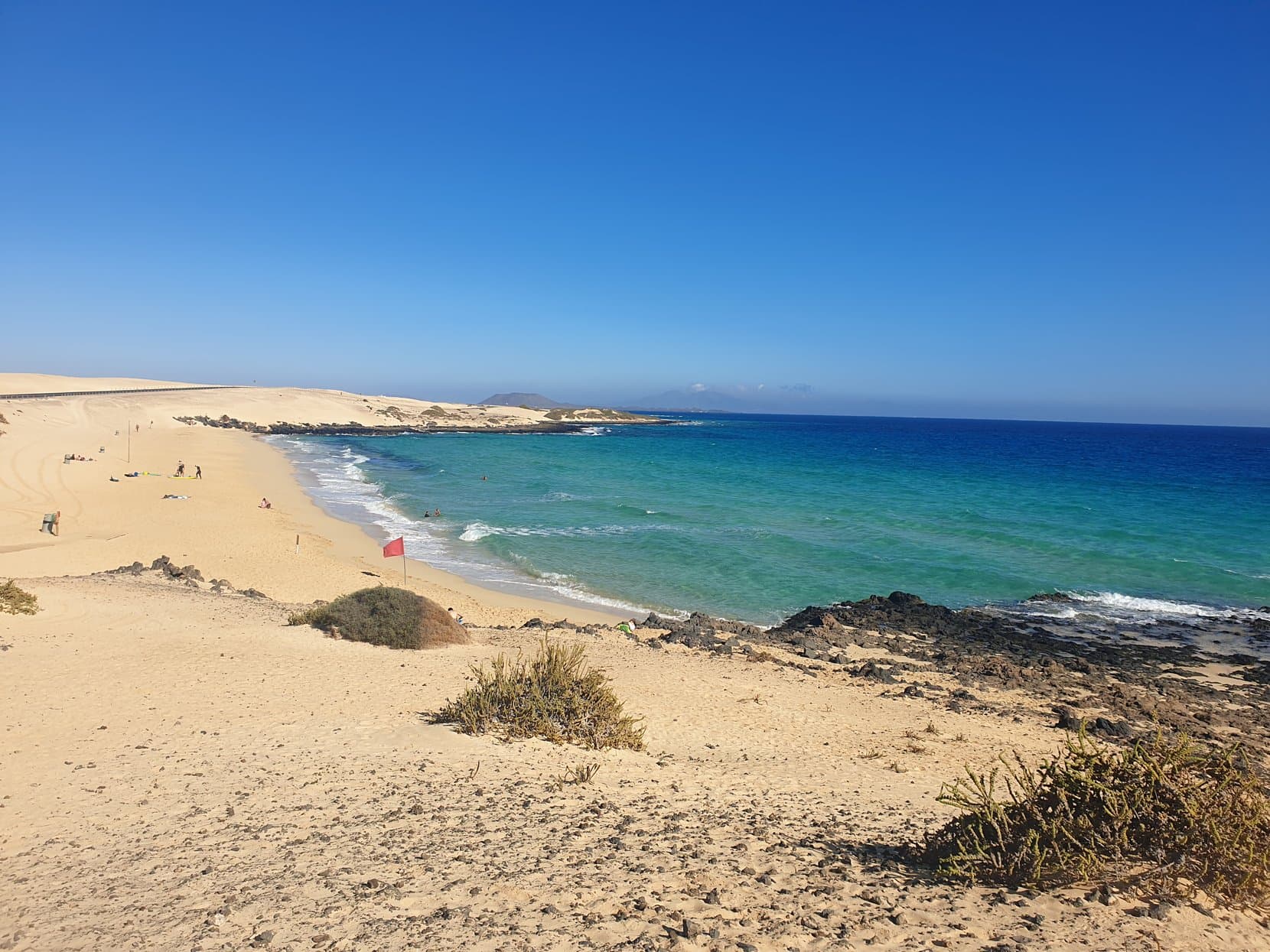
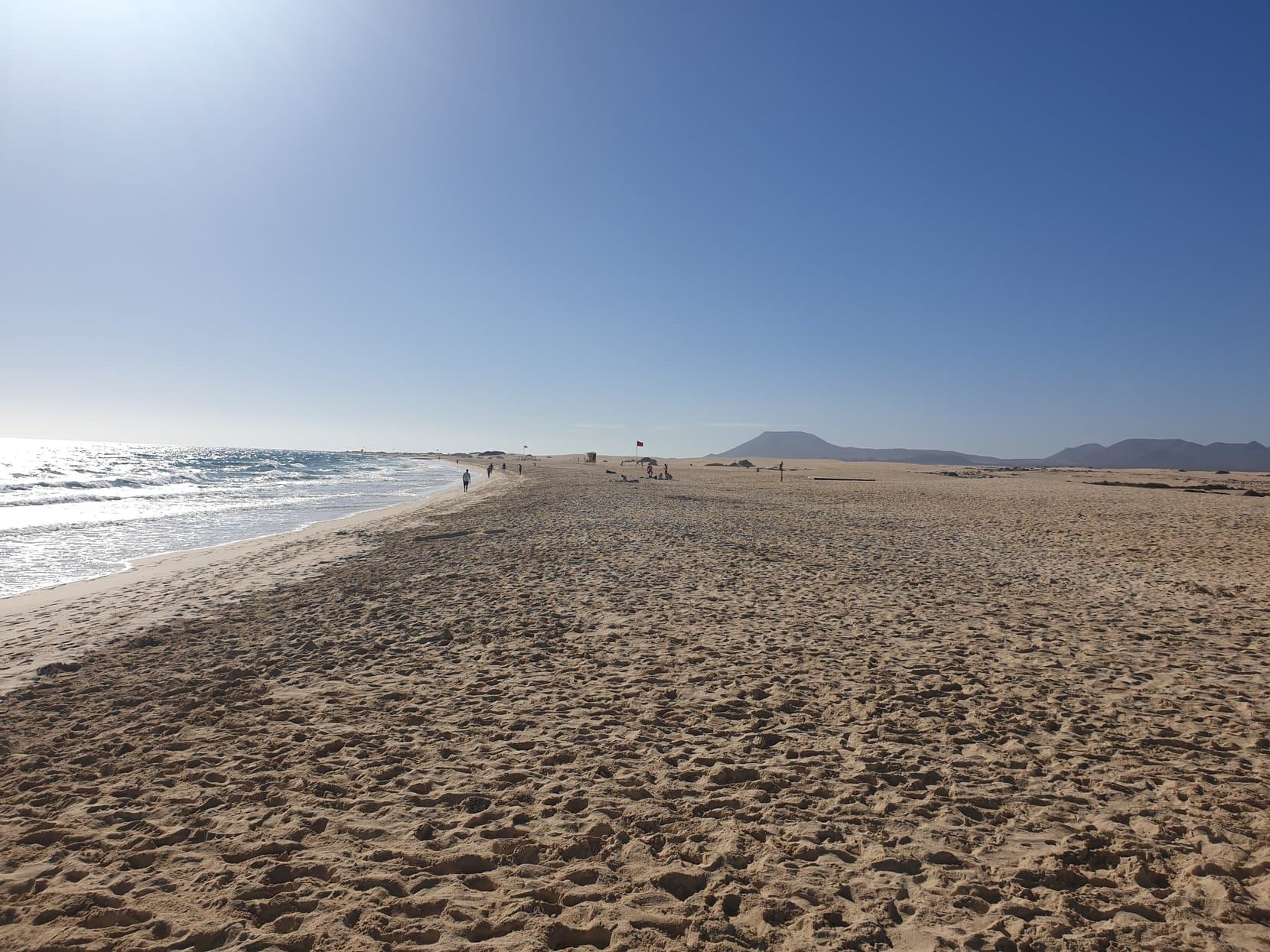
Turquoise water and white sand at Grandes Playas de Corralejo, Fuerteventura

Corralejo and the dune north

The biggest, easiest sands in the archipelago: a dune field rolling straight into turquoise water, a road that runs through it like a line drawn on sand, and the resort town beside it. This is the Fuerteventura most visitors get, and as beach machines go it is a superb one.

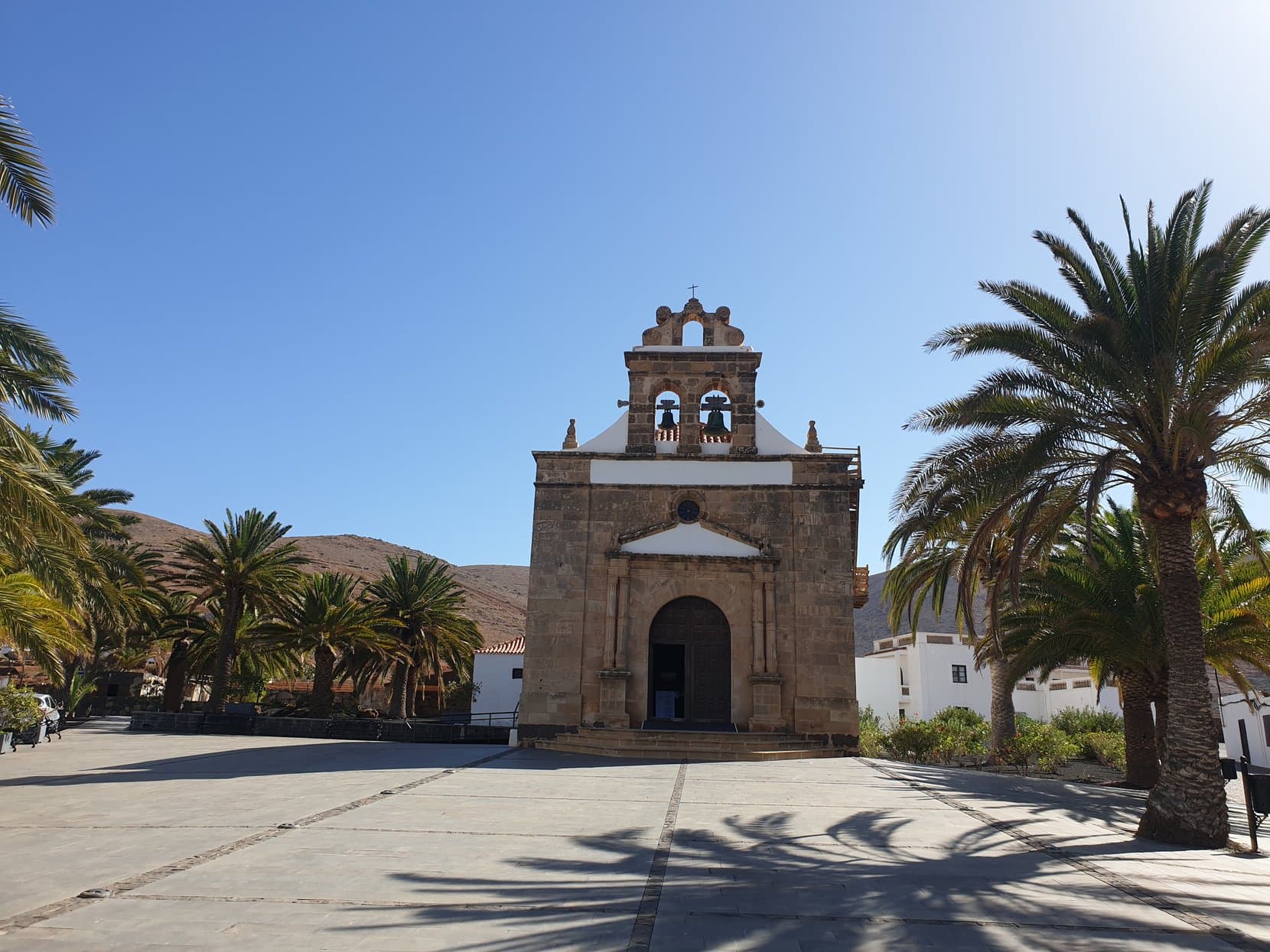
The white church of Betancuria with palms over its plaza, Fuerteventura

Betancuria and the interior

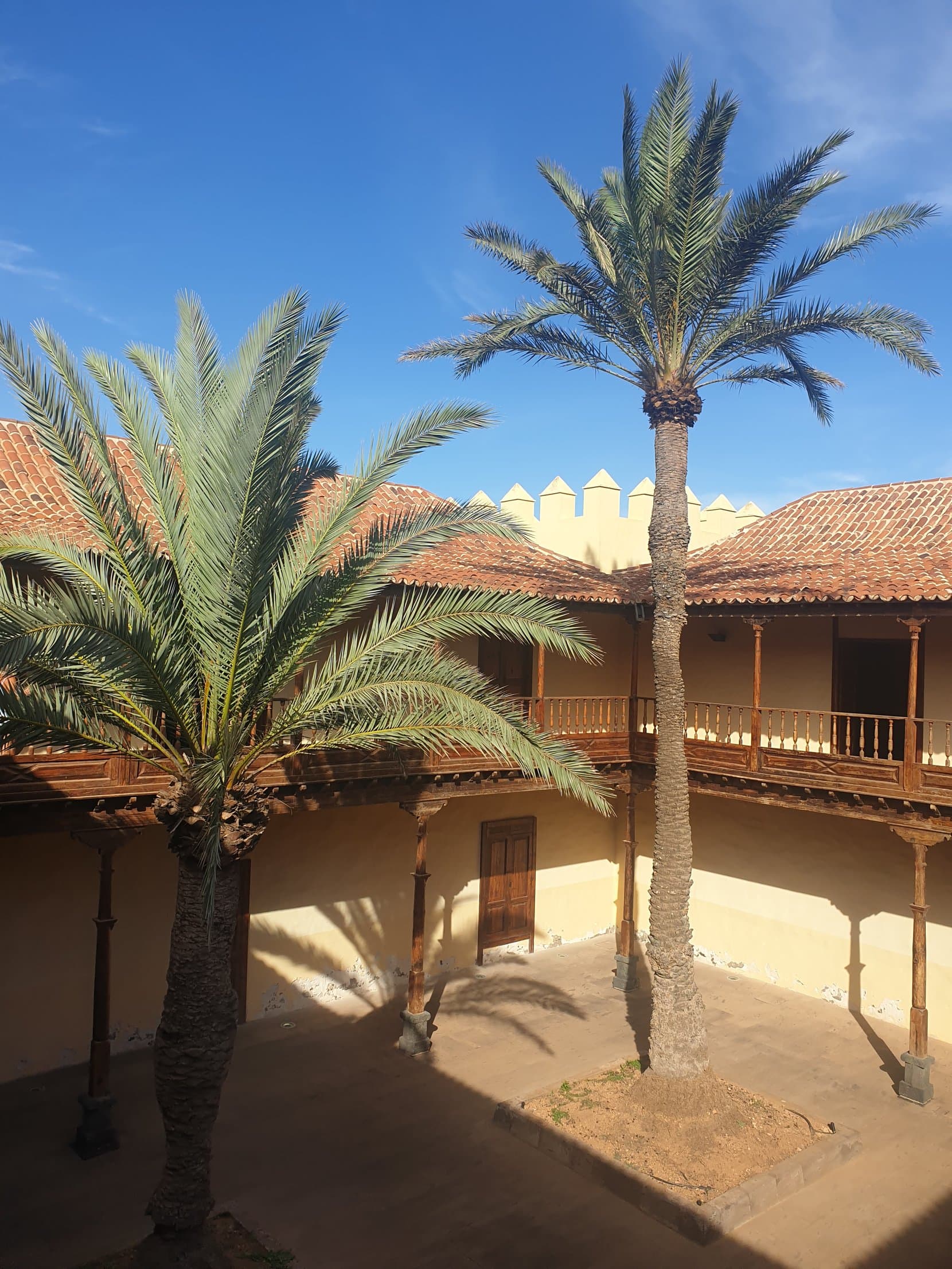
The island's bare heart: winding roads over hills that feel Martian, a stargazing mirador, the tiny town that used to be the capital, and an old colonial house whose car park is run by a colony of ground squirrels. Short on sights by big-island standards, long on atmosphere - and completely unlike the coasts.

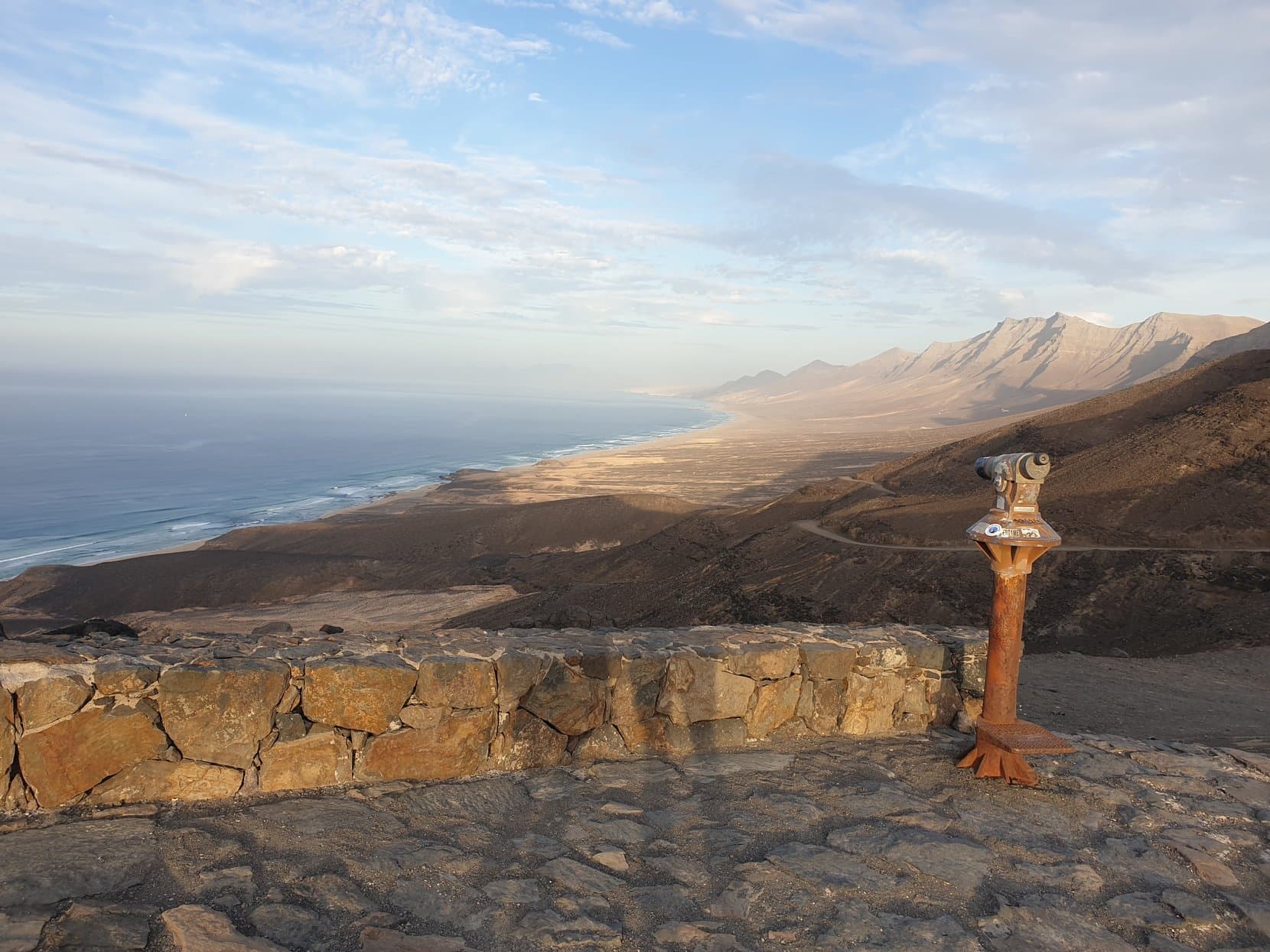
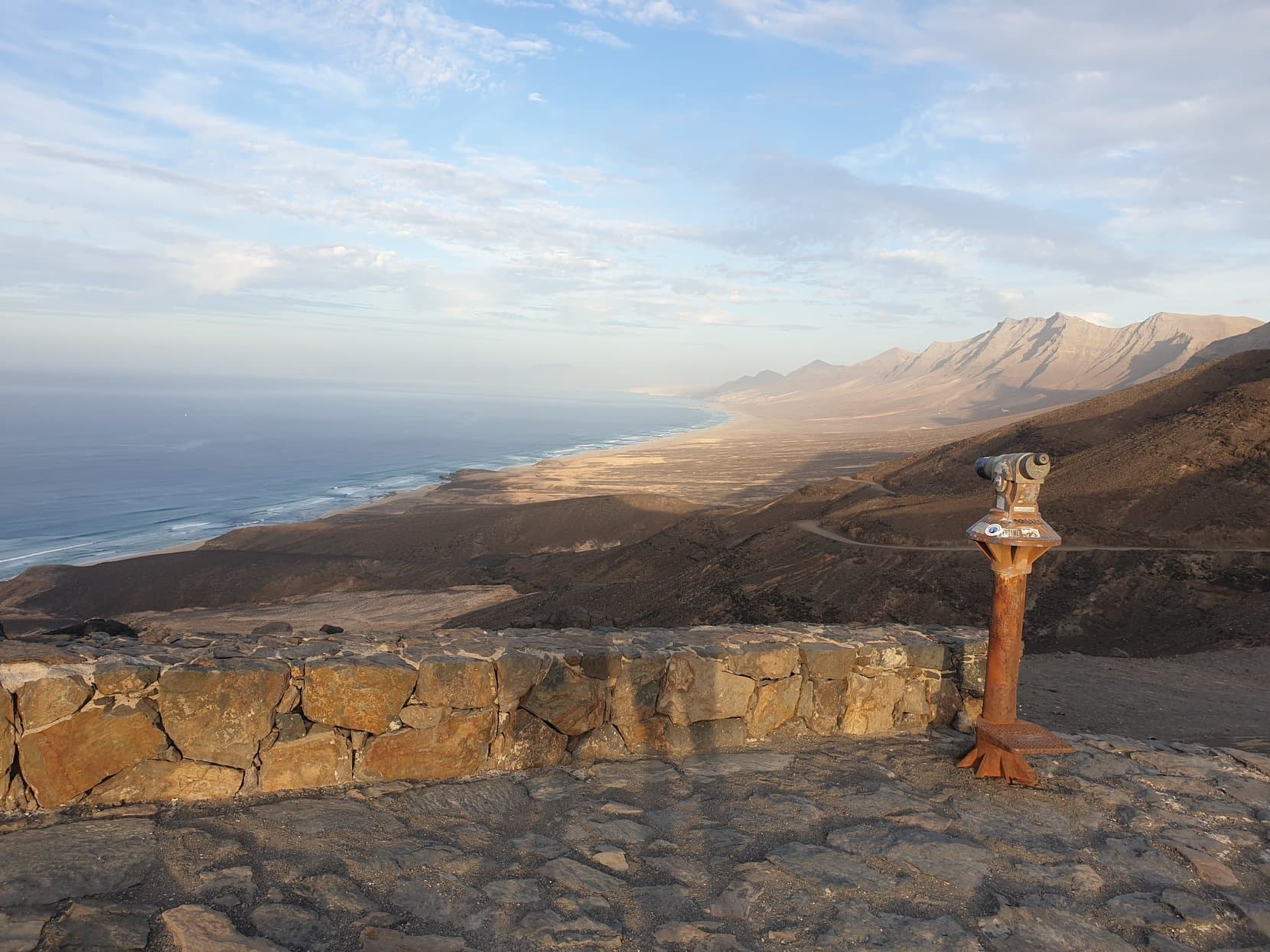
Cofete beach and the Jandía mountain wall at golden hour, from the mirador wall, Fuerteventura

Jandía and Cofete

The wild end. Behind the Jandía ridge, at the end of an unpaved road, lies Cofete: kilometres of empty sand under a mountain wall, a lonely villa with an unresolved wartime legend, and an ocean that demands respect rather than swimming. The single best thing on the island, and the least developed.

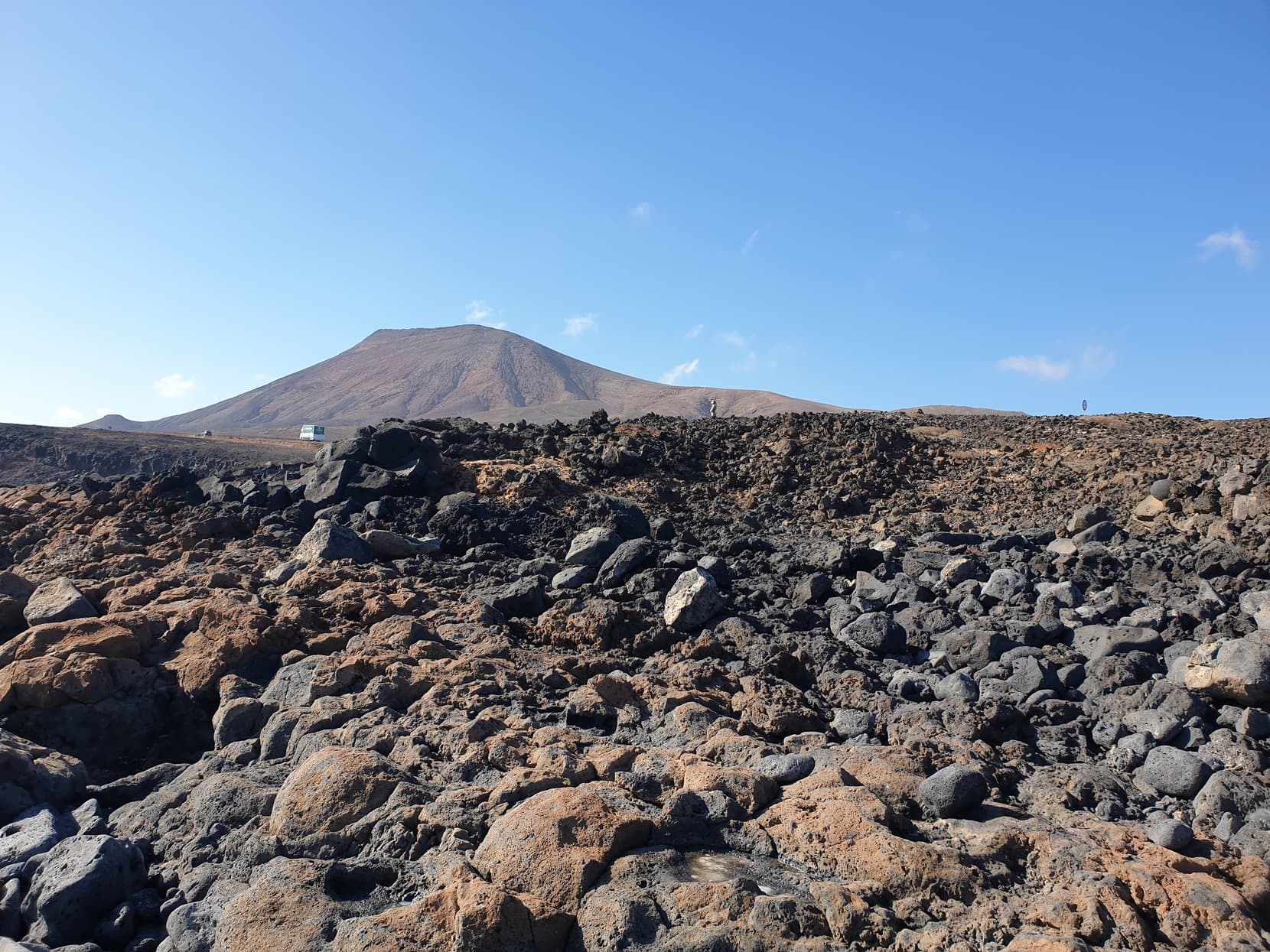
A black lava field running to a bare volcano cone, Fuerteventura

The volcano country

Between the coasts, old cones and lava fields stripe the island - crossed rather than visited, and constantly composing themselves in the windscreen. The drives here are the connective tissue of any Fuerteventura trip, and better than connective tissue usually gets.

From the trip

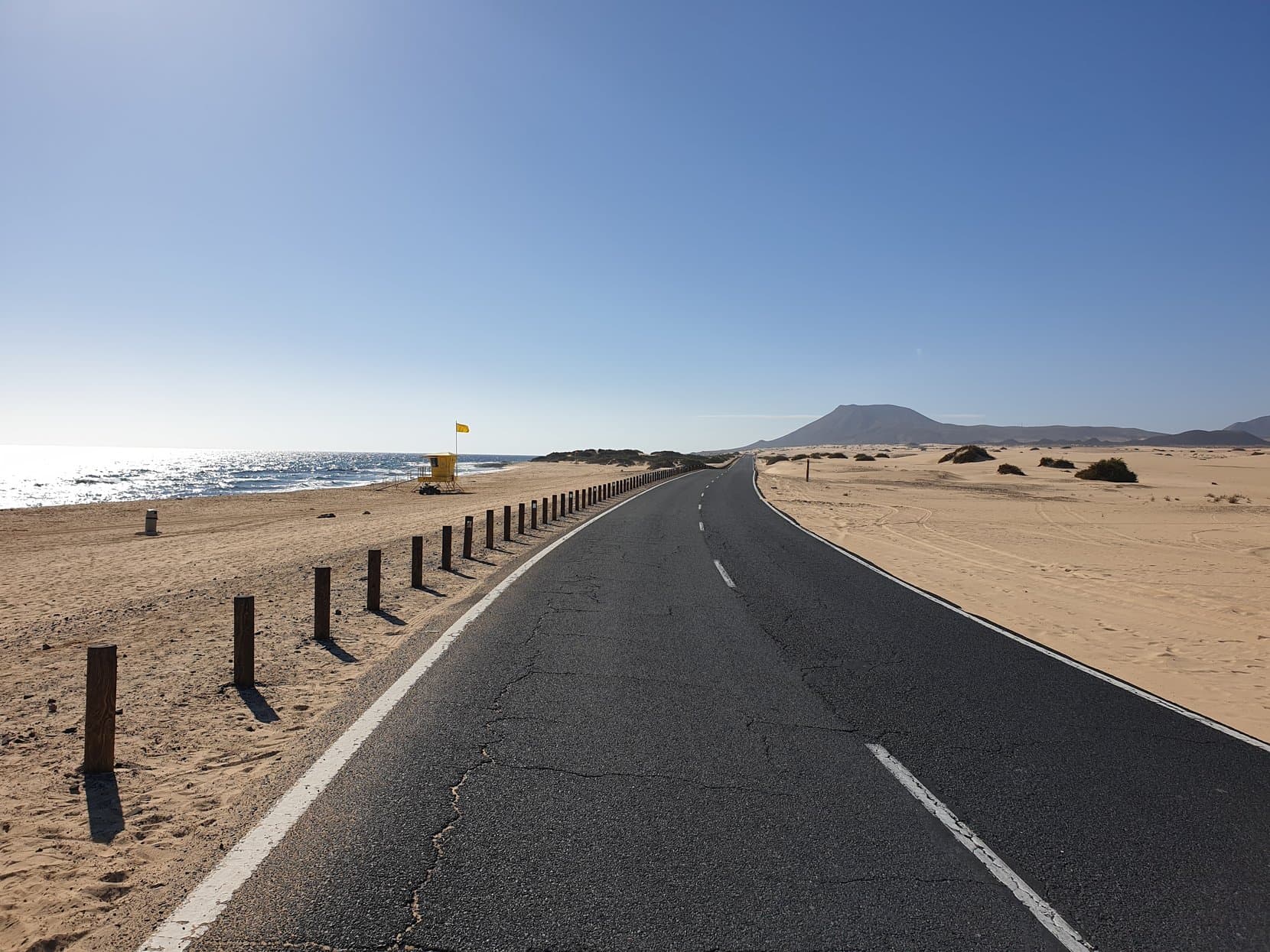
The road running through the Corralejo dunes toward a volcano cone, Fuerteventura
The white sand of Grandes Playas running empty toward a volcano cone, Corralejo, Fuerteventura
A road winding through the bare volcanic hills at Sicasumbre, Fuerteventura
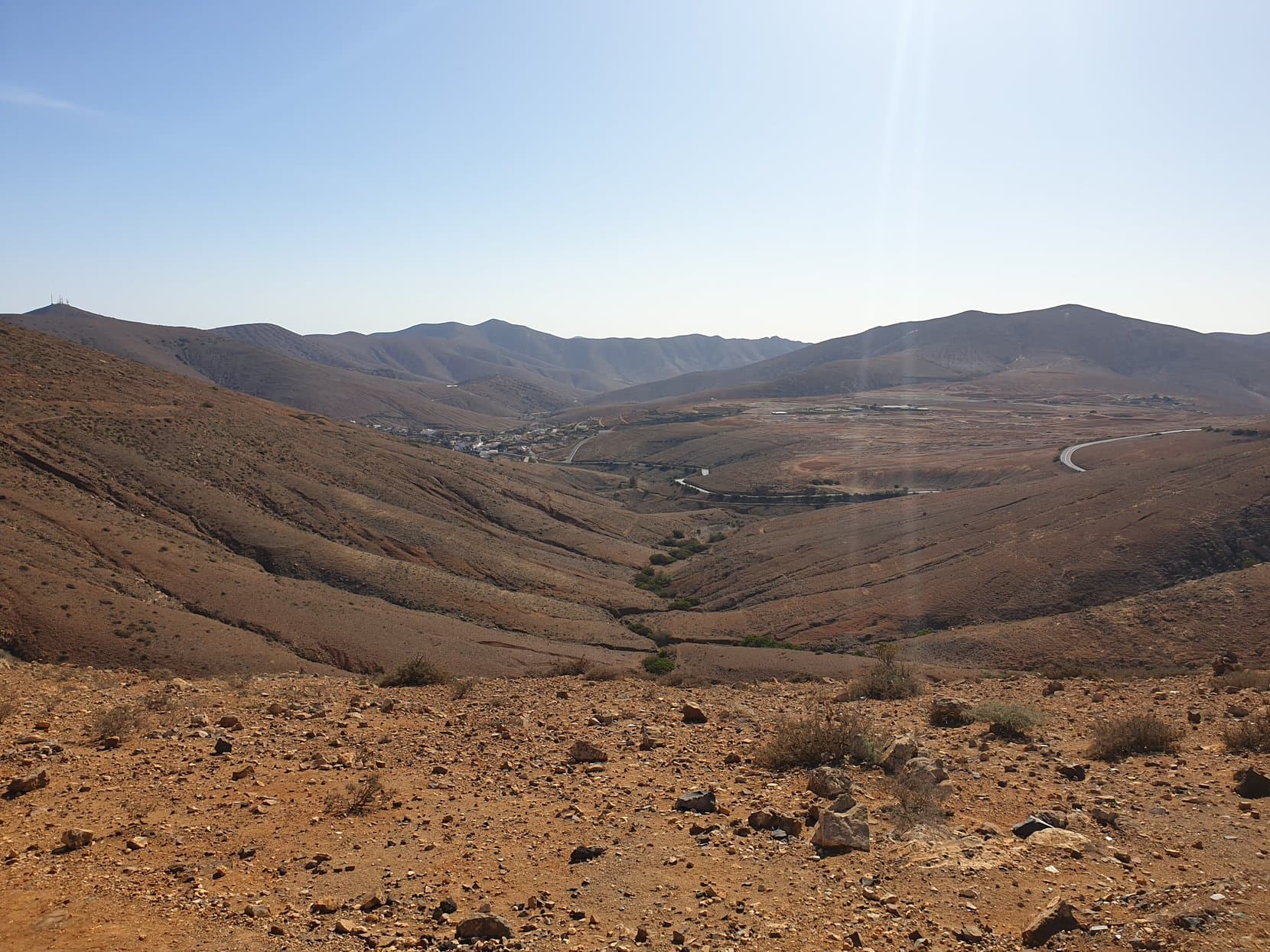
The bare valleys of central Fuerteventura from the Morro Velosa viewpoint
The white windmill of Molino de Antigua over its cactus garden, Fuerteventura
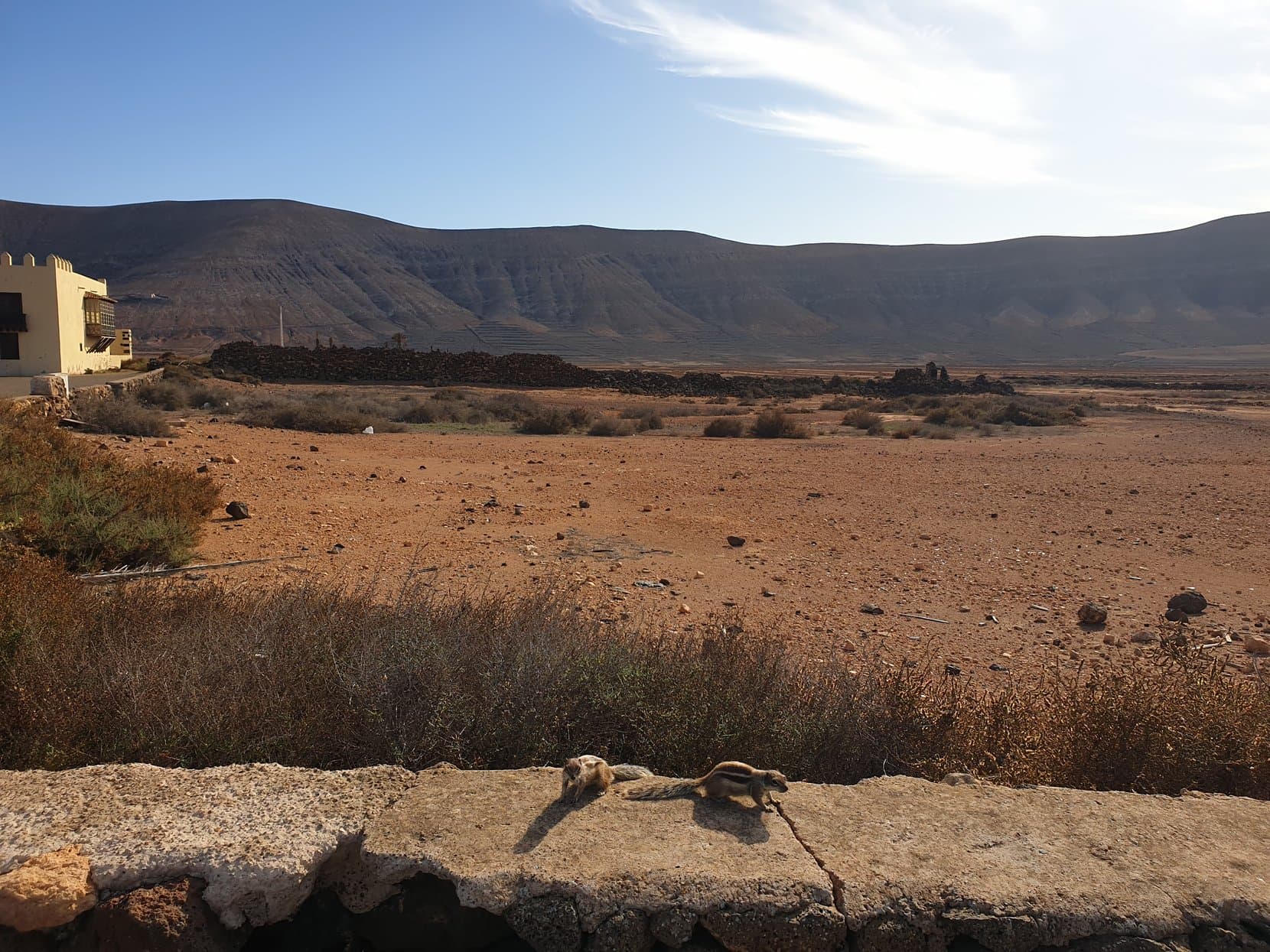
Two ground squirrels on a stone wall in front of a bare volcanic plain at La Oliva, Fuerteventura
The lonely white Villa Winter with its round tower under the Jandía mountains at Cofete, Fuerteventura
Cofete beach and the Jandía mountain wall seen past a candelabra cactus, Fuerteventura

The dune road, Corralejo

Getting there and around

Fuerteventura's airport sits by Puerto del Rosario with direct flights from all over Europe year-round. This is Spain: euros, EU roaming, Schengen rules, and a clock level with London, one hour behind Madrid.

Rent a car - the island is the second largest in the archipelago and its best material sits at opposite ends of it. The main roads are fast and empty; the Cofete approach is unpaved and slow, and part of the experience rather than an obstacle to it.

Ferries make this island the archipelago's natural hinge: a short hop connects Corralejo to Lanzarote - we crossed it in both directions with the same rental car - and longer crossings link toward Gran Canaria and Tenerife. The pairings question belongs to the archipelago page.

What it costs

Getting there is the line every alternative loses to: return flights from most of western and northern Europe typically come in under €150, and sale fares go far lower. On the ground, prices sit at or below mainland-Spain levels - and the island's product is free by nature.

StyleWhat that looks like
LeanA self-catering base near the dunes, supermarket picnics for the driving days, and beaches - the island's whole product - that charge nothing
CoreSmall hotels or a resort base plus a southern night, restaurant dinners, and almost no paid attractions to budget for at all
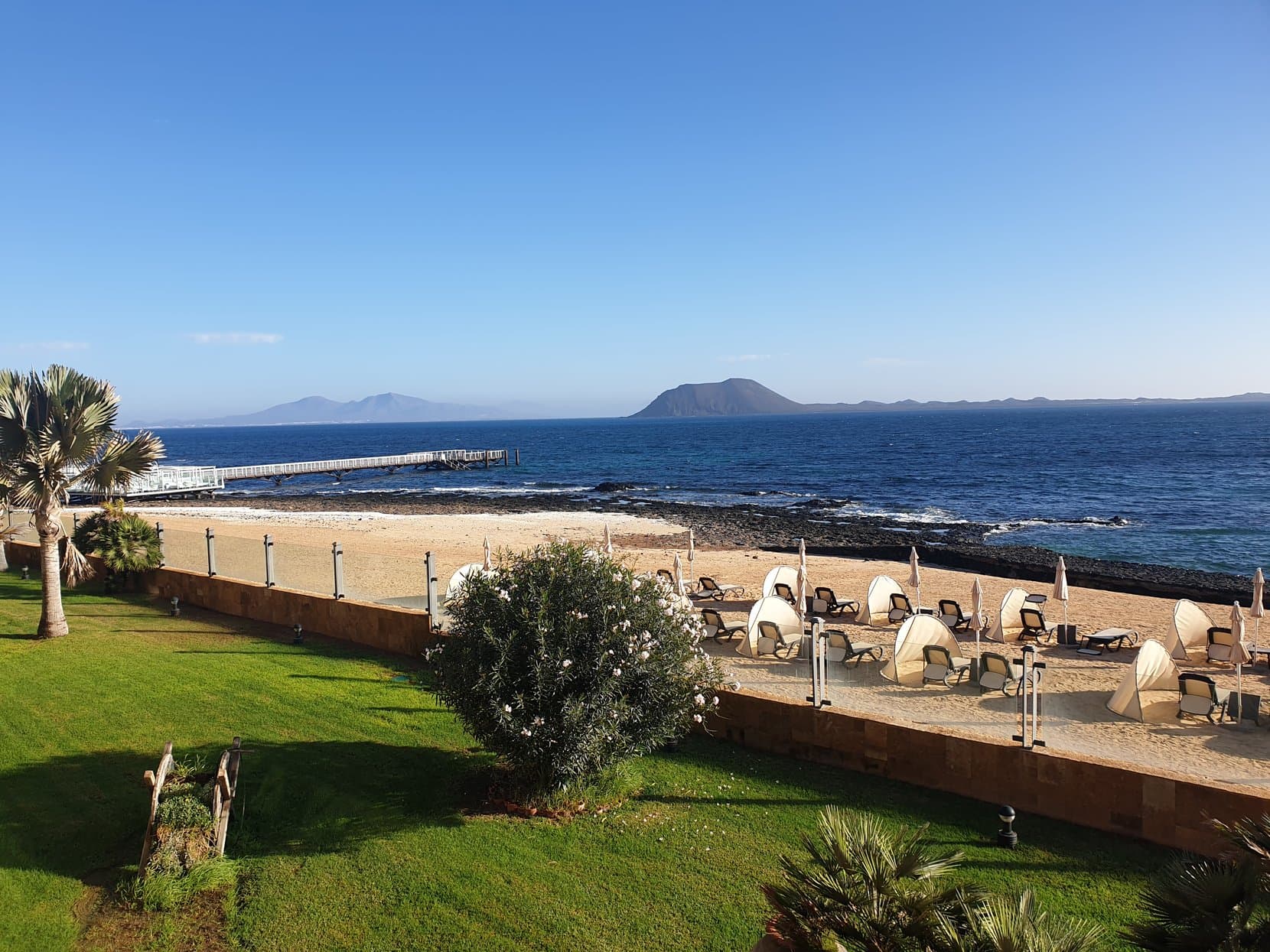
SplurgeThe big-resort tier by the northern beaches - we tried it for two nights as a change of register; money buys the pool landscape, not access

The bed is the only line with real range - winter is the high season - and the almost total absence of paid attractions keeps every other line flat.

Tested tips

Treat Cofete as a day, and the sea there with respect.

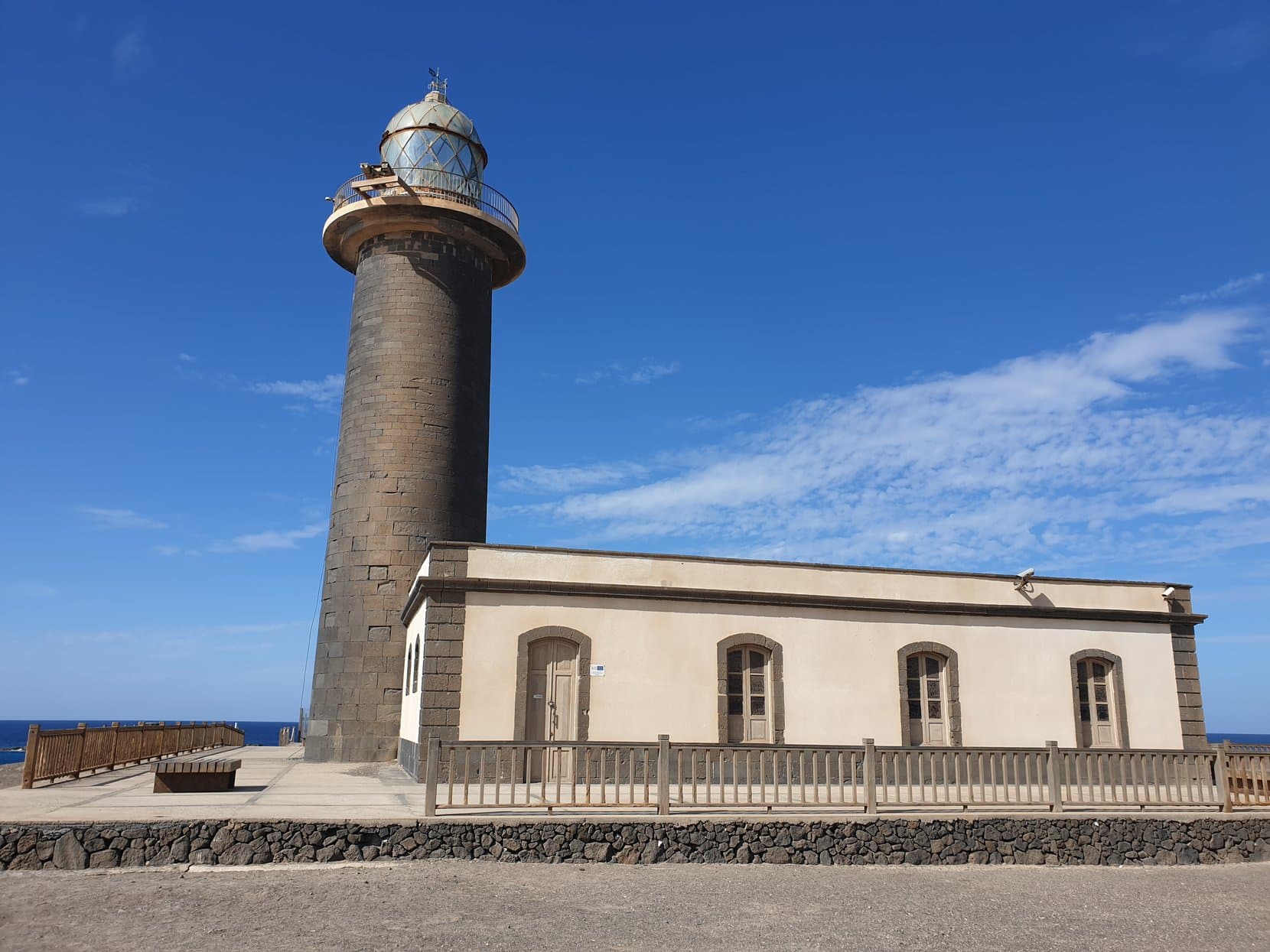
The drive over the ridge is unpaved, the arrival view is the best on the island, and the ocean is the open Atlantic with a serious reputation - we swam carefully or not at all. Go for the walking and the staring, give it a full day with the lighthouse and the villa, and it will outrank every easy beach you have ever queued for.

Give the interior its half-day.

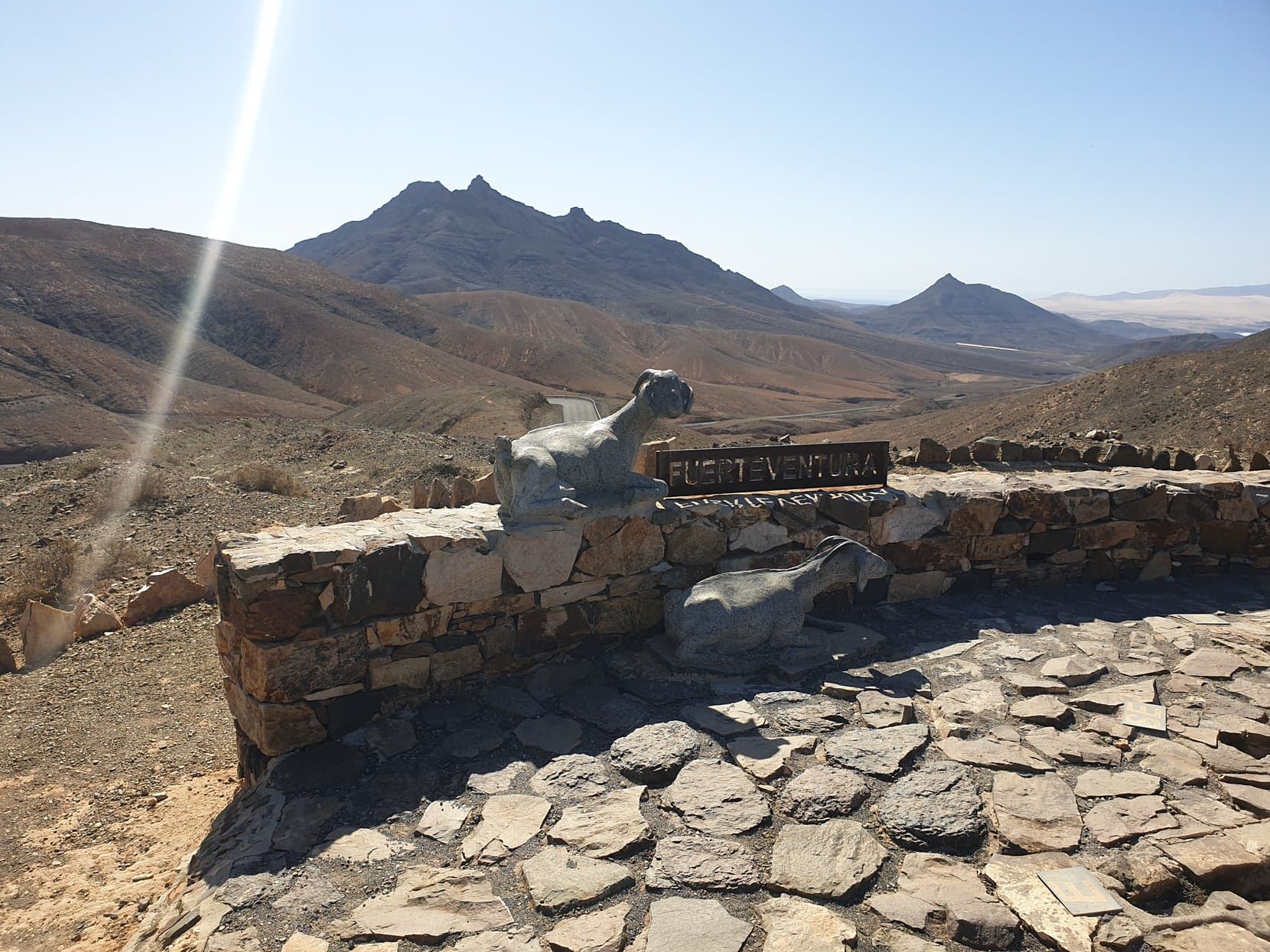
It reads as empty on the map and it is the opposite in the windscreen: the Sicasumbre mirador, Betancuria's plaza, the Morro Velosa panorama and the squirrel car park at La Oliva chain into the island's most underrated hours - and the roads between them are the best drives here.

The dune road is a sight, not a transfer.

The road through the Corralejo dunes runs sand-to-sand with a volcano ahead and turquoise water beside it. Drive it slowly, stop where stopping is allowed, and walk into the dune field at least once - most people save the dunes for their last day and regret the arithmetic.

The deep blue Jandía coast under the mountain ridge, Fuerteventura

FAQ

Is Fuerteventura worth visiting?▾
Yes - if beaches are anywhere near the centre of your trip, it is the best island in the archipelago for them: the biggest easy sands in the north, and at Cofete the wildest beach in the Canaries full stop. The honest caveat is the flip side: it has the least variety of the four big islands. Come for coastline and space, not for a sight-per-hour circuit.
How many days do you need in Fuerteventura?▾
Five to seven. Five covers the northern dunes, the interior and the full southern day to Cofete; seven lets you base at both ends and choose beach days instead of scheduling them. A pure beach long-weekend works too - but you would leave without Cofete, which is like leaving a concert before the headliner.
Fuerteventura or Lanzarote?▾
Beaches: Fuerteventura, without question. Sights and strangeness: Lanzarote - the fire country, the Manrique sites, the west-coast geology. They sit a short ferry apart, which is what makes the honest answer both: the pairing is the archipelago's most natural two-island week, and it is the trip we would sell you.
Is Playa de Cofete worth it, and can you swim there?▾
Worth it beyond argument - kilometres of empty sand under a mountain wall, reached over an unpaved road, with a lonely villa and its unresolved wartime legend at the far end. Swimming is the caveat: this is the open Atlantic with serious currents, and we swam carefully or not at all. It is a walking-and-staring beach first, and better for it.
Are the Corralejo dunes worth the stop?▾
Yes - a genuine dune field rolling into turquoise water, big enough that the crowds thin fifty metres from the car. The road through it is a sight in itself, and the beaches along it are the easiest great swimming on the island.
Should I stay in the north or the south of Fuerteventura?▾
North for infrastructure and the easy sands - Corralejo is the natural base, with the ferry to Lanzarote beside it. South for the wild end and Cofete. On five days, base north and give the south one full day; on seven, split the nights and you will resent no drives.
Is Fuerteventura windy?▾
Yes - the name is not an accident, and summer trades make the island a European wind-sports capital. For everyone else the wind is a feature to plan around rather than a spoiler: our November was breezy at the headlands and calm enough everywhere that mattered. If dead-calm beach days are the whole brief, aim for early autumn.
Do you need a car in Fuerteventura?▾
Yes. The island is big, the distances are real, and its two best things - the interior drives and Cofete - are unreachable without one. Note the Cofete approach is unpaved: ordinary care, not heroics, and factor the slow kilometres into the day.
Is Fuerteventura warm enough to swim in winter?▾
Yes - the sheltered northern beaches run shirt-sleeve warm on winter afternoons and the sea sits around 19 to 20 °C: refreshing, entirely swimmable. We spent whole November days by pool and beach here. Cofete is the exception in every season - see above.
Is Fuerteventura expensive?▾
No. Return flights from most of western and northern Europe typically come in under €150 with sale fares far lower, prices on the ground sit at or below mainland-Spain levels, and the island's product - sand, sea and space - is free. Even the splurge tier is really just a bigger pool.
Stories from Fuerteventura

Four Canary Islands, one trip, by ferry

Four Canary Islands, one trip, by ferry

Four islands, one car on every ferry – and every landing felt like a new country.

Winter sun in Europe: the Canaries in January

Winter sun in Europe: the Canaries in January

Swimming in the Atlantic in November, four hours from a grey home – the honest maths.

Cofete: the wild beach at the end of Fuerteventura

Cofete: the wild beach at the end of Fuerteventura

Kilometres of empty sand behind a mountain wall, at the end of an unpaved road.