TestedRoutes
GuidesDestinationsInspireAbout me

TestedRoutes Newsletter

Field-tested travel routes, in your inbox when they drop.

© 2026 TestedRoutes. All rights reserved.

ContactFAQLegalTermsPrivacyRefundsSecurityAffiliate disclosureSitemap

We independently review everything we recommend. When you buy through our links, we may earn a small commission at no extra cost to you. More on how this works.

ExploreGuidesDestinationsInspireAbout
Destinations›Western Sahara

North & West Africa · The Atlantic Sahara

Western Sahara

Can you visit, is it safe, and is Dakhla worth the trip – for the kite lagoon, the white dune, and the emptiest sealed drive in Africa.

Paulius Pikelis

Tested by Paulius Pikelis · 140 countries

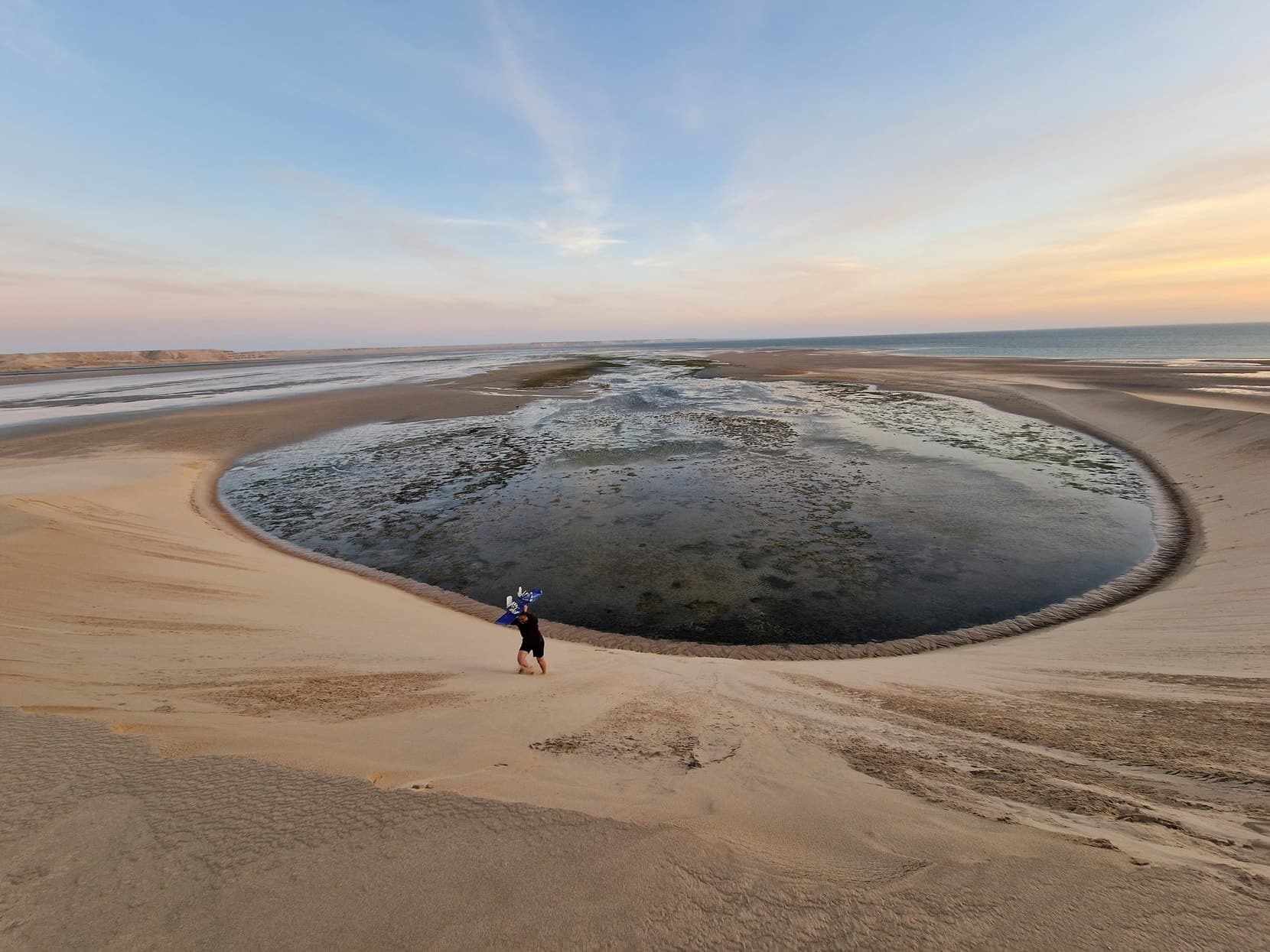
A horseshoe tidal pool ringed by white sand beneath the dune near Dakhla, a lone figure at its rim

Is Western Sahara worth it, and what do you actually do there

Western Sahara is mostly emptiness – and that is the honest pitch, not the caveat. A disputed territory the size of Britain with a single sealed highway down its Atlantic edge, it offers three things in quantities almost nowhere else can: space, wind and light. We crossed it end to end on our West Africa rally expecting a transit, and it gave us some of the trip's best days.

What you actually do: drive a desert highway where fuel stations are events and camels have right of way, mess about on beaches with nobody on them for hours in either direction, and land in Dakhla – a working port at the end of a forty-kilometre spit, beside a flat turquoise lagoon that has quietly become one of the kitesurfing capitals of the world. Climb the white dune that rises straight out of the tidal flats, eat seafood that was swimming that morning, watch the kites until the light goes.

The honest caveats: this is not a sightseeing destination – there are no monuments, no old towns, no museums worth the word. The distances are serious, the wind is constant, and the territory's eastern half is off-limits behind a militarised line. You come for water, desert and emptiness, or you do not come. We think the first option is badly underrated.

When to go

The coast is mild all year – the ocean does for Western Sahara what altitude does for other deserts. The real calendar here is the wind's.

April to June

The sweet spot. The trade wind is already working for the kite crowd, the desert has not hit full summer heat, and the coast stays mild – Dakhla's ocean air keeps it temperate when the interior cooks.

July to September

Peak wind. The lagoon is at its strongest and busiest, and the coast remains bearable while inland Sahara is brutal. Come for the wind, plan around it if you are not here for it.

October to March

The quiet season. Winds ease, resorts thin out, days stay warm and nights get properly cool. The desert drive is at its most pleasant – this is when I would do the overland run.

What I would pick

For Dakhla itself: May or June, taking the livelier lagoon and the odds of wind with it. For the drive south: winter, trading the kite scene for cool mornings and empty roads. The coast is forgiving year-round; the choice is really about wind.

How long to stay

Western Sahara scales by intent: Dakhla is a fly-in trip, the territory is a drive-through, and both are legitimate.

A long weekend

The Dakhla trip: fly in, the lagoon, the white dune, the town's market and promenade, seafood, out. This is the trip the place is built for, and it does not need more days – it needs the right ones.

A week

The kite trip. A week here is for the wind: daily sessions on the flat lagoon – lessons if you are new, your own kit if you are not – with the dune, the town and the empty beaches filling the light-wind days. If you are not kiting, the long weekend is the better-sized trip.

The overland transit

Two long driving days as part of a Morocco-to-Mauritania crossing – roughly a thousand kilometres of sealed, empty desert road. A completely different trip: the emptiness is the sight, and Dakhla is the rest stop you will remember.

The regions

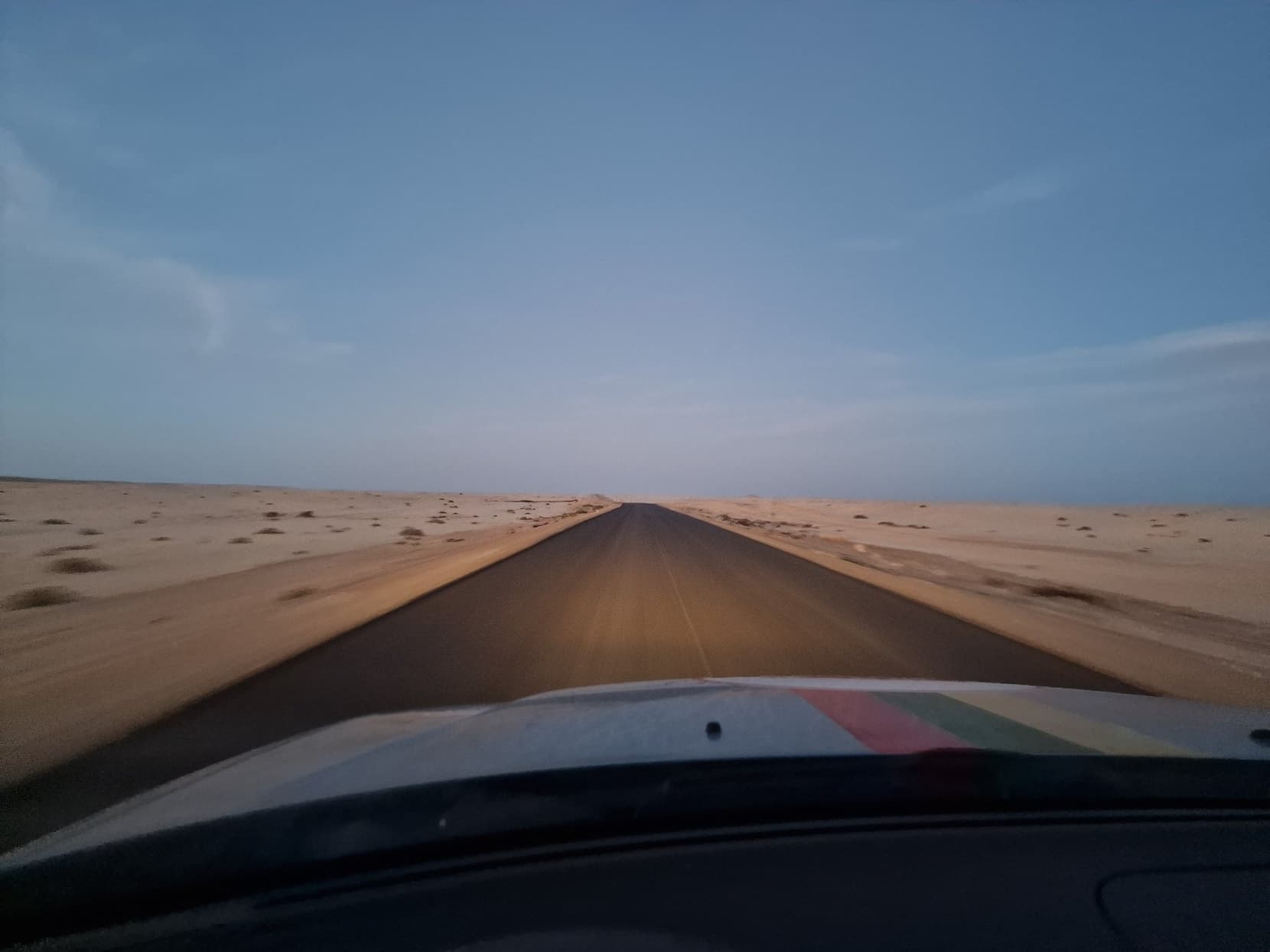
The empty desert highway seen over the car bonnet, a dune encroaching from the left

The long road south

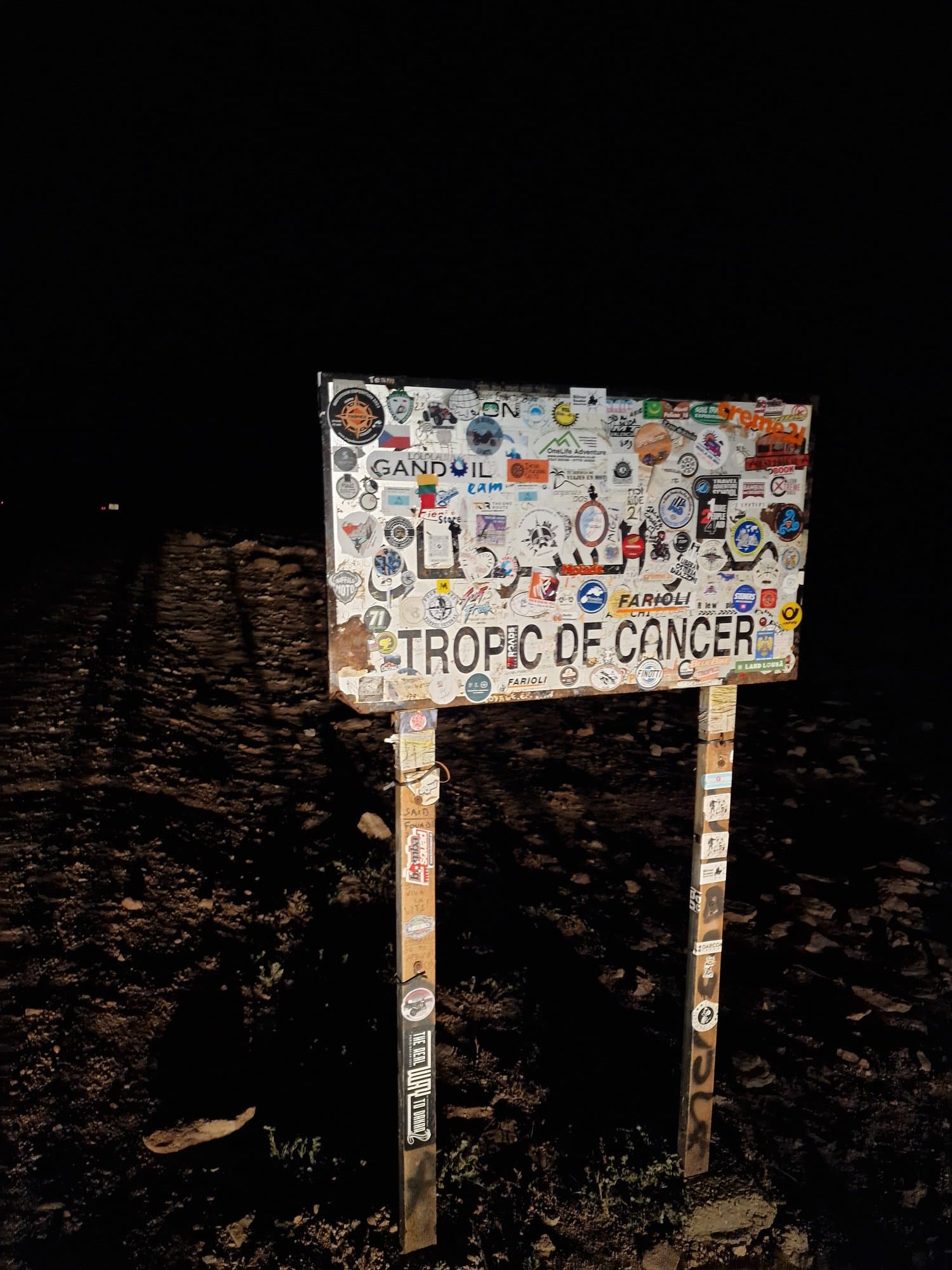
One sealed road runs the length of the territory, and almost nothing shares it with you: drifting sand, camels, checkpoints, fuel stations that feel like events, and a sticker-covered sign where it crosses the Tropic of Cancer. This is one of the emptiest drives you can do on tarmac anywhere, and it is most people's reason to be here at all.

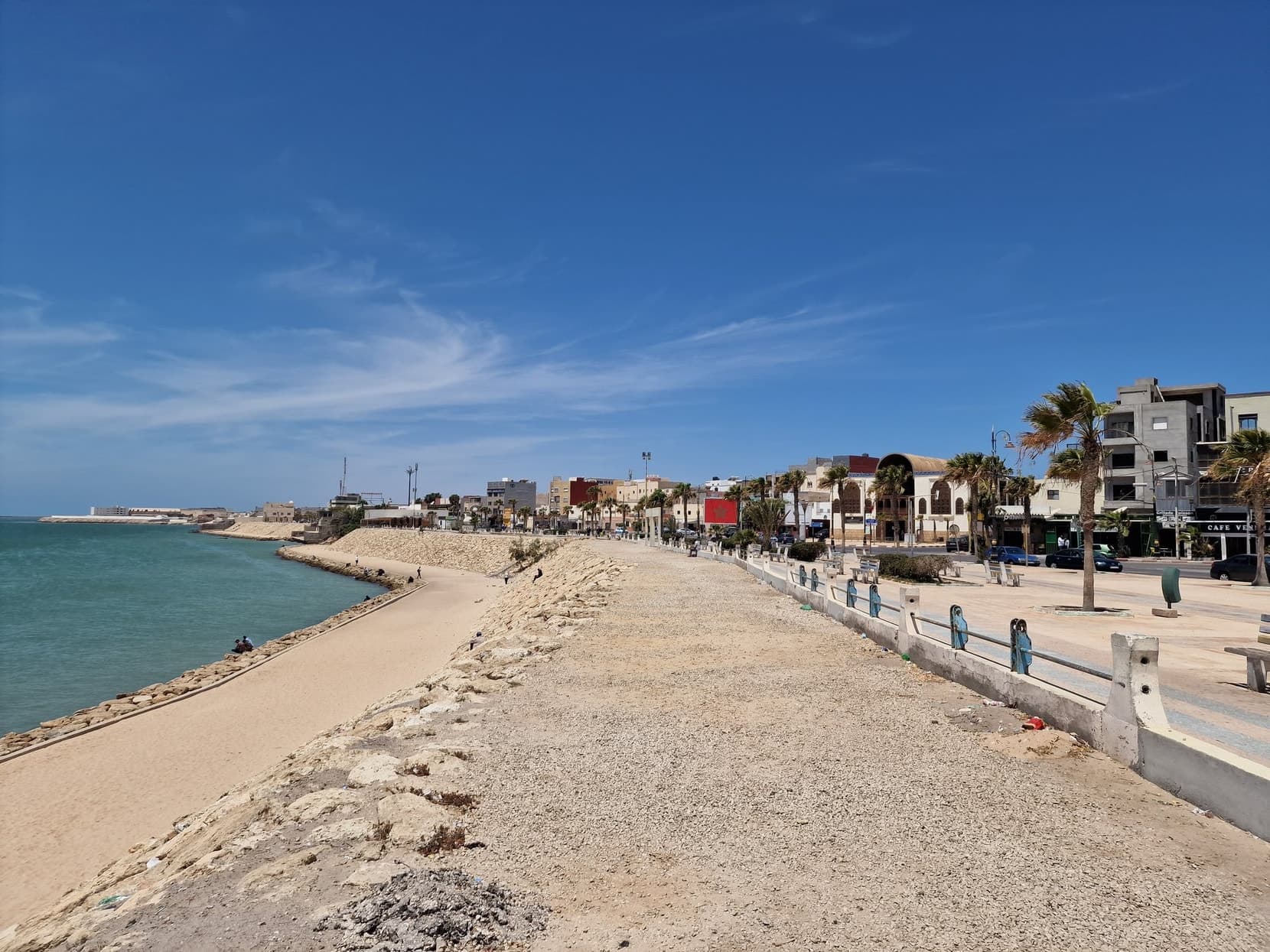
Dakhla's stone seafront promenade curving along the turquoise bay toward town

Dakhla town

A working Saharan port at the end of a forty-kilometre spit: a fish market, a proper souk, palm boulevards and a seafront promenade above flat turquoise water. It is not a town you sightsee – it is a town that works for a living, and eating well here is easy.

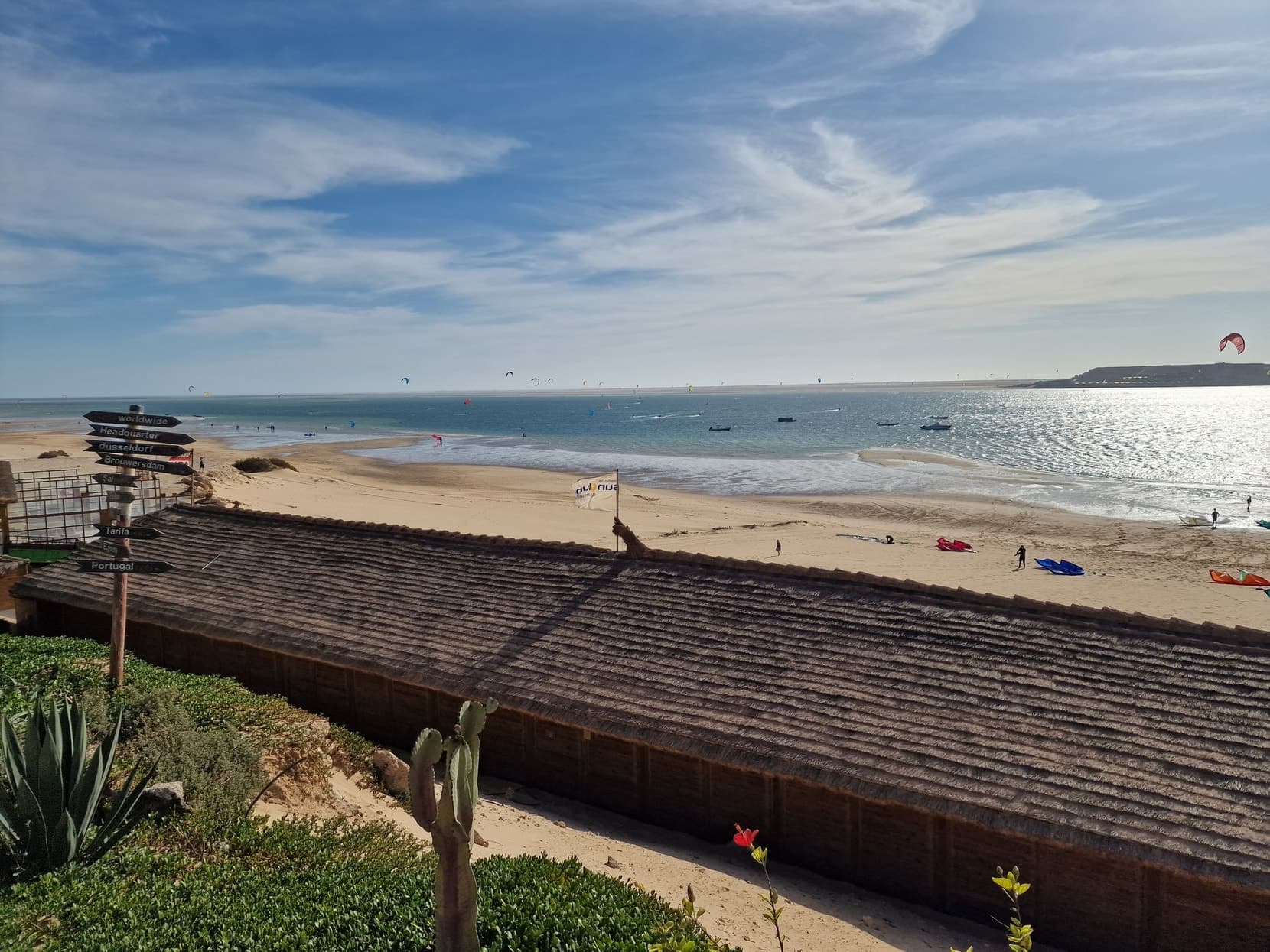
Kites in the air over Dakhla's flat lagoon, seen from the bluff above the beach

The lagoon and the white dune

The reason Dakhla is on the world's map: a shallow, flat-water lagoon with trade wind across it most of the year, kite camps strung along the shore, and a white dune rising straight out of the tidal flats. You do not need to kite for it to be worth the trip – the watching is half the show.

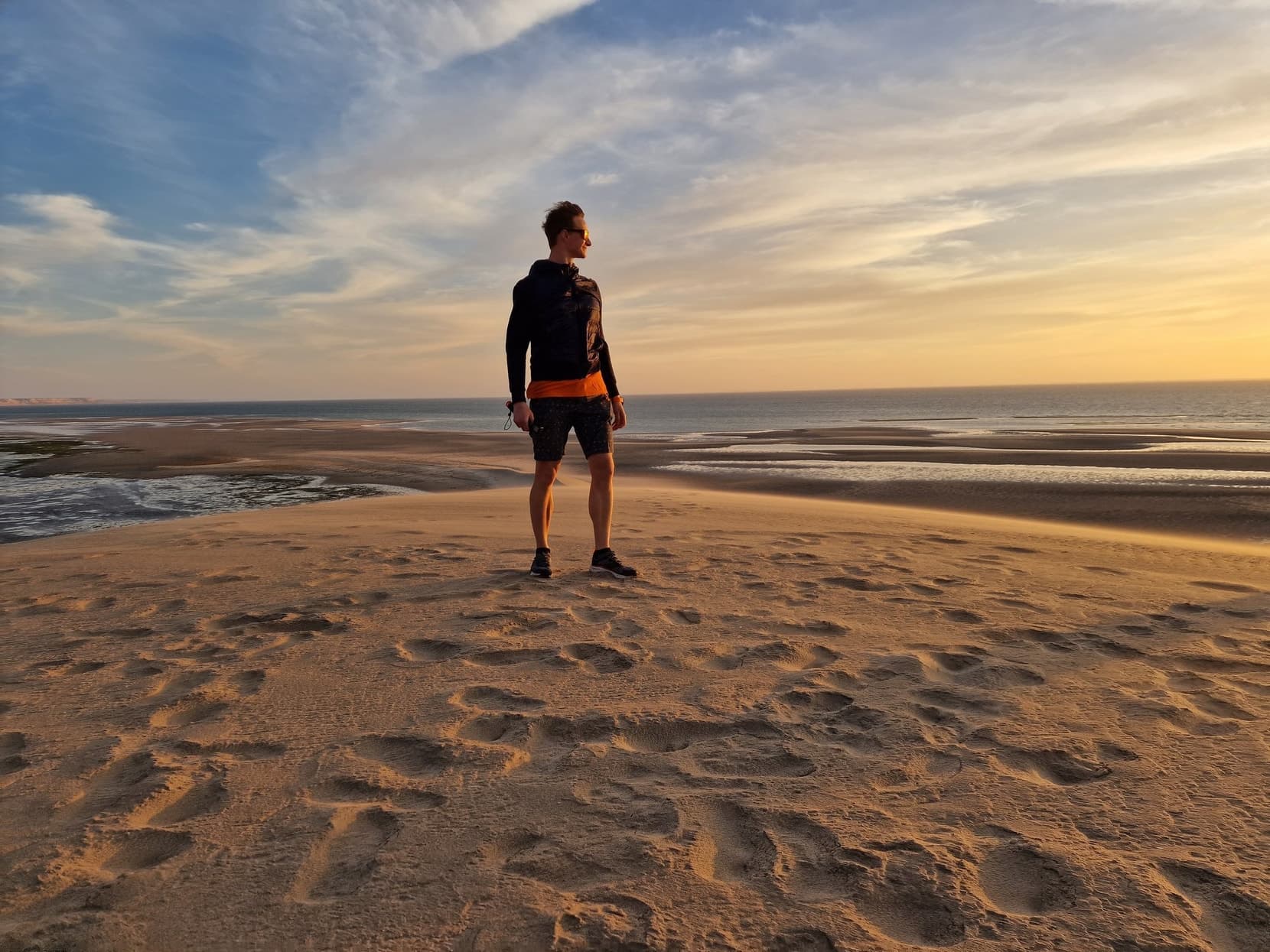
A lone figure on vast tidal sand flats at sunset

The empty coast

Between the road and the Atlantic there are beaches with nobody on them for hours in either direction – tidal flats, low dunes, fishing camps, wind. This is where the territory feels like the edge of the map, and where its scale stops being a number and becomes a feeling.

From the trip

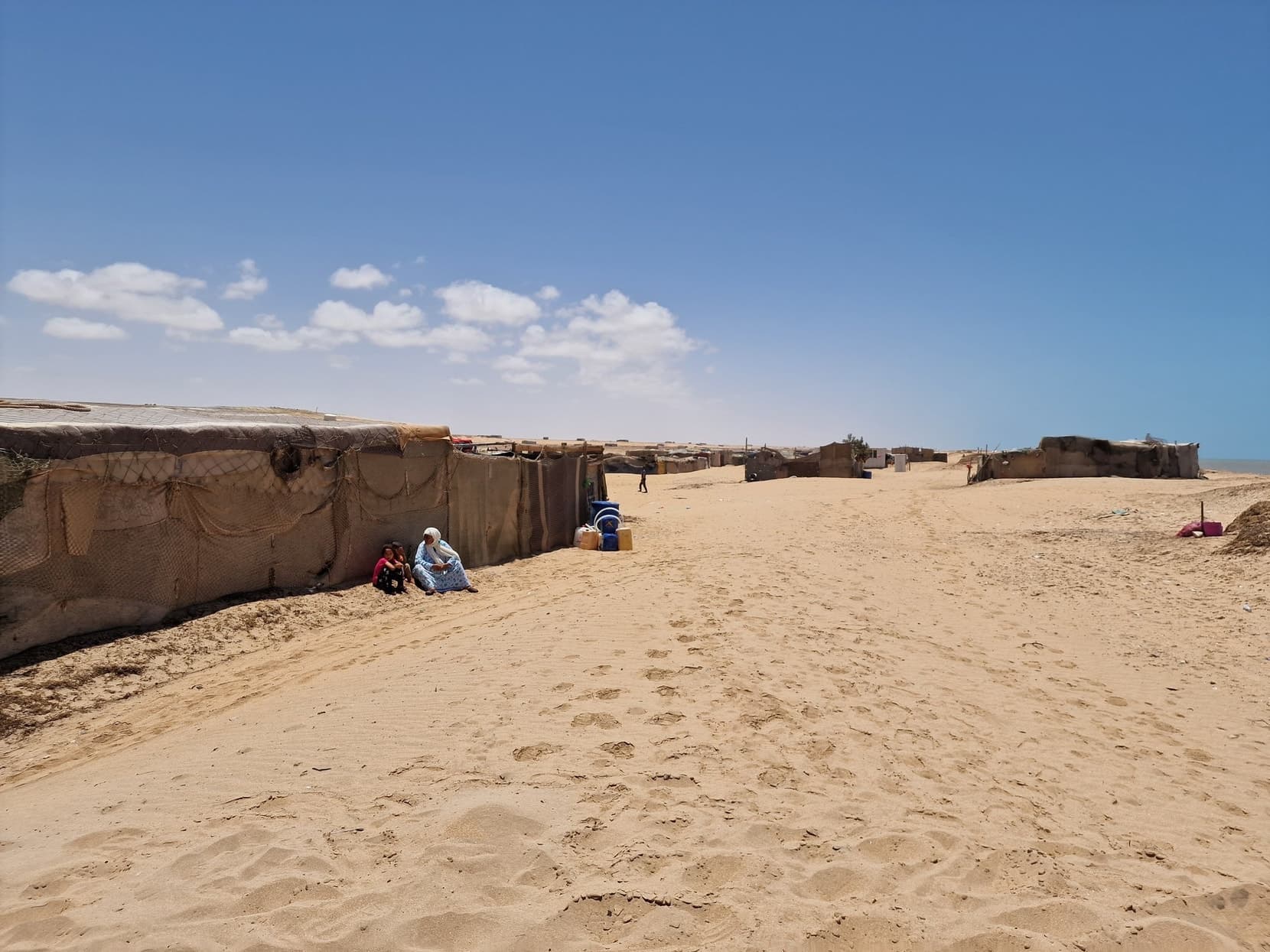
A sand track running past Sahrawi tents toward the beach
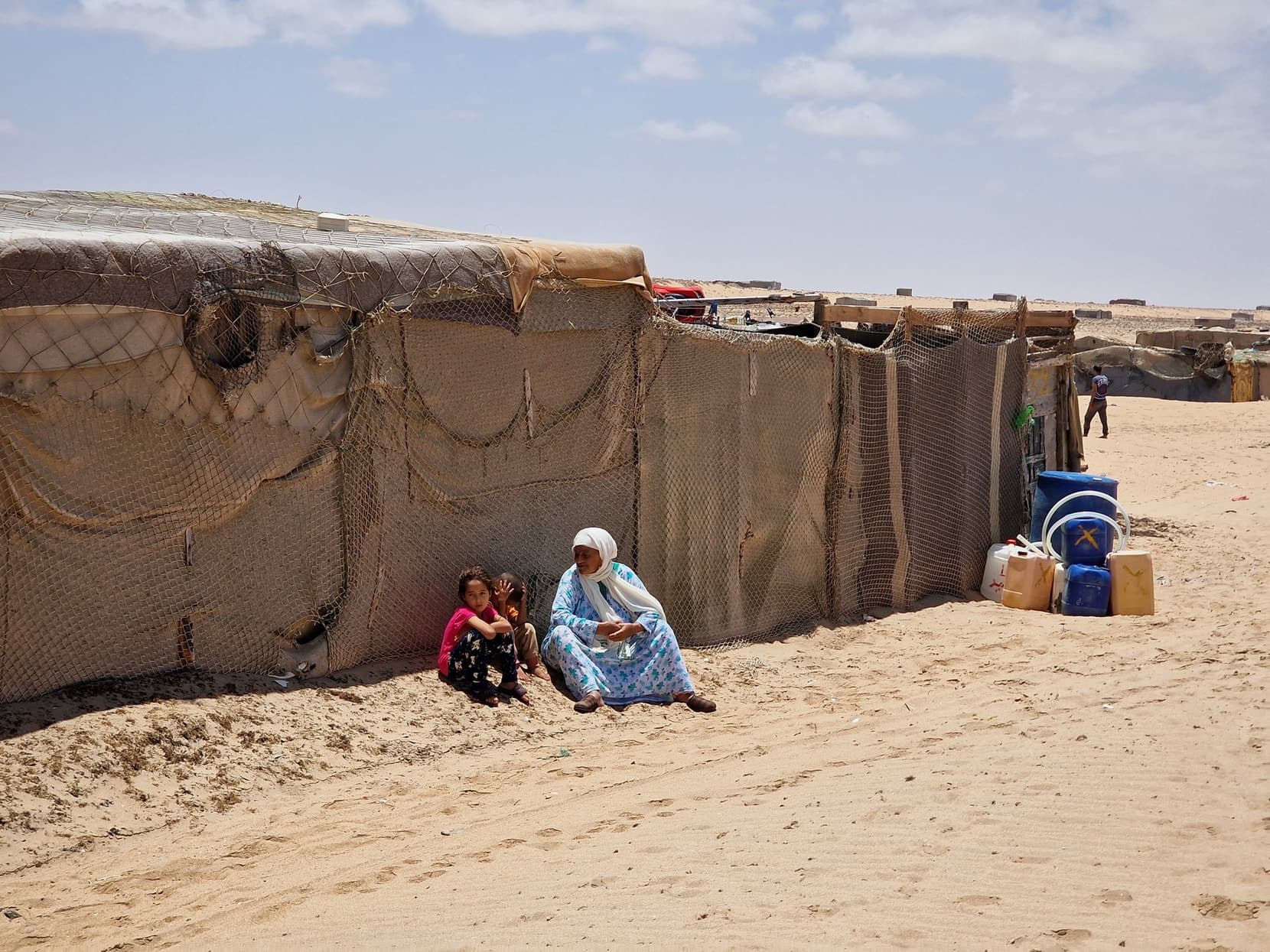
A Sahrawi camp by the beach, figures resting in the shade of a tent wall
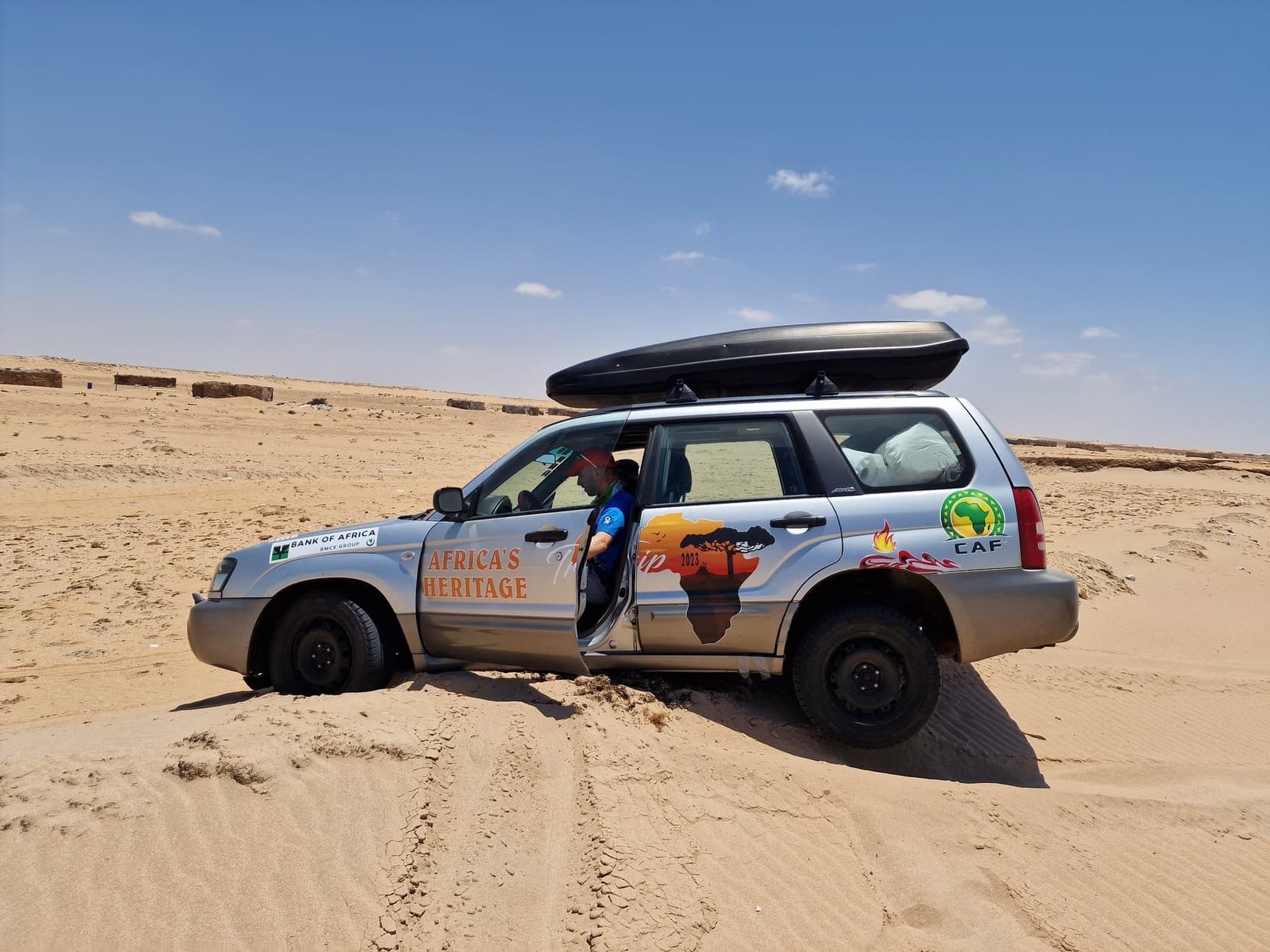
A rally car with a roof box parked on soft beach sand
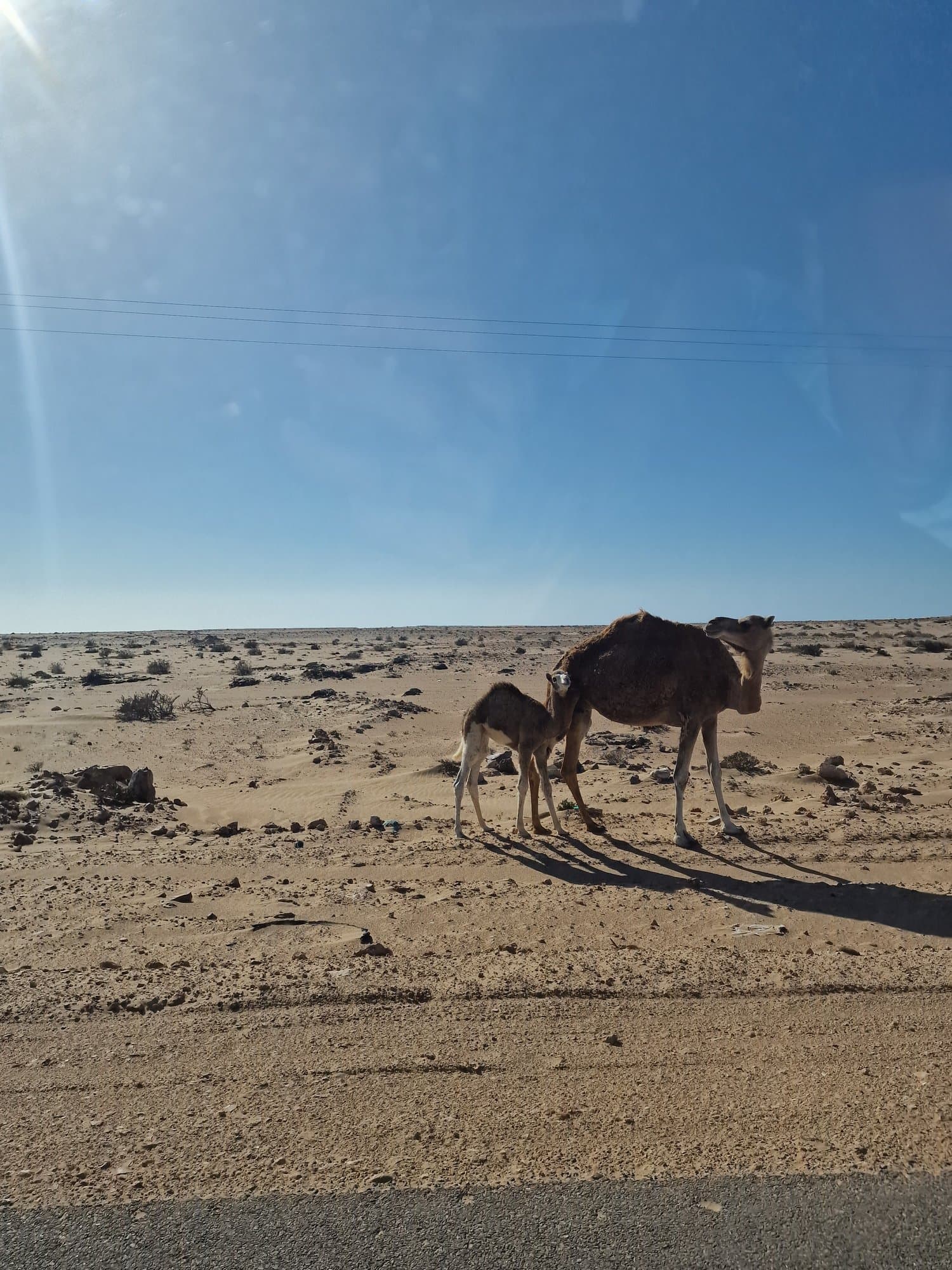
A camel and calf beside the empty desert road
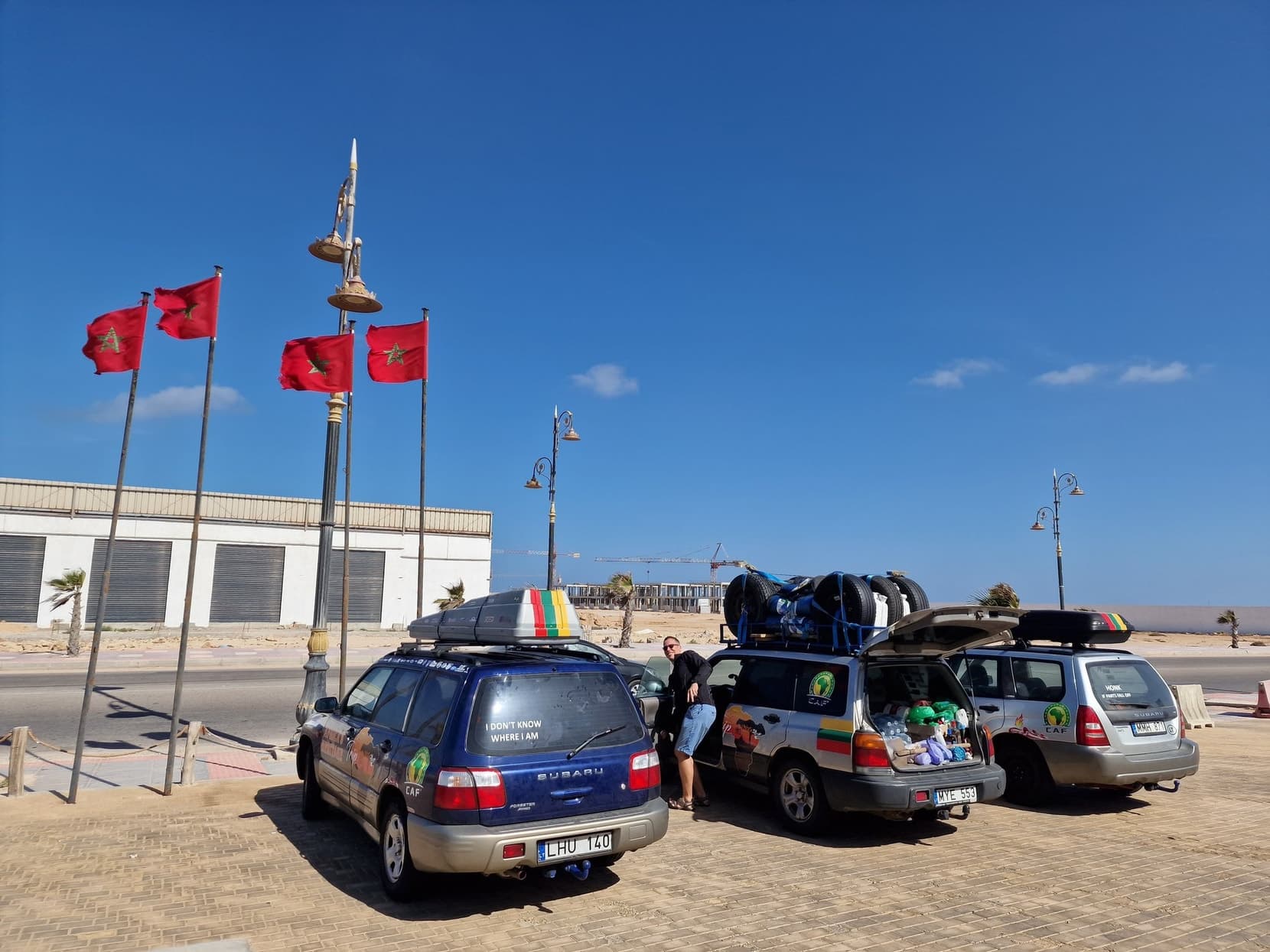
Rally cars parked beneath a row of Moroccan flags on Dakhla's seafront
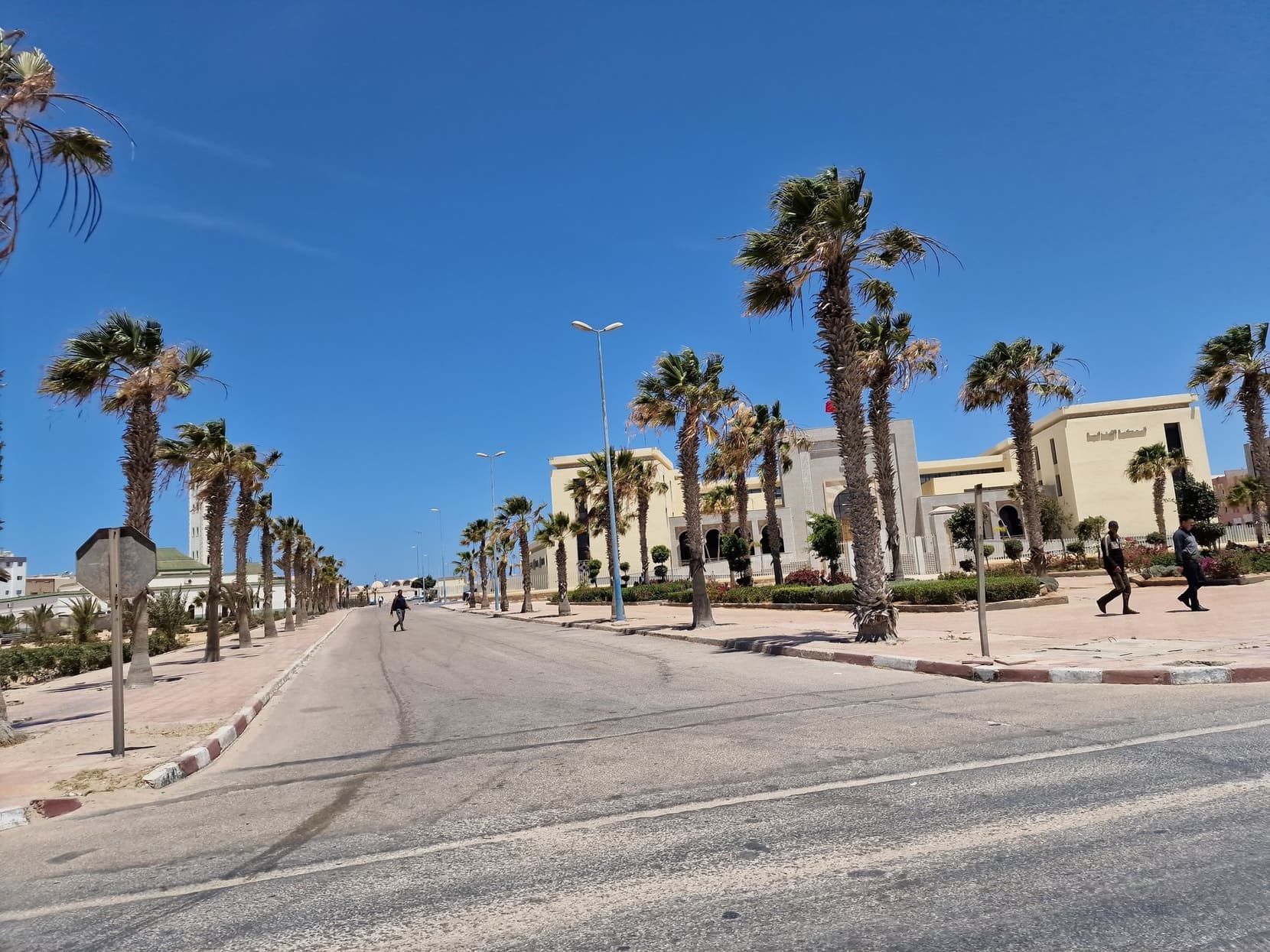
A palm-lined boulevard in Dakhla at midday
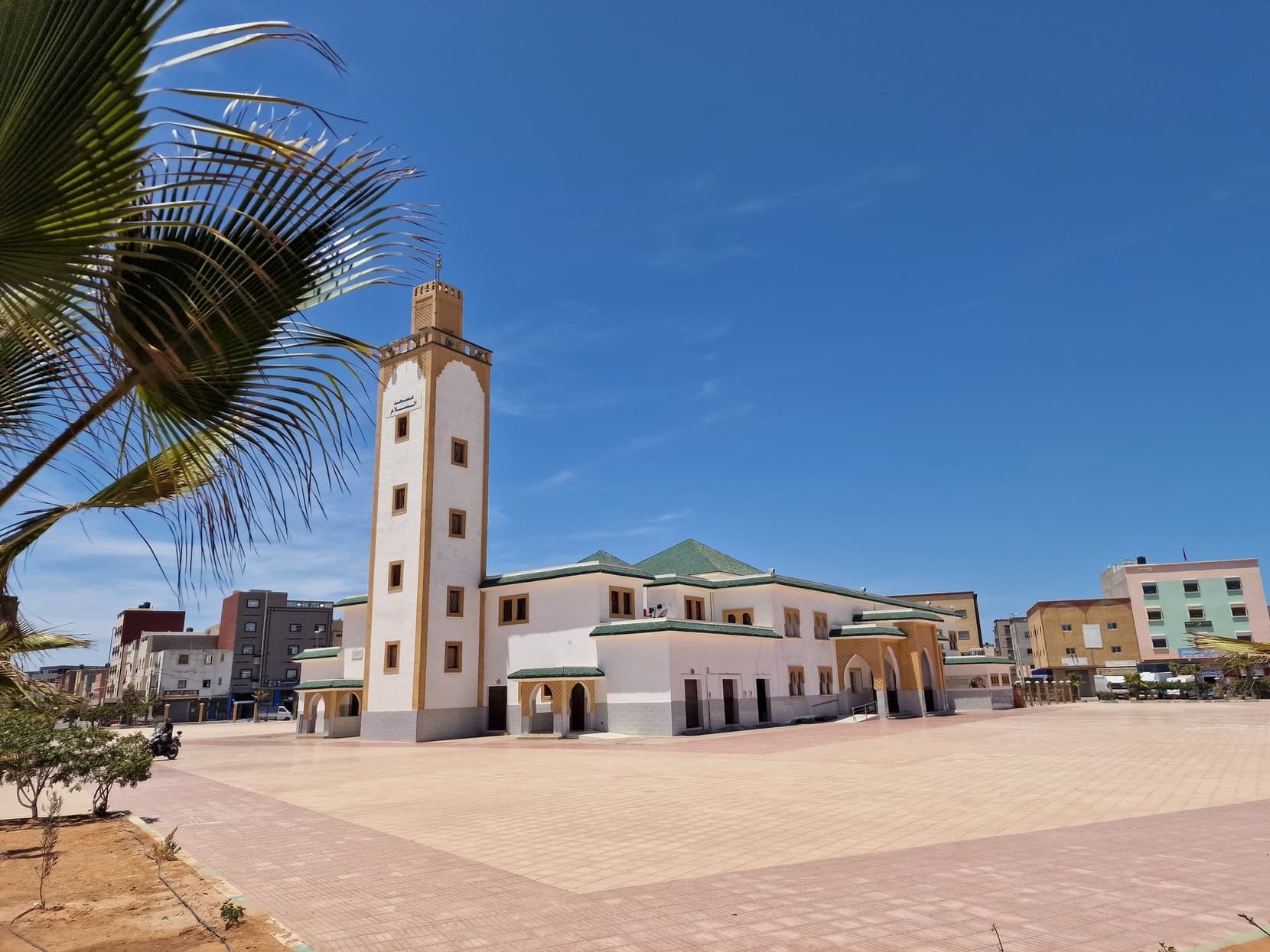
A white mosque and minaret above a quiet square in Dakhla
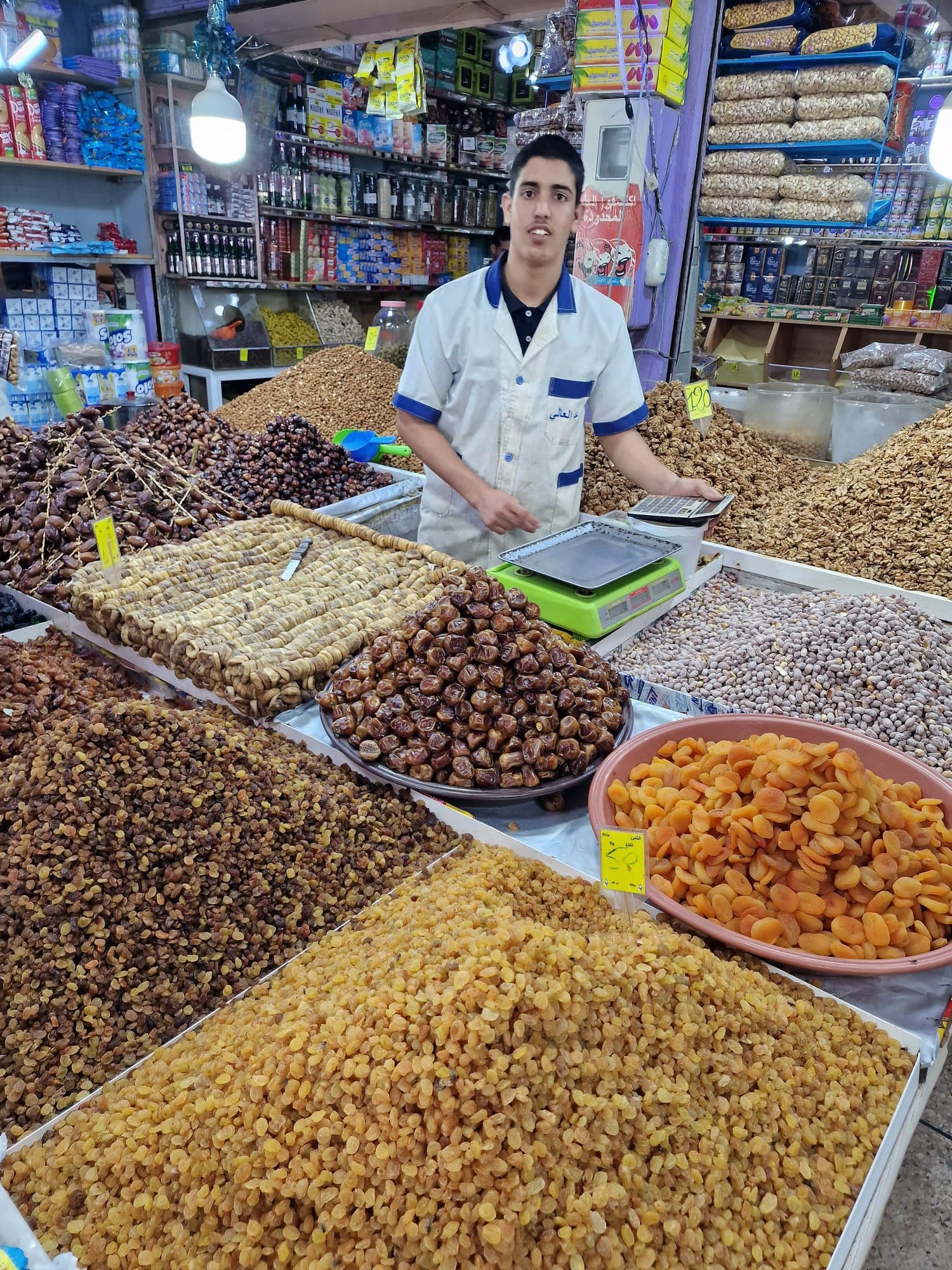
A vendor at a dates and dried-fruit stall in Dakhla's market
The stone promenade curving along Dakhla's turquoise bay
Kites over the flat lagoon seen from the bluff above the beach
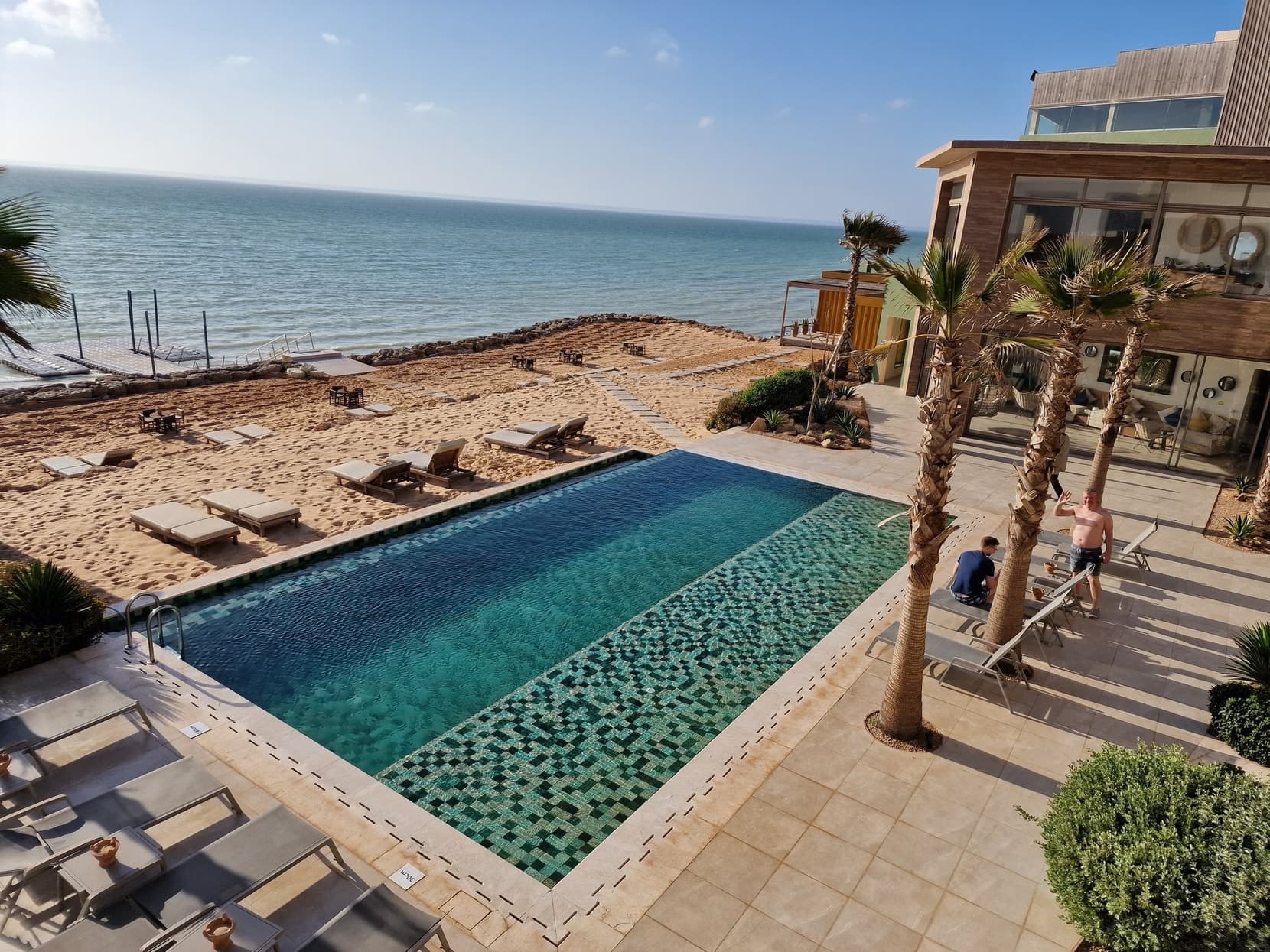
A lagoon-side hotel pool with palms and the Atlantic beyond
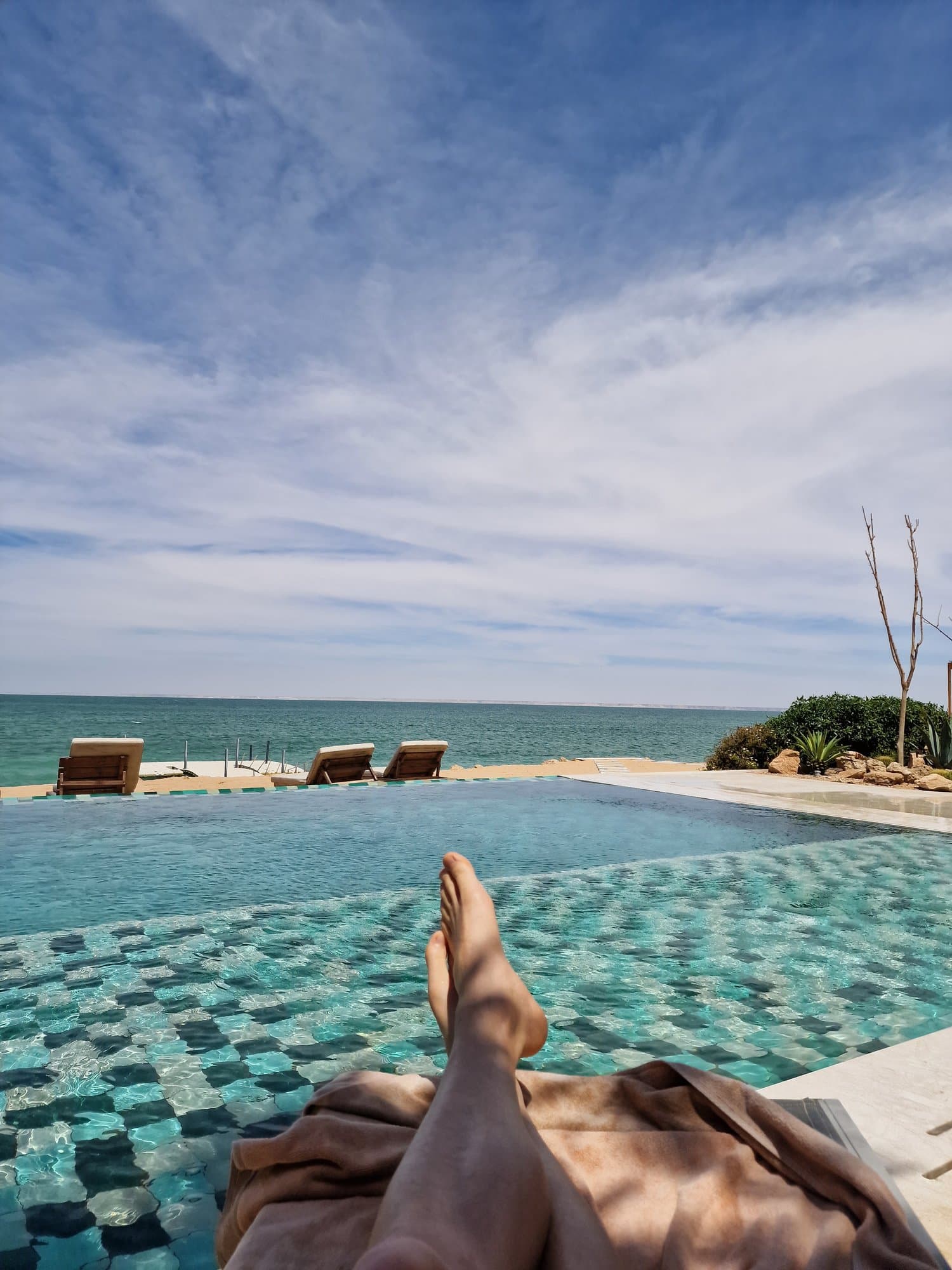
Feet up at an infinity pool overlooking the turquoise lagoon
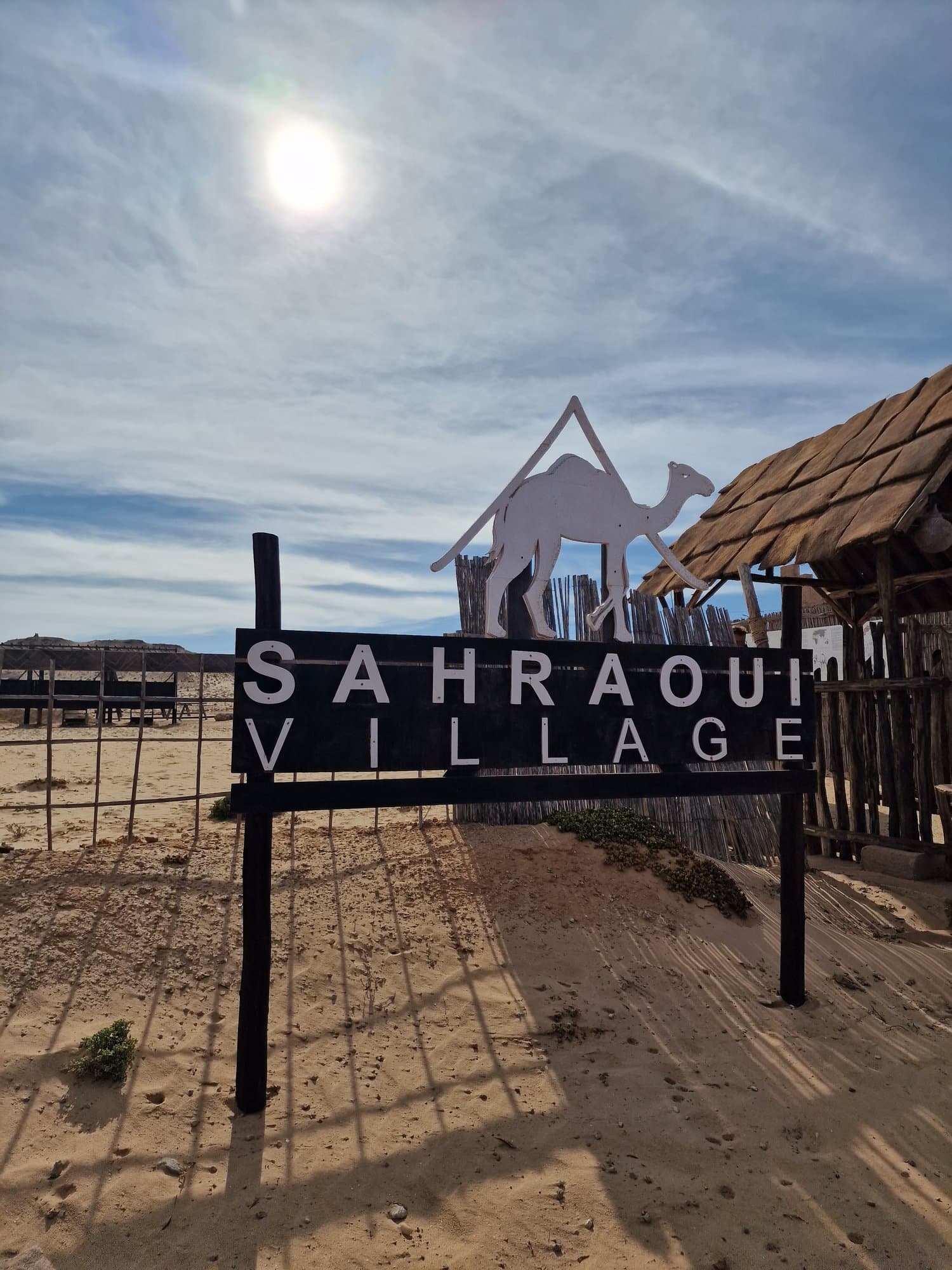
The Sahraoui Village sign with a camel silhouette in the dunes
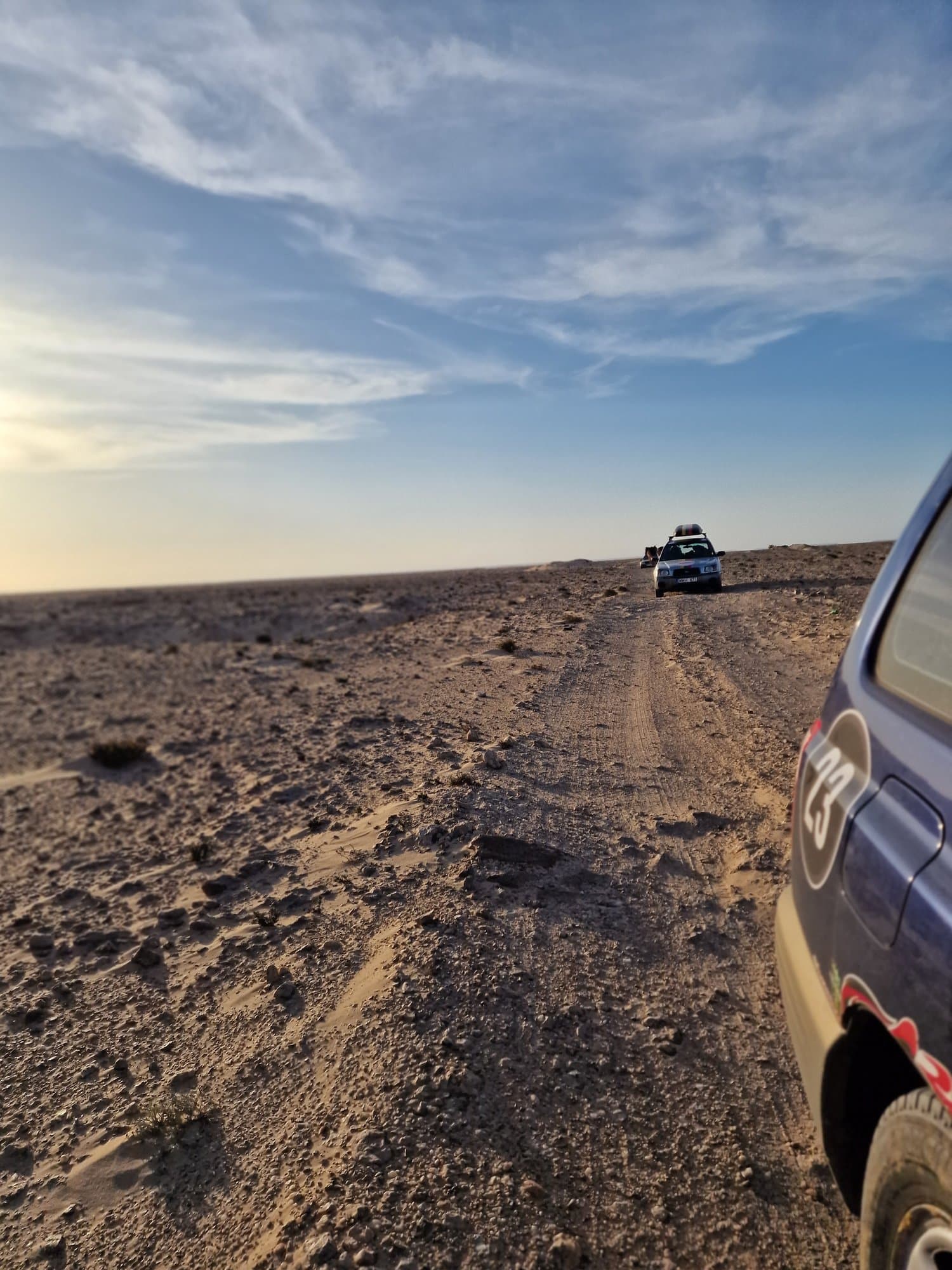
A car climbing a desert track at golden hour
The sticker-covered Tropic of Cancer sign photographed at night
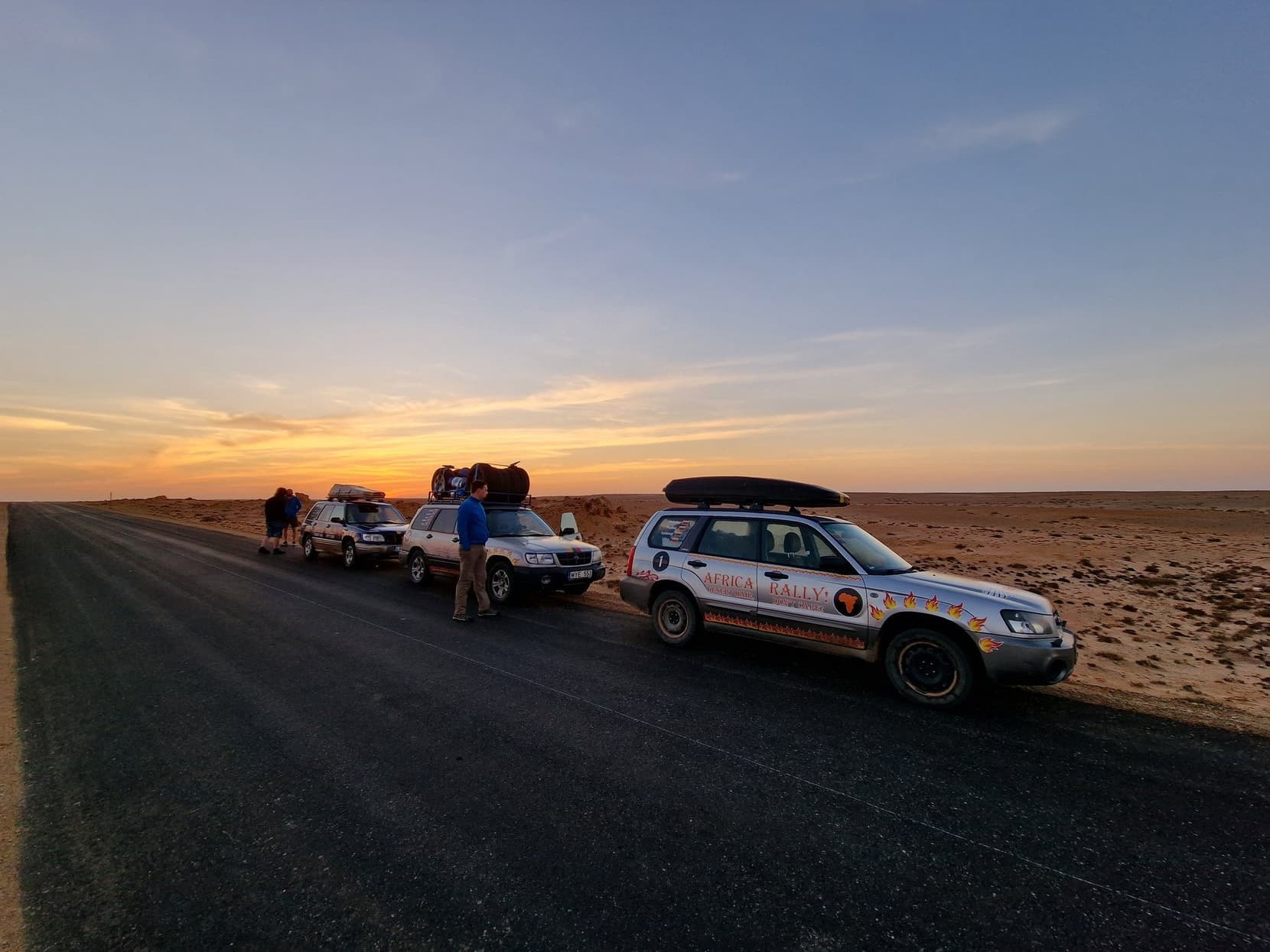
The rally convoy parked on the highway shoulder at dawn

The track to the coast

Getting there and around

Fly to Dakhla: direct budget flights from Paris run year-round, Madrid joins in season, and Casablanca connects the domestic network. Or arrive by road as part of the Atlantic-coast overland route – Western Sahara is the long middle of every Morocco-to-Mauritania crossing, and the highway is sealed the whole way.

On the ground the territory is one road and the places on it. Any normal car handles the highway; the peninsula around Dakhla adds sand tracks where judgment matters more than horsepower. Checkpoints are frequent, polite and part of the rhythm – build slack for them rather than frustration. And the emptiness is real: distances between services are long enough that fuel, water and daylight all deserve a plan.

What it costs

Getting there is the surprise: direct returns from Paris to Dakhla start around €150. That is what reaching the territory costs, not what the trip costs – but on the ground this is an inexpensive place by any resort-destination standard. The shape of the spend is a decision:

StyleWhat that looks like
LeanA guesthouse in town, meals where the fishermen eat, the free sights – the dune, the beaches, the promenade – and the bus-and-taxi layer that locals use
CoreA lagoon-side kite camp or a good town hotel, seafood dinners, and a car for the days that want one – the dune at sunset, the empty coast
SplurgeThe lagoon resorts proper: kite tuition, pools above the water, everything arranged. Dakhla's ceiling is a real resort ceiling – unusual for the Sahara – but it stays a fraction of what the same week costs on famous water elsewhere

The line with real range is the bed: town guesthouse to lagoon resort is the whole spread of the budget. Most of what the territory does best costs nothing to stand in front of.

Tested tips

The town is quiet on purpose – the life is on the water.

Do not judge Dakhla by its streets. It is a working port with a good market, but the energy is at the lagoon: kites, camps, long lunches watching the wind work. Go straight to the water and the place makes sense.

Sand is not snow.

The white dune is worth climbing for where it sits – between open desert and still water – but if you try to board down it expecting a ski run, you will be disappointed. Go for the dune, the light and the drive around it, not the ride.

Fill up whenever you see fuel.

On the road south, fuel stations are far enough apart that each one is an event. We topped up at every working pump whether the tank needed it or not, and that rule never cost us anything but minutes.

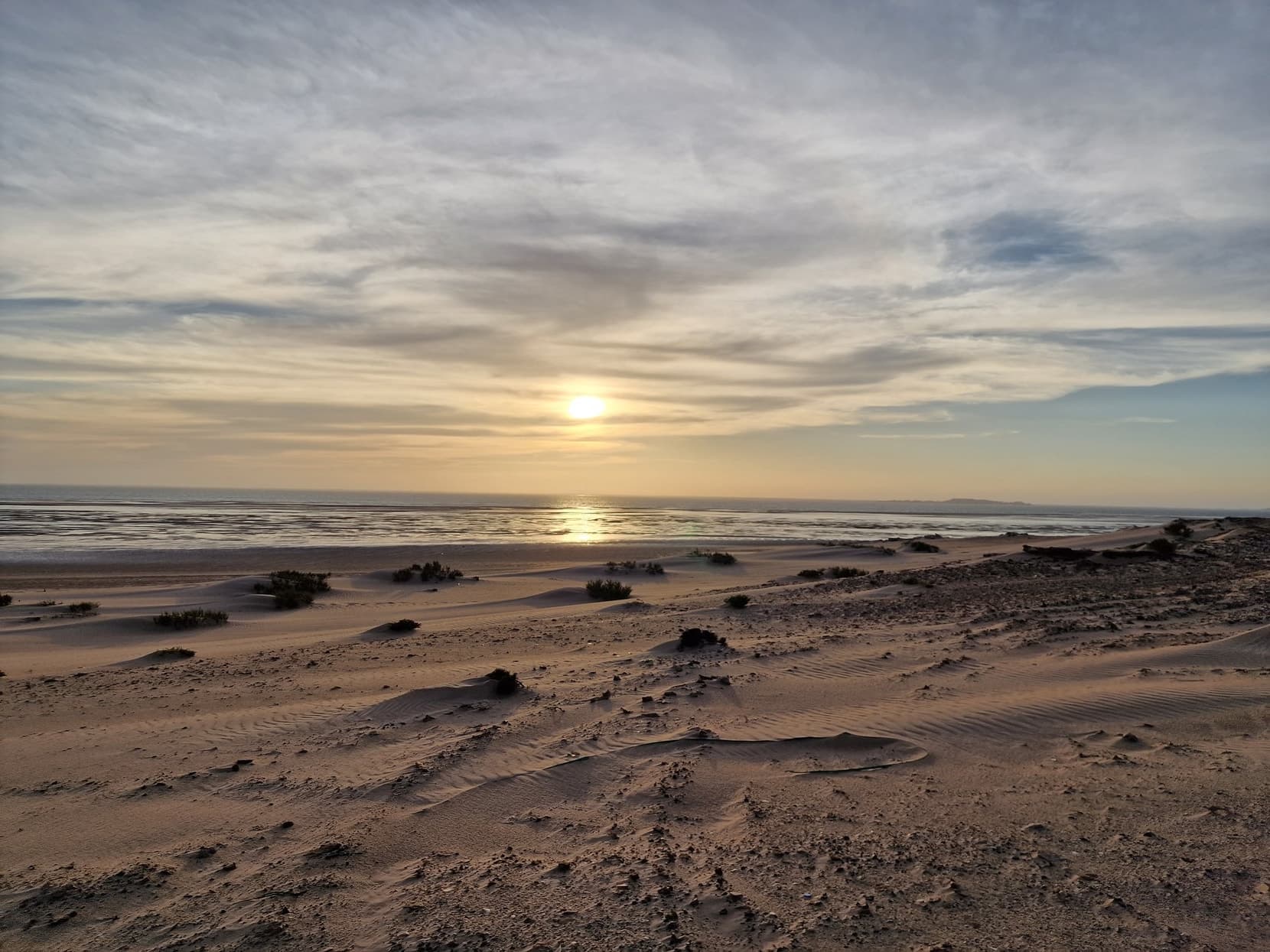
The sun setting over the Atlantic seen from dark dunes on the Western Sahara coast

FAQ

Can tourists visit Western Sahara?▾
Yes. The Atlantic side – the coastal strip with Laâyoune, Boujdour and Dakhla and the sealed highway connecting them – is open, administered by Morocco, and travelled every day by tourists, overlanders and a growing kite-surf crowd. What is off-limits is the east: the militarised berm that divides the territory and everything beyond it. Stay on the Atlantic side, as effectively all visitors do, and visiting is straightforward.
Is Western Sahara safe to visit?▾
Check your government's travel advice first and let it outrank everything, this page included. Western advisories draw a hard line at the berm – no travel within roughly 30 km of it or beyond it, where landmines are a real hazard – and treat the Atlantic corridor much like southern Morocco: go, with normal care. That corridor is where we drove for three days: police checkpoints were frequent and polite, towns felt calm, and the real daily risks were road ones – distance, wind, sand and fuel. Re-read the advisory close to travel; it moves faster than any guidebook.
Is Dakhla worth visiting?▾
Yes – for the water, not the town. Dakhla is a working Saharan port beside one of the best flat-water kite lagoons anywhere, and it works best as a purpose trip: wind, the white dune, seafood, big skies. The town itself is pleasant but thin as a sightseeing destination – we found the streets quiet and the lagoon alive, and that is the right way around to expect it.
How do you get to Dakhla?▾
By air, easily: direct budget flights from Paris run year-round, Madrid joins seasonally, and domestic connections run via Casablanca. By road, seriously: Dakhla sits at the end of a forty-kilometre spit, a thousand-kilometre drive south of Morocco proper – a real overland leg that is its own reason to come. There is no practical third option.
When is the kitesurfing season in Dakhla?▾
The wind works most of the year – the lagoon claims around 300 windy days – but it is strongest and most reliable from April to October, peaking in high summer. Winter brings lighter, less certain wind and quieter camps. If kiting is the point of the trip, aim for the season; if it is not, winter's calm is a feature.
Do you need to kitesurf to enjoy Dakhla?▾
No. We did not kite and the lagoon still carried the trip: the white dune above the tidal flats, the watching – which is genuinely good – the market, the seafood, and the desert light morning and evening. Kiting gives the trip a spine; it is not the entry fee.
How many days do you need in Dakhla?▾
A long weekend covers the trip Dakhla is built for: the lagoon, the dune, the town, the light. A week adds calm rather than sights, which is exactly what some people fly in for. If you are driving through overland, even one night makes it the best rest stop between Morocco and Mauritania.
Can you drive through Western Sahara from Morocco to Mauritania?▾
Yes – it is the standard overland route down the Atlantic coast, and the road is sealed the whole way. Count roughly a thousand kilometres of desert highway through the territory, two long driving days, with checkpoints throughout and fuel stops far enough apart to plan around. We drove it as part of a rally: easy road, serious distances, and emptiness that becomes the point.
What is the political situation – and does it affect a visit?▾
Western Sahara is a disputed territory: Morocco administers the Atlantic side that visitors travel, and the territory east of the militarised berm is beyond it. This page takes no side. On the ground, the visited strip runs on Moroccan administration – dirhams, Moroccan paperwork, Moroccan flags – and a visitor who stays on the Atlantic side experiences a calm, functioning coast. The dispute is real; for travellers who respect the geography, it stays in the background.
Is Western Sahara expensive?▾
Getting there is cheaper than it has any right to be – direct returns from Paris to Dakhla start around €150, and that is the trip's one unavoidable line. On the ground the town side is inexpensive; the kite resorts price like resorts, and they are the budget's only real decision. Everything the territory does best – the dune, the beaches, the emptiness – is free.

Stories from Western Sahara

Dakhla: kite lagoons at the end of the road

Dakhla: kite lagoons at the end of the road

The empty settlements are real – they are just not Dakhla. The life is out on the flat water.

Sandboarding the white dune at Dakhla

Sandboarding the white dune at Dakhla

Sand is not snow – the dune, the light and the drive around it are the real reward.

We built our own road across the Sahara

We built our own road across the Sahara

A joke with shovels on a border beach, and thirty kilometres of our own line a week later.

Driving Western Sahara: the long road to Dakhla

Driving Western Sahara: the long road to Dakhla

Sealed, empty and a thousand kilometres long – the transit that turns into the trip.