TestedRoutes
GuidesDestinationsInspireAbout me

TestedRoutes Newsletter

Field-tested travel routes, in your inbox when they drop.

© 2026 TestedRoutes. All rights reserved.

ContactFAQLegalTermsPrivacyRefundsSecurityAffiliate disclosureSitemap

We independently review everything we recommend. When you buy through our links, we may earn a small commission at no extra cost to you. More on how this works.

ExploreGuidesDestinationsInspireAbout
Destinations›Tuvalu

Oceania & Pacific · Central Pacific

Tuvalu

How to visit the world's least-visited country – from two days on Funafuti, arranged the way the island actually works.

Paulius Pikelis

Tested by Paulius Pikelis · 140 countries

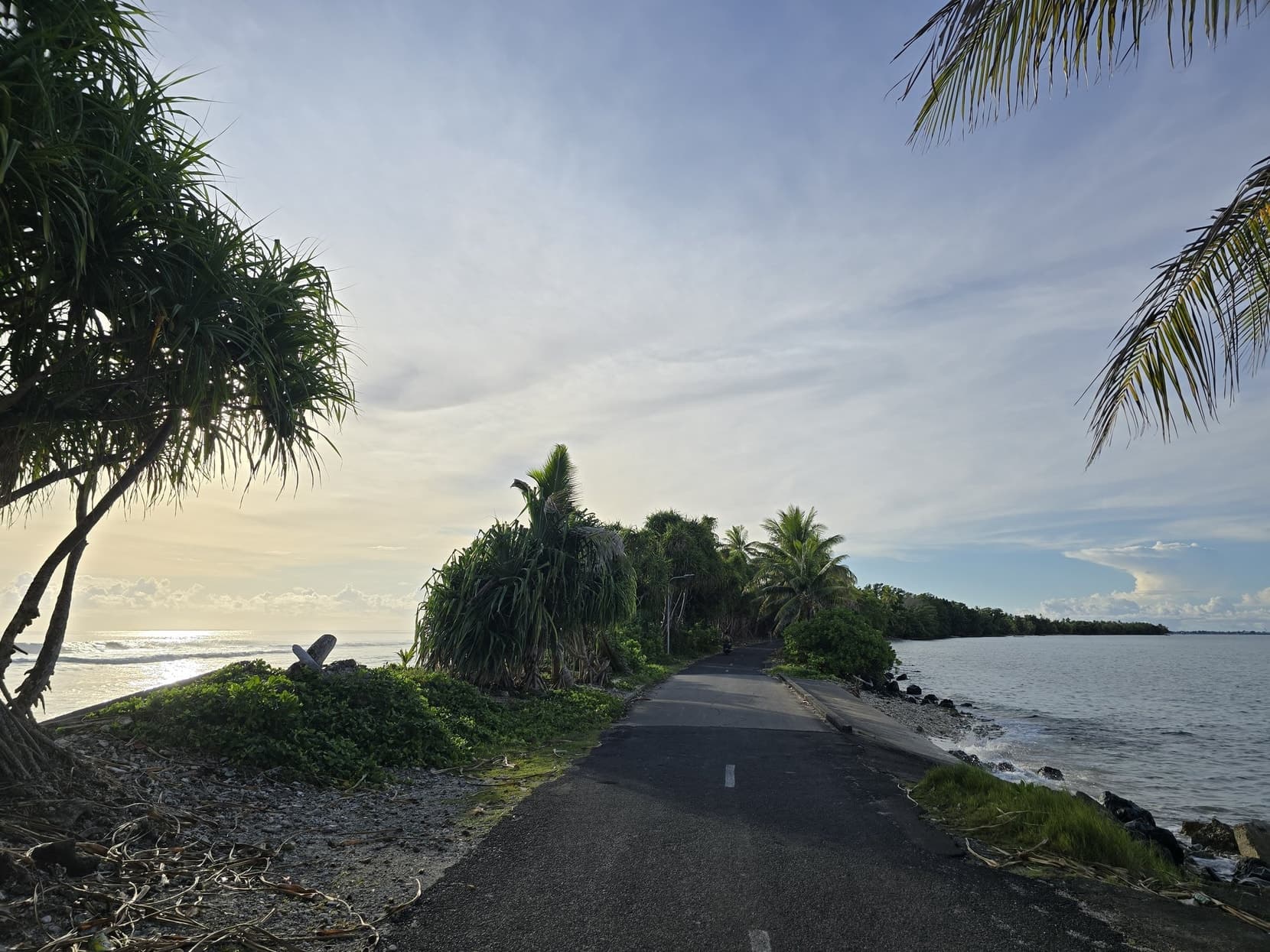
The road at Fongafale's narrowest point with the lagoon and the open Pacific on either side

Is Tuvalu worth it, and what do you actually do there

Fewer than 4,000 people a year see Tuvalu, which makes it, by most counts, the least-visited country on earth. I went on my honeymoon – we were the only honeymooners in the country – and the honest answer to "is it worth it" is yes, provided you want the place and not a product. There is no tourism industry to meet you. That is the appeal.

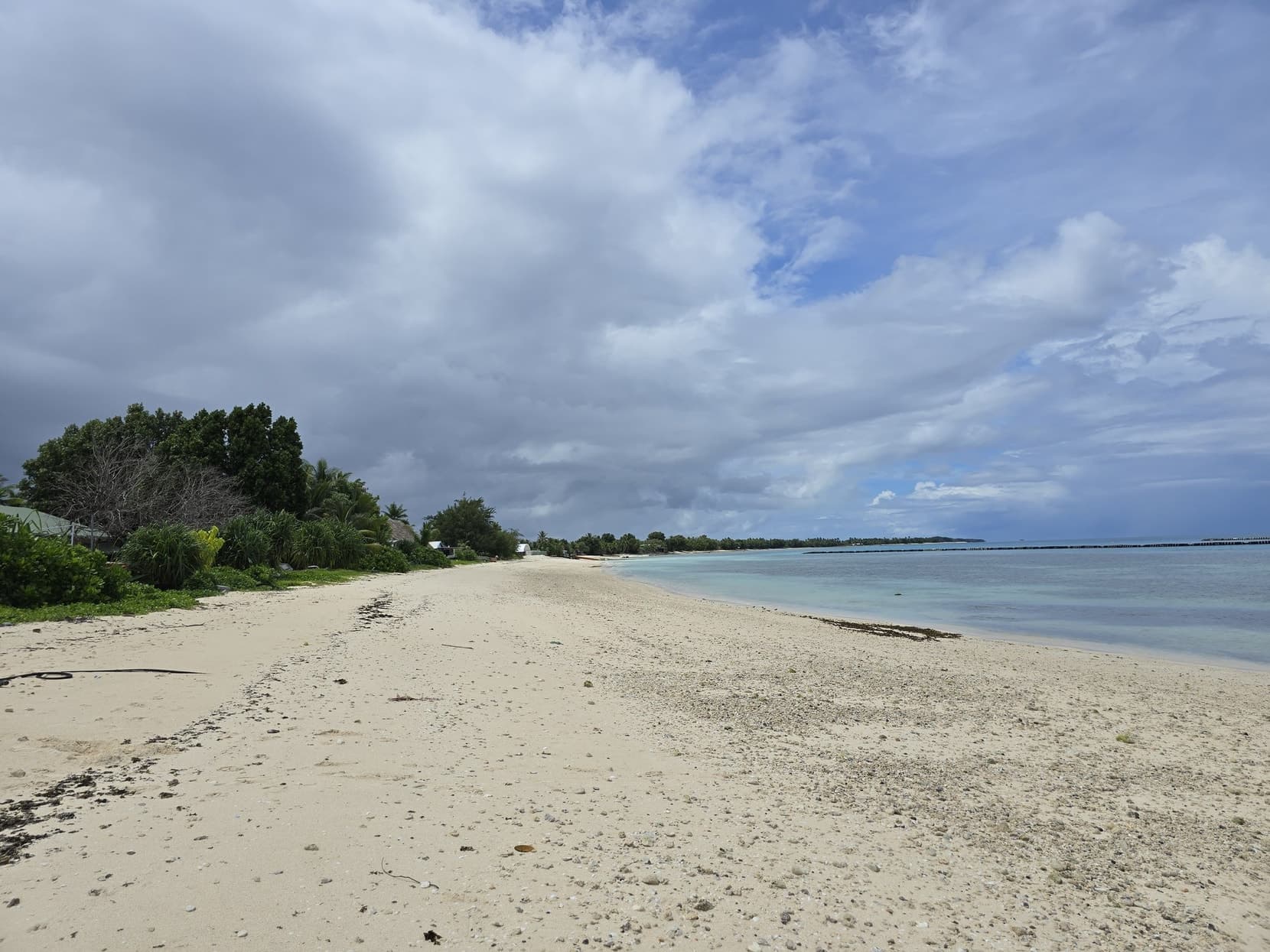
What you actually do: you walk a capital that is really a village, swim at a beach with a shipwreck on it, and watch a third of the country – the runway – turn into the town square at dusk, when the heat drops and half the island comes out to play on the tarmac. You cross the lagoon in an open boat to islets with nobody on them, and you ride the one road north through a green tunnel of palms to beaches locals keep for the weekend. None of it is staged, because there is nobody to stage it for.

The constraint that shapes everything is the flight schedule: about three services a week from Fiji, so the gap between two flights is your trip, whether that suits you or not. Beds are few enough to count, one restaurant works, cash runs the island, and the best day of the trip is arranged by asking around town rather than by booking anything. Know that going in, and the country rewards you for it.

When to go

Temperatures barely move all year – 29 to 31 degrees and humid – so season is about rain and wind, not heat. The dry season is the window; the wet season brings squalls and, at its heart, cyclone risk.

May to October

The dry season and the sensible window: less rain, steadier weather, and the lagoon at its calmest.

June to September

The best of it. This is when the guide's plan was tested.

November to April

The wet season, and cyclone season within it. Flights and the lagoon both get less predictable.

What I would pick

Any dry-season flight pair that fits your Fiji routing. There is no high season to dodge - fewer than 4,000 visitors a year means nothing here is ever crowded.

How long to stay

In Tuvalu this question answers itself: the flight schedule decides, and you choose which gap to buy.

Two full days

What one flight gap gives you, and enough to see why you came - the capital, the lagoon's empty islets, both ends of the island. The guide plans it hour by hour so none of it depends on luck.

Five to seven days

Two flight gaps, or one long one. The extra days do not add sights - they add pace, a second boat morning, and the chance the weather rolls a day without costing you the trip.

Longer

Only worth it if you are chasing the outer atolls, which means the government ferry: days at sea each way, word-of-mouth schedules, and genuine expedition territory.

Guide: Tuvalu: 2 Days in the World's Least-Visited Country plans the two-day version hour by hour, with the boat-day playbook, the three beds in booking order and the runway rules built in.

One atoll, five places

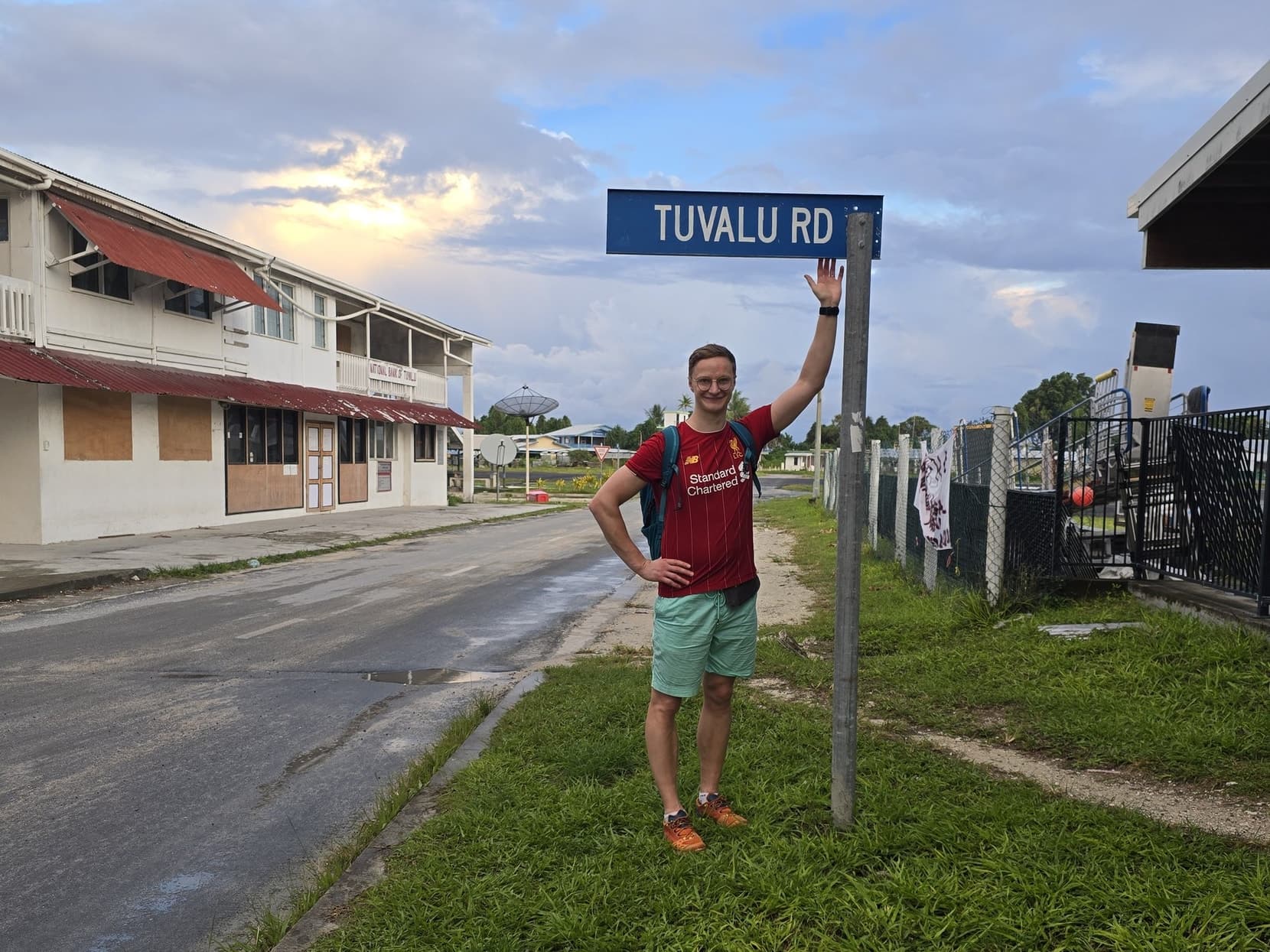
Standing at the TUVALU RD street sign in Vaiaku at dusk

Vaiaku, the capital

The whole apparatus of a nation in a village: the tallest building in the country, the falekaupule meeting hall at the heart of it, streets that end at the lagoon sunset. Everything is under ten minutes on foot, the honour-system prison included - a country you can genuinely walk in an afternoon.

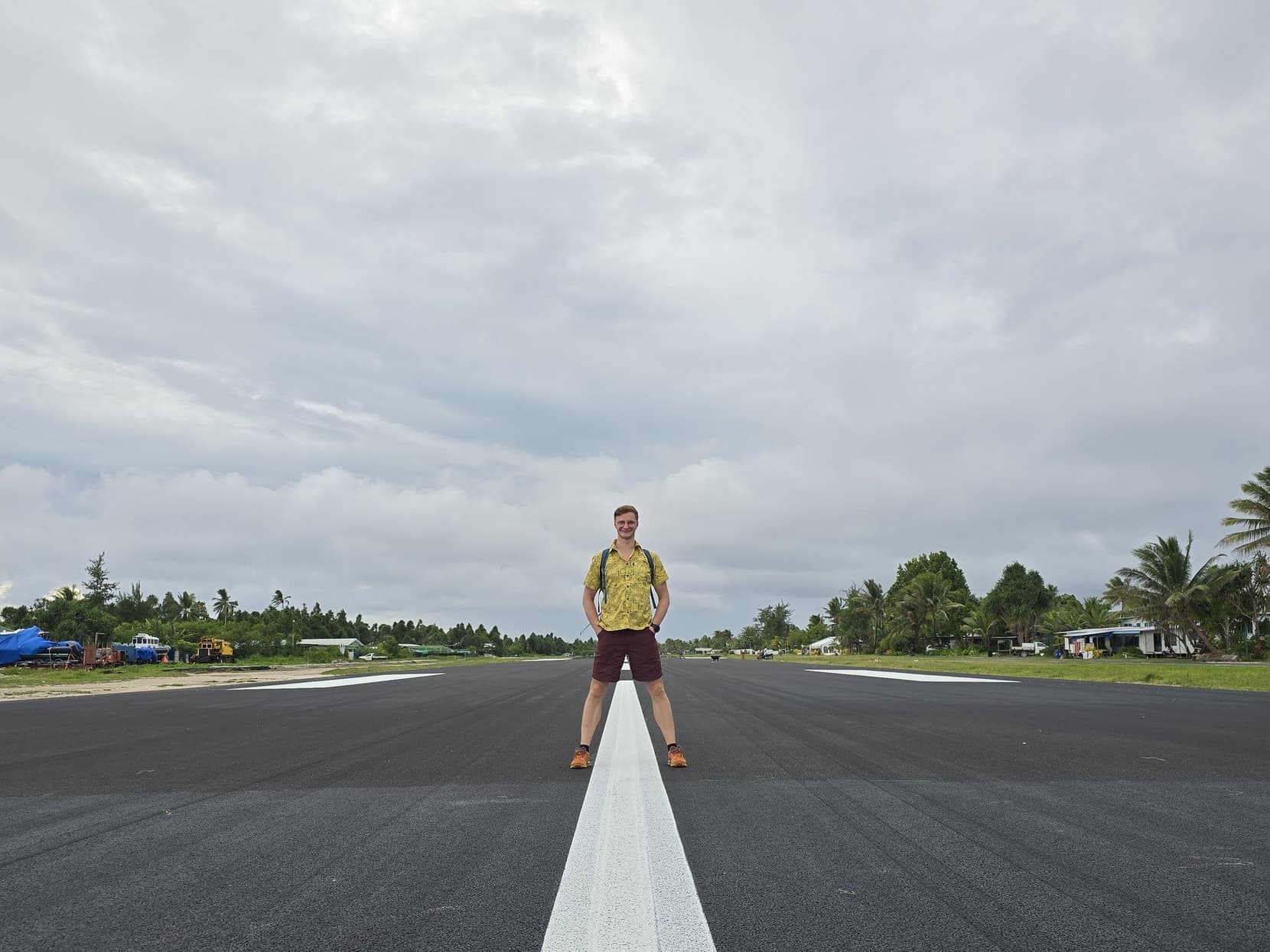
Standing alone on the centreline of Funafuti's runway

The runway

A third of the island is airstrip, there is no fence, and planes land a few times a week. The rest of the time it is the town square: football and volleyball as the heat drops, families walking the centreline, kids on bikes. Crossings close when the ATR appears - the guide builds the rule into departure day.

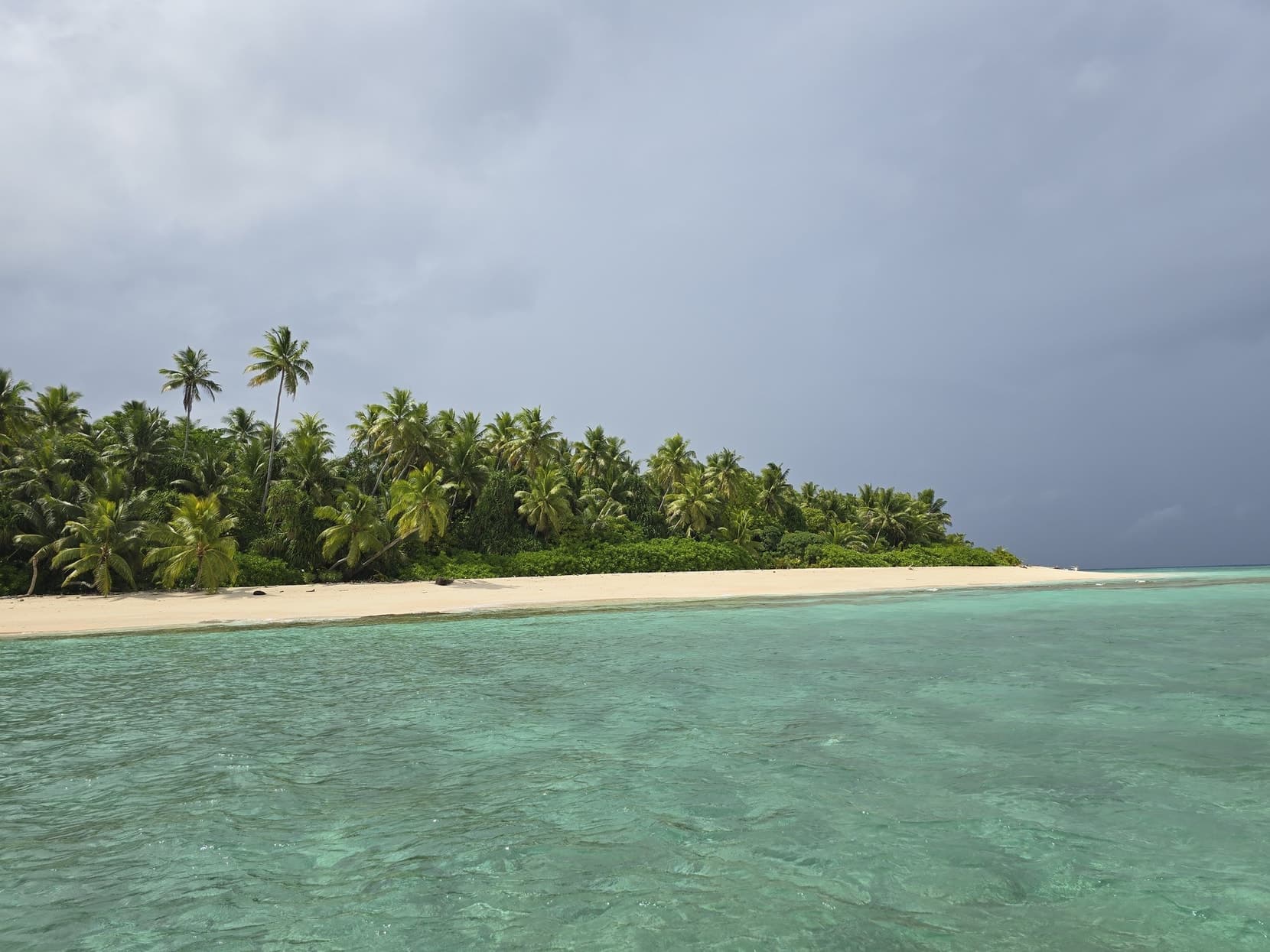
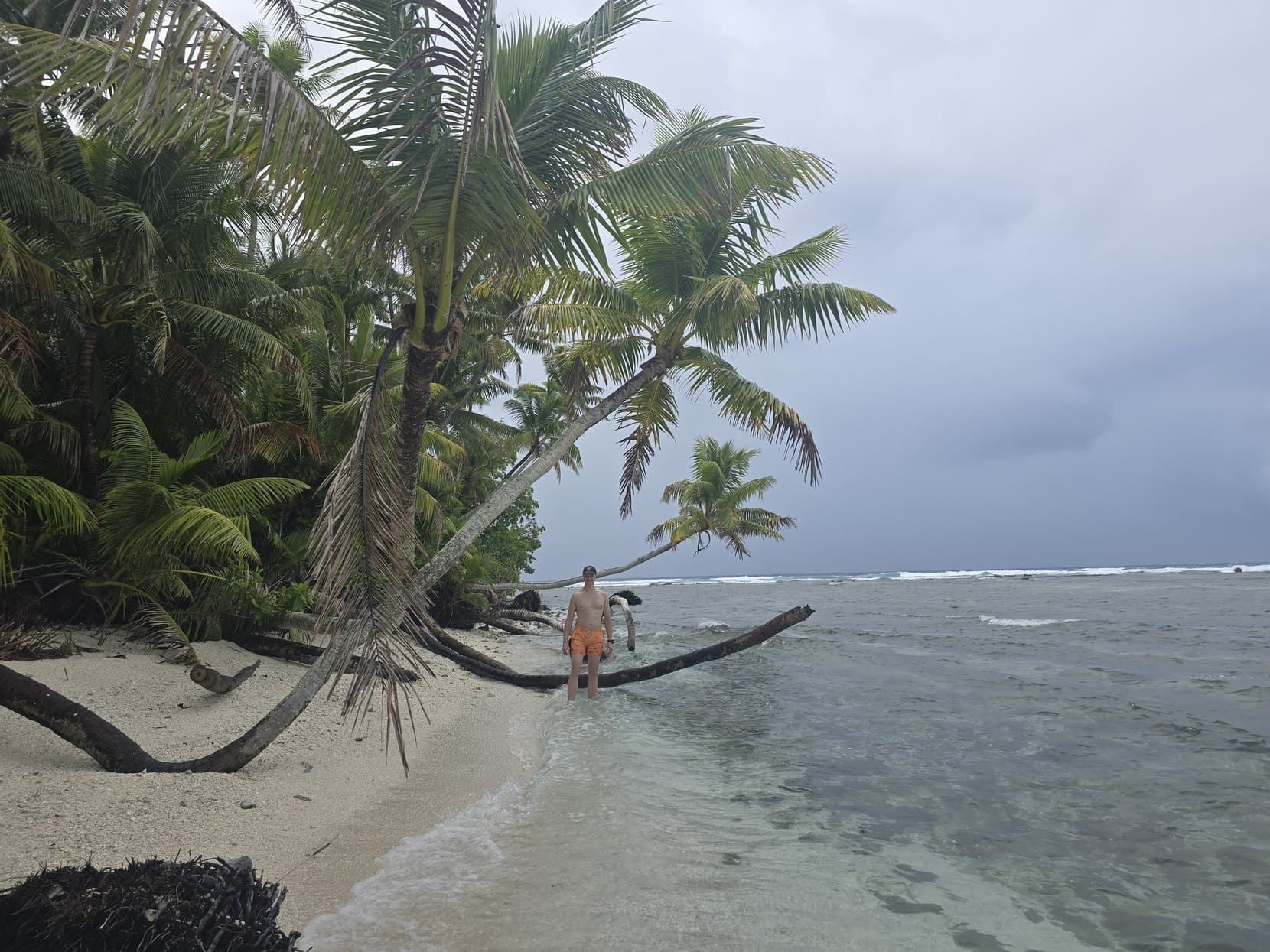
A lagoon islet's white beach and palms seen from the water, nobody on it

The lagoon islets

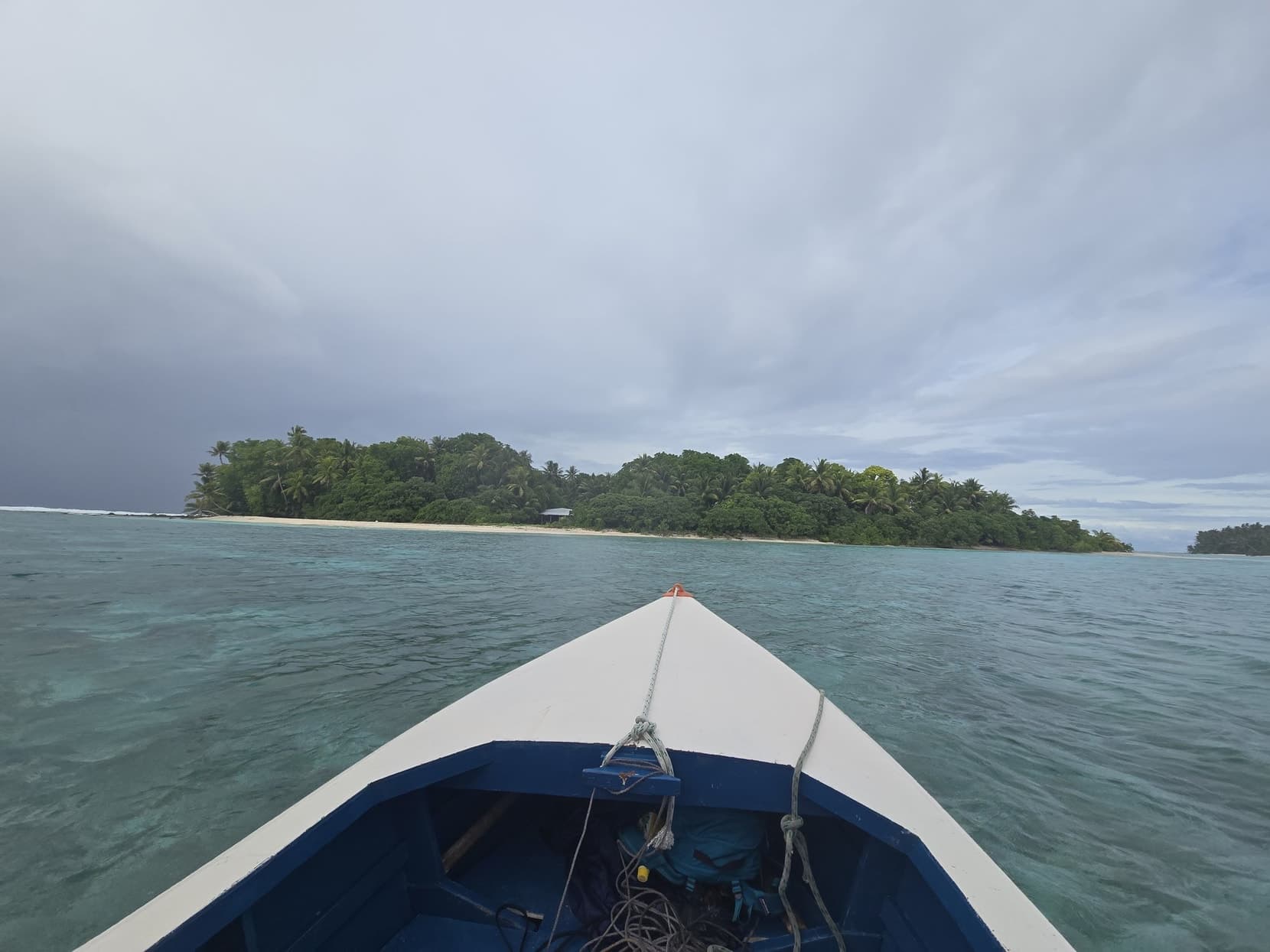
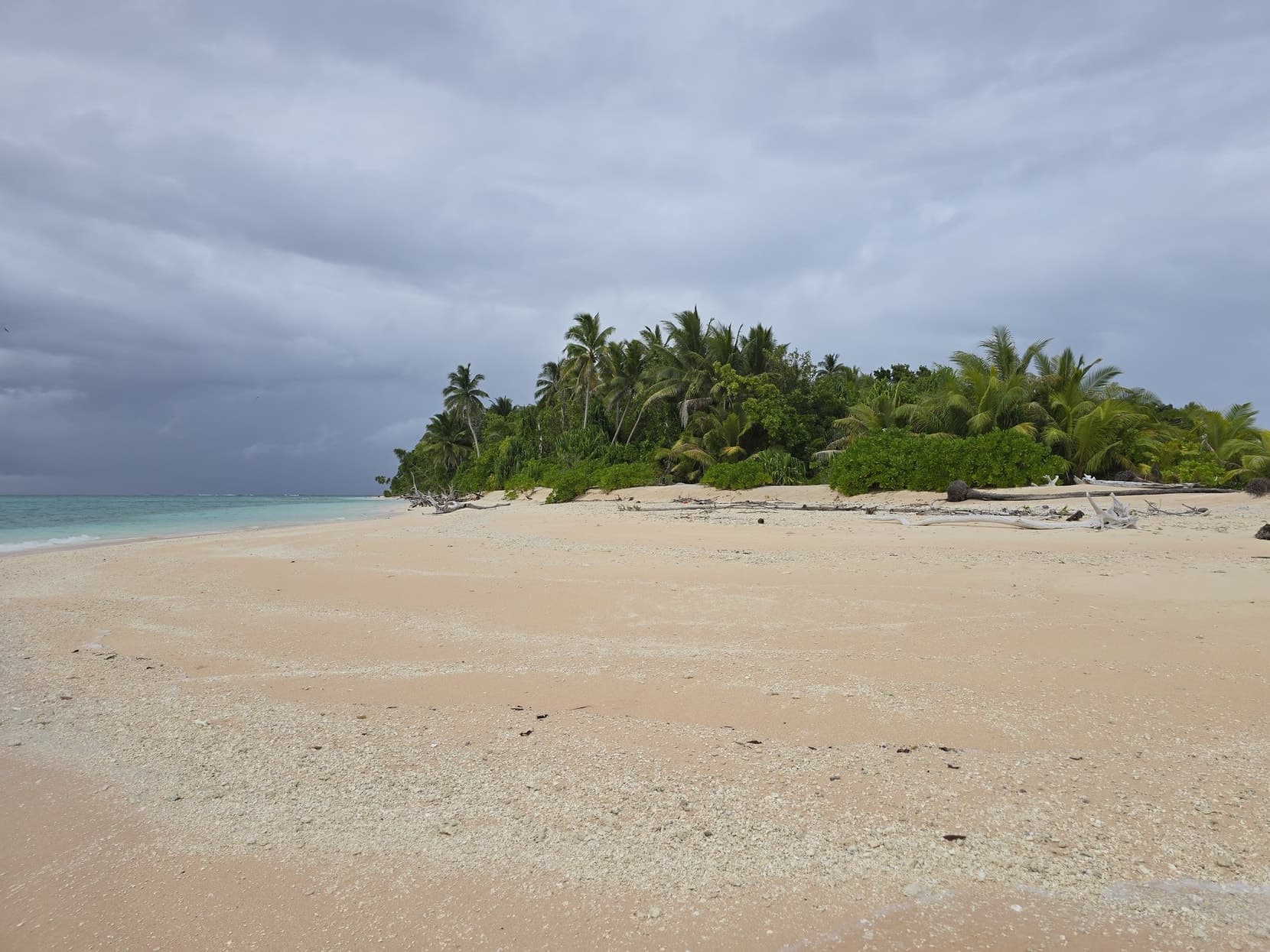
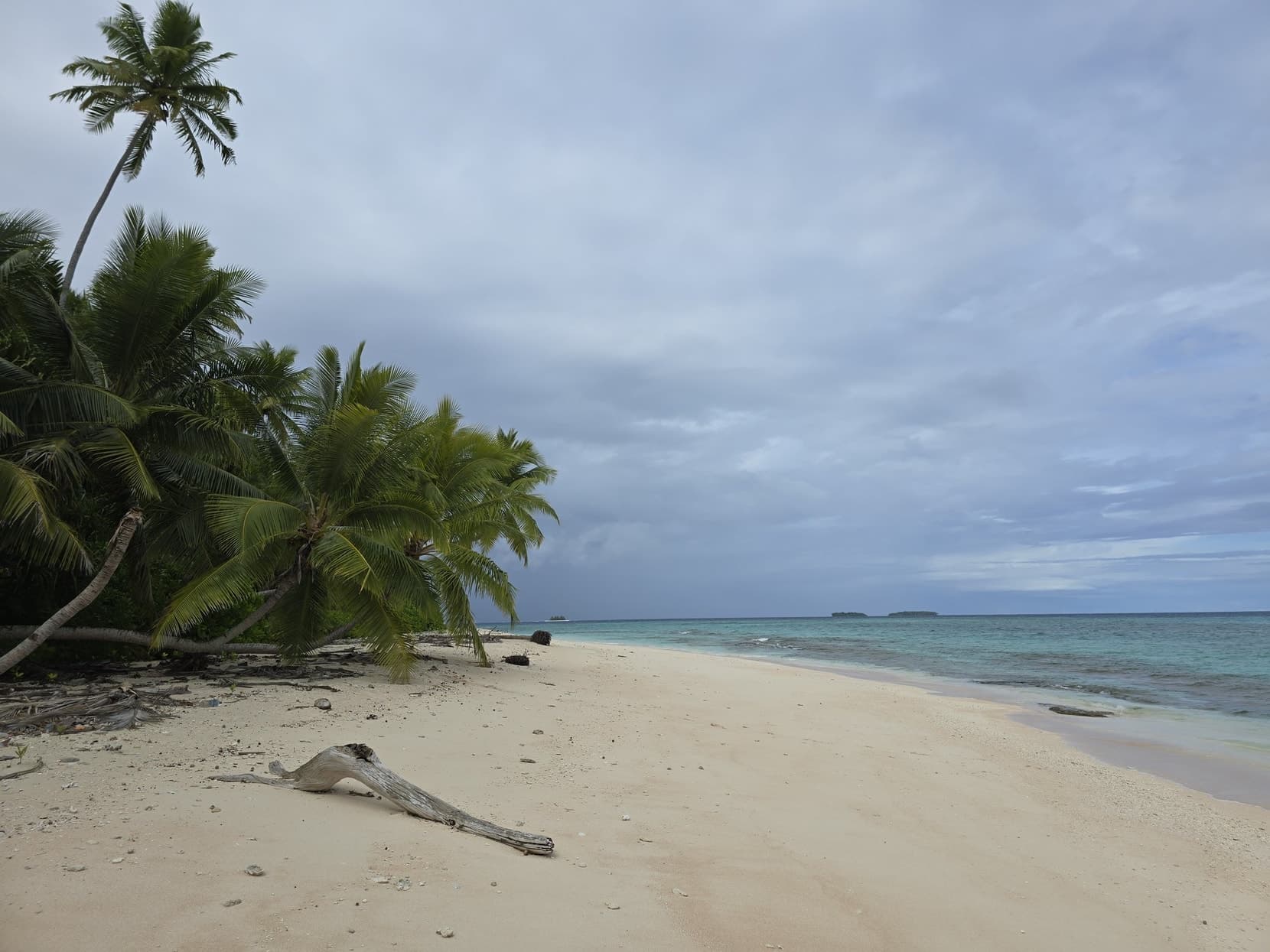
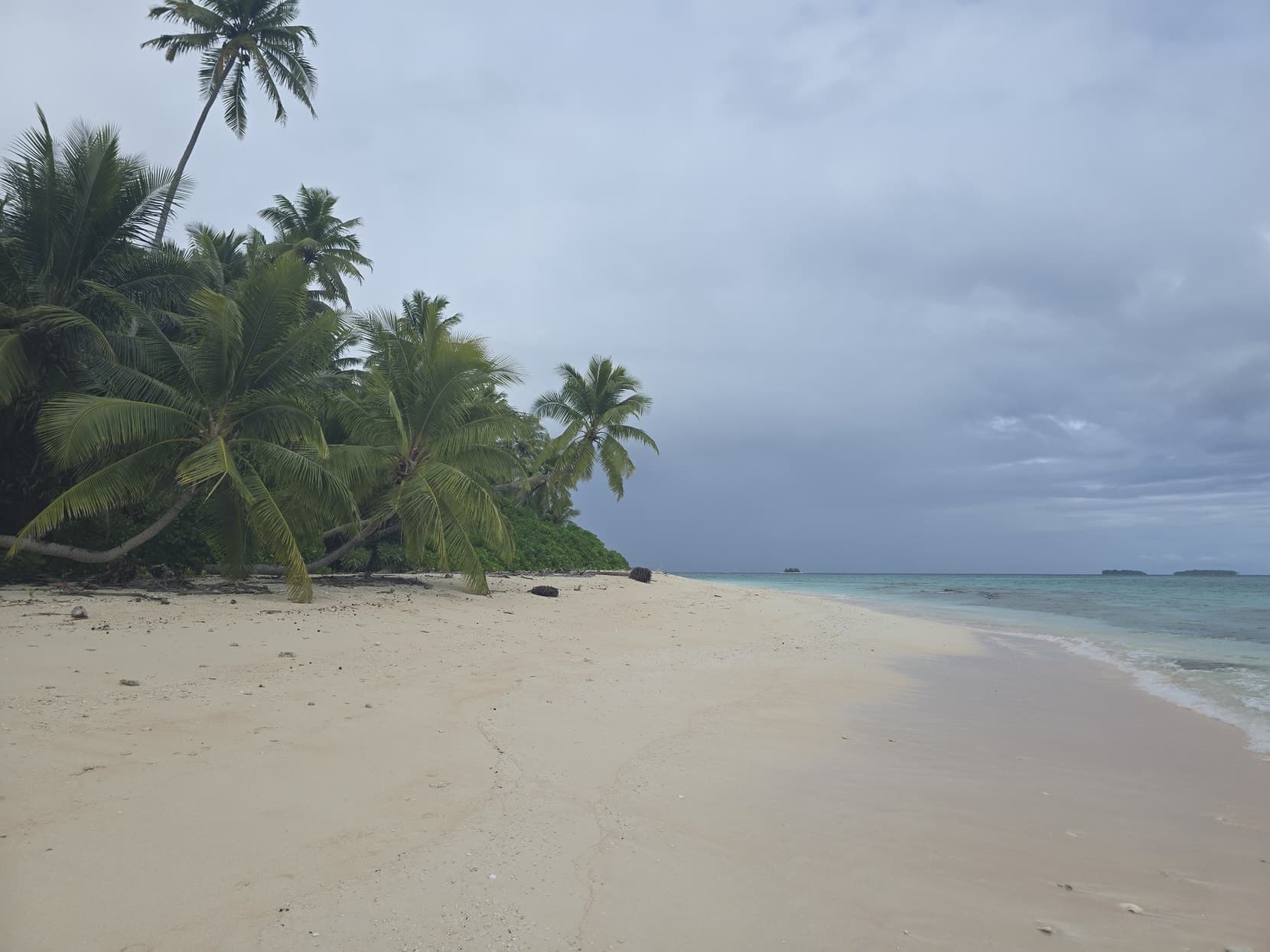
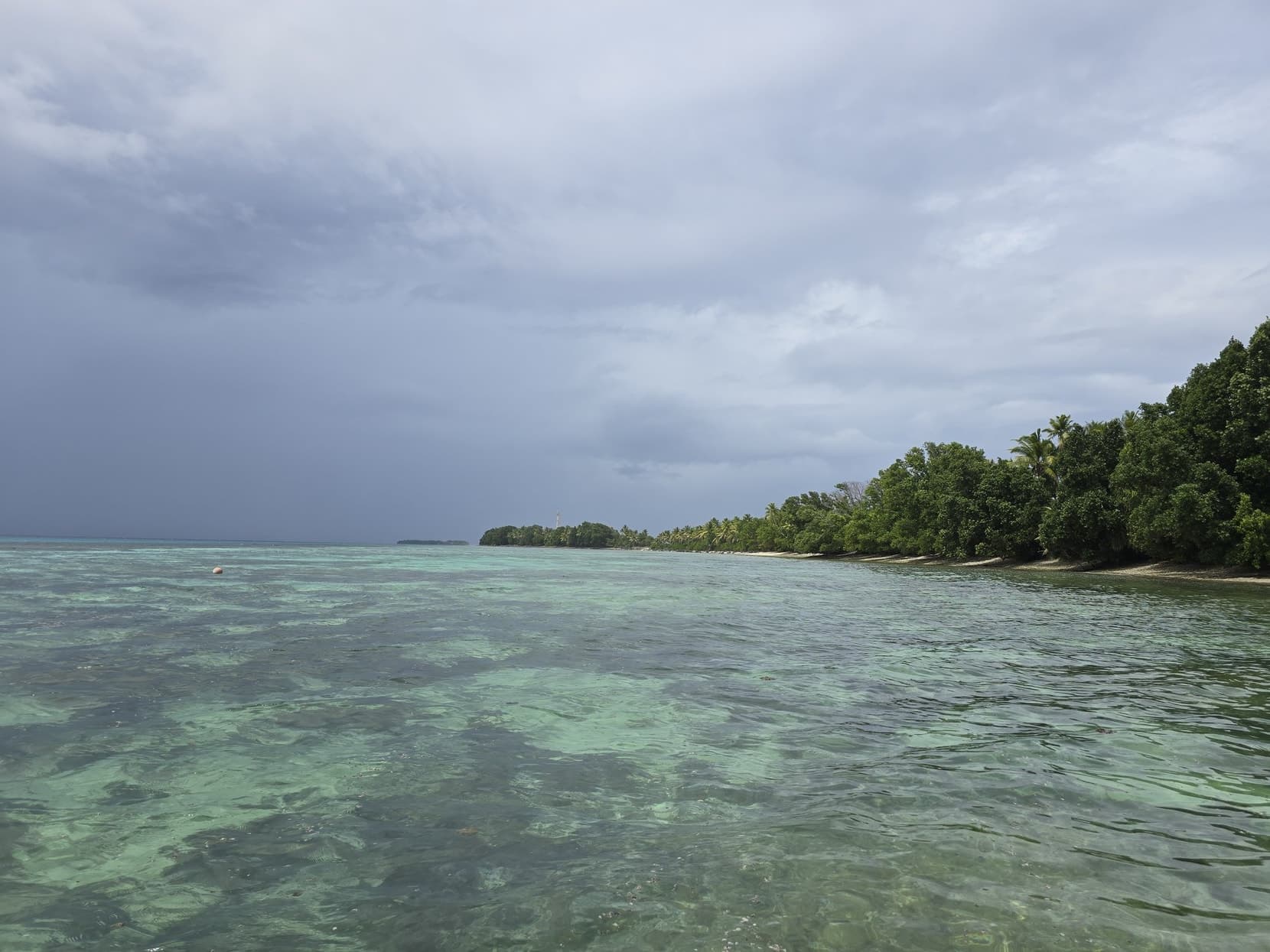
Tepuka, Te Afualiku and Fualifeke sit on the lagoon's western rim: white sand, leaning palms, and nobody on any of them. There is no tour and no website - a local boat is arranged in person, and the wet 30-minute crossing is half the fun. This is the best thing the country has.

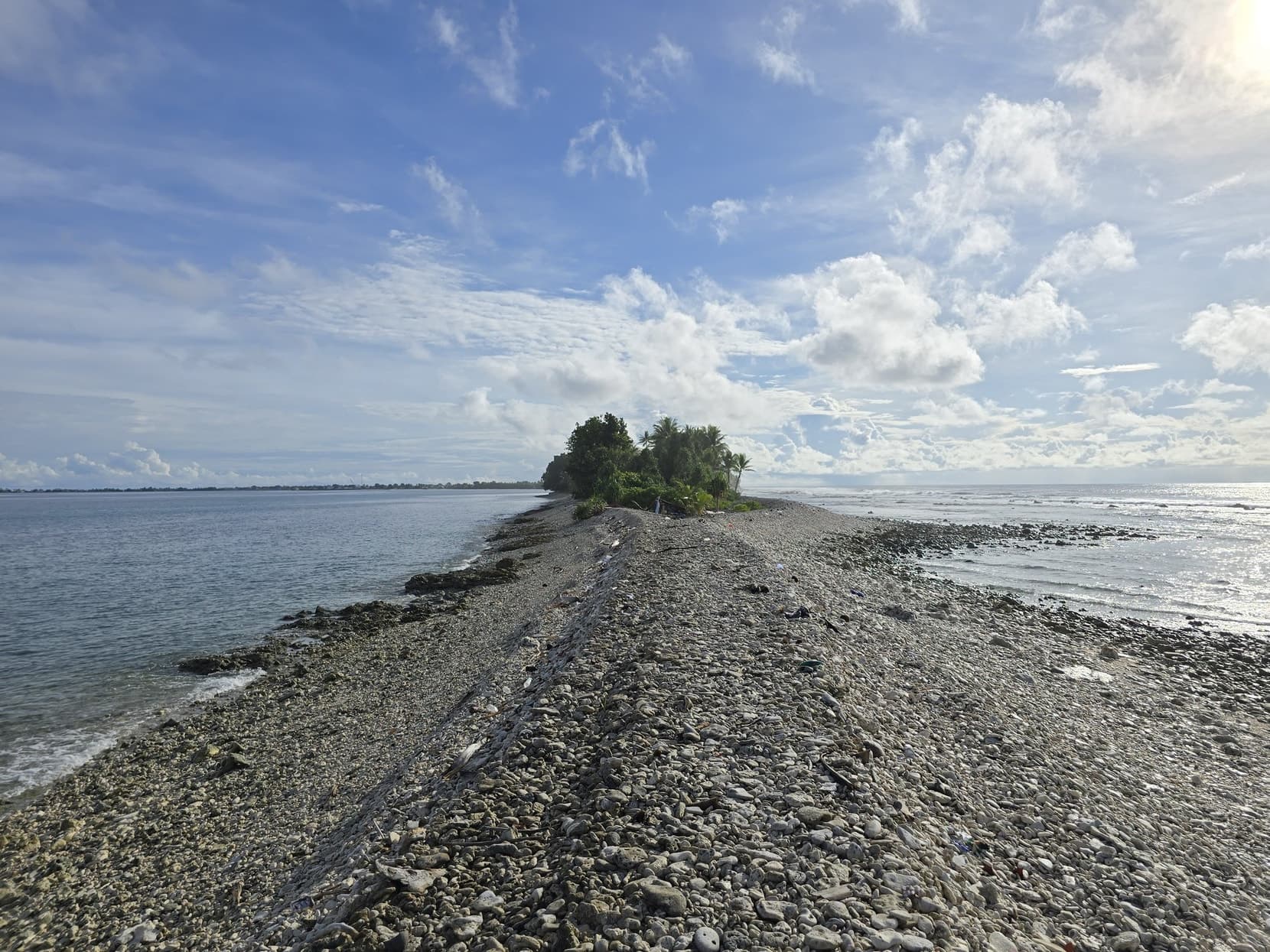
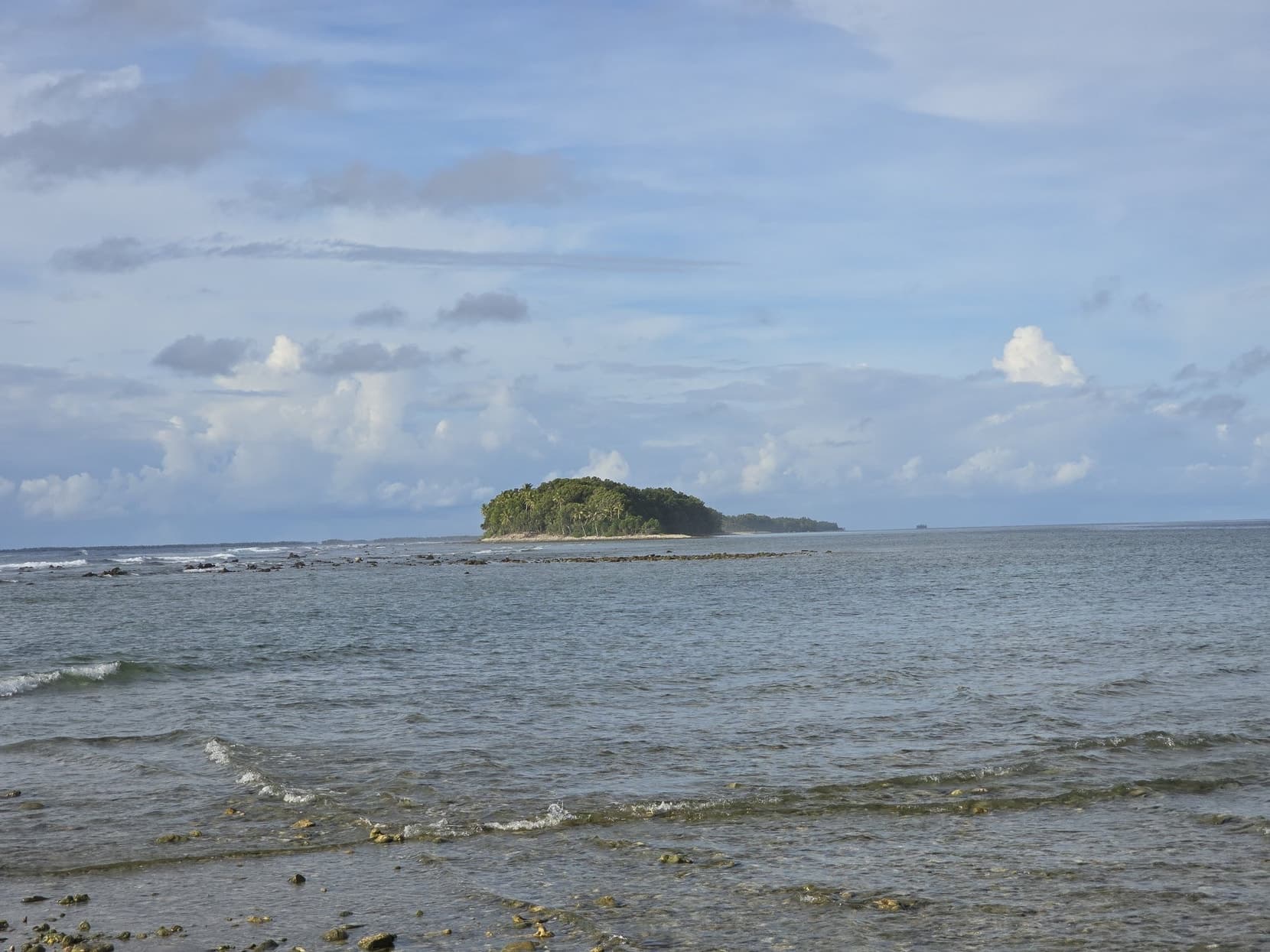
The rubble spit at low tide running out toward the islet off Fongafale's southern tip

The southern spit

South of town the island narrows to a quiet tail: reef on both sides, almost no traffic, and a tidal islet off the end that connects and disconnects with the water. The classic early-morning run or walk before the day warms up.

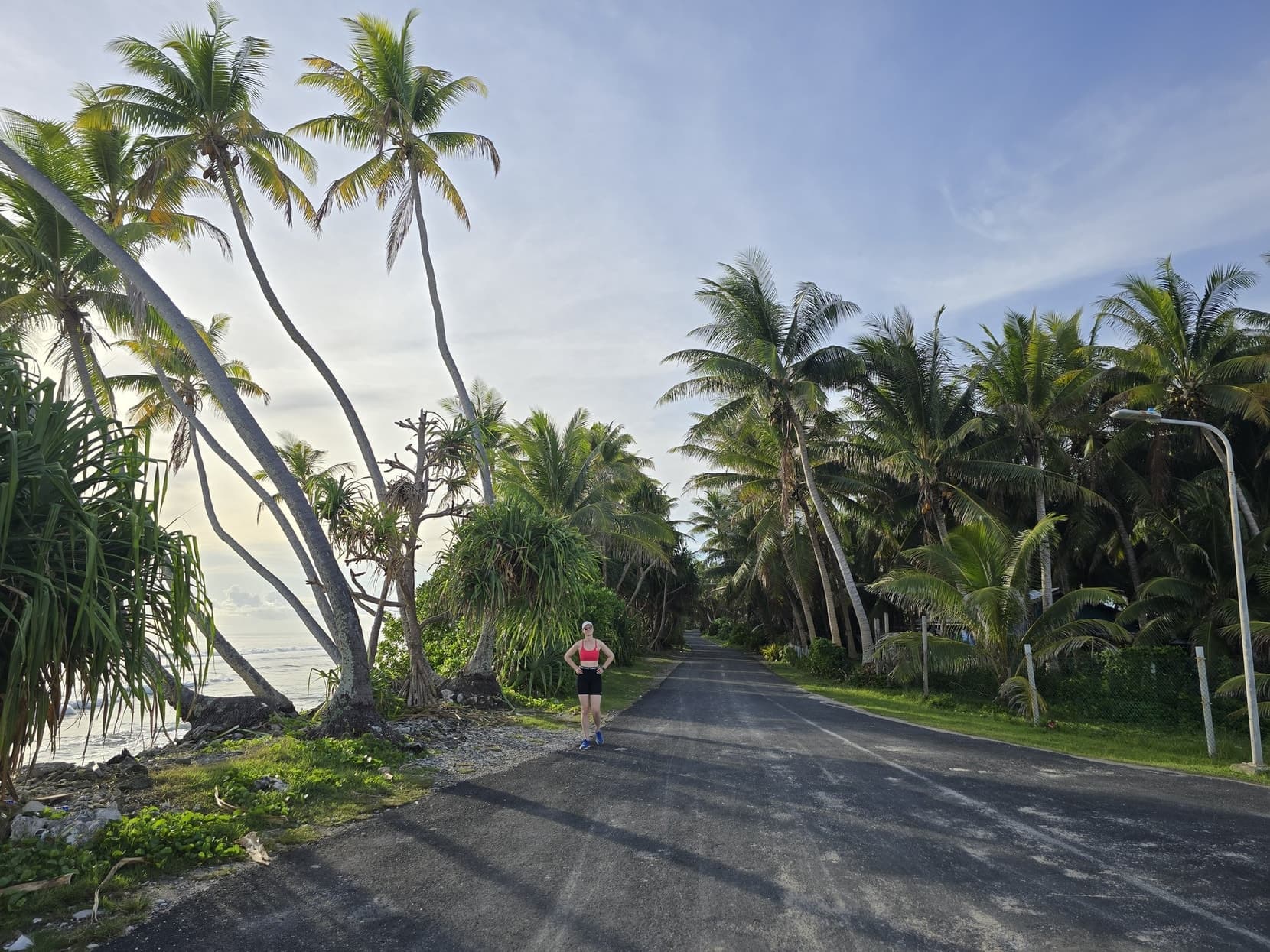
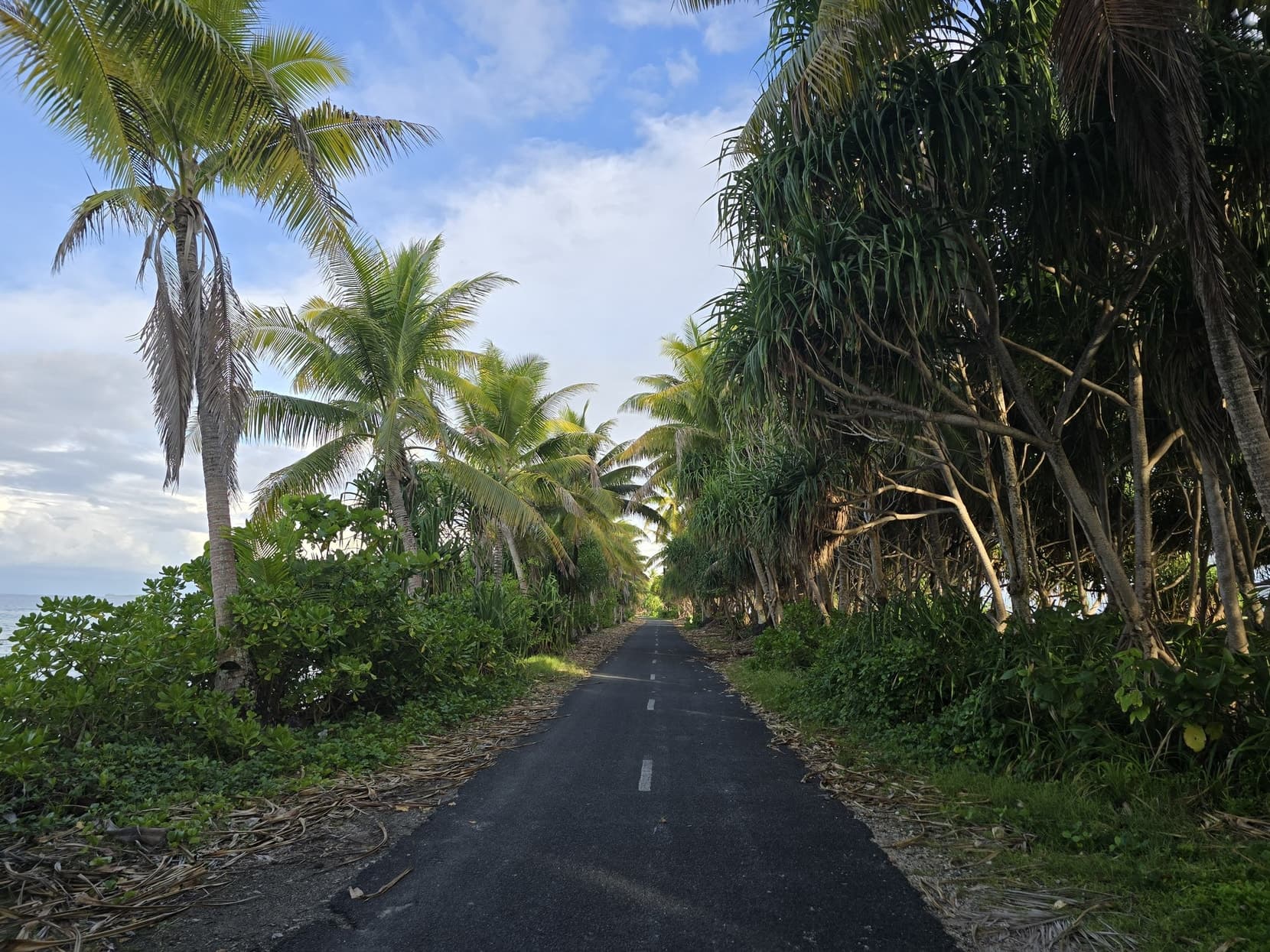
Running the palm-lined north road at dawn, Funafuti

The ocean side and the north

The lagoon side is calm and swimmable; the ocean side is reef shelf and surf, best at dawn. North of town the road runs through a green tunnel of palms to Tengako's quiet beaches - about 10 km each way, made for a hired bicycle or scooter, past the point where the island narrows to roughly 60 metres.

From the trip

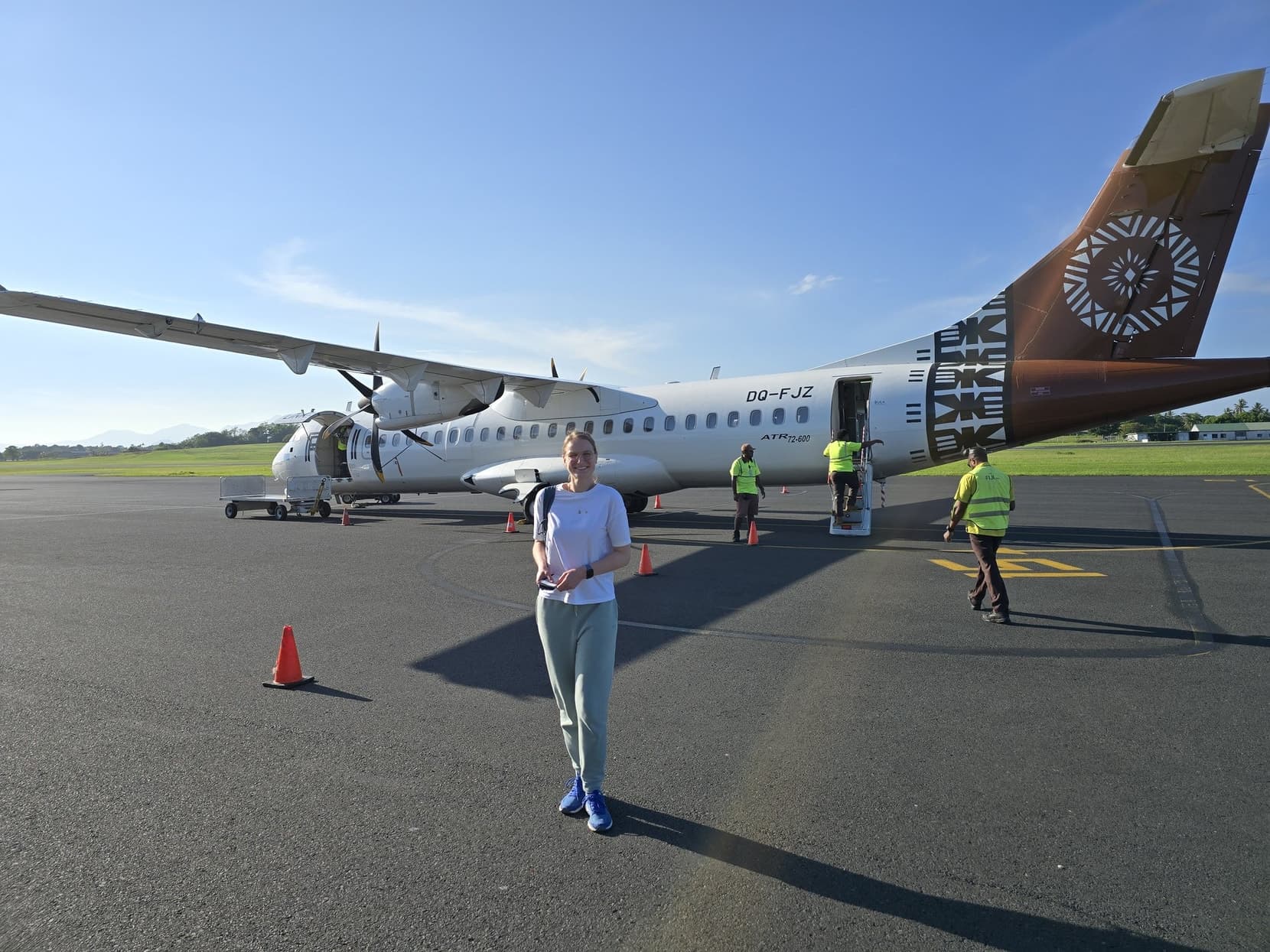
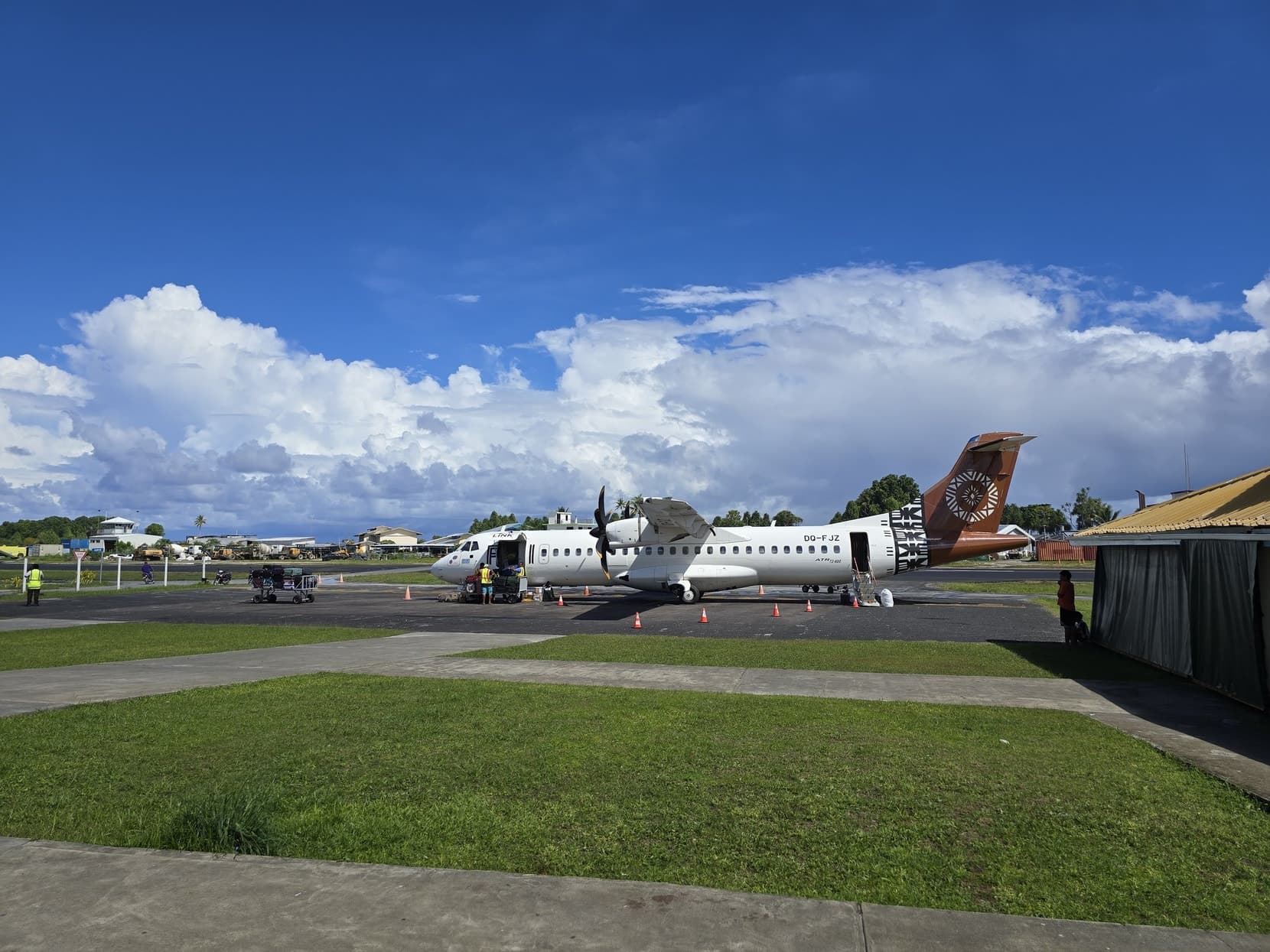
The Fiji Airways ATR 72 on the apron - the only way into Tuvalu
The ATR parked at Funafuti's airstrip under big clouds
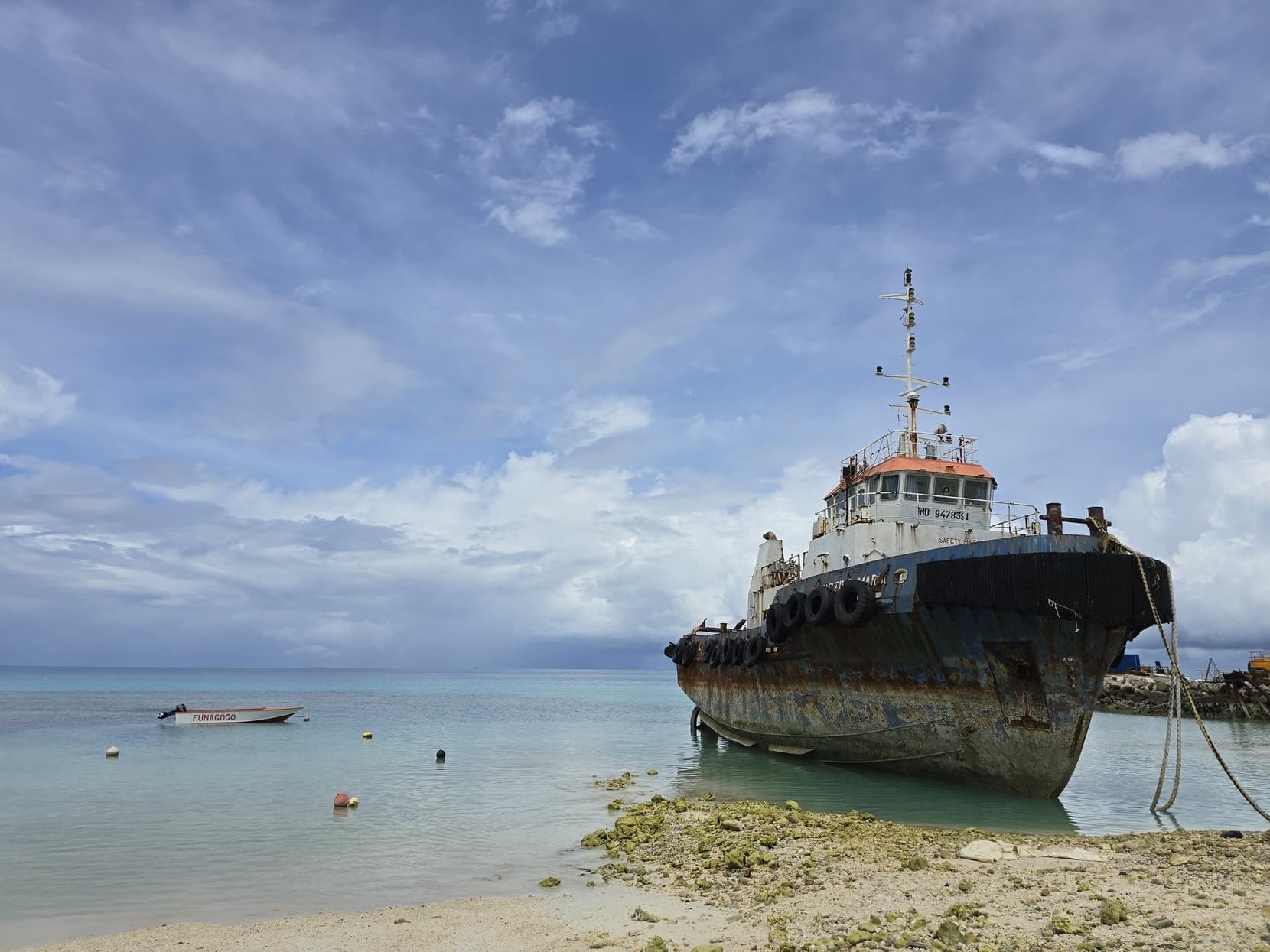
A rusting tugboat beached on the lagoon shore
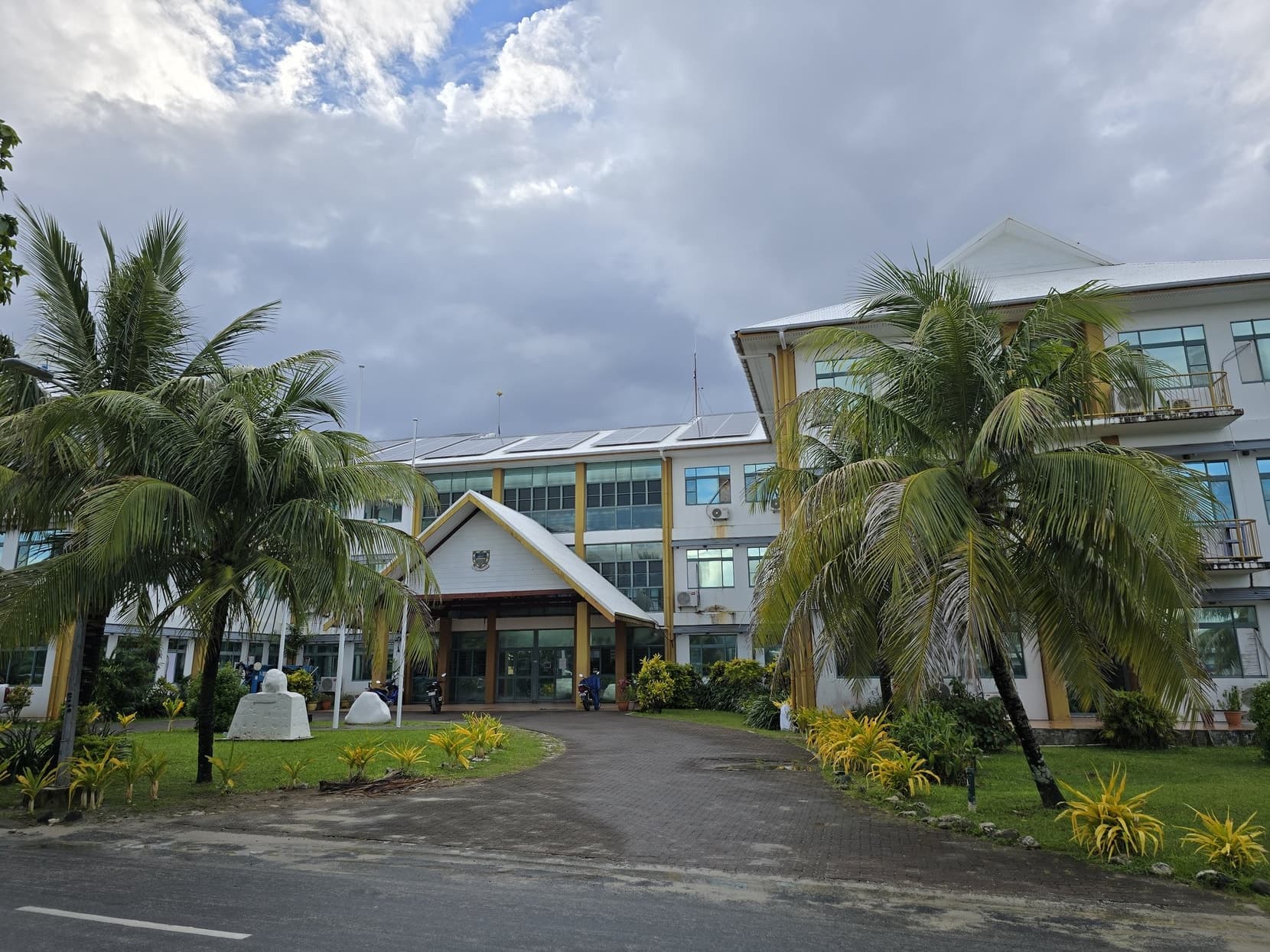
The three-storey government building of Tuvalu behind palms in Vaiaku
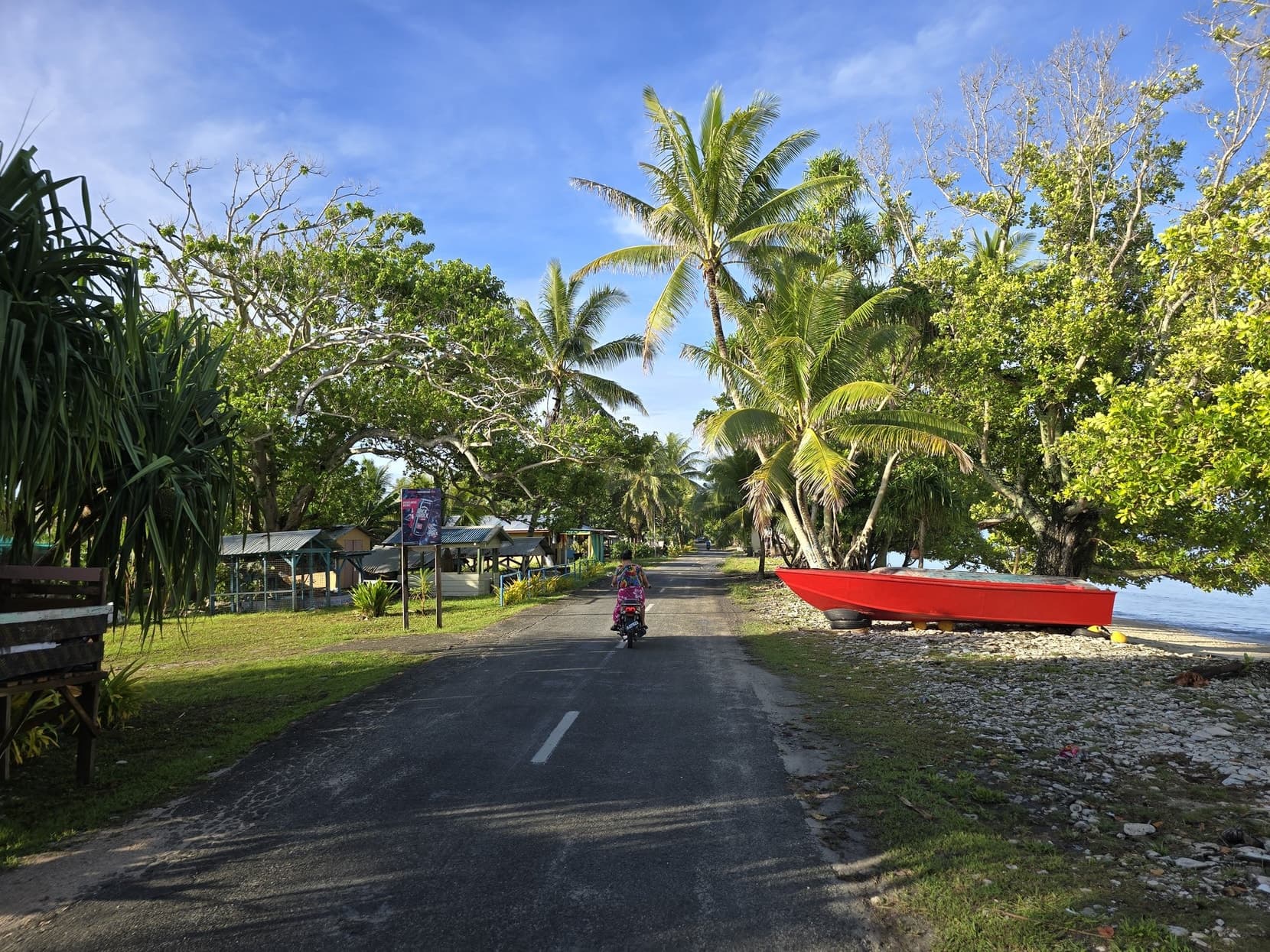
The village main road with a red skiff parked beside it
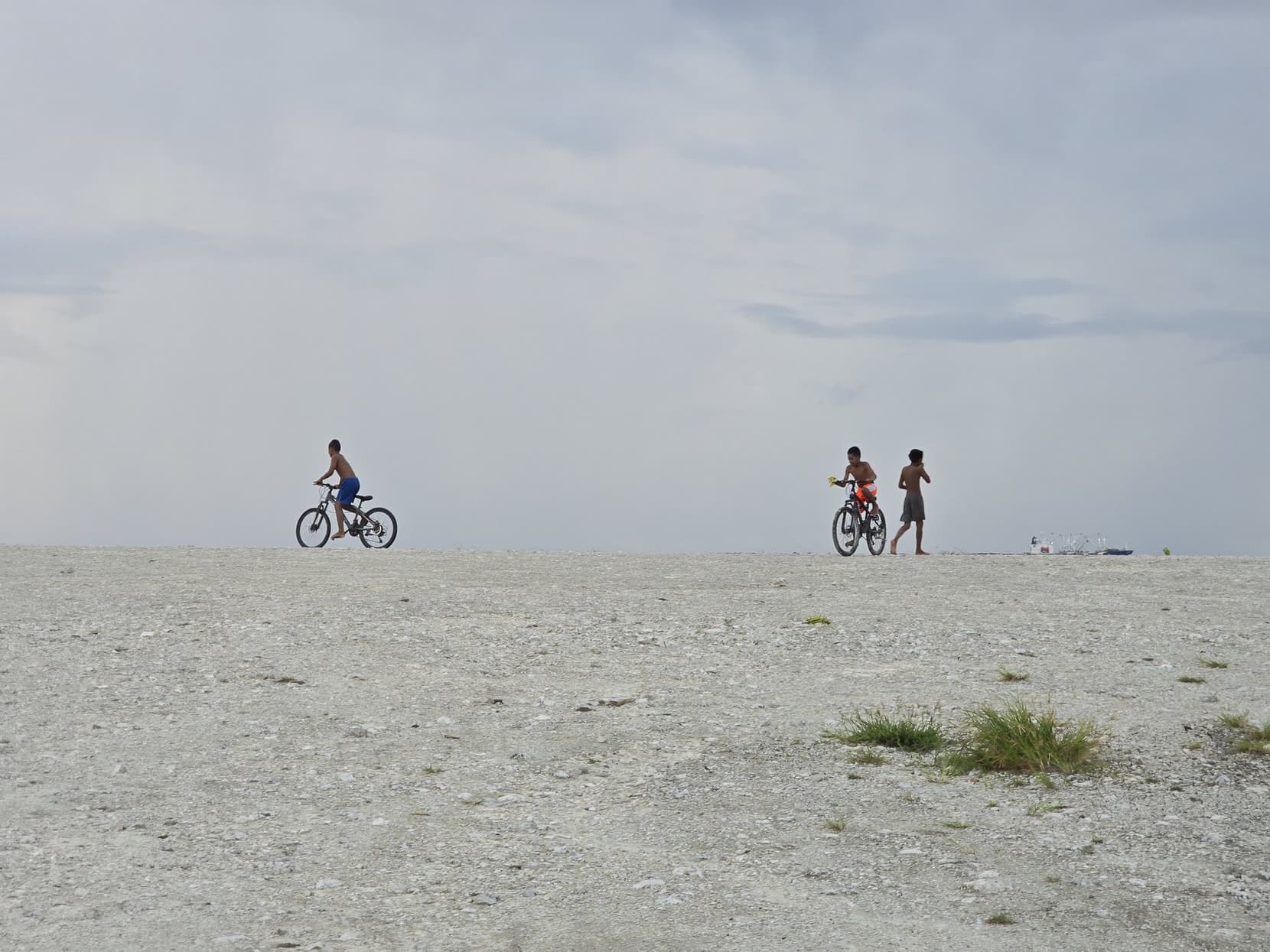
Two kids cycling across the bare coral flat under a huge sky
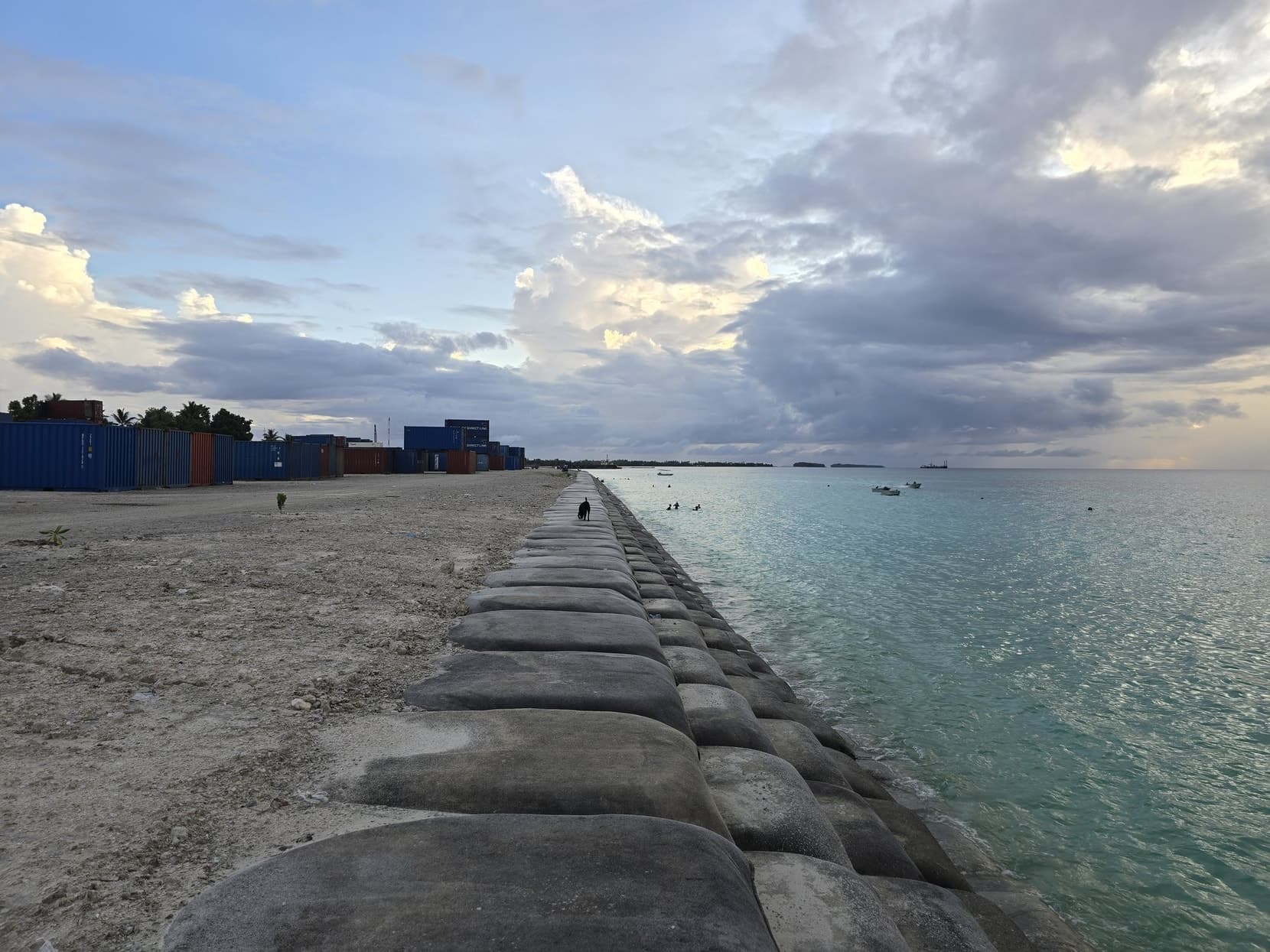
The geotube causeway with shipping containers stacked beside it
The white sand spit north of the village, wide and empty
The bow of an open boat pointed at a lagoon islet
A tree-topped islet and its white sandbar in Funafuti's lagoon
Driftwood on an empty islet beach with palms leaning overhead
Palms leaning over an empty islet beach
A lagoon islet under dramatic storm light
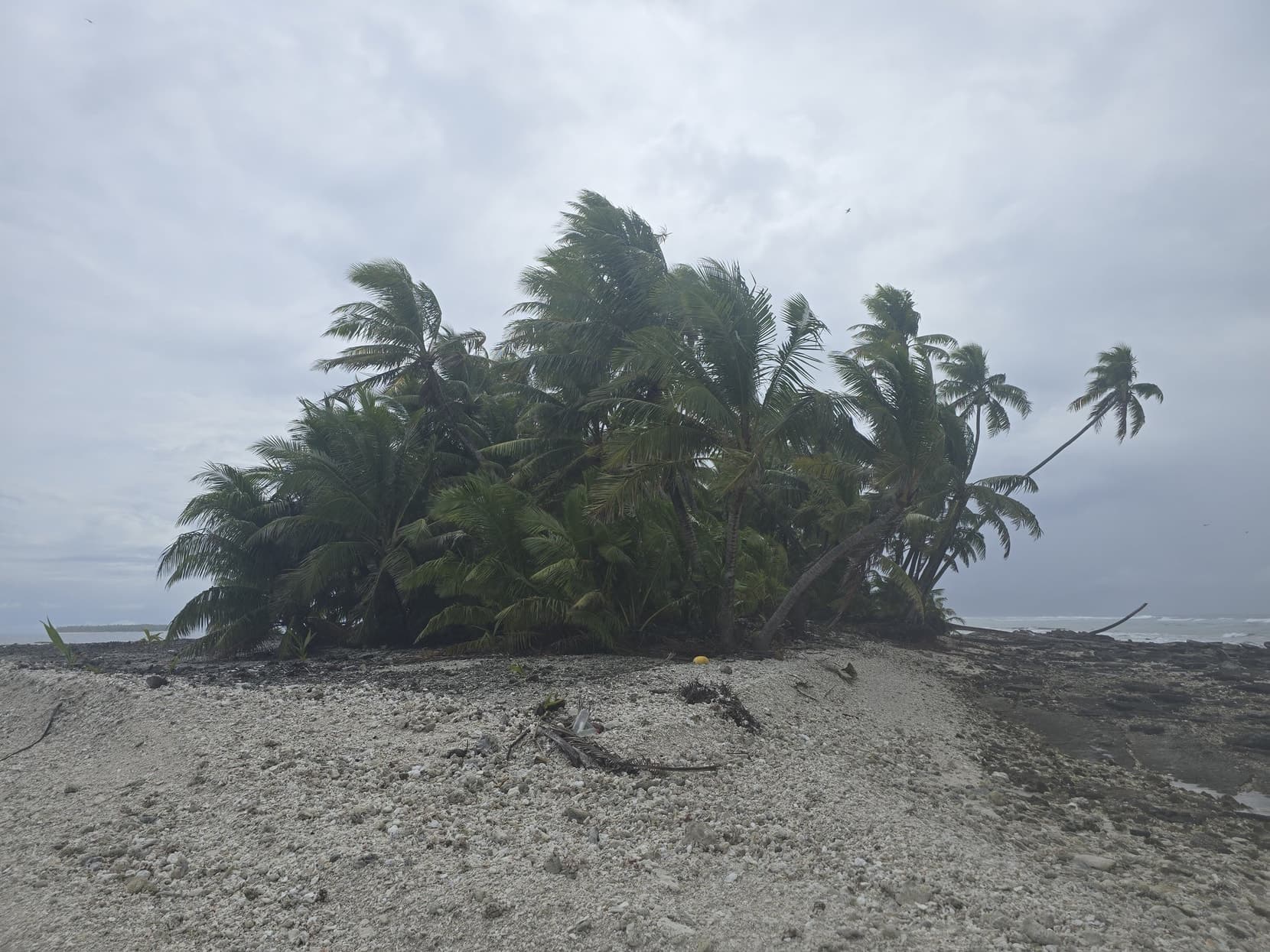
A windblown islet seen from its own beach
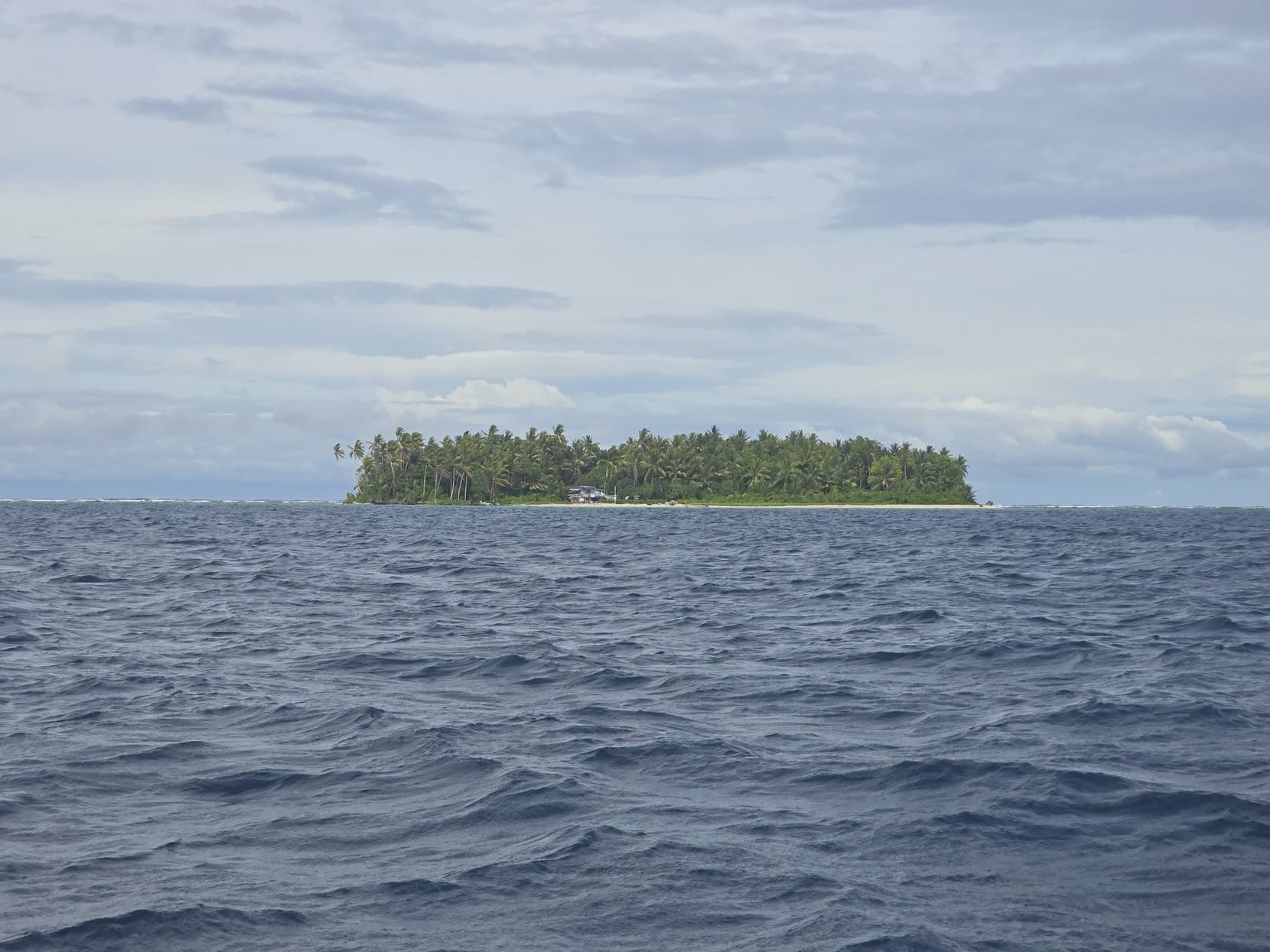
A lone islet in deep-blue open ocean
The tree-topped islet off the southern tip of Fongafale across the shallows
The north road running through a green tunnel of palms
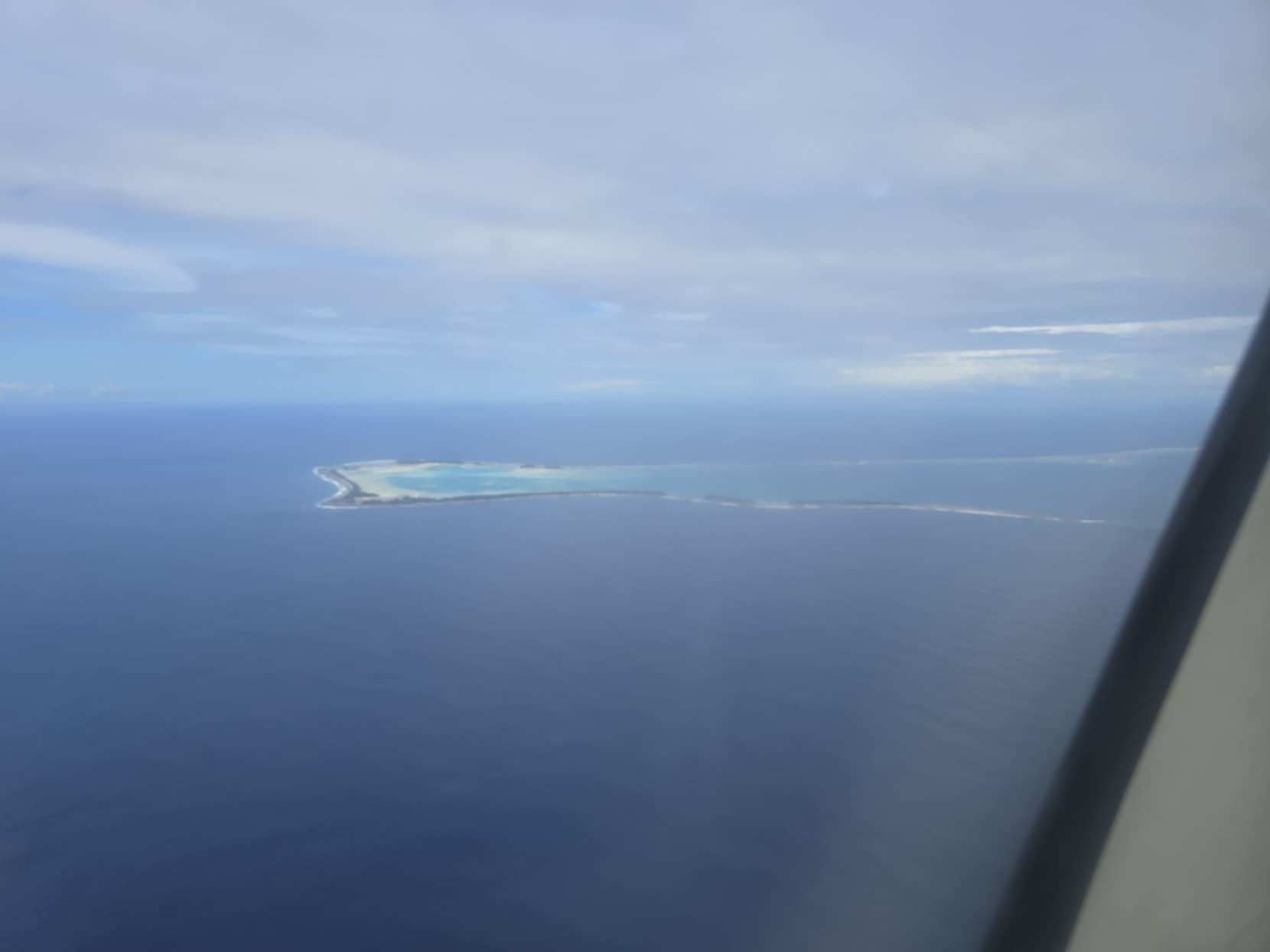
The whole Funafuti atoll ring seen from the plane window

The only way in: the ATR from Fiji

Getting there and around

One route in: Fiji Airways from Suva, about three times a week, roughly 2.5 hours over open ocean in an ATR turboprop. The weekdays rotate by season and the occasional rotation runs via Nadi, so confirm the days when you book rather than assuming them. Fly into Fiji, connect to Suva, and treat the Tuvalu pair as the first booking of the whole trip – everything else hangs off it.

On the ground there is nothing to rent with four wheels, and no need: everything in town is minutes on foot, two wheels are hired locally for small money, hitching a short lift is normal and free, and one road runs the island end to end – you cannot get lost. The lagoon boat is the exception: no operator exists, so it is arranged in person, and the guide carries where to ask, when, and what a fair deal looks like.

Paperwork is light – a 30-day visitor permit stamped on arrival for most passports. The guide's before-you-fly page carries the full checklist, from the onward-ticket rule to the things worth saving offline.

What it costs

The unavoidable part is the flights: the Suva–Funafuti return runs about EUR 785 per person, and it dwarfs every other line. That is what getting there costs, not what the trip costs – because once you land, Tuvalu is one of the cheapest countries you will ever stand in.

On the island the money is small and mostly cash. The bed is the only line with real range, and the boat day is priced per boat rather than per head, so a shared boat nearly halves the best day of the trip. There is no lean-versus-splurge decision to make here – the island offers one level, and it is inexpensive. The guide itemises the whole trip in AUD and EUR, per person, including the flight pair and what a fair boat quote looks like.

Tested tips

Plan around Sunday before you book the flights.

The island keeps Sunday strictly: shops shut, boats rest, and no amount of money changes it - we learned this trying to hire a boat on one. A workaround exists, and the guide carries it, but the cheaper fix is choosing a flight gap whose boat day is a weekday.

Expect the evening pause.

Each evening, between a quarter to seven and seven, the island stops for devotion - the police gently waved us off the road mid-stroll. Wait out the minutes. It is a custom, not an inconvenience, and one of the things you will remember.

Walk the runway at dusk.

When the heat drops, the airstrip becomes the island's living room: football, volleyball, families on the centreline. Join in. It is the single most Tuvaluan hour of the trip.

A palm leaning over the turquoise shallows of a lagoon islet, Funafuti, Tuvalu

FAQ

What is the least visited country in the world?▾
Tuvalu, by most counts: fewer than 4,000 visitors a year. It is a nine-island nation of about 11,000 people in the central Pacific, and its capital atoll Funafuti is the only part with flights, so almost every visit is a visit to Funafuti.
Is Tuvalu worth visiting?▾
Yes, if the appeal is the place itself rather than sights. There is one hotel, one restaurant and no tourism industry - what you get instead is a runway that turns into the town square at dusk, empty lagoon islets arranged by handshake, and a country you can genuinely walk end to end. If you need resorts and menus, no.
How do you get to Tuvalu?▾
Fly Fiji Airways from Suva, about three times a week on a rotating schedule - roughly 2.5 hours over open ocean. There is no other scheduled way in. Book the flight pair first: the gap between two flights is your trip length, and everything else follows from it.
How many days do you need in Tuvalu?▾
Two full days covers Funafuti properly - the capital, the runway, the lagoon's empty islets and both ends of the island. That is exactly what one flight gap gives you. More days add pace and weather margin, not sights.
How much does a trip to Tuvalu cost?▾
The unavoidable part is the flight pair from Fiji: about EUR 785 per person return, and it dwarfs everything else. Once you land, Tuvalu is one of the cheapest countries you will ever stand in - the bed is the only line with real range, and the boat day is priced per boat, so sharing it halves the best day of the trip. The guide itemises every line in AUD and EUR.
Do you need a visa for Tuvalu?▾
Most passports get a 30-day visitor permit stamped on arrival - free for many nationalities, a fee for some. Check yours before flying; the guide's before-you-fly page carries the rest of the paperwork checklist, onward-ticket rule included.
Can you pay by card in Tuvalu?▾
Barely. Cash runs the island: Australian dollars, carried in with you. The first ATMs arrived in 2025 and card acceptance is new and patchy, so treat any card as a backup, not a plan.
Is there internet in Tuvalu?▾
Slower and scarcer than you are used to. No eSIM works here; connectivity is bought locally and takes cash, and some hosts share theirs. The guide covers the setup that actually works - and download offline maps before you fly either way.
What happens in Tuvalu on Sunday?▾
The island keeps it: shops shut, boats rest, and the day belongs to church. Plan anything that needs hiring or arranging for a weekday. There is also a daily pause - between a quarter to seven and seven each evening, the island stops for devotion.
Is Tuvalu sinking?▾
The risk is real - the country's highest natural ground is only a few metres above the sea - and Tuvalu is actively raising land: the Coastal Adaptation Project has pumped a new stretch of reclaimed land along Funafuti's lagoon shore, which is now the island's best open space for an evening walk. For a visitor the practical effect is simple: this is a place to see deliberately, not eventually.
Is Tuvalu safe?▾
Very. The prison runs on an honour system and mostly stands empty, which says most of it. The real hazards are sun, heat and current: no shade on the water, a reef-shelf ocean side that is not for swimming, and one hospital - bring your own medications.

Guides for this destination

Tuvalu: 2 Days in the World's Least-Visited Country

Tuvalu: 2 Days in the World's Least-Visited Country

Everything this page deliberately leaves out: the boat-day playbook with where to ask and the fair price to agree, the three beds in booking order with QR links, the paperwork and connectivity setup, the full cost breakdown in AUD and EUR, and the companion Google map with every pin.

2 days, 3 on the ground · €29

Stories from Tuvalu

Tuvalu up close: devotion time, an honour-system prison, and life on the runway

Tuvalu up close: devotion time, an honour-system prison, and life on the runway

Evening prayer stops, an honour-system prison – Tuvalu's customs are its sights.

How to actually visit Tuvalu: flights, a bed, and a Sunday boat

How to actually visit Tuvalu: flights, a bed, and a Sunday boat

Two flights a week, one hotel, one restaurant – here is how to make Tuvalu actually work.

Tuvalu: the honeymoon almost nobody takes

Tuvalu: the honeymoon almost nobody takes

One of the least-visited countries on earth – and we had the islands entirely to ourselves.

PDF Guide

€29

Instant download

Get the Guide

30-day refunds, no questions asked. Read the policy.

  • ✓Risk-free · 30-day full refund
  • ✓One-time purchase · No subscription
  • ✓Works offline · Save to phone