TestedRoutes
GuidesDestinationsInspireAbout me

TestedRoutes Newsletter

Field-tested travel routes, in your inbox when they drop.

© 2026 TestedRoutes. All rights reserved.

ContactFAQLegalTermsPrivacyRefundsSecurityAffiliate disclosureSitemap

We independently review everything we recommend. When you buy through our links, we may earn a small commission at no extra cost to you. More on how this works.

ExploreGuidesDestinationsInspireAbout
Destinations›Kuwait

Middle East · The Gulf

Kuwait

Is it worth a stop, and how long you actually need – from the layover version to the two days with a Bronze-Age island and the desert at dusk.

Paulius Pikelis

Tested by Paulius Pikelis · 140 countries

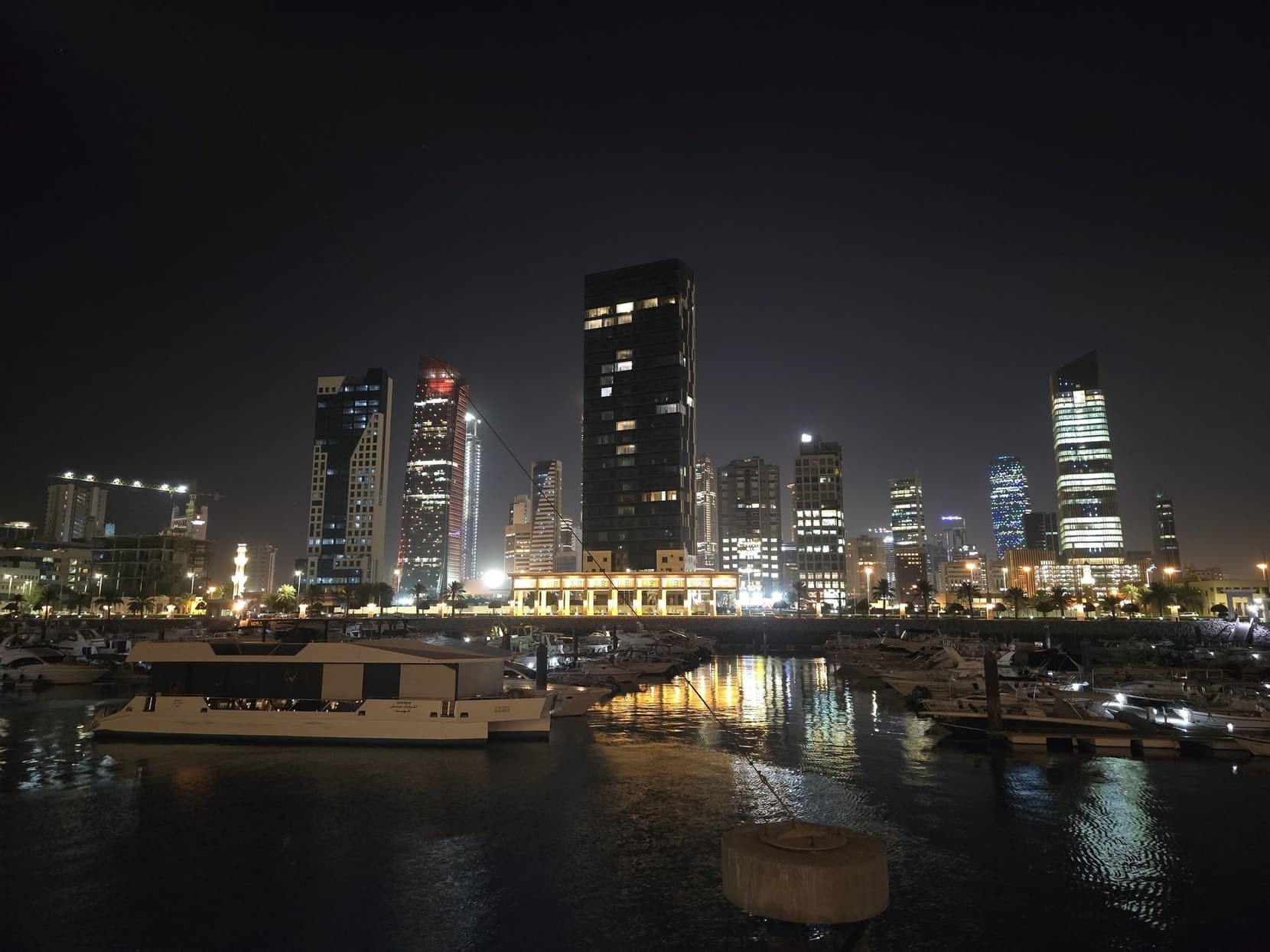
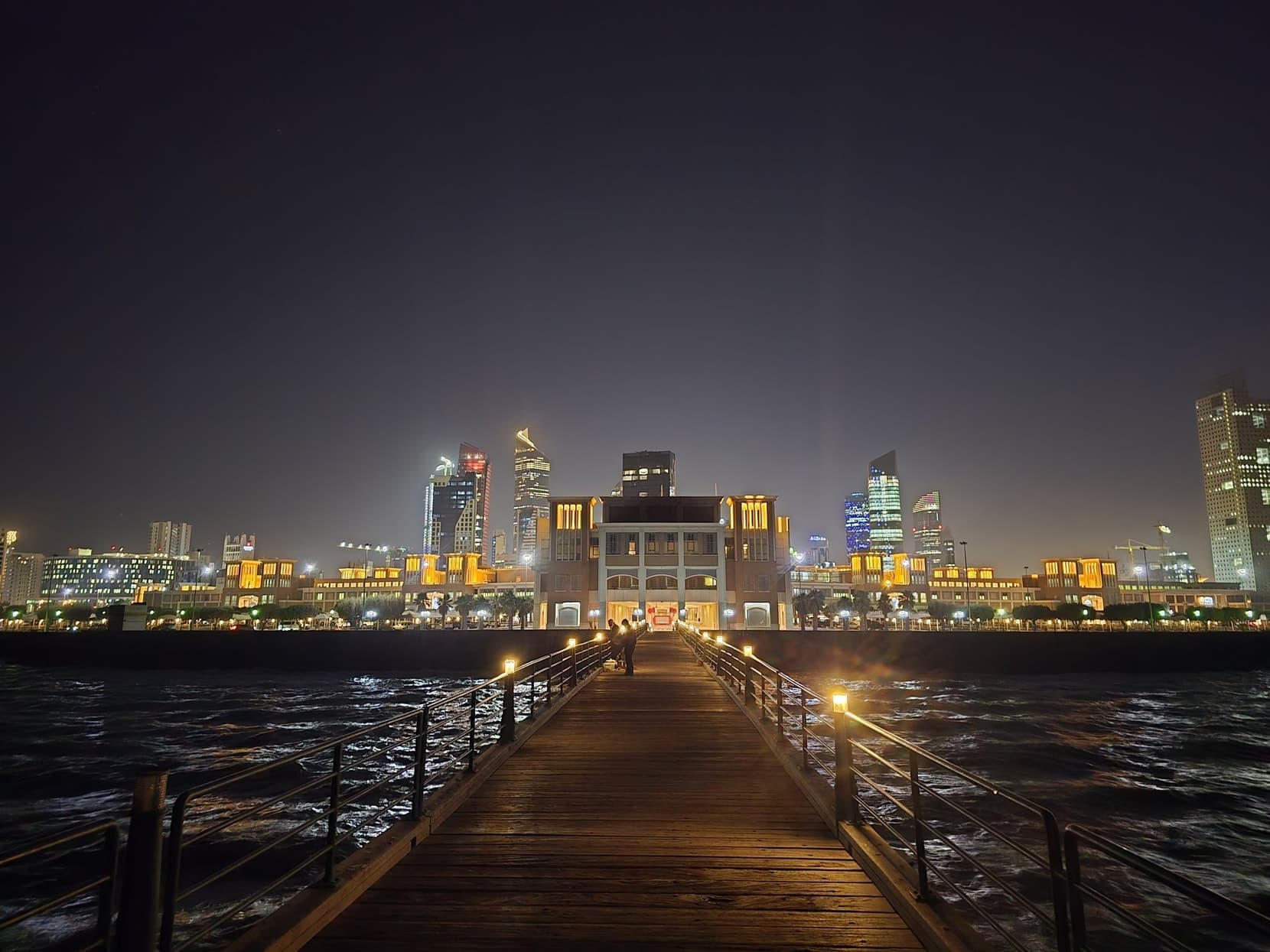
The wooden pier at Souq Sharq marina at night, the lit skyline behind

Is Kuwait worth it, and what do you actually do there

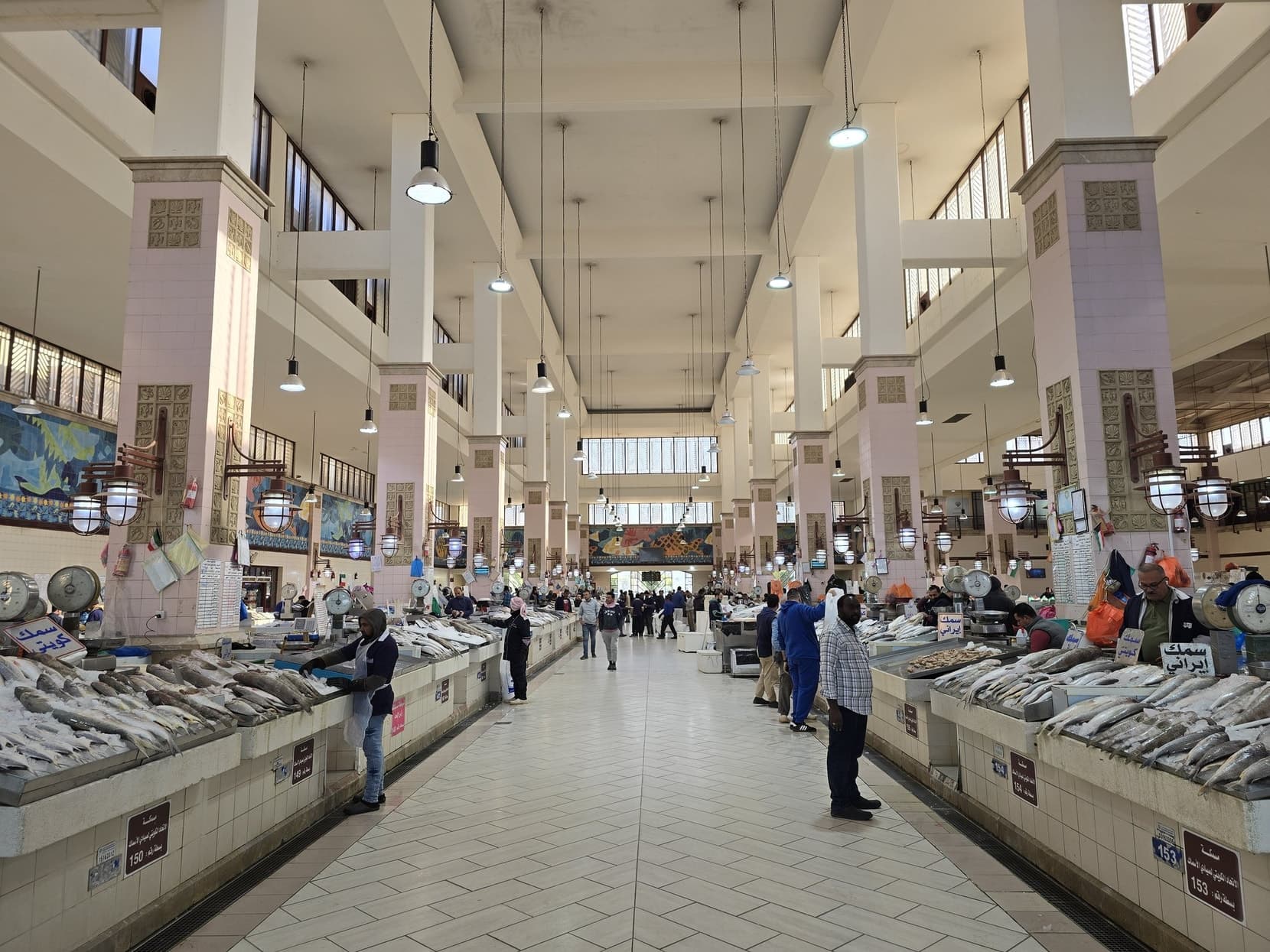
Kuwait gets written off as a transit lounge, and that is exactly why it works. There are no tour groups, no queue for anything, and no theme-park version of Arabia – what there is, is a real two-hundred-year-old souk, a harbour full of working wooden dhows, a fish market with the catch coming in under blue mosaics, and one iconic tower with the whole bay below it. I had the lanes of the old market nearly to myself on a Sunday morning.

What you actually do: walk the old town while the rest of the city drives, drink tea brewed over coals in the souk, ride the sphere of Kuwait Towers, and then – if you take the second day almost nobody takes – cross to a Bronze-Age island by boat and watch the desert switch its lights on at dusk. The trip runs on a car, because Kuwait is built around cars and you will often be the only pedestrian in the capital. Treat that as part of the experience rather than a flaw and the city is a pleasure.

Two honest caveats. The country is completely dry – no alcohol anywhere, including your hotel – and dinner culture fills the evening instead. And this is a stop, not a holiday: one to two days is the right amount, which is precisely what makes it such good value in hours. Check your government's travel advice before booking; the region has moved quickly and the advisory, not the guidebook, is the current document.

When to go

Winter, without much debate. Kuwait in summer runs past 45 °C and the trip in this shape stops working; November to March is mild, walkable and – crucially – the season when the desert camps exist at all.

November to March

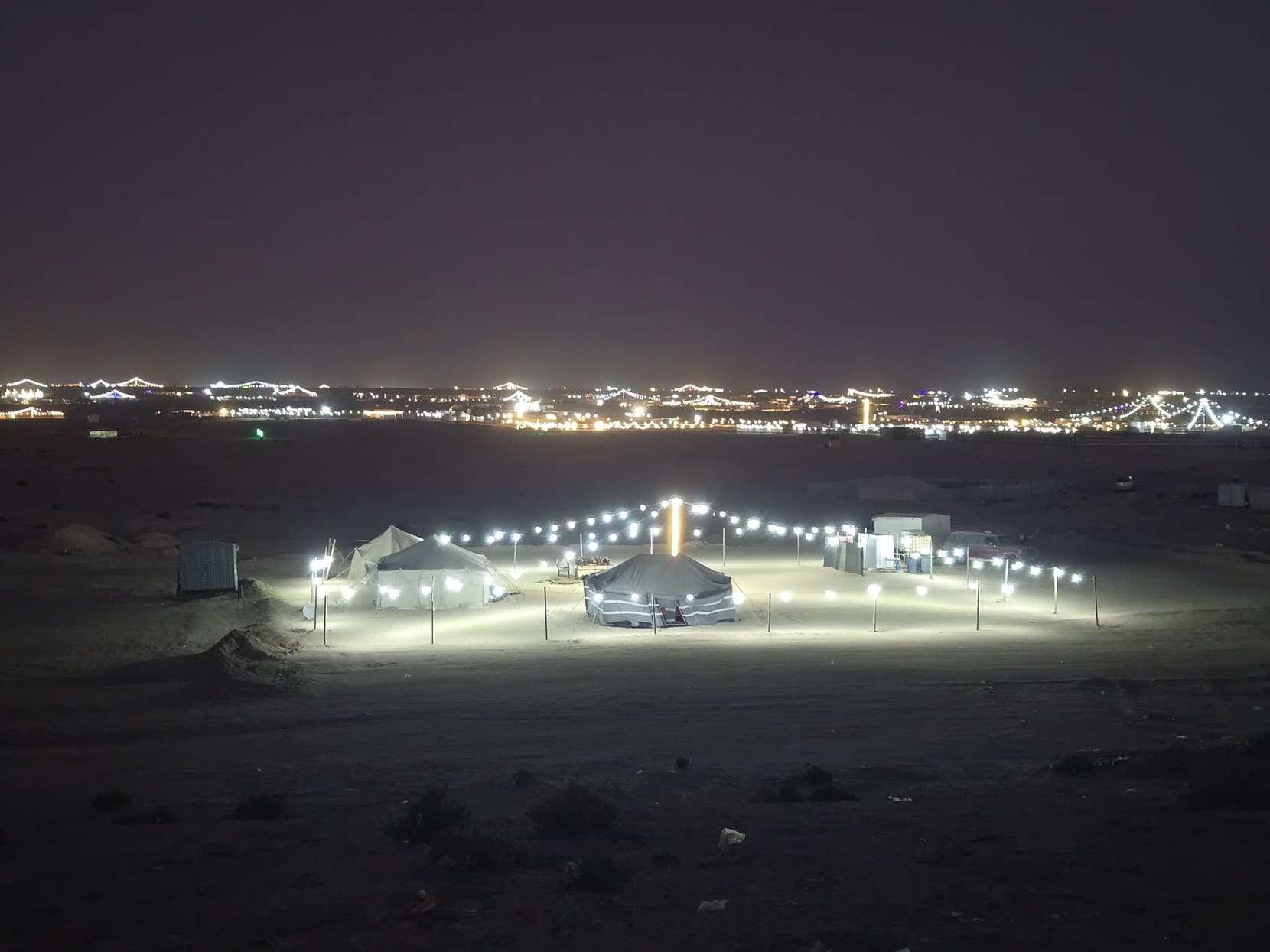
The season. Mild, walkable days, cool evenings with a sea wind, and the desert filling up with the winter tent camps – they exist from about mid-November to mid-March, and after dark they are the best thing in the country.

April and October

The shoulders. Hot but workable. The camps are gone or going, so the desert half of the trip loses its payoff.

May to September

No. Summer runs past 45 °C, life moves indoors, and walking the old town – most of day one – stops being pleasant at all.

What I would pick

December or January for the camps at their fullest, accepting jacket weather in the evenings; late February if you want the mildest walking days and can live without the busiest tent season. Either way, the day of the week matters more than the month – see below.

The calendar that actually decides the trip is the week, not the year: the Kuwaiti weekend is Friday and Saturday, and Friday closes more of the country than a visitor expects. Put the city day on a weekday – the guide plans both days around what is open when.

How long to stay

This is the question Kuwait answers more cleanly than almost anywhere: the city fits in a day, the country fits in two, and a third is a day too many.

Under 24 hours

The city, and it genuinely fits – the old souk, the dhow harbour and the towers make one of the better layover days anywhere. How well it fits depends on which weekday you land and what you do in what order, which is exactly what the guide times out.

Two days

The version almost nobody takes, and the reason to stay a night: a boat to Failaka island – Bronze-Age ruins, a tank graveyard from 1990, an abandoned town – then the desert at dusk, when the winter camps switch their lights on. Day one is the city; day two is a different country.

Three or more

Honestly, no. The remaining museums fill half a day at most, and the rest of the country is desert you have already seen, oil infrastructure you cannot photograph, and border towns with nothing in them. Kuwait is a superb stop and a poor holiday – two days is the right amount.

Guide: Kuwait in 2 Days: A Weekend Itinerary is the two-day version done for you: both days hour by hour, every booking in the order it has to be made, and the desert timed so you reach the camps exactly as the light goes.

The regions

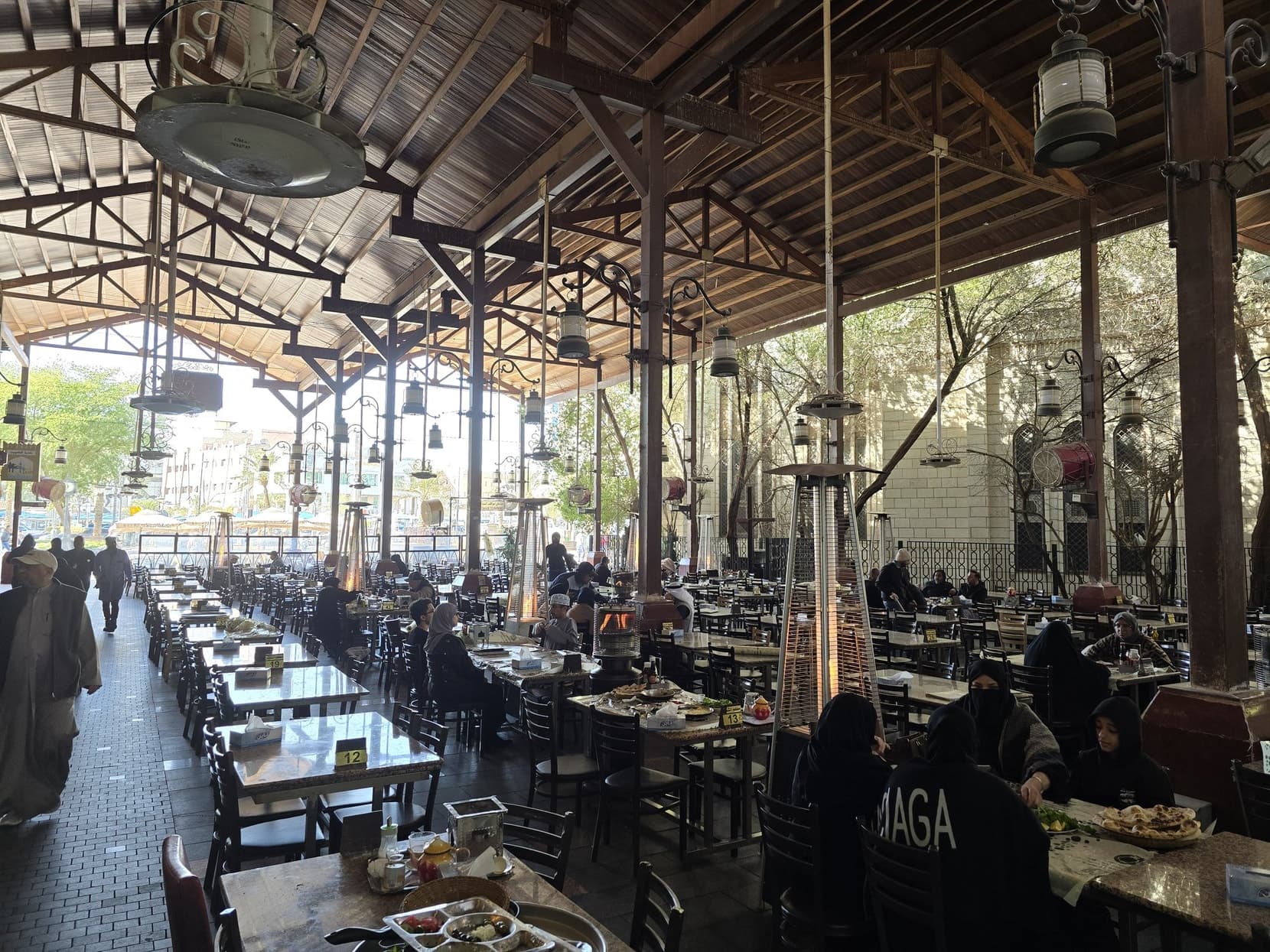
The open-air food courtyard of Souk Al-Mubarakiya under its timber roof, tables and heaters between the trees

The old town

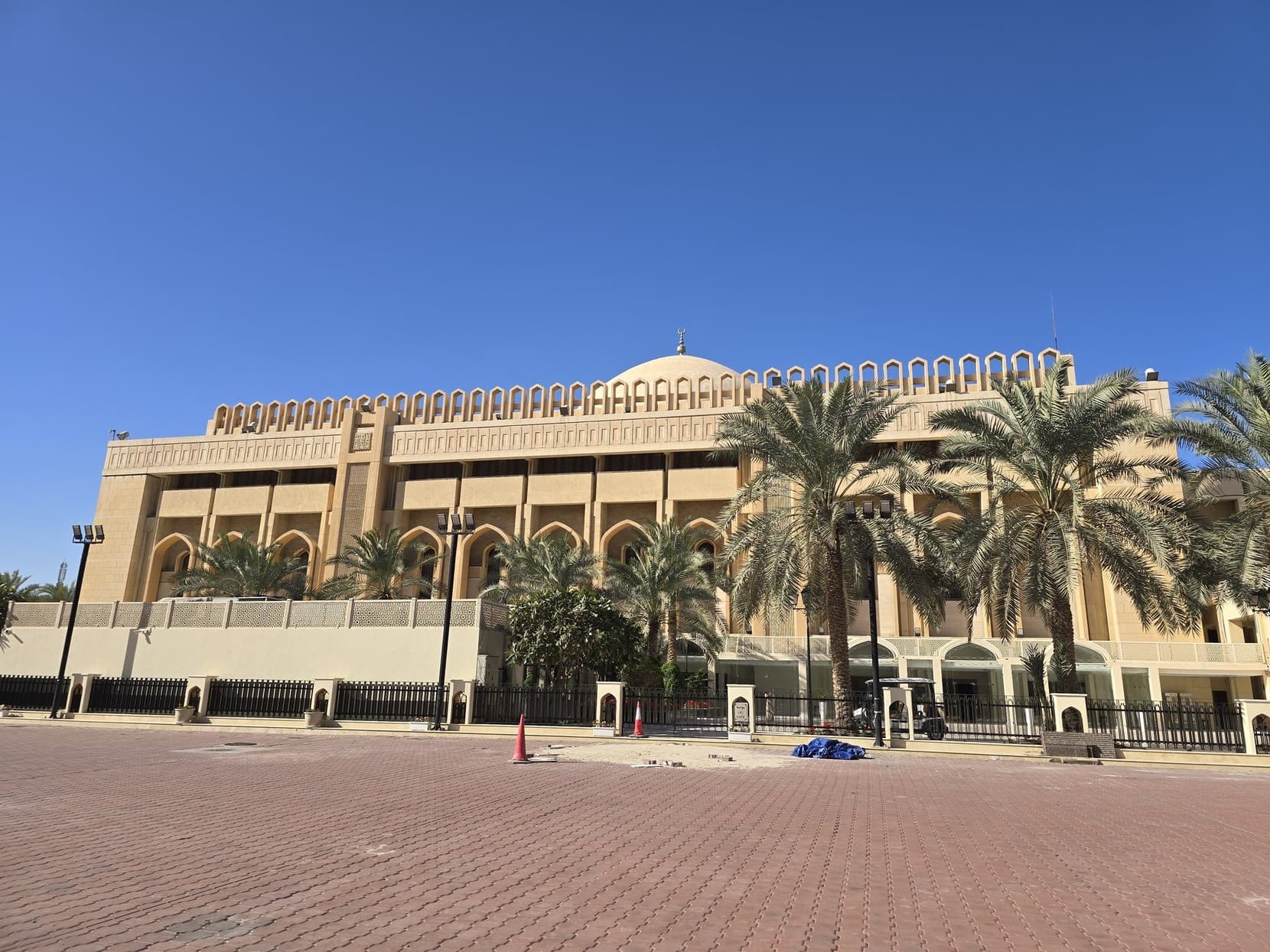
Souk Al-Mubarakiya is two hundred years of market under one roof – perfume, oud, gold, dates and spices, tea brewed over coals in the lanes, and free museums hidden inside it. The Grand Mosque and the Liberation Tower stand over the same few streets. This is the half of Kuwait that feels its age, and you will have much of it to yourself.

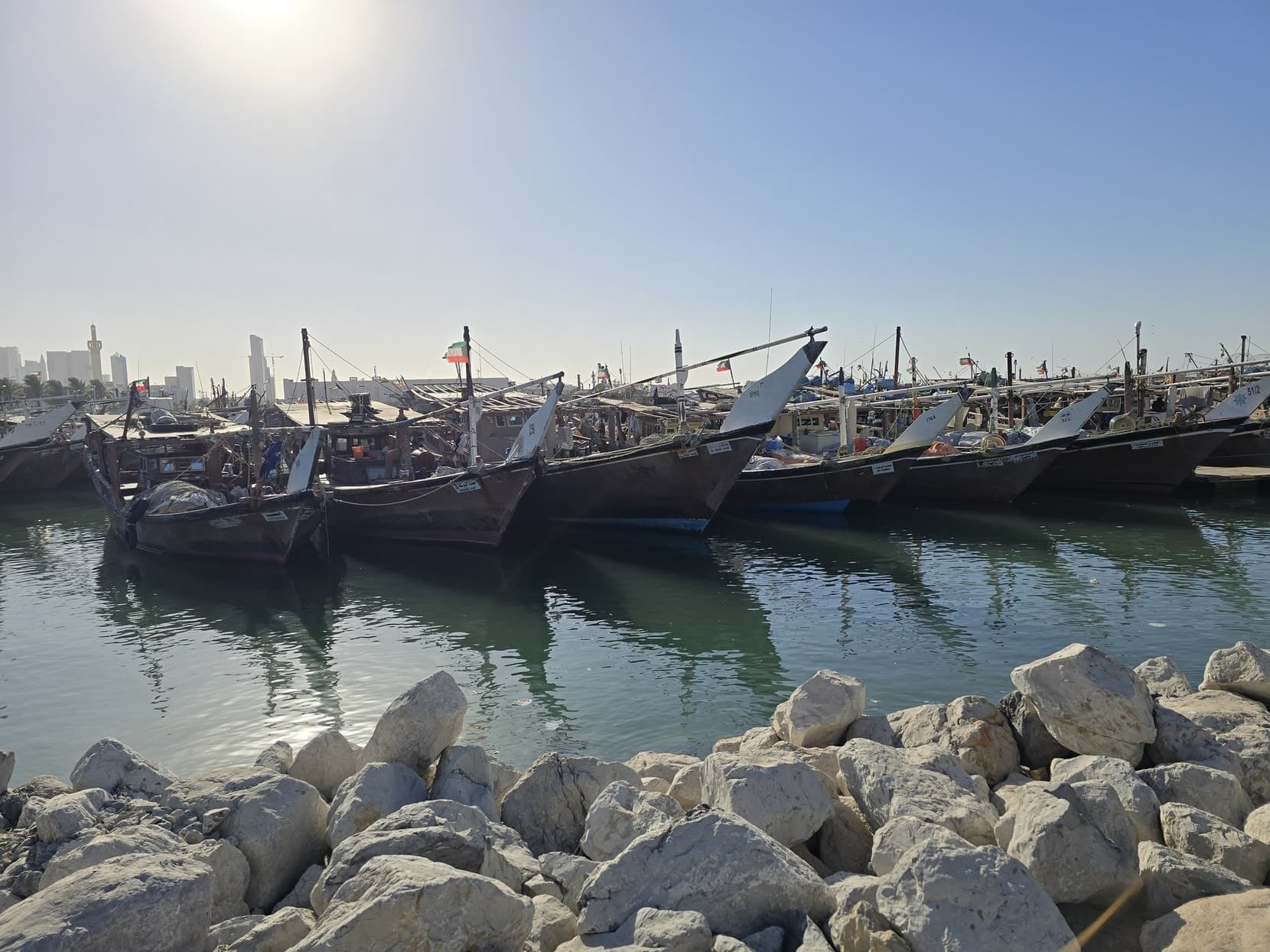
Wooden dhows moored hull to hull at the dhow harbour, white rocks in the foreground

The waterfront

The city faces the Gulf along one long corniche: hundreds of working wooden dhows moored hull to hull, a fish market with the catch coming in under blue mosaics, and Kuwait Towers – the country's postcard – with the whole bay visible from the sphere. Nobody walks in Kuwait, so the best promenade in the Gulf is usually empty.

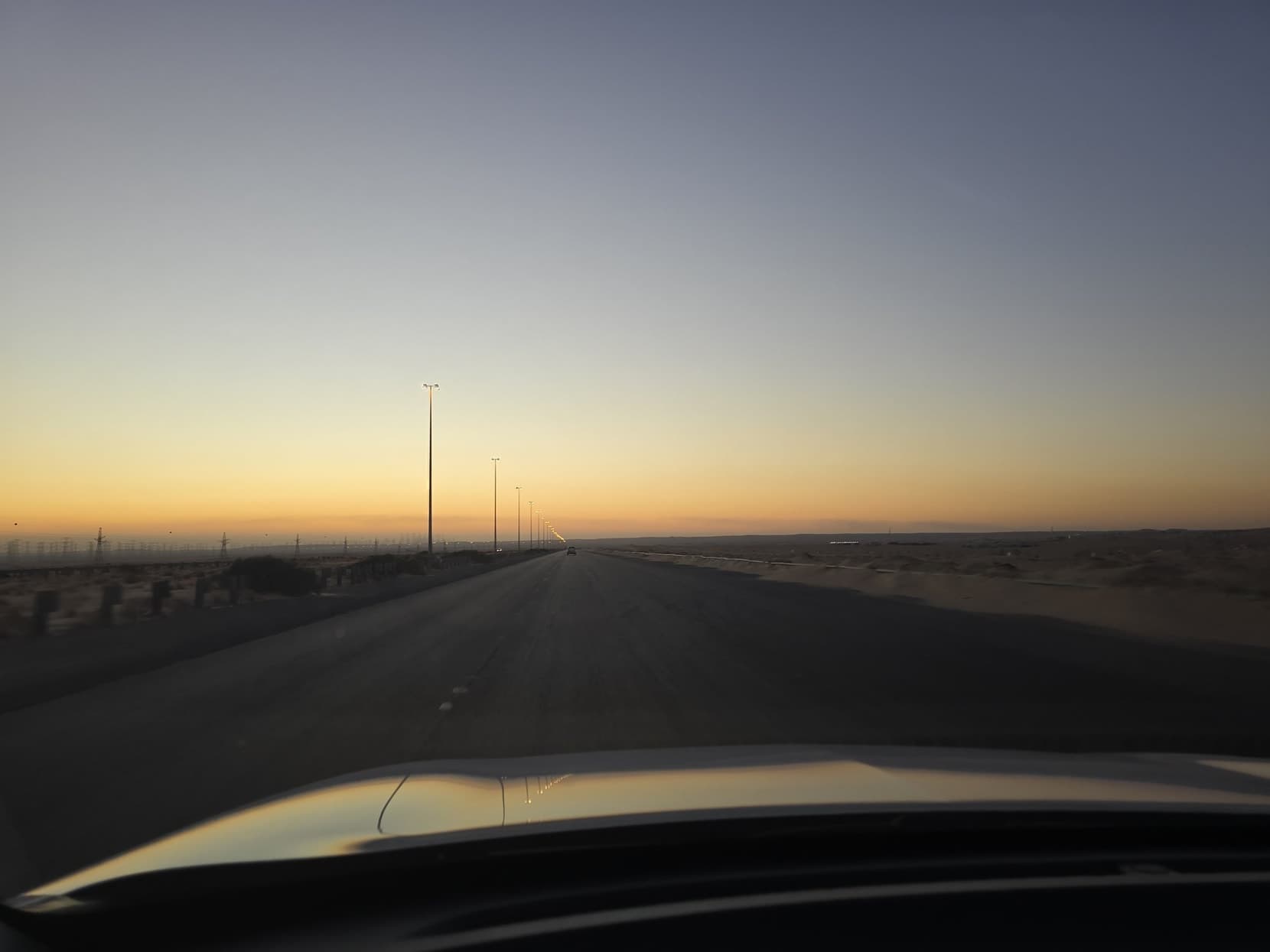
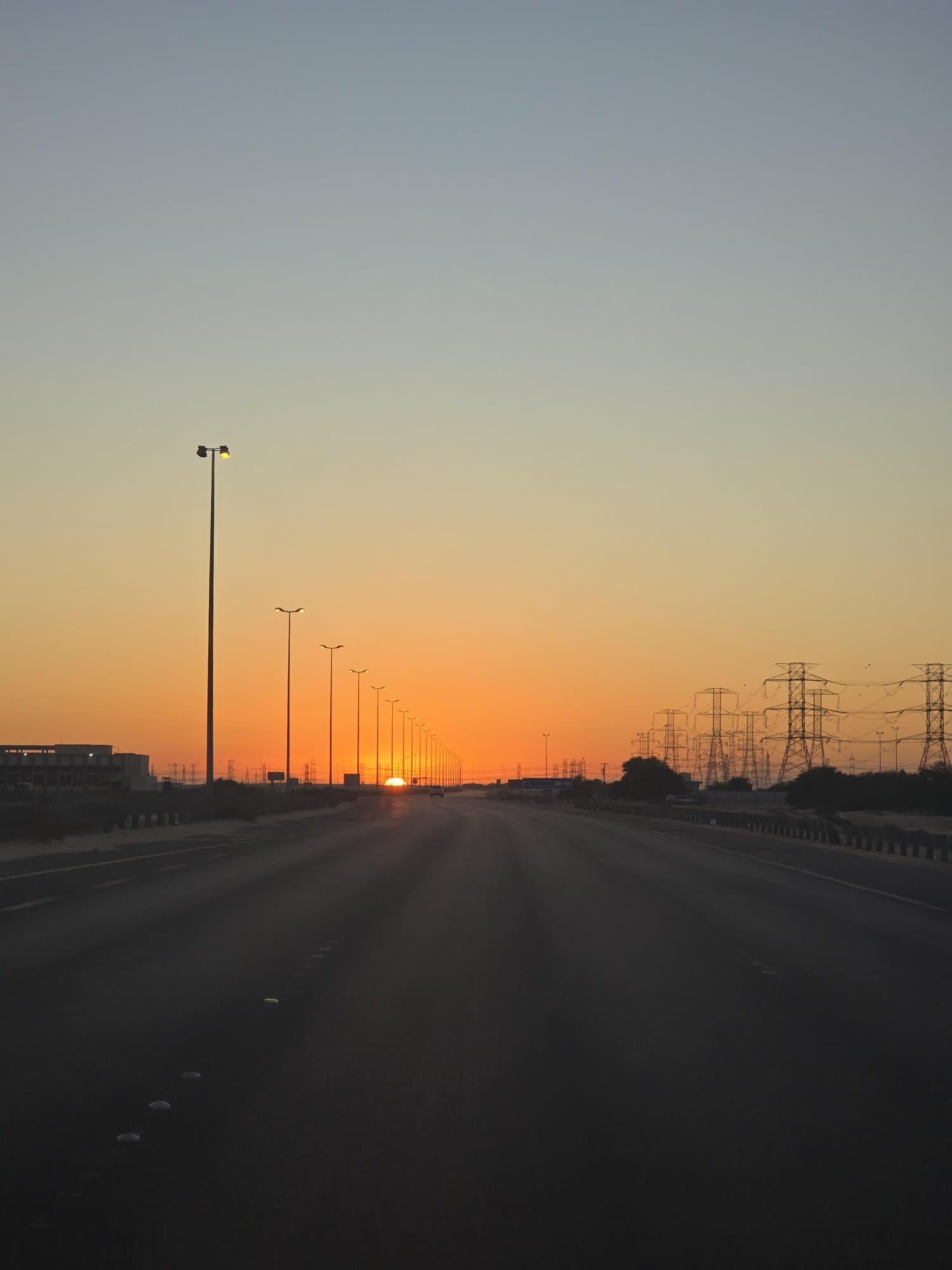
The desert highway at dusk from the car, power lines running to the horizon

The desert and the island

Cross the bay and the desert begins: empty ground, big sky, and – in winter – whole villages of lit tents appearing at dusk, the country's favourite tradition. Offshore sits Failaka, a Bronze-Age Greek trading post turned 1990 battlefield, reachable by boat and visited by almost nobody. Together they are the second day, and the reason the stop becomes a trip.

From the trip

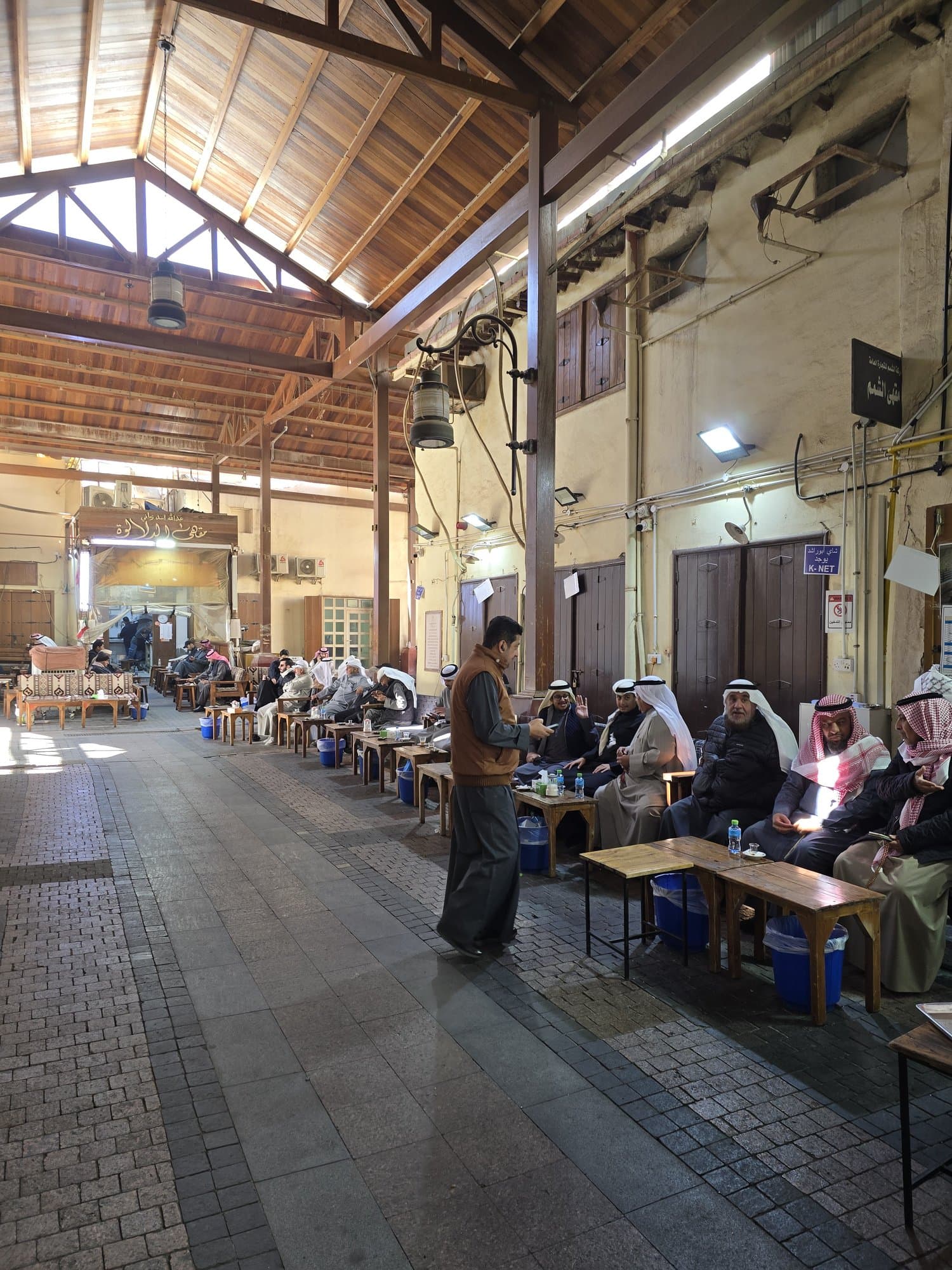
Men drinking tea on benches in a lane of Souk Al-Mubarakiya
The fish market hall with the day's catch on the counters
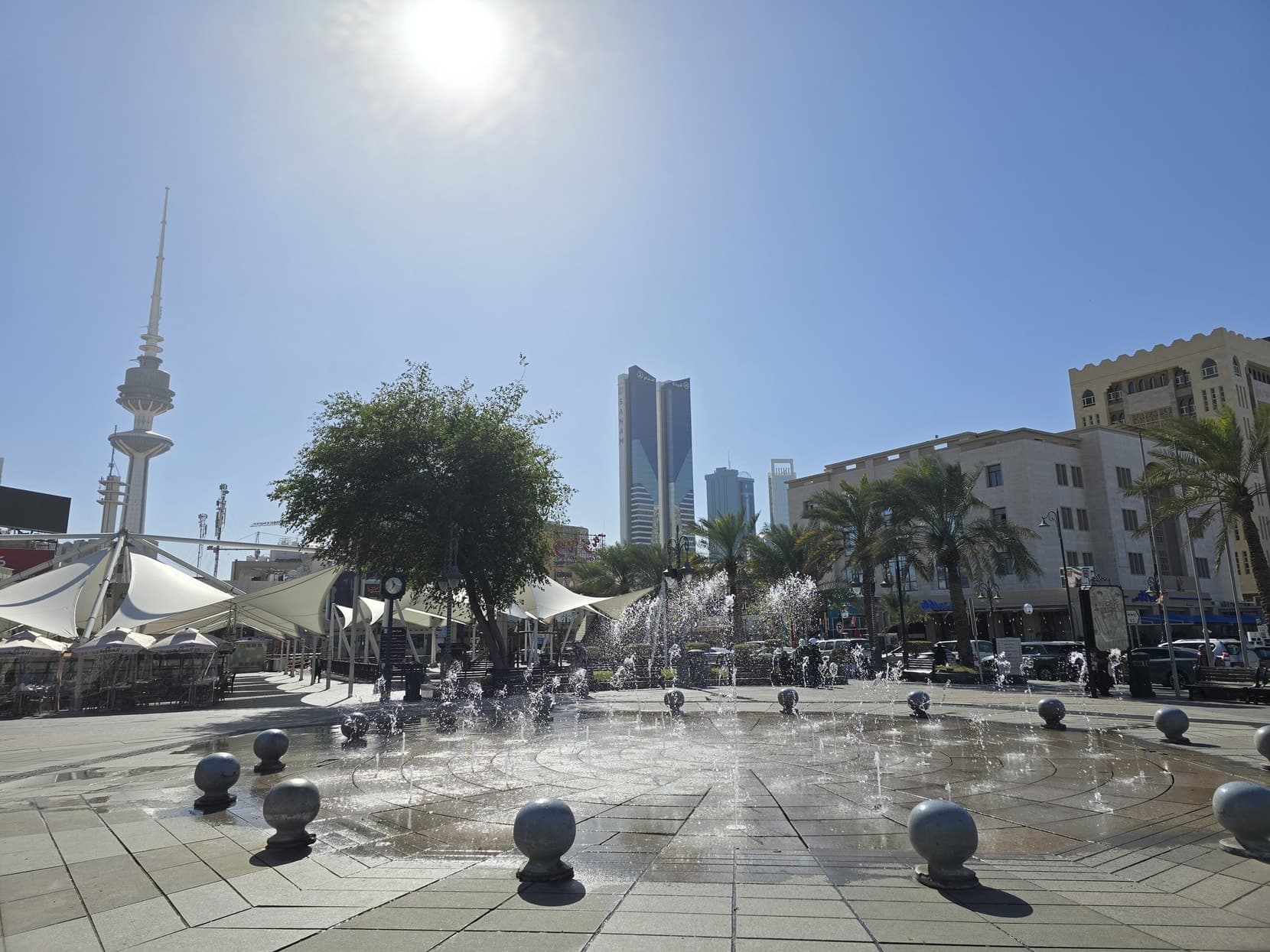
The fountains of Safat Square with the Liberation Tower behind
The Grand Mosque of Kuwait from the street, palms along its wall
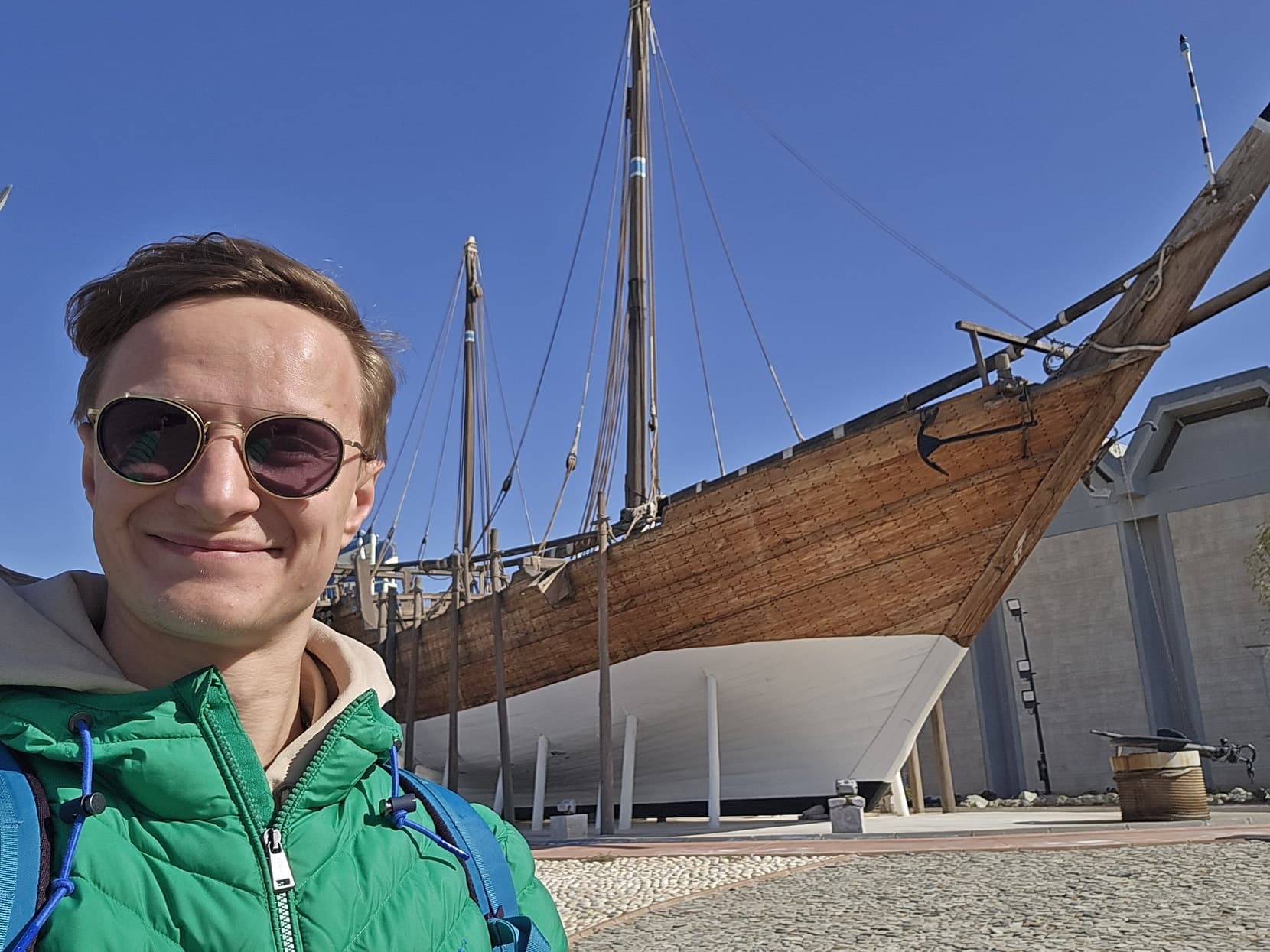
The founder in front of the wooden dhow at the maritime museum
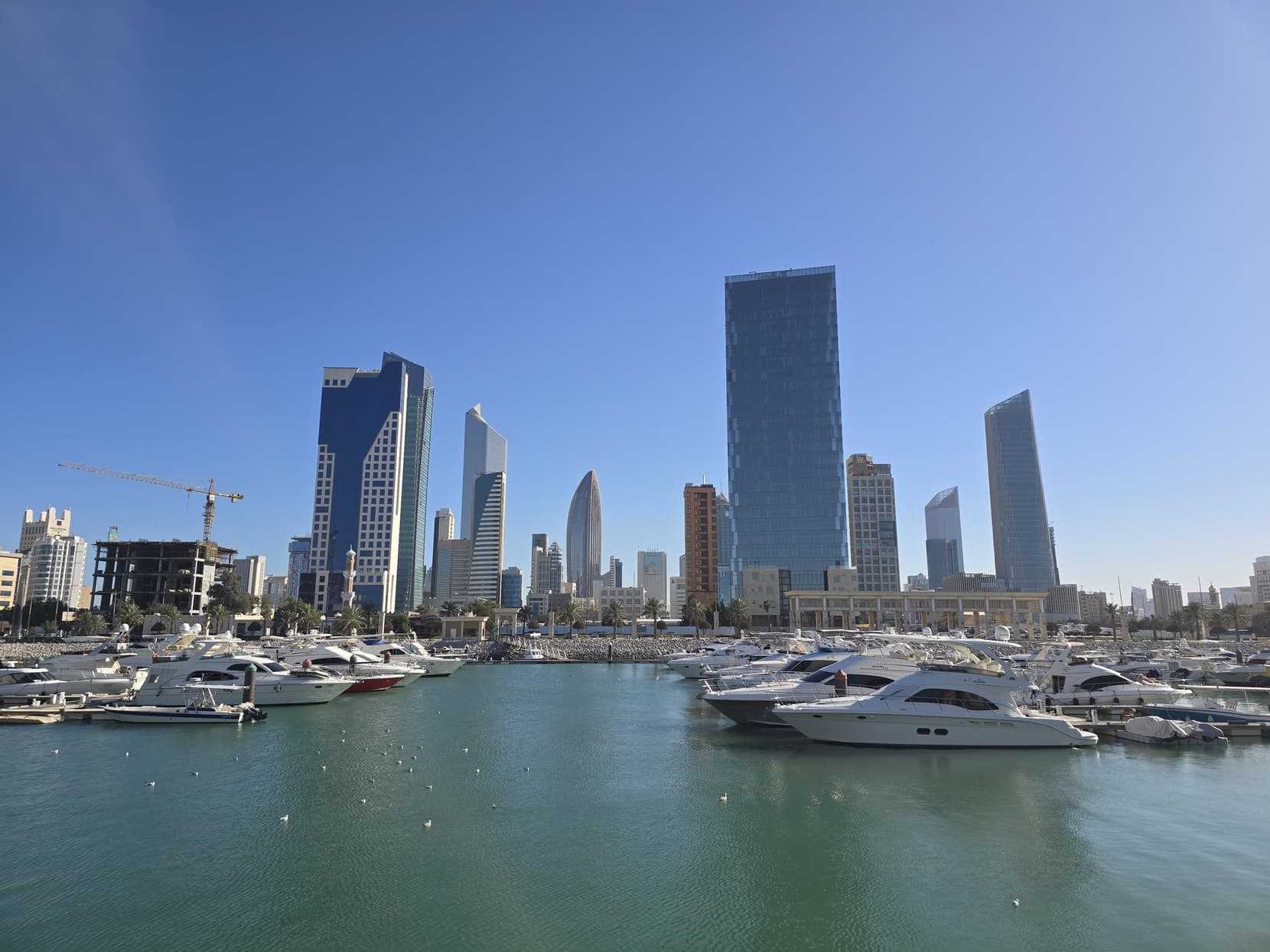
Yachts at Souq Sharq marina with the skyline behind
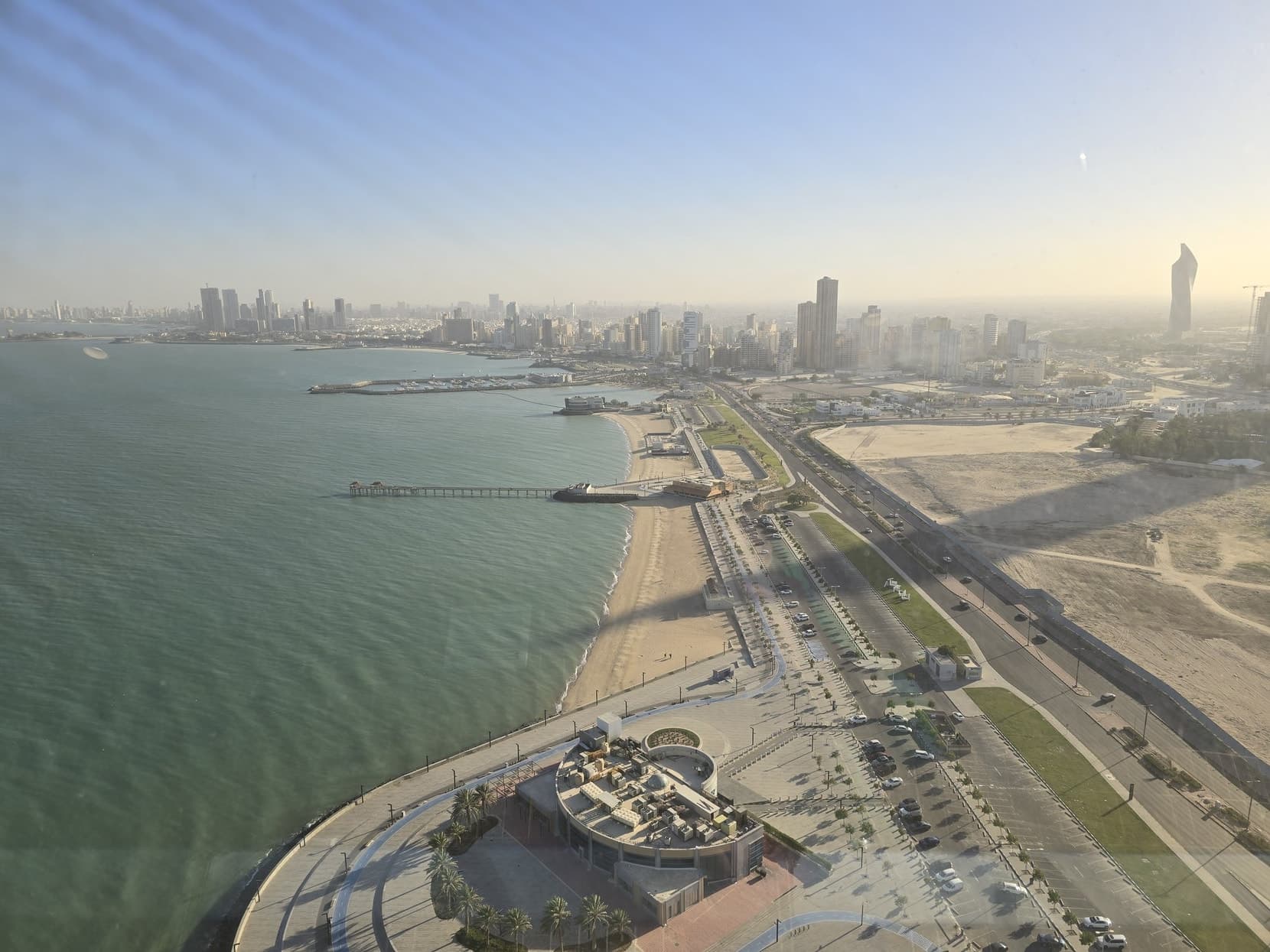
The bay and the coast road seen from the Kuwait Towers sphere
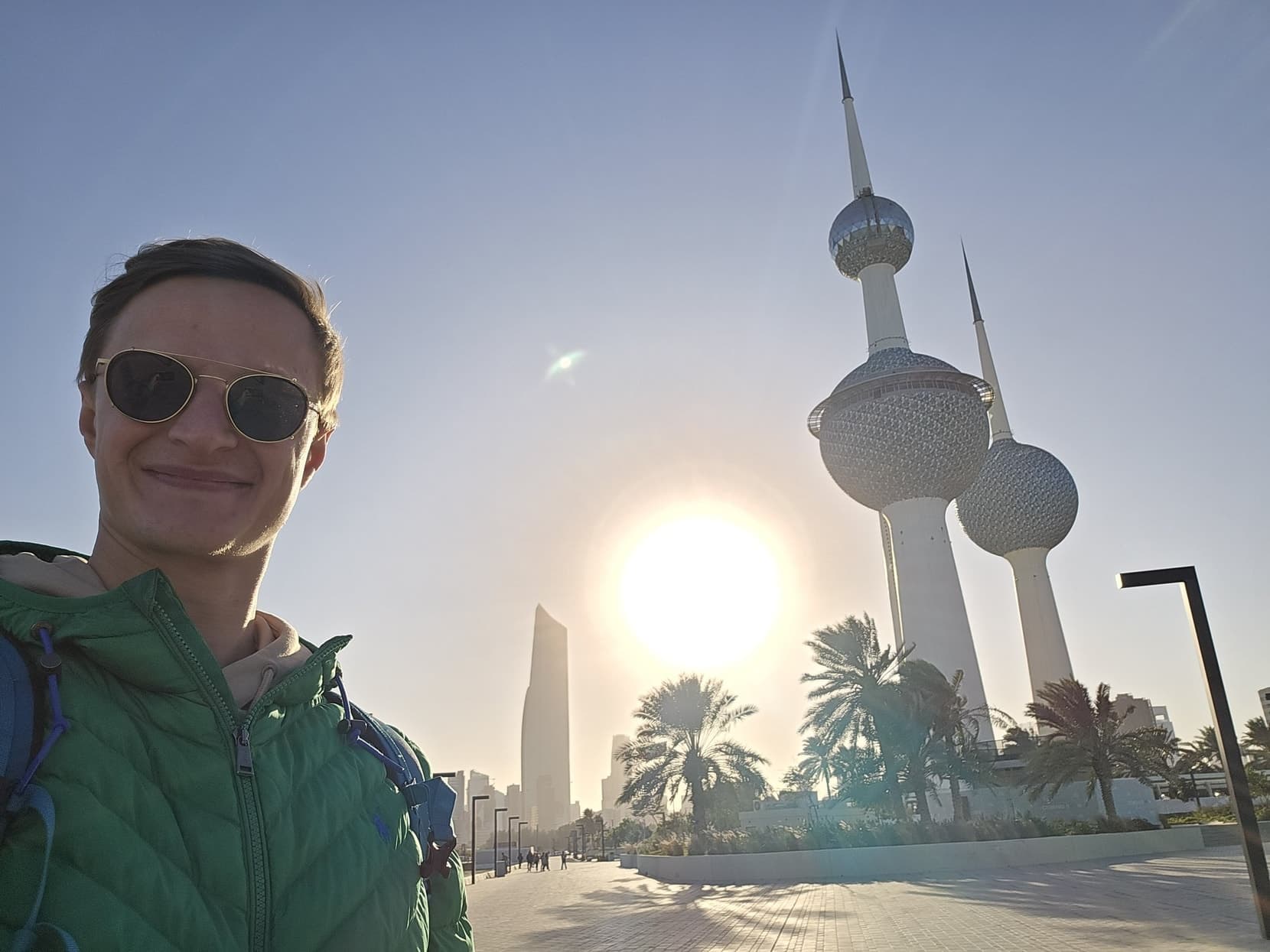
The founder below Kuwait Towers with the sun behind the spheres
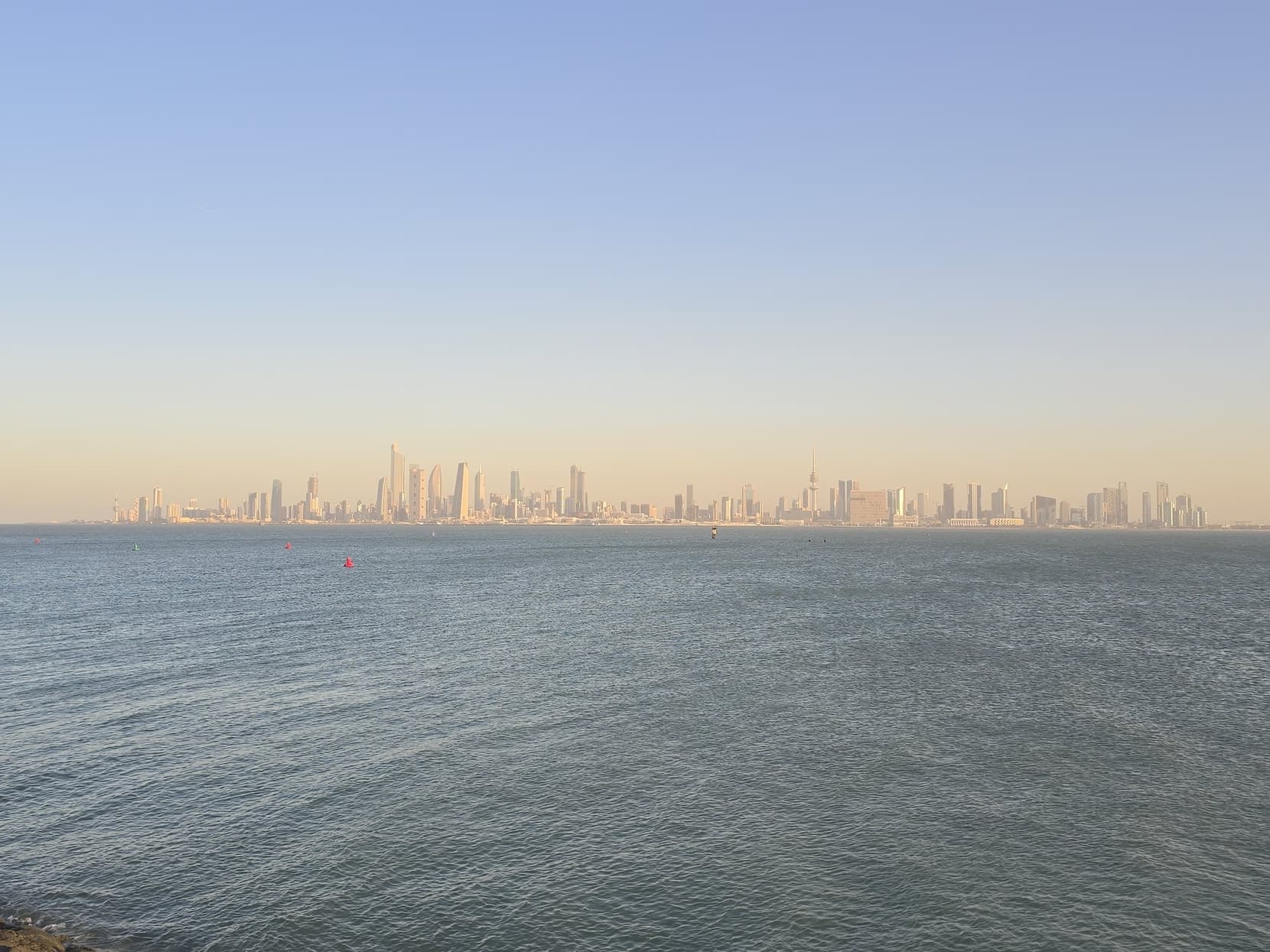
The Kuwait City skyline across the water from the causeway
Sunset over the desert highway north of the bay
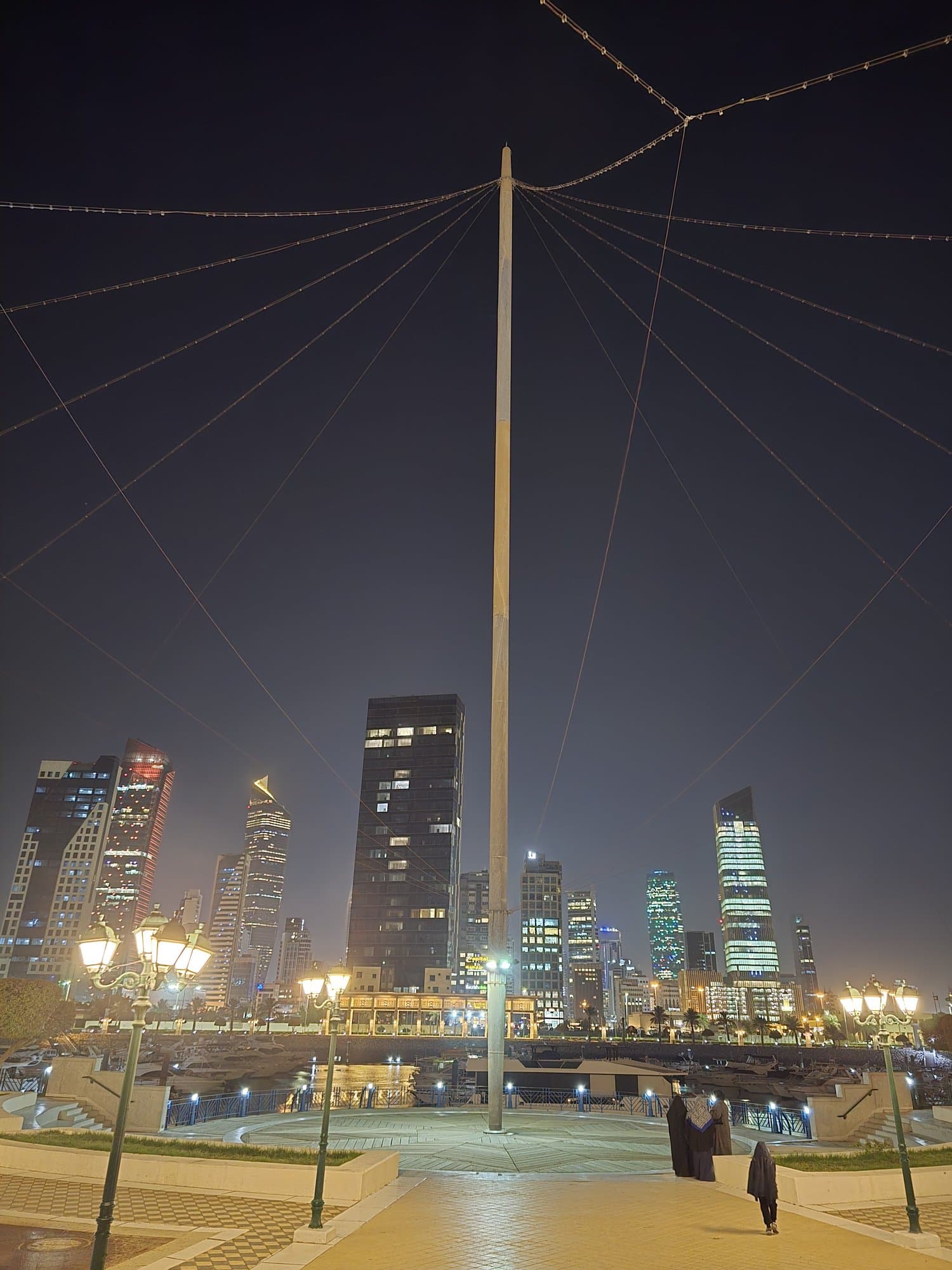
The marina flagpole at night with the lit skyline behind
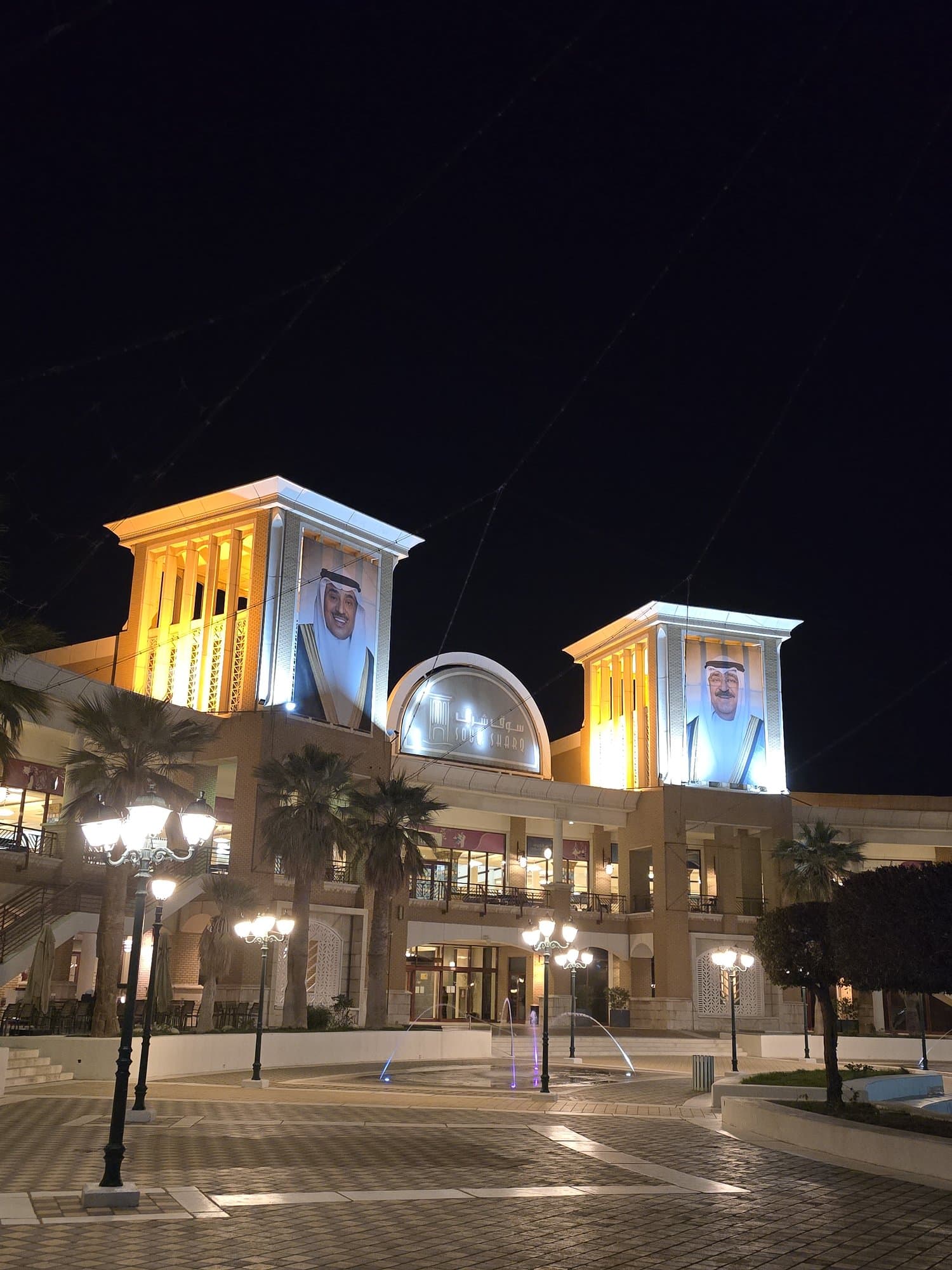
A lit waterfront arcade at night
The night skyline from the marina, towers lit along the water

Tea in the souk lanes

Getting there and around

Everything lands at Kuwait International, about twenty minutes south of the centre, and most Western passports enter easily – with one trap worth knowing: Kuwait's e-visas run their validity from approval, not from travel, so one approved months early can expire before you fly. Check the expiry date, not the approval.

On the ground this is a driving country, and there are exactly two ways to do it: a rental car, or a driver-guide for the day. Both work; they suit different travellers and different budgets, and the rental comes with paperwork that catches people at the desk. The guide prices both options, covers what the desks actually ask for, and says which to pick.

Day two adds a boat – the tide-dependent crossing to Failaka – and one of the world's longest sea bridges, which puts the desert twenty minutes from downtown. The rules that matter everywhere: alcohol is illegal and duty-free is seized on arrival; photographing government, military or oil sites is a criminal offence; and the desert is strictly a stay-on-tarmac country – landmines and unexploded ordnance remain from 1990. None of these complicate the trip in practice.

What it costs

Kuwait is one of the cheapest trips on this site to actually execute, because the two things that usually dominate – getting around, and getting in – barely register. For two people sharing, the car for both days plus every kilometre of fuel comes to roughly €30 each; petrol is so cheap that the whole trip's driving costs less than one airport coffee. Almost everything you look at – the souk, the harbour, the desert at dusk – is free. That €30 is what the driving costs, not what the trip costs; the rest is a decision:

StyleWhat that looks like
LeanA budget room, eating where the city eats, and none of the paid bookings – most of the trip is free to look at
CoreThe route as written: a mid-range hotel, the boat, the towers, and proper dinners
SplurgeA waterfront five-star, both museums, and dinner inside a full-size wooden dhow

The hotel is the only line with real range, and it moves on a lever most visitors point the wrong way: rates follow the working week rather than the weekend, so the same room costs more midweek. The paid activities are few enough to count on one hand.

The guide costs all three levels out line by line – nine hotels in three bands, every activity per person, the car and the fuel against the real distance – so you can build the trip at the level you actually want instead of guessing.

Tested tips

Check the visa expiry, not the approval.

My e-visa, approved months ahead, had expired before I ever used it – Kuwait issues them with their own clock running. Visa on arrival saved the day, but check the dates before you fly and spare yourself the airport arithmetic.

Plan around Friday, not the weather.

The Kuwaiti weekend is Friday and Saturday, and Friday closes more of the country than you expect – so a European Saturday-Sunday city break lands on the two worst days. Put the city day on a weekday. The guide plans both days around what is actually open when.

Leave the duty-free at your departure airport.

Kuwait is completely dry and none may be brought in – bottles are seized on arrival. Dinner is the whole evening out here, and the country runs perfectly well on juice, tea and the best fruit cocktails in the Gulf.

A winter tent camp lit up in the dark desert, seen from the road

FAQ

Is Kuwait worth visiting?▾
Yes – for a day or two, and on purpose. It is the Gulf without the theme park: a real old souk, a working dhow harbour, one iconic tower, and a desert culture that still actually happens every winter. It gets written off as a layover because the city genuinely fits in a day; the mistake is thinking that is all there is. The second day – a Bronze-Age island by boat and the tent camps lighting up at dusk – is the part almost nobody sees.
Is Kuwait safe to visit?▾
The city itself is calm and low-crime, and I travelled it recently without issue. But check your government's travel advice before you book and again before you fly – conditions in the wider region have changed quickly, and advisories move faster than guidebooks. The UK's is at gov.uk/foreign-travel-advice/kuwait. Two hard local rules: never photograph government, military or oil sites, and never drive off-road in the desert, where landmines from 1990 remain.
How many days do you need in Kuwait?▾
One day covers the city properly – the souk, the harbour and the towers. Two days is the right trip: the second buys you Failaka island and the desert at dusk, which is a different country from the first day. More than two adds little; Kuwait is a superb stop and a poor holiday. The guide is built around the two-day version, with the city day planned so it works as a standalone layover.
What can you do on a Kuwait layover?▾
A lot – the city is about twenty minutes from the airport, visas are straightforward for most passports, and the old town, the harbour and the towers make one of the better layover days anywhere. Whether your hours land well depends on the weekday and the order you do things in, and that is precisely what the guide times out, landing to boarding.
Can you drink alcohol in Kuwait?▾
No. Alcohol is illegal to sell, serve, carry or import anywhere in the country, including hotel bars, and duty-free bottles are seized at the airport. Dinner culture fills the gap – restaurants are the whole evening out, and tables turn late.
When is the best time to visit Kuwait?▾
November to March. Winter days are mild with cool evenings, and the desert tent camps – the best thing in the country after dark – exist from about mid-November to mid-March. Summer regularly passes 45 °C and is genuinely not usable for this trip. Whatever the month, put the city day on a weekday: the Kuwaiti weekend is Friday and Saturday, and Friday closes more than you expect.
Do you need a car in Kuwait?▾
Yes, or someone driving one. Kuwait is built around cars and car parks; distances between sights are short but unwalkable in aggregate, and there is no metro. A rental is the cheap answer and a driver-guide for the day is the comfortable one – the guide prices both, covers the paperwork that rental desks actually ask for, and says which one suits which traveller.
Can you visit Failaka island?▾
Yes – a half-day by passenger boat from the city, and the reason to stay a second day: Bronze-Age Greek ruins, a tank graveyard left from 1990, and a whole abandoned town. The crossings are tide-dependent and most listings are wrong about how the tickets actually work, so this is the one part of the trip worth doing on tested information – the guide carries the confirmation step, the ticket rule and the island logistics.
What days is the weekend in Kuwait?▾
Friday and Saturday – the working week is Sunday to Thursday. That one fact shapes the whole trip: Friday closes much of what a visitor comes for, and hotel prices run opposite to Europe's, higher midweek than at the weekend. The guide plans both days around it.
Do you need a visa for Kuwait?▾
Most Western passports get a visa on arrival or an e-visa ahead of time. The trap is the e-visa's expiry: Kuwait issues them valid from approval, not from travel, so one approved months early can be dead before you fly – mine was. Check the expiry date, not just the approval.
What are the winter desert camps?▾
From about mid-November to mid-March, Kuwaiti families move out to licensed tent camps in the desert – generators, satellite dishes and strings of lights included – to live, for a season, the way their grandparents did. After dark the desert on both sides of the road fills with lit villages of tents. It is the country's favourite tradition, it empties the city at weekends, and seen at dusk it is the best free sight in Kuwait. The guide times day two so you reach it exactly as the light goes.

Guides for this destination

Kuwait in 2 Days: A Weekend Itinerary

Kuwait in 2 Days: A Weekend Itinerary

Everything this page deliberately leaves out: both days hour by hour, the ferry procedure and its confirmation step, every booking in the order it has to be made, nine hotels and nine restaurants each with a QR link, a three-tier budget, and the companion Google map with every pin.

2 days, 1 night · €15

Stories from Kuwait

Kuwait after dark: driving into the desert tent camps

Kuwait after dark: driving into the desert tent camps

A night drive around Kuwait Bay leads straight into the country's winter desert camping tradition.

Turning a Kuwait layover into a highlight

Turning a Kuwait layover into a highlight

One tested day in Kuwait – the visa trap, the car-city reality, and all the sights by 4pm.

PDF Guide

€15

Instant download

Get the Guide

30-day refunds, no questions asked. Read the policy.

  • ✓Risk-free · 30-day full refund
  • ✓One-time purchase · No subscription
  • ✓Works offline · Save to phone